- hanqi
- Blog
As electronic devices become smaller, more powerful, and increasingly sensitive, the demand for reliable electrostatic protection solutions is growing rapidly across global manufacturing industries. In modern electronics manufacturing, ESD Footwear, also known as ESD Shoes or Static Control Footwear, has become an essential component for maintaining a safe production environment and protecting electrostatic-sensitive devices from unexpected damage.
The expansion of semiconductor production, PCB assembly, consumer electronics, automotive electronics, and precision manufacturing has increased the need for effective electrostatic discharge (ESD) control systems. Manufacturers are facing stricter quality requirements, shorter product cycles, and higher costs associated with component failures caused by uncontrolled static electricity.
For production managers and procurement teams, selecting the right ESD protection products is not only about meeting technical requirements but also ensuring long-term reliability, worker comfort, compliance with international standards, and stable supply capability.
However, many buyers still face challenges when sourcing ESD footwear, including concerns about inconsistent electrical performance, product durability, cleanroom compatibility, supplier reliability, and customization capability. A professional ESD solution partner must provide more than footwear—it should offer reliable materials, manufacturing expertise, quality assurance, and application-specific support.
With advanced anti-static material technology and customized manufacturing capabilities, Sanwei provides reliable ESD protection solutions designed to meet the evolving needs of global electronics manufacturers.
Why Electronics Manufacturing Requires ESD Footwear for Static Control
Electronic manufacturing environments are highly sensitive to electrostatic discharge because many components can be damaged by very low levels of static energy.
During daily production activities, operators naturally generate static charges through:
- Walking movement
- Friction between footwear and flooring
- Handling plastic packaging materials
- Contact with electronic devices and components
Without effective static control footwear, accumulated charges may discharge suddenly when workers contact sensitive electronic products.
This uncontrolled electrostatic discharge can lead to:
| ESD Risk in Electronics Manufacturing | Potential Impact | How ESD Protection Helps |
|---|---|---|
| Component Damage | Electrostatic discharge events may damage sensitive electronic components, including integrated circuits (ICs), semiconductor devices, microcontrollers, sensors, and electronic modules. | ESD protection measures help control static electricity and reduce the risk of sudden electrostatic discharge affecting sensitive components. |
| Hidden Product Failures | Some ESD damage may not cause immediate failure but can create latent defects that reduce product lifespan, reliability, and long-term performance after delivery. | A complete ESD control system helps prevent invisible damage and improve product reliability throughout the product lifecycle. |
| Increased Manufacturing Costs | Poor electrostatic control can lead to higher inspection costs, increased rejection rates, reduced production efficiency, and customer quality complaints. | Effective static control solutions help manufacturers reduce production losses and maintain consistent product quality. |
Grounding System:A grounding system provides a safe pathway for electrical charges to flow from people or equipment into the ground.
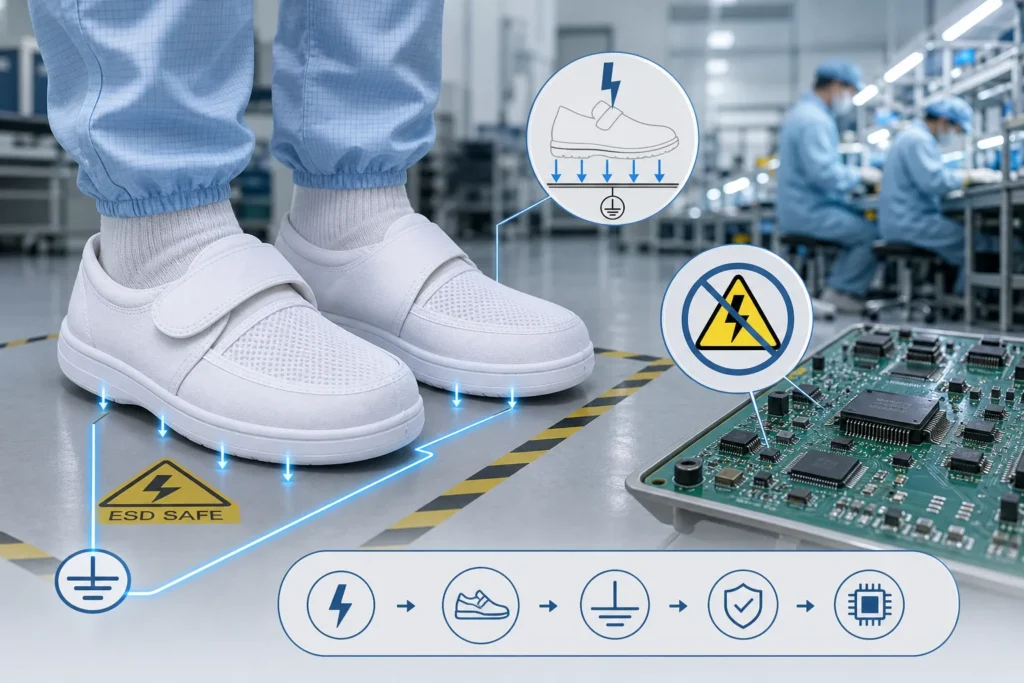
How ESD Footwear Protects Sensitive Electronic Components During Production
The primary function of ESD footwear is to provide a controlled path for static charge dissipation from the human body to the ground.
The typical discharge pathway is:
Human Body → ESD Shoes → ESD Flooring → Grounding System
When operators wear properly designed static dissipative shoes, excessive electrical charges are safely transferred away from the body instead of accumulating and suddenly releasing into sensitive electronic components.
Controlled Static Charge Dissipation
Professional ESD protective footwear uses conductive or dissipative materials to achieve controlled electrical resistance.
Compared with ordinary footwear, ESD shoes are engineered to:
- Reduce body voltage accumulation
- Maintain stable electrical resistance
- Support continuous grounding performance
- Minimize electrostatic discharge risks
This makes them suitable for demanding environments such as:
- PCB assembly lines
- Semiconductor manufacturing
- Electronic component production
- Precision equipment assembly
Integration with Complete ESD Control Systems
ESD footwear should not be considered as an independent product but as part of a complete electrostatic control program.
Effective static control requires coordination between:
- ESD compliant footwear
- Conductive flooring systems
- Grounding equipment
- Anti-static work surfaces
- Personnel training
When properly implemented, ESD footwear helps manufacturers maintain a stable ESD-safe environment and protect valuable electronic products throughout production.
The Role of Anti-Static Materials in ESD Footwear Performance
The performance of ESD shoes depends greatly on the quality of the materials used.
Advanced anti-static materials and conductive composite materials help achieve:
- Stable electrical properties
- Long-term durability
- Reliable static dissipation
- Resistance to industrial environments
Sanwei specializes in high-performance anti-static materials, including:
- Permanent anti-static clean materials
- High-temperature resistant anti-static materials
- Conductive composite materials
- Low-warpage polypropylene composites
- High-performance PBT/PET alloy composite materials
These material technologies support the development of reliable static control solutions for modern industrial applications.
Key Features of ESD Shoes for Electronics Manufacturing Environments
Selecting suitable ESD shoes for electronics manufacturing requires more than choosing a comfortable pair of work shoes. Professional electronics manufacturers need ESD footwear solutions that combine reliable electrical performance, workplace comfort, durability, and compatibility with controlled production environments.
High-quality static control footwear should provide stable electrostatic protection throughout the entire working process while meeting the specific requirements of different manufacturing applications.
Stable Static Dissipative Performance
The most important function of ESD footwear is controlling electrical resistance and ensuring safe static charge dissipation.
Unlike conventional industrial footwear, static dissipative shoes are designed with specially engineered materials that allow electrostatic charges to flow gradually through a controlled pathway.
- Important performance characteristics include:
- Stable electrical resistance
- Consistent grounding performance
- Reliable electrostatic discharge protection
- Long-term static control capability
For electronics manufacturers, stable electrical performance helps reduce the risk of unexpected electrostatic events during sensitive manufacturing operations.
Cleanroom Compatibility and Contamination Control
Many electronics manufacturing processes require controlled environments where both static electricity and contamination must be carefully managed.
For semiconductor manufacturing, precision electronics assembly, and other clean production areas, ESD cleanroom shoes should provide:
- Low particle generation
- Easy cleaning characteristics
- Material stability
- Compatibility with cleanroom procedures
Cleanroom ESD footwear is especially important in environments where even small contaminants can affect production quality.
Typical applications include:
- Semiconductor cleanrooms
- Integrated circuit production
- Precision electronic assembly
- High-value component manufacturing
Comfort for Long-Term Industrial Use
Workers in electronics factories often wear protective footwear for extended periods. Therefore, comfort is an important factor when selecting ESD work shoes.
Well-designed ESD protective footwear should provide:
- Lightweight construction
- Breathable materials
- Ergonomic support
- Reduced foot fatigue
Improved comfort not only enhances employee experience but also supports production efficiency by allowing workers to maintain stable performance during long shifts.
Durability for Industrial Manufacturing Conditions
In addition to electrostatic protection, industrial customers expect footwear that can withstand daily production environments.
Reliable anti-static footwear should provide:
- Abrasion resistance
- Slip resistance
- Mechanical durability
- Long service life
For manufacturers purchasing large quantities of ESD shoes, durability directly affects operational costs and replacement frequency.
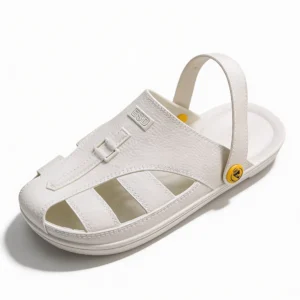
Applications of ESD Footwear Across Electronics Manufacturing Industries
ESD footwear is widely used across industries where electrostatic control is essential. From PCB assembly to semiconductor manufacturing, reliable static control shoes help protect sensitive products and maintain production stability.
ESD Footwear for PCB Assembly Manufacturing
PCB assembly environments involve numerous sensitive electronic components that require strict electrostatic control.
During SMT (Surface Mount Technology) production, assembly workers frequently handle:
- Circuit boards
- Electronic components
- Integrated circuits
- Precision electronic devices
Using ESD shoes for PCB assembly helps prevent electrostatic discharge during:
- Component installation
- Inspection processes
- Testing operations
- Manual assembly procedures
A complete PCB production ESD protection system typically combines:
- ESD flooring
- ESD workstations
- Personnel grounding equipment
- Static dissipative footwear
SMT:SMT is a manufacturing technology that places electronic components directly onto the surface of printed circuit boards.
ESD Shoes for Semiconductor Manufacturing
The semiconductor industry has some of the strictest requirements for electrostatic protection.
Semiconductor devices, including integrated circuits and microelectronic components, are extremely sensitive to electrostatic damage.
In semiconductor production environments, ESD footwear for semiconductor manufacturing supports applications such as:
- Wafer processing
- Chip assembly
- Semiconductor packaging
- Testing and inspection
Because semiconductor production often involves cleanroom environments, manufacturers require footwear that provides both:
- Electrostatic discharge control
- Contamination control
ESD Footwear for Consumer Electronics Production
Consumer electronics manufacturers produce high-volume products that require consistent quality control.
Applications include:
- Smartphones
- Wearable electronics
- Electronic accessories
- Smart devices
In these production environments, ESD shoes help reduce electrostatic risks during assembly and testing processes, improving product reliability and reducing manufacturing losses.
ESD Shoes for Automotive Electronics Manufacturing
Modern vehicles contain increasingly complex electronic systems, including:
- Electronic control units (ECUs)
- Sensors
- Battery management systems
- Automotive electronic modules
Automotive electronics manufacturers require reliable ESD protection footwear to prevent electrostatic damage during component production and assembly.
ESD Footwear Requirements for Cleanroom Electronics Production
Cleanroom electronics manufacturing requires a higher level of control than standard industrial environments.
In addition to static protection, cleanroom footwear must support contamination management and stable production conditions.
Electrostatic Control in Cleanroom Environments
Cleanroom operators need ESD compliant footwear that can maintain consistent performance while working with sensitive products.
Important requirements include:
- Controlled electrical resistance
- Stable charge dissipation
- Compatibility with ESD flooring systems
- Reliable grounding capability
Contamination Prevention
In semiconductor and precision electronics production, contamination control is as important as electrostatic protection.
Professional cleanroom ESD shoes should help minimize:
- Particle generation
- Material shedding
- Surface contamination
This makes them suitable for controlled environments requiring high production reliability.
Supporting International Manufacturing Standards
Global electronics manufacturers often require suppliers to provide products that support recognized ESD standards.
Common requirements include:
- IEC 61340-5-1 compliance
- ANSI/ESD S20.20 compatibility
- RoHS compliance
- SGS-tested materials
These standards help manufacturers establish effective electrostatic control programs.
How to Choose the Right ESD Footwear for Electronics Manufacturing
Choosing the correct ESD footwear solution depends on production conditions, application requirements, and compliance expectations.
A professional purchasing decision should consider the following factors.
1. Evaluate the Manufacturing Environment
Different production areas require different types of ESD shoes.
| Application Environment | Recommended Considerations |
| PCB Assembly Line | Lightweight ESD work shoes with stable static control |
| Semiconductor Cleanroom | Cleanroom-compatible ESD footwear with low contamination |
| Electronic Assembly Workshop | Durable anti-static shoes for long-term use |
| Precision Manufacturing | High-performance static dissipative footwear |
2. Check Electrical Performance Requirements
Manufacturers should evaluate:
- Electrical resistance range
- Static dissipation performance
- Grounding effectiveness
- Testing methods
A reliable ESD footwear manufacturer should provide technical information and quality verification to support customer requirements.
3. Consider Customization Requirements
Large electronics manufacturers often require customized solutions for:
- Company branding
- Worker identification
- Production environment requirements
- Regional market preferences
Professional suppliers should support:
- OEM ESD footwear
- ODM ESD shoes
- Custom colors
- Logo customization
- Packaging solutions
4. Select an Experienced ESD Footwear Supplier
A qualified supplier should have:
- Manufacturing capabilities
- Material development expertise
- Quality control systems
- International export experience
For global customers, choosing an experienced anti-static footwear manufacturer can help ensure stable product quality and long-term cooperation.
ESD Footwear Standards and Testing for Electronics Manufacturing
For electronics manufacturers, selecting ESD footwear is not only about product appearance or basic functionality. Reliable electrostatic discharge footwear must meet strict performance requirements to ensure consistent static control in real production environments.
Professional ESD footwear manufacturers should provide products supported by appropriate testing methods, quality control procedures, and compliance documentation.
IEC 61340-5-1 Electrostatic Control Requirements
IEC 61340-5-1 is one of the most recognized international standards for electrostatic control in electronics manufacturing.
This standard provides guidelines for establishing and maintaining an effective ESD control program, including requirements related to:
- Personnel grounding
- Electrostatic protective equipment
- Static control materials
- ESD-safe working environments
As an important component of personnel grounding protection, ESD shoes should work together with other ESD control measures to reduce the risk of electrostatic discharge damage.
ANSI/ESD S20.20 ESD Control Program Compatibility
Many global electronics manufacturers follow ANSI/ESD S20.20 requirements when managing electrostatic-sensitive devices.
An effective ESD control program typically includes:
- ESD protective footwear
- Grounding systems
- Conductive flooring
- Workstation protection
- Regular performance verification
For companies operating international manufacturing facilities, choosing ESD compliant footwear helps maintain consistency with global quality management requirements.
ESD Footwear Performance Testing
Reliable static dissipative footwear should undergo professional testing to verify electrical and mechanical performance.
Common testing procedures include:
Electrical Resistance Testing
Evaluating:
- Electrical resistance values
- Static dissipation capability
- Grounding performance
Material Performance Testing
Evaluating:
- Conductive material properties
- Anti-static performance stability
- Material durability
Environmental Compliance Testing
Including:
- SGS testing
- RoHS compliance verification
For demanding industrial applications, advanced testing ensures that ESD protective shoes maintain stable performance throughout their service life.
Customized ESD Footwear Solutions for Electronics Manufacturers
Different electronics manufacturers have different production requirements. A standard product may not always provide the best solution for every application.
Therefore, professional ESD footwear suppliers increasingly provide customized solutions based on customer environments, branding requirements, and technical specifications.
Sanwei provides customized electrostatic protection solutions supported by advanced anti-static material technology and manufacturing capabilities.

OEM and ODM ESD Footwear Development
As an integrated manufacturer with R&D, production, and international trade capabilities, Sanwei supports OEM and ODM cooperation for global industrial customers.
Customized ESD shoes solutions can include:
- Custom company logo
- Customized colors
- Product appearance design
- Nameplate production
- Packaging customization
- Instruction manual customization
- Engineering drawing development
These services allow electronics manufacturers and industrial distributors to develop products that better match their market positioning and operational needs.
Advanced Anti-Static Material Technology
Unlike traditional suppliers that focus only on finished footwear products, Sanwei has strong expertise in anti-static materials and conductive composite materials.
The company develops high-performance materials designed for demanding industrial environments, including:
- Permanent anti-static clean materials
- High-temperature resistant anti-static materials
- Conductive composite materials
- Low-warpage polypropylene composites
- High-performance PBT/PET alloy composite materials
By combining material science expertise with manufacturing capabilities, Sanwei delivers more comprehensive static control solutions for global customers.
Supporting Different Industrial Requirements
Sanwei’s customized ESD solutions are suitable for various industrial applications, including:
- Electronics manufacturing
- Semiconductor production
- OEM manufacturing
- Industrial equipment production
- Precision manufacturing environments
Whether customers require standard ESD footwear, customized anti-static shoes, or complete electrostatic protection solutions, Sanwei provides professional technical support.
Why Choose Sanwei as Your ESD Footwear and Static Control Solution Partner
Founded in 1988, Sanwei is a professional manufacturer specializing in:
- Anti-static materials
- Electrostatic discharge protection products
- Industrial anti-static engineering materials
- High-performance conductive and anti-static composite materials
With decades of experience in material development and industrial applications, Sanwei provides reliable ESD protection solutions for customers worldwide.
Integrated R&D and Manufacturing Capabilities
Sanwei combines:
- Research and development
- Material engineering expertise
- Manufacturing capabilities
- International trade services
This integrated business model allows Sanwei to support customers from product concept development to customized manufacturing.
For companies searching for an experienced ESD footwear manufacturer, Sanwei provides not only products but also technical solutions based on practical industrial requirements.
Global Export Experience and International Customer Support
Sanwei serves customers across global markets, including:
- United States
- Germany
- Israel
- Singapore
- Malaysia
- More than 20 countries worldwide
The company has experience supporting international customers with requirements related to:
- Product customization
- Quality consistency
- Technical communication
- Export cooperation
Sanwei understands the expectations of global industrial buyers and provides reliable manufacturing support.
Compliance with International Quality Requirements
Quality and compliance are essential for industrial customers purchasing ESD shoes and static control products.
Sanwei supports international quality requirements through:
- IEC 61340-5-1 standard alignment
- ANSI/ESD S20.20 compatibility
- SGS-tested materials
- RoHS compliance
- Military standard related requirements
- National High-Tech Enterprise certification
These qualifications demonstrate Sanwei‘s commitment to reliable product performance and professional manufacturing practices.
Providing Solutions Beyond Traditional ESD Footwear
Modern industrial customers need more than a single product. They require complete solutions that address:
- Static electricity control
- Material performance
- Manufacturing reliability
- Application-specific requirements
With expertise in advanced anti-static materials and electrostatic protection technologies, Sanwei helps customers build safer and more reliable production environments.
Frequently Asked Questions
1. What is ESD footwear?
ESD footwear is designed to control static electricity by safely dissipating electrical charges from the human body to the ground. It helps protect sensitive electronic components from electrostatic discharge during manufacturing, assembly, and cleanroom operations.
2. Why do electronics manufacturers need ESD shoes?
Electronics manufacturers use ESD shoes to reduce the risk of static damage to sensitive components such as PCBs, ICs, and semiconductor devices. They are an important part of a complete ESD protection system in production areas.
3. What is the difference between ESD shoes and anti-static shoes?
ESD shoes are specifically designed for electrostatic discharge control and are commonly used in electronics and cleanroom environments. Anti-static shoes mainly reduce static buildup but may not always meet strict ESD control requirements.
4. Where are ESD footwear solutions commonly used?
ESD footwear solutions are widely used in electronics manufacturing, PCB assembly, semiconductor production, cleanrooms, automotive electronics, and other industries where static control is important.
5. How do I choose ESD shoes for a cleanroom?
When choosing ESD cleanroom shoes, consider electrical performance, contamination control, comfort, and compatibility with your ESD flooring system. Reliable suppliers should provide testing data and compliance information.
6. What standards should ESD footwear meet?
Quality ESD footwear should support recognized standards such as IEC 61340-5-1 and ANSI/ESD S20.20. These standards help ensure effective electrostatic control in manufacturing environments.
7. Can I order customized ESD shoes for my company?
Yes. Many ESD footwear manufacturers offer OEM and ODM services, including custom logos, colors, packaging, and product specifications to meet different industrial requirements.
8. How can I find a reliable ESD footwear supplier?
Look for an ESD footwear supplier with manufacturing experience, quality certifications, material expertise, and OEM capabilities. A reliable supplier should provide consistent product quality and technical support.
References
Electrostatic Discharge Association (ESDA). An Overview of ANSI/ESD S20.20.
KPMG. Global Semiconductor Industry Outlook 2025.
Semiconductor Industry Association (SIA). 2025 State of the Industry Report.
Leave a Reply