- Turbo
- Blog
ESD box labeling should identify the container and its contents without damaging packaging, hiding functional surfaces or creating ambiguous records after reuse. Separate a permanent container identity from the changing part, lot and status information carried during each trip. Select label placement, material and removal rules with the box supplier and the site’s ESD program. A barcode that scans at one station is not proof that the complete labeling workflow works. Check receiving, loading, storage, transfer and return using the actual container and protected packages.
Decide what the barcode identifies
A container barcode can identify a reusable asset, a current load or a storage location. These are different objects. A permanent asset identifier should not change whenever the contents change. A load record may change every trip, while a shelf location belongs to the storage arrangement rather than the tote. Define the relationship before ordering labels. Otherwise, operators can scan a perfectly readable code and update the wrong record because the system does not clearly distinguish these identities.
Record the required information in the associated system instead of trying to print every detail on the box. A durable asset code can link to inspection and service history; the load record can link to parts, lots and ownership. Decide which details need to remain visible when the scanner or network is unavailable. Avoid inventing a universal label format. The factory’s inventory and customer traceability requirements determine what must be carried through the route.
Establish the external label zone with the supplier
Inspect the actual molded container for a suitable external surface. A label should not cover handles, stacking contacts, lid engagement, drainage features or surfaces required for verification. Ask whether the supplier provides an intended labeling zone and whether the proposed adhesive is compatible. An apparently flat side panel can still flex or have a texture that affects adhesion. Do not sand, drill or coat the box to create a label zone without approval.
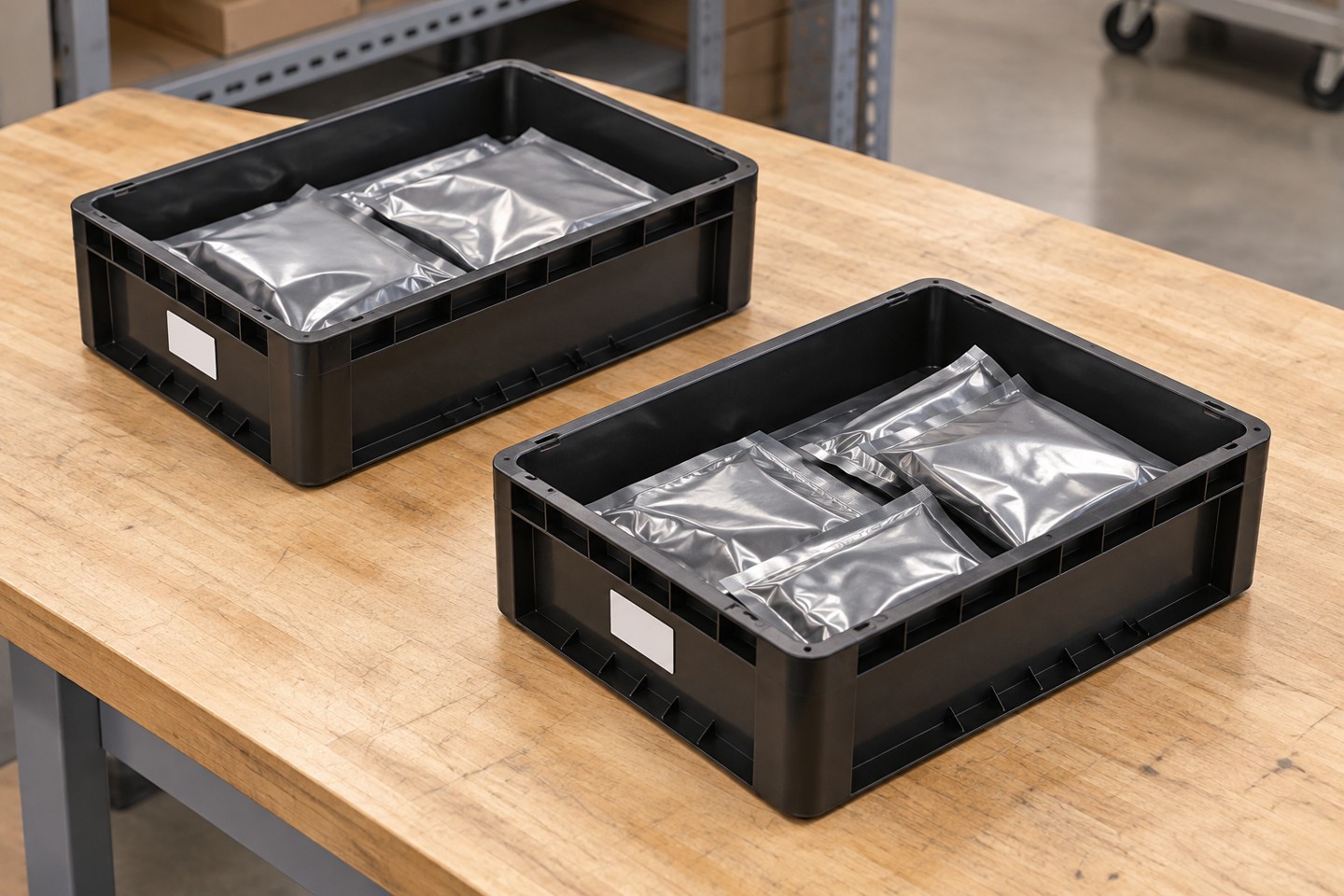
For a real container reference, review the SWESD shallow ESD box. The photographs illustrate an external label position, not a verified barcode system or a claim that a label holder is included. Check the exact model and mounting method with the supplier. If a removable holder is proposed, identify it separately and review its effect on clearances and the ESD arrangement.

Keep permanent and trip-specific labels distinguishable
Design the workflow so operators know which identity persists and which is replaced. A permanent asset label should remain readable through the accepted cleaning process. A temporary load label must be removed, invalidated or updated under a defined rule after unloading. Multiple old lot labels on the same box can create a traceability error even if every barcode remains readable. Establish who clears the previous trip record and when the next load becomes associated with the container.
Separate ownership from product status. A customer-owned tote can carry available, reserved or held material on different trips. Do not use one colored sticker to represent all three concepts. The FIFO and traceability guide addresses inventory sequence and lot control. The box label should support that process without becoming a second conflicting source of truth.
Review the information handoff at each route step
Use the table below as a workflow review. It lists decisions to resolve rather than prescribing a particular enterprise system or barcode symbology. The accepted identifier must work with the actual scanners, records and fallback procedure used at each station.
| Route step | Identity to check | Controlled action |
|---|---|---|
| Receiving empty box | Permanent asset and ownership | Resolve unknown or conflicting identity before release |
| Yükleniyor | Current part, lot and permitted configuration | Associate the load with the verified container record |
| Storage or transfer | Location and product status | Verify the scan updates the intended record rather than an obsolete trip |
| Unloading | Product association and destination | Clear or close the load record under the defined rule |
| Cleaning and return | Container identity and service condition | Remove temporary identification without losing asset history |
| Label replacement | Original identity and replacement control | Preserve the record association and prevent a duplicate asset |
Demonstrate failure handling as part of the trial. When a code is unreadable, define whether the operator may use a visible identifier, send the box to hold or request a replacement label. Prevent informal relabeling that loses the association with the current contents. An error message should lead to a controlled action, not an undocumented workaround. Test duplicate scans and a container arriving with an old trip label before the process is released.
Qualify the label material within the ESD arrangement
Labels, adhesives and holders introduce additional materials near the product. Determine whether their position and behavior need evaluation under the site’s ESD plan. An outer label does not become suitable merely because the box is described as conductive. The EOS/ESD Association’s basic materials guidance provides the context for reviewing auxiliary materials and production aids.
Keep electrical measurements reproducible. If a label covers a surface used for an approved measurement, either relocate it or revise the accepted procedure through the responsible team. Do not place test electrodes on a different surface casually and compare the result with the original method. The ESD control and auditing guidance emphasizes defined requirements and verification; label installation is a configuration change that should remain traceable when it affects those requirements.
Test scanning in the real physical arrangement
Use the planned label material, printing process, scanner and container position. Evaluate the normal range of orientations and lighting found during receiving and transfer. Check whether another container, shelf edge or cart frame hides the code. Do not establish performance from a handheld scan of a loose label on a desk. The accepted setup must account for the way the box will actually be presented to the reader.
Also inspect the human-readable identifier and the record returned by the scan. A code can decode successfully yet point to the wrong container or stale contents. Demonstrate the association between a loaded package and its record, then demonstrate unloading and the return to an empty state. Where RFID is being considered, review RFID label placement for storage bins separately; radio performance and ordinary optical barcode visibility are different qualification questions.
Include cleaning and reuse in label acceptance
Confirm how the label behaves during the accepted cleaning process. Look for loss of adhesion, curling edges, residue after removal or degradation of the printed code. Check whether a temporary label can be removed without damaging the box or obscuring the permanent identifier. Use the actual approved materials and process rather than assuming all removable adhesives leave no residue.
Set replacement triggers and control replacement records. When a permanent asset label is changed, preserve the association with the original container identity and service history. Do not create a new asset silently because a sticker was replaced. A returned box with uncertain identity should be held until its record is resolved. The ESD box cleaning-validation guide covers the separate release evidence for the container after cleaning.
Manage customer-owned and pooled boxes
In a shared returnable pool, container ownership and responsibility for inspection may differ from the owner of the contents. Define who applies the permanent identifier, who approves label materials and who maintains the record. Agree on how labels from another facility are handled. A receiving team should not remove an external identification mark that the owner needs without an agreed replacement or cross-reference rule.
Use the load record to document handoffs where required, but keep claims within the system’s actual capabilities. A barcode alone does not prove every custody event was captured. Audit representative trips and investigate gaps between scans, especially where containers are repacked or split. This makes the label a practical part of traceability rather than a decorative symbol of control.
RFQ and acceptance handoff
Give suppliers the box model, label zone, cleaning process, printing and scanning requirements, and the intended service life conditions. Ask them to identify the proposed material and any holder or surface treatment. Request samples that can be tested on the actual box. Keep pricing for labels, replacement supply and installation separate so purchasing can compare like-for-like arrangements.
Release the labeling process with a clear illustration of the correct location, the identities carried and the steps for loading, clearing and replacing labels. Train receiving, production and return-pool staff together because the system crosses their work boundaries. Retain the accepted sample and the test record. When the container, label or scanning arrangement changes, review the affected checks rather than assuming that a similar-looking replacement behaves identically.
Further learning: movement and information control
The NPTEL material handling lecture below explains how movement and storage fit into a production system. It provides context for tracing the container through its route; barcode and record acceptance still require the site-specific checks above.

Educational video: Lec 27: Material handling systems, NPTEL IIT Guwahati.
Sık sorulan sorular
Should a reusable box have a permanent barcode?
Use a permanent asset identifier when the process needs container-level history, while keeping changing contents in a separate load record.
Can labels cover handles or stacking surfaces?
Avoid functional surfaces unless the supplier specifically approves the arrangement and its effect has been evaluated.
Does a successful scan prove traceability?
It proves a code was read under those conditions. Verify the correct record, association and handoff events as well.
How should old lot labels be handled?
Remove, invalidate or update them using a defined unloading and reuse rule so they cannot conflict with the new load.
What should be tested after changing label material?
Review adhesion, removal residue, cleaning compatibility, scanning and any relevant effect on the ESD control arrangement.



Bir Yorum Bırakın