- Turbo
- Blog
Replacement insoles in ESD shoes should be reviewed as a change to the footwear assembly, even when they are introduced only for comfort. The approved shoe, internal components, wearer, floor, and required test arrangement may no longer match the original evidence after a substitution. Confirm whether the manufacturer permits replacement, identify the exact proposed part, and obtain the required safety and electrical review before use. This guide explains the purchasing and release process; it does not prescribe orthotic treatment or approve a generic insole for every ESD shoe.
Identify why a replacement is proposed
Record the issue being addressed: damaged original component, a supplier-supported service replacement, a fit complaint, or another specific request. Do not assume that all internal footbeds are removable or intended to be replaced. First establish what the exact shoe manufacturer permits.
If the request concerns a worker’s health or a prescribed device, use the organization’s appropriate occupational-health and safety process. This article provides no medical selection advice. The technical review still needs to identify how the proposed change interacts with the approved footwear arrangement. Keep the worker-support decision and the product-qualification decision connected without treating either as a substitute for the other.
Verify the shoe and original construction
Record the manufacturer, model, size, revision, supplied components, relevant history, and approved use. Obtain the current instructions and evidence for that construction. A report that does not identify the internal arrangement is a reason to ask for clarification, not permission to change it freely.
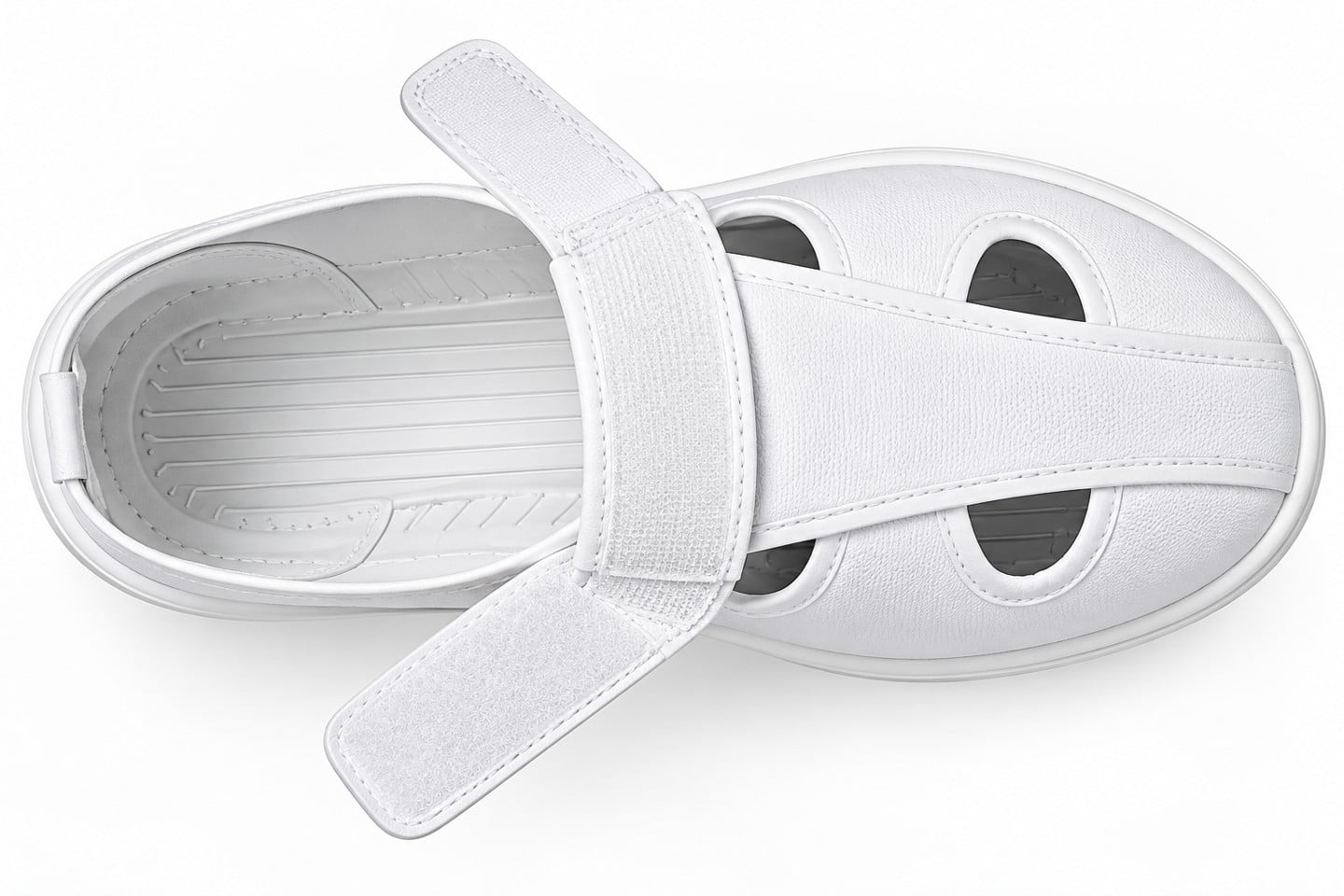
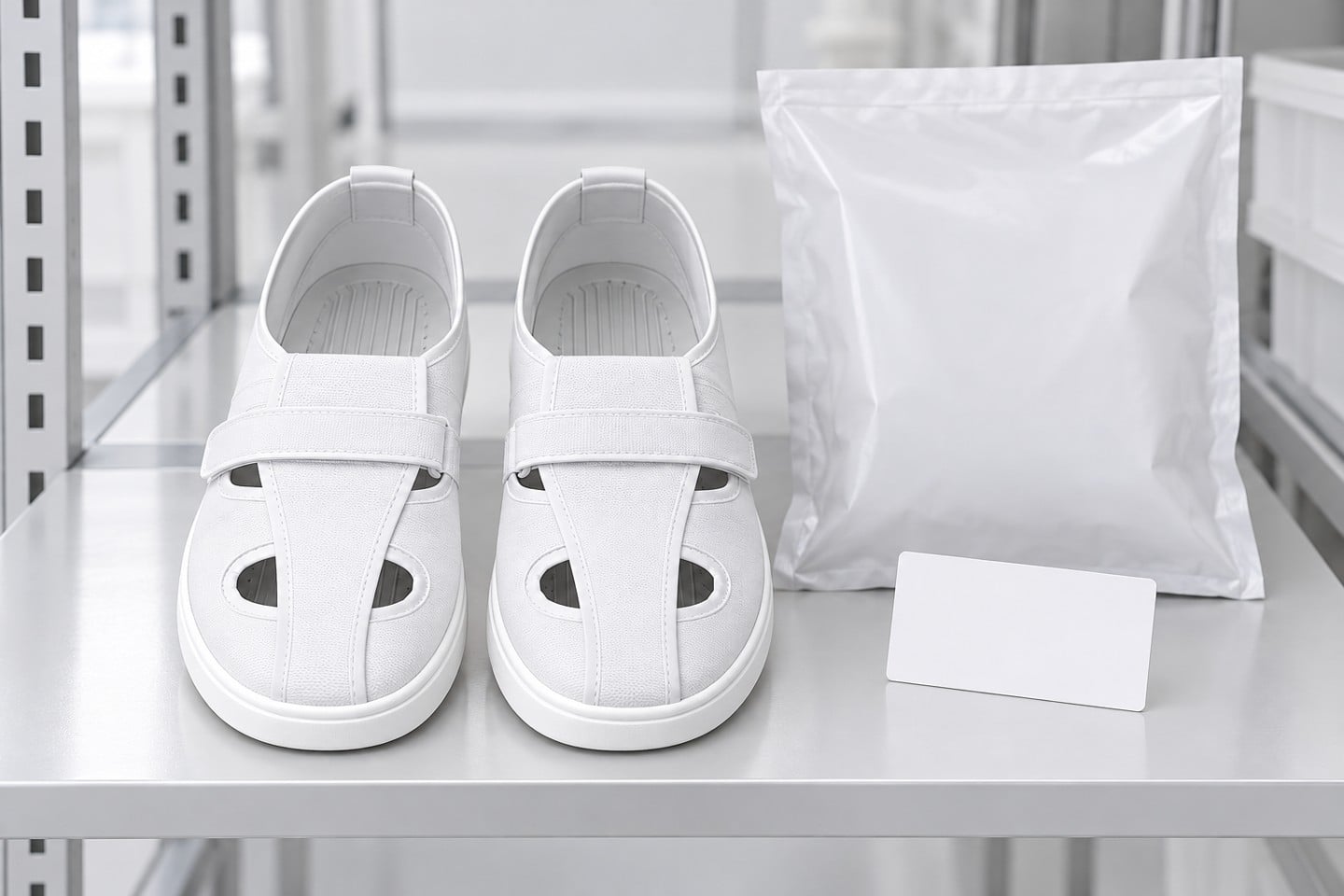
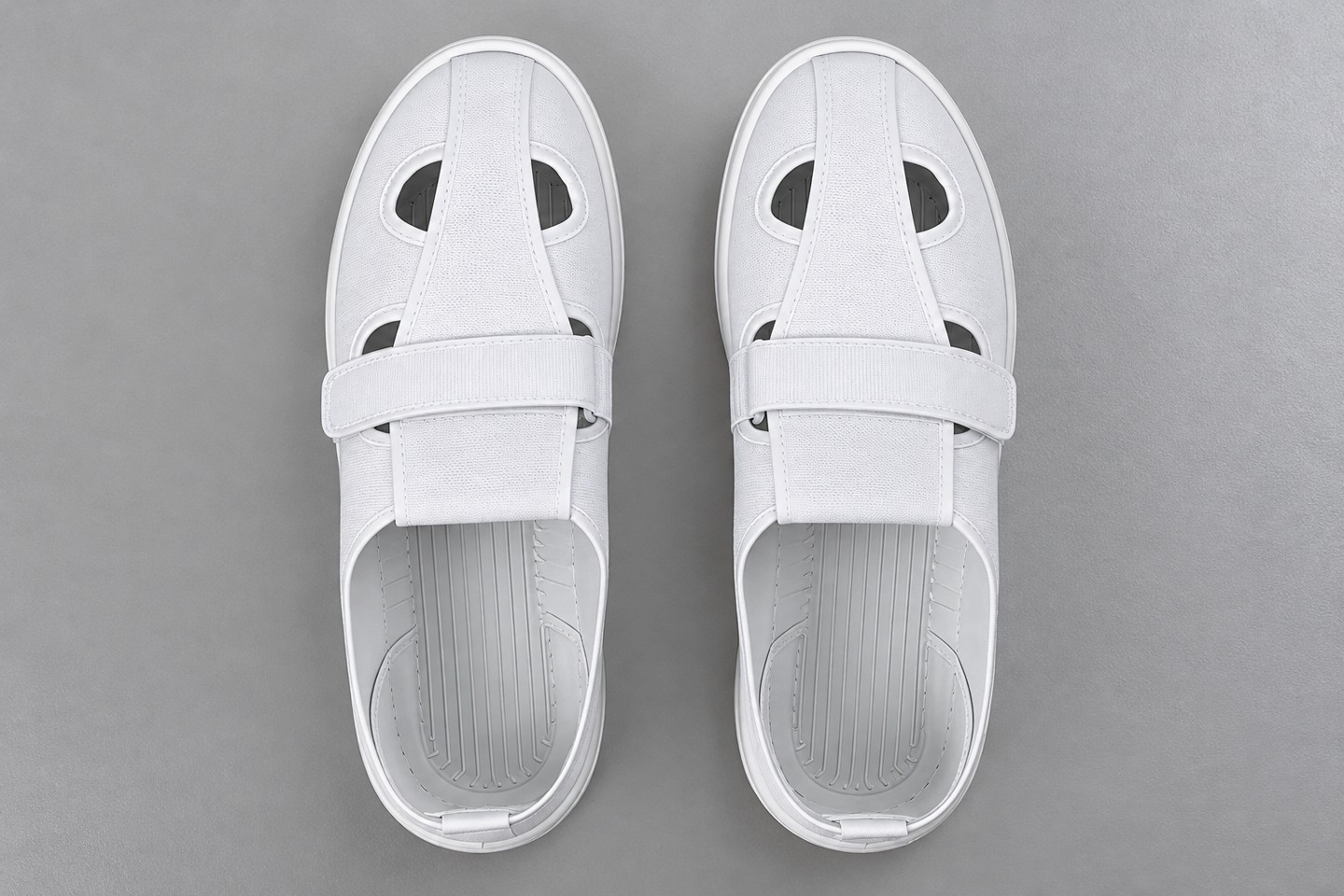
The SWESD ventilated cleanroom shoe provides a product identity with a visible internal footbed. Its photograph does not establish removability or approve an additional insole. Confirm those points with the supplier before attempting a change. Do not cut, glue, stack, or remove components based on a general online demonstration. An apparently reversible modification can still create an unapproved wearing arrangement.
Request the manufacturer's position in writing
Ask whether the exact shoe permits replacement or addition, which parts are supported, and what limitations apply. The response should identify the shoe and proposed component clearly. A general statement that the supplier also sells insoles is not evidence that every combination has been evaluated.
If an approved service part exists, request its model, size mapping, fitting instructions, and required checks. If the manufacturer prohibits the change or cannot support it, consider another authorized footwear option through the responsible team. Do not relabel an unsupported combination as equivalent merely because the replacement is marketed as antistatic or feels comfortable during a short trial.
Keep protective functions visible
The Canadian Centre for Occupational Health and Safety footwear guidance emphasizes choosing footwear for actual workplace hazards and reviewing the required protective functions. A component change must not be assumed irrelevant to fit or the required protective arrangement. Obtain appropriate advice and exact product evidence where such functions are needed.
This guide does not establish toe clearance, puncture protection, slip performance, chemical protection, or electric-shock protection for any modified shoe. An ESD claim addresses a different purpose from electrical insulation. Where the workplace requires protective footwear, the competent responsible owner should assess whether the proposed change is compatible with the required approved product.
Evaluate the electrical question as a changed assembly
The EOS/ESD Association material-control guidance describes personnel and footwear-flooring controls within the overall program. Apply that system perspective. A result for the original shoe does not automatically establish the required behavior after an internal component changes.
The shoe resistance testing guide explains the difference between material, complete footwear, and worn-system evidence. Identify the required method and acceptance decision with the ESD coordinator. Do not use an ordinary multimeter reading or one convenient entrance check as a substitute for whatever qualification the actual change requires.
Use a change-review matrix
| İnceleme noktası | Evidence needed | Avoid this assumption |
|---|---|---|
| Permission | Manufacturer position for exact shoe and component | Every footbed is removable |
| Identity | Shoe, size, revision and supported part | Similar-looking insoles are interchangeable |
| Protection | Applicable hazard and fit review | Comfort alone preserves protective functions |
| Electrical | Required evidence for changed arrangement | Original shoe result covers all substitutions |
| Control | Identifiable issue, care and replacement route | Approved combination will be remembered without records |
The matrix organizes the evidence needed for a decision. It does not imply that every change can be approved through the same checks. The exact manufacturer instructions, required protective functions, applicable ESD program, and intended task should determine the scope of review.
Keep each conclusion tied to the combination evaluated. If one shoe model and one supported replacement part are accepted, do not extend that result automatically to another size, a different sole construction, or a generic aftermarket part. Document any supported basis for extending the scope. Uncertainty should remain visible until the responsible owner resolves it.
Check fit and retention in the intended task
Where the proposed change is permitted, evaluate the actual fit and movements using the authorized process. Record closure operation, heel retention, contact, available space, and any issue relevant to the required use. A component can alter the wearing arrangement even when the external shoe looks unchanged.
Use representative safe work movements and the actual permitted route. Do not improvise a hazardous performance trial. Keep the test scope separate from a personal comfort preference: comfort feedback matters, but it cannot establish the separate protective and electrical requirements. Conversely, technical acceptance should not conceal an unresolved fit problem that prevents correct wearing during normal work.
Control preparation, floor and verification conditions
Identify the state in which the modified arrangement is evaluated. Record the exact shoe, proposed component, wearer arrangement where applicable, preparation, floor, conditions, method, equipment, and decision rule. Follow the approved procedure and retain deviations. Results from materially different arrangements should not be combined into one generic passed statement.
The ESD test report requirements guide provides a useful evidence structure. A report for the insole material alone may answer a material question while leaving the complete arrangement unresolved. Ask the evaluator to state that limitation clearly. Do not interpret an isolated number without knowing the path and specimen it represents.
Preserve the original construction information during the review, including which component was supplied and why a change was requested. If a component is removed through an authorized route, record that action rather than assuming it can later be restored without review. An apparently identical original part can have a different size or condition. The release record should describe the actual assembled state being issued, not simply say original shoe approved while leaving its internal components uncertain.
Keep the changed pair identifiable
If an arrangement is accepted, establish how the shoes and supported components are identified and issued together. Prevent an approved component from being replaced later by a similar-looking unsupported item. Record relevant fitting, review, and release information in a system that the workplace can maintain reliably.
Do not rely on workers remembering which change was approved several months earlier. Issue staff should have a clear product list and a response when identity is uncertain. If the approved combination cannot be confirmed, follow the site’s review route rather than accepting a verbal claim that the part is probably the same. Keep rejected or awaiting-review stock separate from accepted stock.
Include care, replacement and further changes
Obtain the supported care and replacement instructions for both shoe and component. Do not assume that a cleaning method accepted for one material is suitable for the entire assembly. Changes in fit, condition, component identity, floor, work route, or supplier information may require review under the approved program.
Define observable inspection and replacement triggers. A worn or damaged component should not be replaced informally with whatever is available that day. The footwear format comparison guide provides complementary task-based selection context if the original model cannot support the required arrangement. Selecting a different approved shoe may be more defensible than attempting to qualify an unsupported modification.
Educational context and final release
The following EOS/ESD Association introductory lecture explains why personnel and material controls need a coordinated approach. It does not recommend insoles, provide medical advice, or approve a modified shoe. Use the manufacturer’s exact instructions and the required technical review for the actual combination.
The final release record should identify the shoe, permitted component, size mapping, fitting instructions, required protective and electrical evidence, evaluated task and floor, inspection rules, and change controls. If the proposed combination remains unsupported, record that specific gap and use an authorized alternative. The useful outcome is an identifiable approved arrangement, not a broad claim that every antistatic insole preserves every ESD shoe’s original performance.
Sık sorulan sorular
Can any antistatic insole be added to an ESD shoe?
No. Confirm manufacturer permission and qualify the exact changed arrangement.
Does a picture prove the footbed can be removed?
No. Obtain the exact product instructions before changing components.
Does this guide recommend medical insoles?
No. Health-related needs belong in the appropriate occupational-health and safety process.
Does one entrance check replace all change qualification?
Not automatically. Follow the actual applicable method and approved program requirements.
What if the supplier cannot support the proposed combination?
Record the gap and use an authorized alternative rather than claiming equivalence.
Bir Yorum Bırakın