- เทอร์โบ
- บล็อก
A disposable shoe cover collection point should let people remove and discard used covers in the approved exit sequence without returning them to fresh supply or obstructing the route. Start with the site’s actual gowning and degowning procedure, then position the receptacle and replenishment stock around that sequence. There is no universal rule that every bin belongs on the same side of every cleanroom doorway. This guide proposes a layout review for electronics workplaces; it does not classify waste, establish biological protection or qualify the electrical performance of a worn shoe-cover system.
Begin with the exit sequence, not the bin catalogue
Write down what a person does when leaving the controlled area. Include removal of reusable garments, handling of personal items, removal of disposable covers and the next destination. Identify where each action is authorized to occur and which surfaces people touch. A collection point that looks convenient in an empty room can be awkward when staff leave together or carry items. Observe the real sequence before deciding what equipment is needed.
เดอะ Stanford cleanroom gowning instructions illustrate that disposal location is part of a specific facility procedure. They should not be copied as a universal electronics-factory rule. Use your own boundary definitions, environmental controls and waste arrangements. If the written instructions and current behavior differ, resolve the discrepancy with the responsible person before moving a receptacle and creating a third, unofficial arrangement.
Distinguish fresh supply, used covers and reusable garments
These are separate flows even when they occupy a small change area. Fresh covers need an identifiable protected supply point. Used disposable covers need their designated collection stream. Reusable garments need the appropriate return or storage route. Do not place all three in similar unmarked containers and expect workers to distinguish them during a busy shift. Keep the meanings clear through the site’s approved labels and instructions.
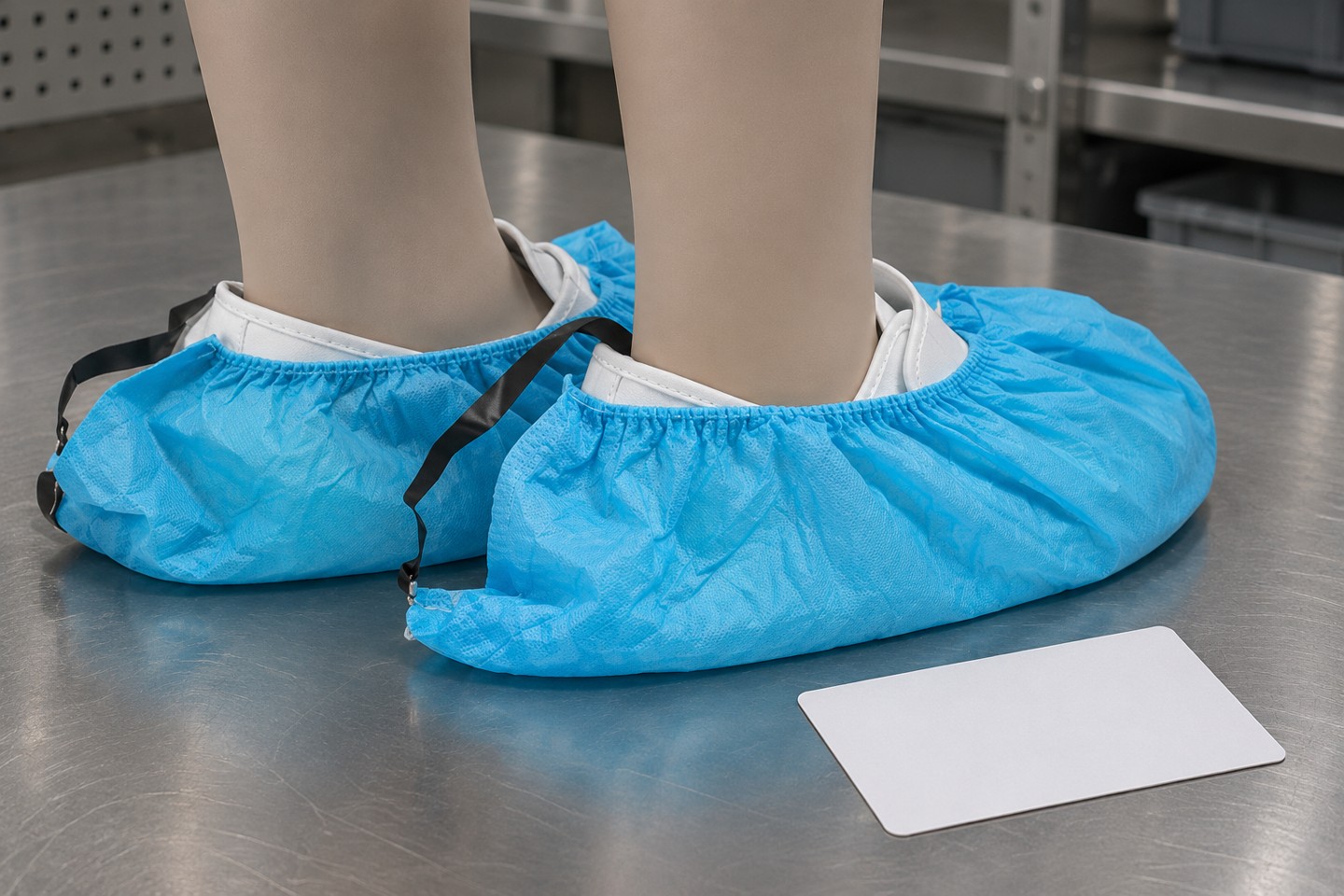
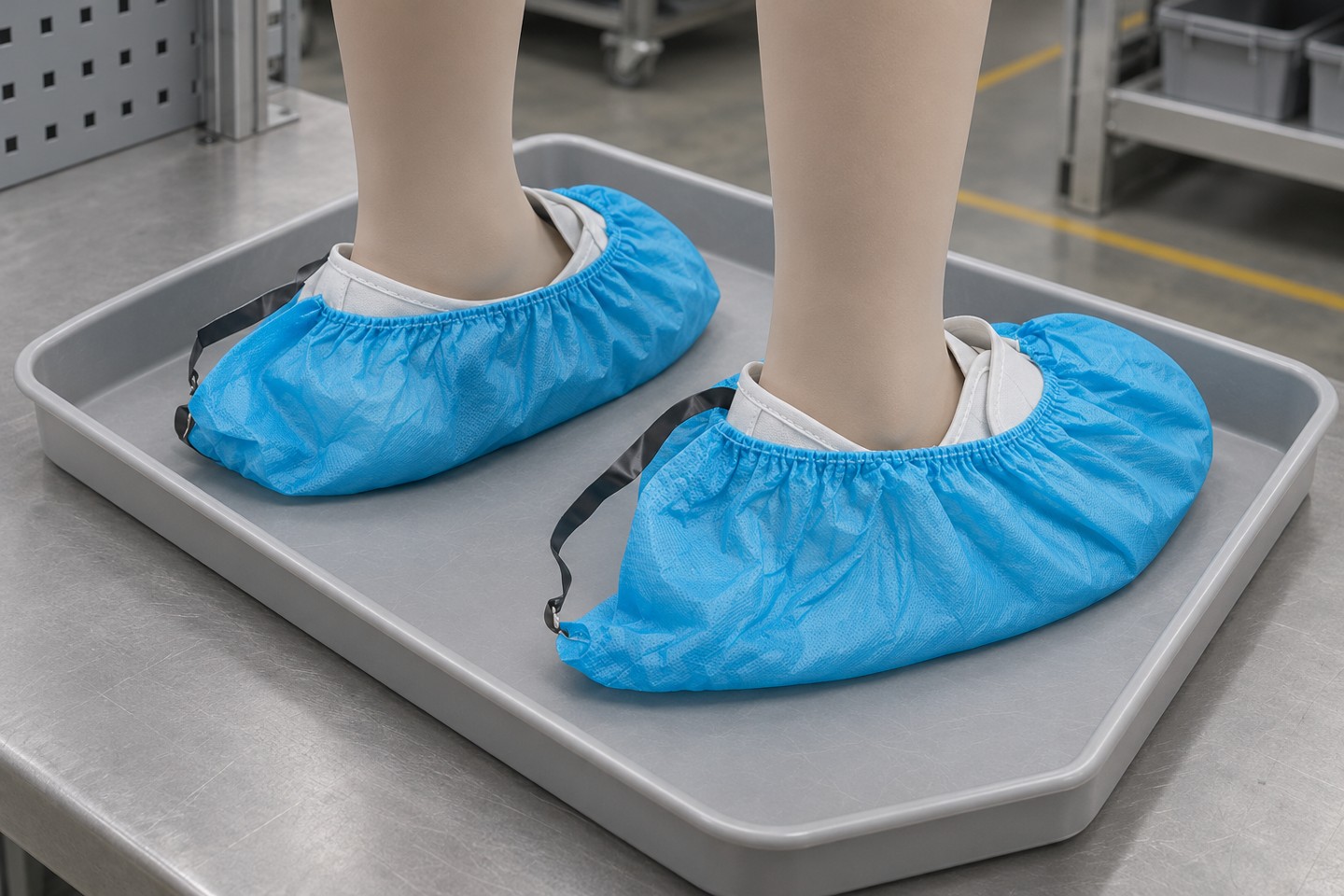
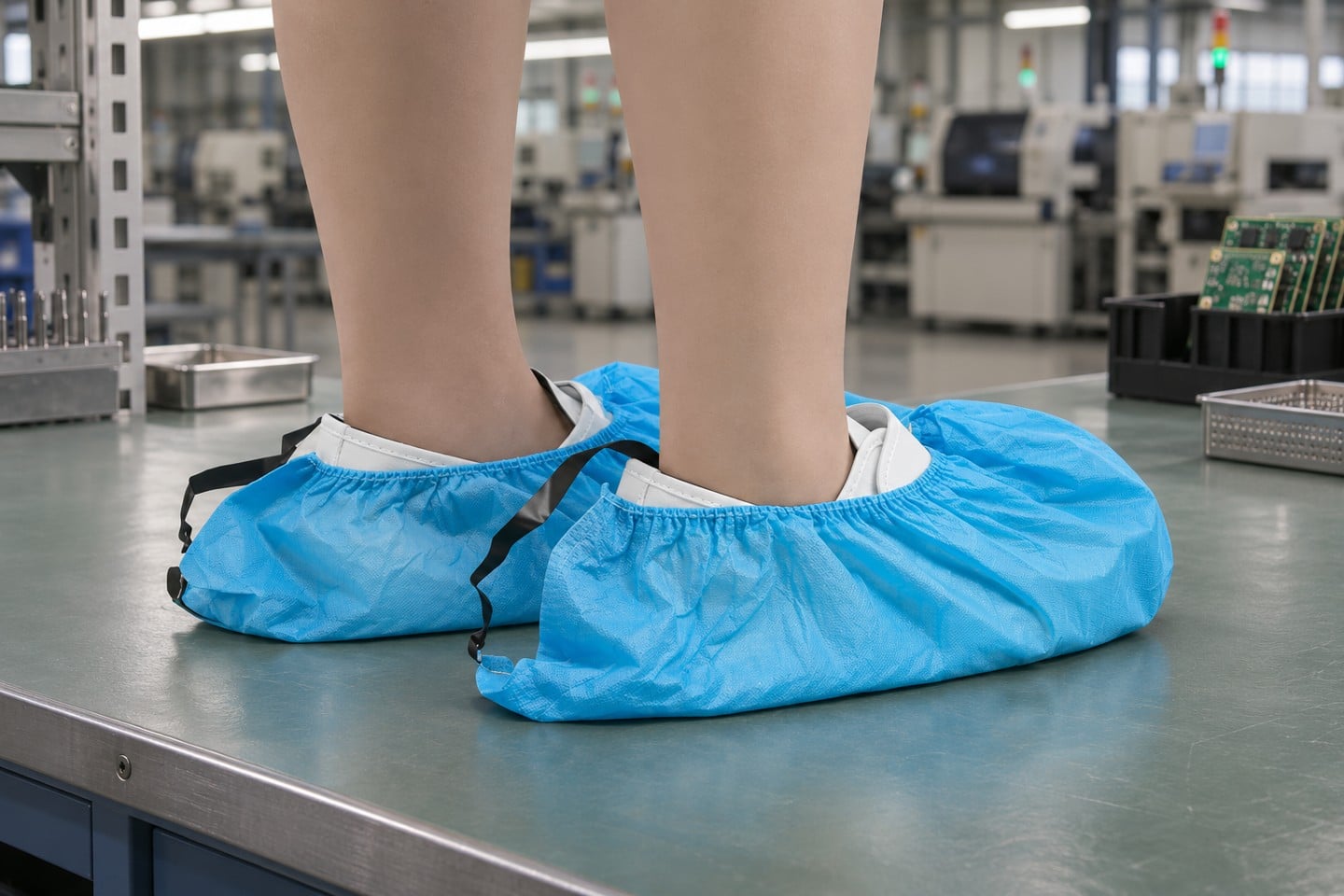
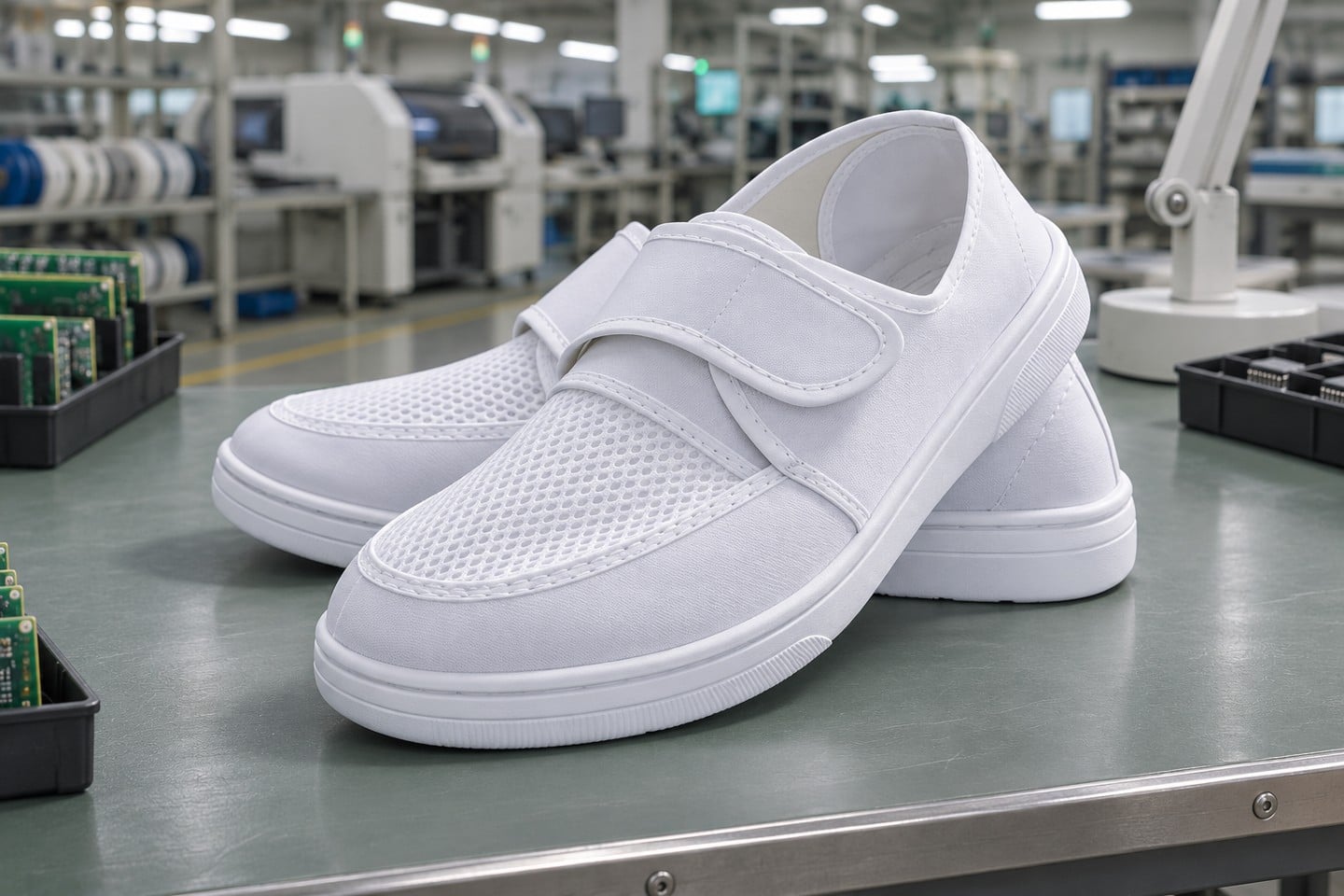
เดอะ SWESD disposable anti-static shoe cover product is the visual reference for this article. Its appearance does not establish sterility, chemical resistance or suitability for hazardous waste work. Electrical use is addressed separately in the shoe-cover system qualification guide. A useful disposal layout cannot compensate for an unqualified product or a missing decision about the intended waste stream.
Map the point where covers become used material
On a simple floor sketch, mark the doorway, bench if present, fresh cover supply, removal position, receptacle and exit path. Add the expected direction of movement. The sketch should reflect the approved procedure rather than an idealized layout. Identify whether a person has to turn around, reach over fresh stock or cross a boundary again to find the collection point. Those observations reveal practical problems that a bin capacity specification cannot answer.
Discuss the sequence with the people who use and service the area. Ask where visitors receive instructions, how contractors leave and what happens during the busiest handoff. Include staff with differing reach and mobility requirements in the workplace assessment. Do not prescribe a universal bin height or distance without evaluating the actual arrangement. The goal is a usable, unobstructed sequence that the site can maintain consistently.
Evaluate layout choices with a concrete table
The following table is a proposed review aid. It is not a cleanroom standard, waste classification rule or specification for a certified installation. Apply it alongside the site’s accepted gowning procedure and facilities requirements, and record the decision for each relevant route.
| รายการที่ต้องตรวจสอบ | Observe in the actual sequence | คำถามการรับรอง |
|---|---|---|
| Removal position | Where people remove used covers | Does this match the approved procedure? |
| Fresh supply | How stock is withdrawn and replenished | Is used material kept separate? |
| Collection opening | How covers enter the receptacle | Can the intended sequence be followed reliably? |
| Walking route | Door movement and shift traffic | Is circulation unobstructed? |
| Waste handoff | Liner closure and removal route | Is the collection stream approved? |
| Servicing owner | Busy period checks and fallback | Who resolves a full or missing receptacle? |
Assign one person to accept the layout and separate owners for replenishment and waste collection where appropriate. Shared responsibility should not mean no responsibility. State what happens if the receptacle is unavailable or the fresh stock is exhausted. The fallback must preserve the approved sequence rather than invite people to leave used covers on a bench while someone looks for a liner.
Select the receptacle for the defined process
Confirm what material will enter the receptacle, how it will be lined, how it will be cleaned and how waste will be removed. Review the opening and operating method against the approved removal sequence. A receptacle should not require contact with an uncontrolled surface merely because its catalogue description calls it convenient. Equally, an unfamiliar mechanism should not be introduced without checking that workers and collection staff can operate it reliably.
เดอะ คู่มือการทำความสะอาด CCOHS supports planned waste handling, storage and clear circulation as general workplace principles. It does not establish the cleanliness class of a receptacle or tell a particular factory how to classify its waste. Ask the relevant site owner to decide whether ordinary, hazardous or another controlled collection stream applies before ordering containers and liners.
Keep the emptying route out of the fresh supply flow
Follow the waste bag from the receptacle to its next collection point. Determine how it is closed, moved and replaced, and whether that movement conflicts with fresh cover replenishment. Avoid treating the exit bin as the end of the process when its contents still have to pass through the area. Identify the approved route and any required cleaning or handling steps for the people performing this work.
Plan service around observed demand, not a guessed permanent interval. Record the collection condition during a representative operating period, including a busy shift change. Adjust the servicing arrangement through the responsible owner if the collection point regularly becomes unavailable. Do not interpret a bag count as a cleanliness measurement or assume that a larger receptacle automatically resolves poor placement and unclear ownership.
Protect the supply point during replenishment
Keep opened fresh stock identifiable and protect it according to its supplied instructions and site procedure. Staff should be able to replenish covers without resting new packs on the used-material container. Review the staging surface, pack opening method and treatment of outer packaging. A tidy finished shelf can hide an uncontrolled replenishment step if nobody observes how the stock arrived there.
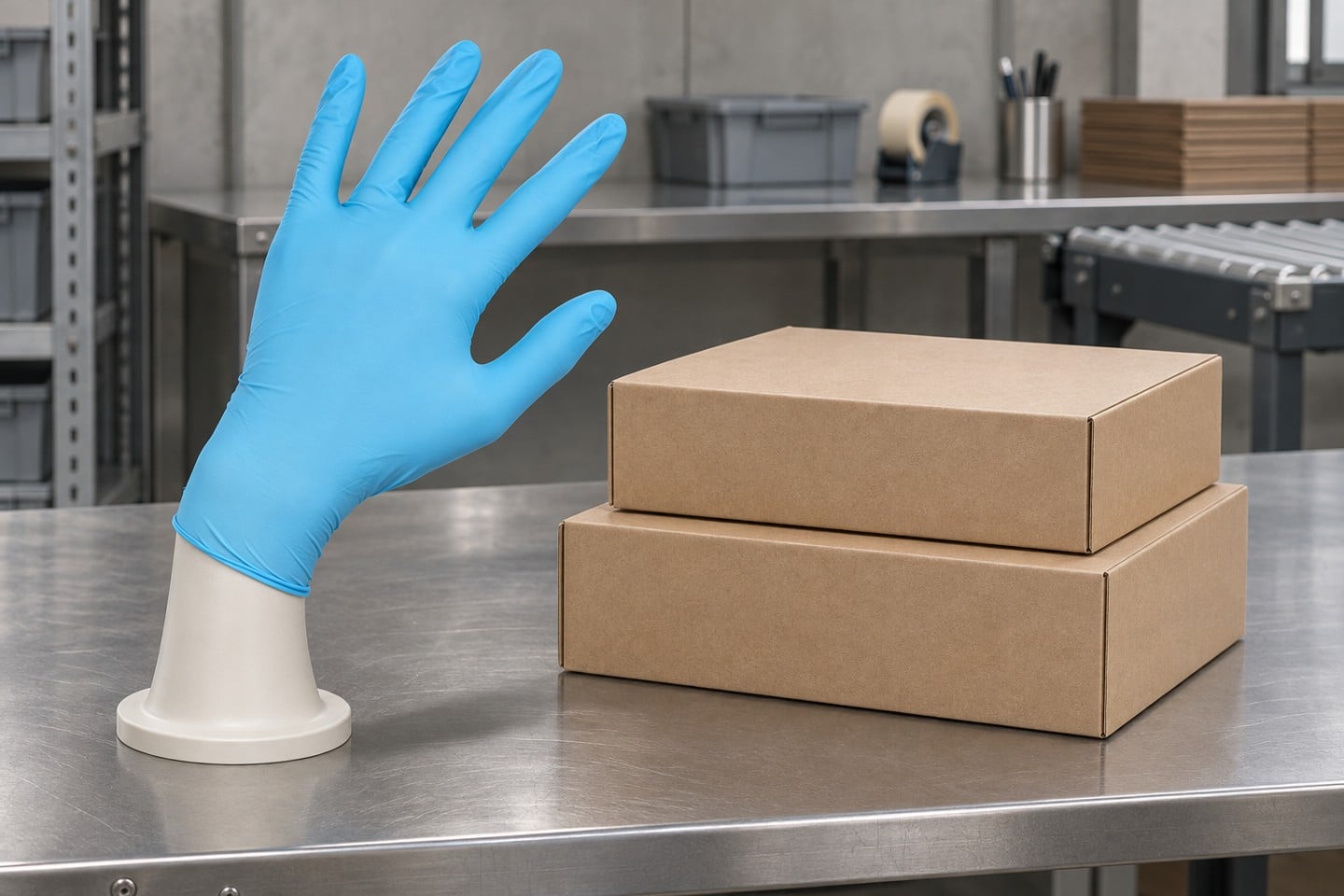
Use the same care with nearby consumables. The cleanroom glove dispenser replenishment guide explains complementary identity and handoff questions for fresh supply. Its glove-specific details are not shoe-cover instructions. The shared operational lesson is to keep the supplied item, opened stock and responsible replenishment role traceable instead of mixing anonymous loose consumables from several sources.
Separate cover disposal from other exit waste
If the site collects several waste types in one area, confirm which materials share a stream and which must remain separate. Do not assume a used sticky-mat sheet, a solvent-wetted wipe and a disposable shoe cover have identical handling requirements. Their previous use and the site’s waste decisions may differ. Make the collection arrangement consistent with those decisions rather than relying solely on container color.
เดอะ คำแนะนำการกำจัดแผ่นแปะกาวใช้แล้ว ครอบคลุมการส่งมอบสิ่งของใช้ที่แตกต่างกันซึ่งอาจเกิดขึ้นใกล้กับการเปลี่ยนถ่ายเดียวกัน จัดเส้นทางให้การนำของเสียออกไปโดยไม่ขัดขวางกระบวนการที่ได้รับอนุมัติอื่น ๆ คงการคืนเสื้อผ้าที่นำกลับมาใช้ใหม่ให้แตกต่างกันด้วย โดยเฉพาะในกรณีที่ถุงหรือกล่องเก็บของดูคล้ายกันและพนักงานใหม่อาจไม่รู้ความแตกต่าง.
ทดสอบลำดับที่เสนอไว้ก่อนการติดตั้งถาวร
ดำเนินการเดินตรวจสอบอย่างมีการควบคุมโดยใช้วัสดุสาธิตที่สะอาดและเส้นทางที่ตั้งใจไว้จริง สังเกตลำดับตั้งแต่การถอดฝาครอบจนถึงการกำจัด การเคลื่อนที่ออกจากสถานีและการเข้าถึงบริการ รวมถึงประตูในตำแหน่งการทำงานปกติและอุปกรณ์ที่ยังคงอยู่ใกล้เคียง บันทึกความขัดแย้งใด ๆ กับพื้นที่เข้าใกล้ การจัดการเสื้อผ้า การเข้าถึงการทำความสะอาด หรือเส้นทางออก หยุดและปรับปรุงการจัดวางที่ไม่เหมาะสมแทนที่จะสอนให้คนทำงานรอบ ๆ มัน.
กำหนดว่าสามารถแสดงอะไรได้บ้างจากการทดลอง มันสามารถแสดงให้เห็นว่าคนสามารถปฏิบัติตามลำดับที่ตั้งใจไว้ได้หรือไม่ และภาชนะสามารถให้บริการภายใต้เงื่อนไขที่สังเกตได้หรือไม่ มันไม่ได้พิสูจน์ระดับความสะอาดของห้องคลีนรูม เส้นทางกราวด์ไฟฟ้า หรือการลดการปนเปื้อนที่วัดได้ คำถามเหล่านี้ต้องการการประเมินและหลักฐานของตนเอง บันทึกการเดินตรวจสอบให้เฉพาะเจาะจงพอที่จะเปรียบเทียบกับการเปลี่ยนแปลงการวางผังในภายหลัง.
ใช้การฝึกอบรมที่ตรงกับการจัดวางที่ติดตั้งไว้
ฝึกอบรมเจ้าหน้าที่ปฏิบัติการและเจ้าหน้าที่บริการโดยใช้สถานีจริง อธิบายแหล่งจ่ายใหม่ การกำจัดฝาครอบที่ใช้แล้ว การเก็บเสื้อผ้าที่นำกลับมาใช้ใหม่ และการตอบสนองที่ได้รับอนุมัติเมื่อภาชนะเต็มหรือขาดแคลน แสดงเส้นทางออกที่จำเป็นให้ผู้มาเยือนทราบก่อนที่จะต้องใช้ หลีกเลี่ยงการวางโปสเตอร์ชุดคลุมทั่วไปข้างคำแนะนำที่ระบุลำดับที่แตกต่างกัน การฝึกอบรมที่ขัดแย้งกันอาจทำลายการวางผังที่วางแผนไว้อย่างรอบคอบ.
วิดีโอการแต่งกายของ Georgia Tech IEN ให้บริบททางการศึกษาเกี่ยวกับการจัดการเสื้อผ้าอย่างมีการควบคุมและบทบาทของลำดับที่กำหนดไว้ โครงสร้างสถานีของมันไม่ได้อนุมัติสถานที่จุดเก็บรวบรวมของคุณ แสดงประสิทธิภาพไฟฟ้าของผลิตภัณฑ์นี้ หรือแทนที่คำแนะนำการถอดเสื้อผ้าท้องถิ่น เปรียบเทียบกับขั้นตอนของสถานที่แทนที่จะให้พนักงานนำลำดับที่สองจากวิดีโอไปใช้.

บันทึกเจ้าของเอกสารและทบทวนหลังจากมีการเปลี่ยนแปลง
บันทึกตำแหน่งที่ได้รับอนุมัติ แบบร่างเส้นทาง การไหลของการเก็บรวบรวม ภาชนะและลายเส้นของถังบรรจุภัณฑ์ เจ้าของการให้บริการ และเจ้าของสต็อกใหม่ ระบุวันที่ฝึกอบรมและการสังเกตที่สนับสนุนการรับรอง รวมถึงสิ่งที่อยู่นอกเหนือการตรวจสอบ เช่น การตรวจสอบสิ่งแวดล้อมหรือการรับรองผลิตภัณฑ์ รายงานการรับรองที่สั้นและแม่นยำมีประโยชน์มากกว่าข้อความทั่วไปที่ระบุว่าสถานที่เป็นไปตามข้อกำหนดของห้องคลีนรูม.
ทบทวนการจัดวางหลังจากมีการเปลี่ยนแปลงประตู รูปแบบกะงานใหม่ การเปลี่ยนแปลงในฝาครอบ หรือการเปลี่ยนแปลงในการเก็บรวบรวมของเสีย ตรวจสอบการใช้งานจริงในเวลาสั้น ๆ หลังจากดำเนินการเพื่อจับการส่งมอบที่พลาด หากฝาครอบใช้แล้วปรากฏอยู่ข้างสต็อกใหม่ ให้ตรวจสอบลำดับและความพร้อมก่อนตำหนิพฤติกรรมของแต่ละบุคคล เป้าหมายคือกระบวนการที่คนสามารถปฏิบัติตามได้อย่างน่าเชื่อถือ โดยสนับสนุนด้วยความรับผิดชอบที่ชัดเจนและหลักฐานที่เหมาะสม.
คำถามที่มักถูกถาม
ถังรองเท้าครอบทุกใบต้องอยู่ภายในห้องเปลี่ยนเสื้อผ้าหรือไม่?
ไม่มีตำแหน่งที่ใช้ได้กับทุกสถานที่ ตั้งตำแหน่งบนพื้นฐานของลำดับการนำออกจากสถานที่ที่ได้รับอนุมัติ ขอบเขต และการจัดการของเสีย.
สามารถส่งคืนฝาครอบที่ใช้แล้วไปยังภาชนะจัดเก็บของใหม่ได้หรือไม่?
แยกวัสดุที่ใช้แล้วออกจากวัสดุใหม่และปฏิบัติตามคำแนะนำเกี่ยวกับรายการที่ใช้แล้วทิ้งและขั้นตอนของสถานที่.
เลย์เอาต์นี้มีคุณสมบัติในการป้องกันรองเท้าคลุม ESD หรือไม่?
ไม่ใช่. คุณสมบัติด้านไฟฟ้าของระบบที่ใช้งานจริงเป็นการประเมินแยกต่างหาก.
สามารถให้ขยะที่ออกทั้งหมดใช้ภาชนะเดียวกันได้หรือไม่?
เฉพาะเมื่อการประเมินสถานที่รับผิดชอบอนุญาตให้ใช้เส้นทางเดียวกัน การใช้งานก่อนหน้านี้และข้อกำหนดเกี่ยวกับของเสียในท้องถิ่นอาจแตกต่างกัน.
อะไรที่ควรตรวจสอบในการเดินตรวจสอบการวางผัง?
สังเกตการถอดฝาครอบ การกำจัด การเคลื่อนย้ายออก การเข้าถึงสต็อกใหม่ การเคลียร์ประตู และการบำรุงรักษาภายใต้เงื่อนไขการใช้งานที่ตั้งใจไว้.
แสดงความคิดเห็น