- เทอร์โบ
- บล็อก
SMT reel storage tray dimensions should be selected from the actual reel diameter, overall width, flange shape and required handling clearance. A nominal reel size alone does not establish compatibility. Check how the carrier supports the flange, whether adjacent reels touch, and whether an operator can remove the intended reel without disturbing another lot. For purchasing, approve a drawing and a physical fit trial using representative production reels before releasing a tray specification. Electrical suitability remains a separate acceptance item: dimensional fit does not establish ESD performance, moisture protection or suitability for every component packaging system.
Define the reel population before measuring the tray
Begin with the reels that the store actually receives, including partial reels returned from a production line. Record the supplier packaging identification, component package, reel diameter and overall width. Include unusual flange profiles, damaged incoming packaging that must be quarantined, and labels protruding beyond the flange. The objective is a controlled compatibility list, rather than a tray described as suitable for every reel.
Separate nominal dimensions from measured extremes. A catalogue description may identify a reel family while leaving tolerance, flange flexibility and label position unspecified. Ask the packaging supplier for the current drawing where available. Measure several representative reels without squeezing the flanges together. Keep the measurement method and the sample identity with the fit record so that a later purchaser can reproduce the decision.
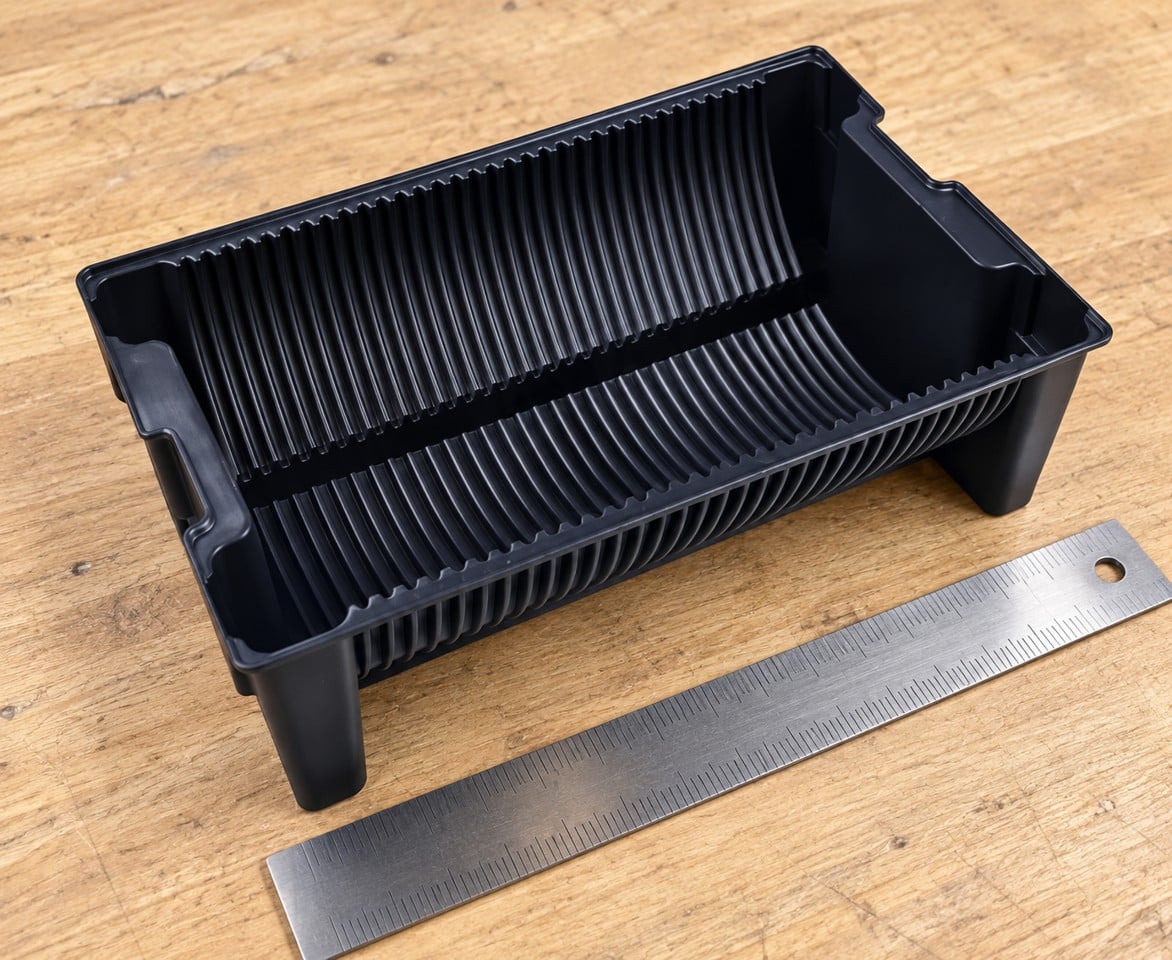
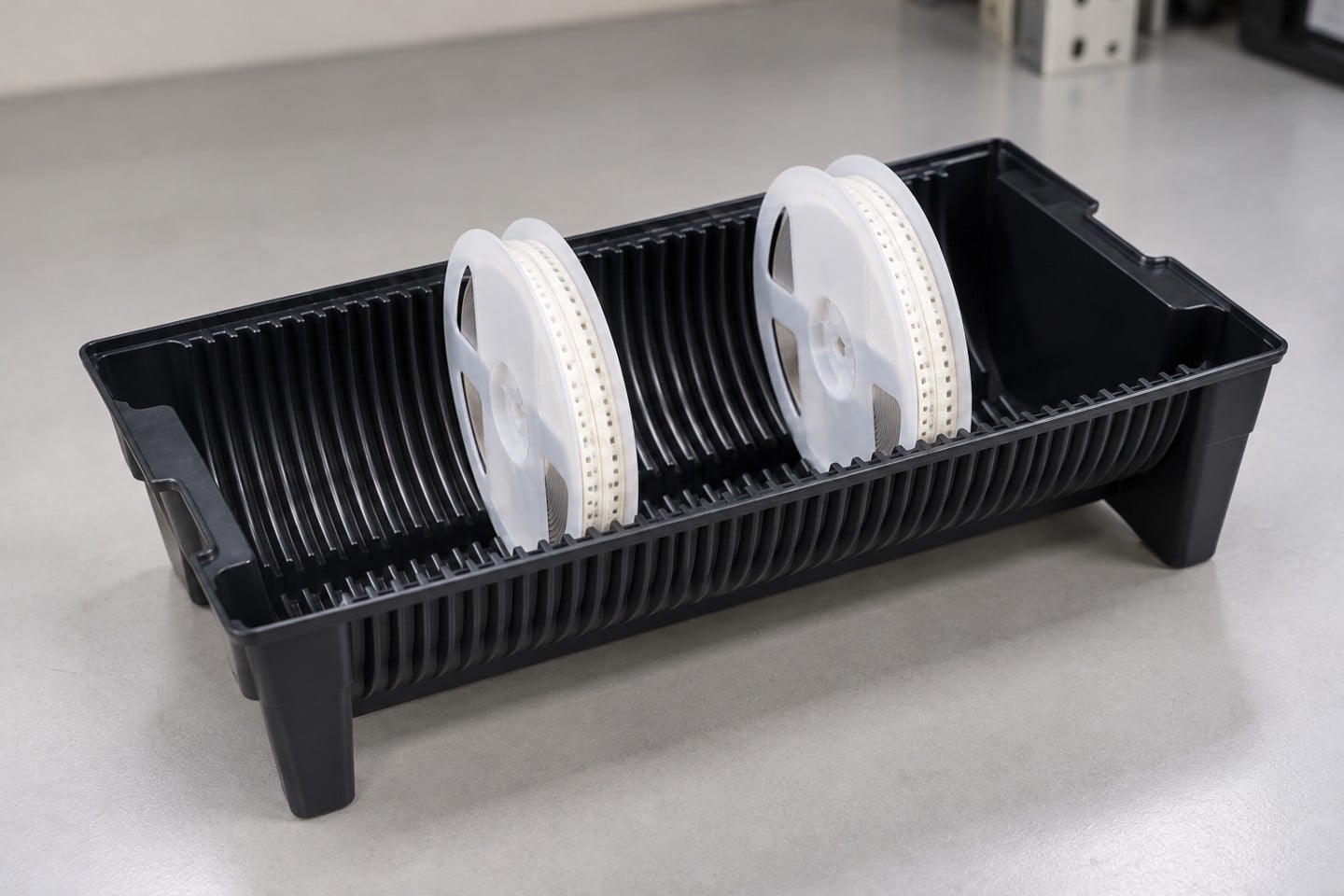
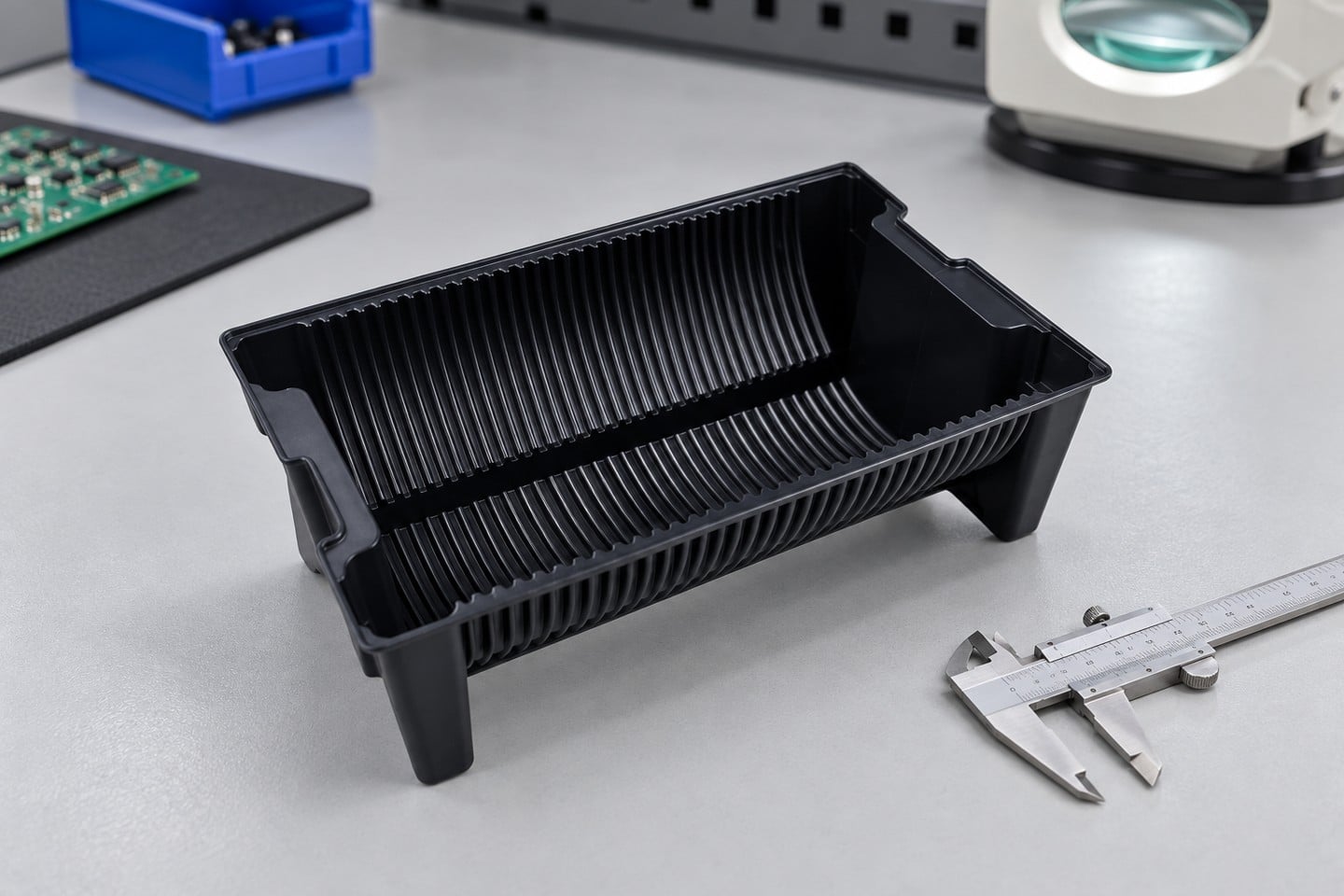
เดอะ SWESD SMT reel storage tray provides a relevant carrier format for this review. Its product photograph shows an open, grooved support arrangement. A photograph does not prove the usable dimensions, number of compatible reels or allowable load. Request the current model drawing and confirm those details against samples instead of estimating them from the image.
Distinguish outside dimensions from usable support space
Outside length, width and height determine whether a carrier fits a shelf, trolley or workstation. Usable internal space determines whether it accepts the reels. These are separate checks. A carrier can fit neatly in a rack yet leave insufficient clearance for a wide reel or an operator’s hand. Conversely, a carrier that accepts the reels may protrude into an aisle when placed on an existing shelf.
Identify which surfaces actually contact the reel. For a grooved carrier, check the slot opening, groove profile, spacing between intended positions and the depth of the supporting region. Do not assume that every visible rib represents a separate usable reel position. The intended arrangement must come from the supplier’s drawing and the fit trial. Count only positions that remain usable with the approved reel population.
Check the lowest part of the reel and any protruding tape or label against the tray base. The flange should sit as intended without forcing the component tape against a hard edge. If the contact arrangement is unclear, pause the dimensional approval and request clarification. Solving a clearance problem by cutting a carrier or bending a reel creates a changed configuration requiring another review.
Build a practical dimensional acceptance table
Use the following qualitative checks as a receiving and trial framework. They do not prescribe universal tolerances. Set actual limits from the approved drawing, packaging requirements and observed handling conditions. Record the instrument, sample and drawing revision beside each result so the table becomes evidence rather than a list of impressions.
| Check | Record | Release question |
|---|---|---|
| Reel envelope | Drawing and measured diameter and width | Are extremes represented? |
| Support contact | Approved groove and flange arrangement | Is tape clear of unintended contact? |
| Adjacent clearance | Widest permitted loaded combination | Can reels be retrieved without interference? |
| Storage envelope | Shelf and workstation clearances | Does the carrier rest on the approved supports? |
| การควบคุมการเปลี่ยนแปลง | Model and packaging revisions | Is another fit trial needed? |
A good fit record includes both an observation and a decision. For example, record that a labelled partial reel could be inserted and retrieved without catching its label, then identify who approved that condition. Writing only “fits” hides what was tested. A later change in label stock or reel supplier could otherwise pass unnoticed even though it changes usable clearance.
Run the fit trial with mixed and partial reels
Start with an empty, identified carrier on a stable work surface. Inspect for sharp damage, loose debris, distortion or contamination before introducing packaging. Insert one representative reel using the intended motion. Observe where its flange contacts the support and whether its centre remains stable. Do not force a tight reel into a groove or use loaded component packaging as a gauge for an unknown opening.
Next, populate the intended neighbouring positions with the widest approved combination. Check reel-to-reel contact, label visibility and access to the selected reel. Include both full and partial reels where these occur in production. A partial reel can have a different balance or a retained tape end that changes handling, even though its nominal outside diameter matches an incoming full reel.
Repeat removal from the least accessible position. The operator should use the approved handling method and required gloves. Record any need to lift another reel, drag a flange against a wall or grasp exposed tape. These observations can change the usable capacity. The purchasing capacity should reflect the validated arrangement, rather than the largest number that can physically be squeezed into the carrier.
Check the surrounding shelf and transfer route
Measure shelf depth and width at the intended position, including uprights, lips and nearby obstructions. Confirm how the carrier rests on the shelf and whether the support is continuous or limited to rails. Obtain the permitted support arrangement and load information from the responsible suppliers. Carrier dimensions cannot be used to calculate a load rating without the relevant design evidence.
Walk through the transfer route with an approved representative setup. Consider trolley lips, doors, bench edges and the place where an operator changes grip. A carrier that fits the storage shelf may still be awkward to place on a narrow line-side bench. Keep the tray level during the trial and follow the site’s manual handling procedures; this article does not establish a safe lifting limit.
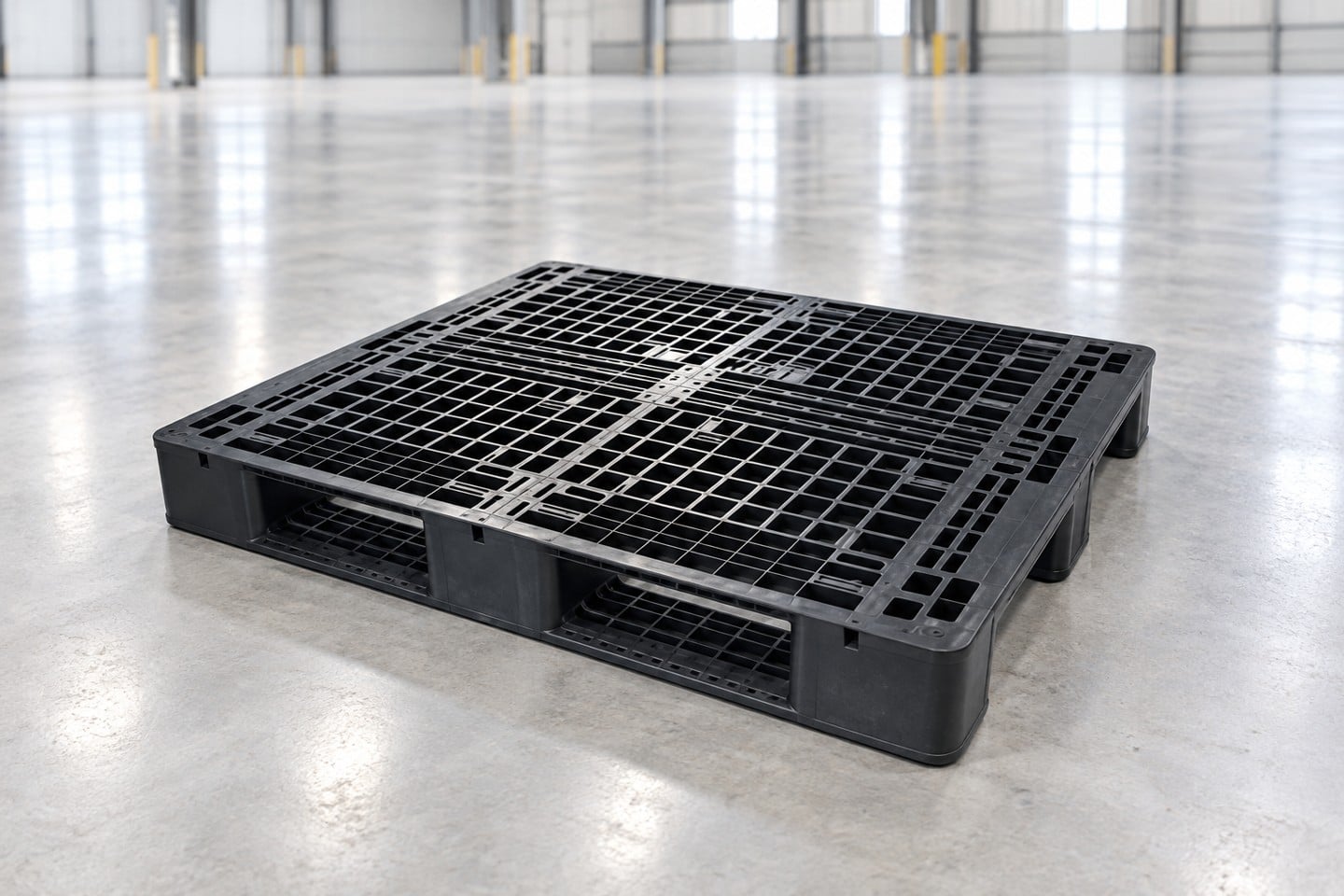
Do not introduce stacking simply because the tray has feet or raised end walls. Stackability, permitted stack configuration and access are separate questions. If stacked storage is intended, request written support and load instructions and evaluate the complete arrangement. An image of several empty products together is not evidence that loaded carriers may be stacked in service.
Keep dimensional fit separate from electrical approval
A black carrier is not automatically suitable for an ESD protected area. The EOS/ESD Association’s control procedures overview explains why the handling environment and protective materials form part of an ESD control program. Select applicable verification methods and acceptance criteria through the site’s responsible ESD function. Do not treat a dimensional trial as an electrical test.
Likewise, an open carrier does not replace the packaging required for transport outside an approved protected environment or moisture-sensitive component storage. Establish which packaging remains around the component and what protection is required at each transfer. If bags or other packaging are retained in the carrier, include their dimensions and labels in the compatibility trial instead of assuming that a bare reel fit covers the packaged assembly.
The educational video below introduces the electrical-control context. It does not demonstrate dimensional inspection of this tray or qualify its material. For documented acceptance, use the site’s approved procedures and the exact supplied model. The ESD test report requirements guide can help organize the separate evidence request.

Convert the trial into a purchasing specification
The request for quotation should identify the carrier model, drawing revision, approved reel families, usable arrangement and required shelf envelope. Add the expected cleaning process, operating environment and any packaging that stays with the reels. Ask the supplier to state which claims are supported and which arrangements require evaluation. Avoid replacing missing evidence with an unqualified description such as universal ESD storage.
Specify how substitutions are handled. A change in mould, groove geometry, resin system or supplier packaging can affect the approved configuration. Require notification of relevant changes and define when another sample trial is needed. Receiving staff should have access to the approved drawing and photographs of the intended support arrangement, rather than relying on a previous purchaser’s memory.
เดอะ EOS/ESD Association’s training and auditing guidance supports the wider need for repeatable practices and review. Apply that principle by assigning ownership of the compatibility list and keeping rejected combinations visible. A failed reel family should remain explicitly excluded until a documented change resolves the issue; silence in the list should not be interpreted as approval.
Common errors that make a tray seem larger than it is
Counting grooves without checking reel width overstates capacity. Measuring an empty carrier without considering hand access overstates usable space. Testing only the easiest reel hides the extremes. Comparing outside dimensions from one supplier with internal dimensions from another creates a misleading price comparison. Correct each error by stating the dimension definition and the actual loaded arrangement used in the trial.
Another mistake is treating a successful first sample as permanent approval. Keep the component FIFO and traceability checks alongside dimensional records, because a label change can affect retrieval even when the reel body is unchanged. Review high-mix component storage practices when assessing partial reels. These checks address related handling risks without replacing the dimension drawing.
Before ordering production quantities, agree how the first shipment will be checked and who can release it. Retain an identified approved sample where practical, together with the drawing and trial record. If a later delivery differs, quarantine the uncertain configuration and compare the changed features. This is more reliable than trying to recover a dimensional decision from a product photograph after the reels are already on the line.
คำถามที่มักถูกถาม
Is nominal reel diameter enough to choose a tray?
No. Check overall width, flange geometry, retained packaging, support contact and handling clearance using the actual reel population.
Can every groove be counted as a usable position?
Only positions approved for the intended loaded arrangement should be counted. Reel width and retrieval access can reduce usable capacity.
Does a fit trial establish ESD suitability?
No. Electrical acceptance requires separate evidence and verification under the applicable ESD control program.
May loaded carriers be stacked?
Use only a supplier-supported, approved stack arrangement with the required load and support evidence. Feet alone do not establish stackability.
What should trigger another dimensional review?
Review relevant changes to the carrier drawing, reel packaging, label position, retained packaging or handling arrangement.
แสดงความคิดเห็น