- Турбо
- Блог
An electrostatic field meter with a frozen reading may simply be displaying a held snapshot. On the FMX-003 versions described in the operating instructions cited below, HOLD stops the displayed measurement from updating; releasing HOLD resumes measurement. Check the mode indicator before treating an unchanged number as a sensor fault. Preserve the observation, use the instructions supplied with your exact instrument, and take a new reading under the approved measurement conditions. A held value cannot tell you what is happening at a different location, and releasing it does not prove that the instrument is calibrated or suitable for a particular acceptance test.
Separate a saved-looking display from a live observation
An operator measures a charged surface, moves to a second station and sees the same number. Without checking the instrument mode, the team may conclude that both stations have identical conditions. That conclusion is not supported if HOLD remained active. The first display belongs to the earlier observation. Moving the instrument changes the location of the instrument, but it does not turn a retained value into a measurement of the new target.
Start by recording the target, time, displayed units, visible indicators and whether a button was pressed. If the previous measurement supports a quality record, capture that information before changing modes. Do not write a guessed second location beside the retained value. If the original location is uncertain, describe that uncertainty and take a fresh observation rather than inventing a missing association.
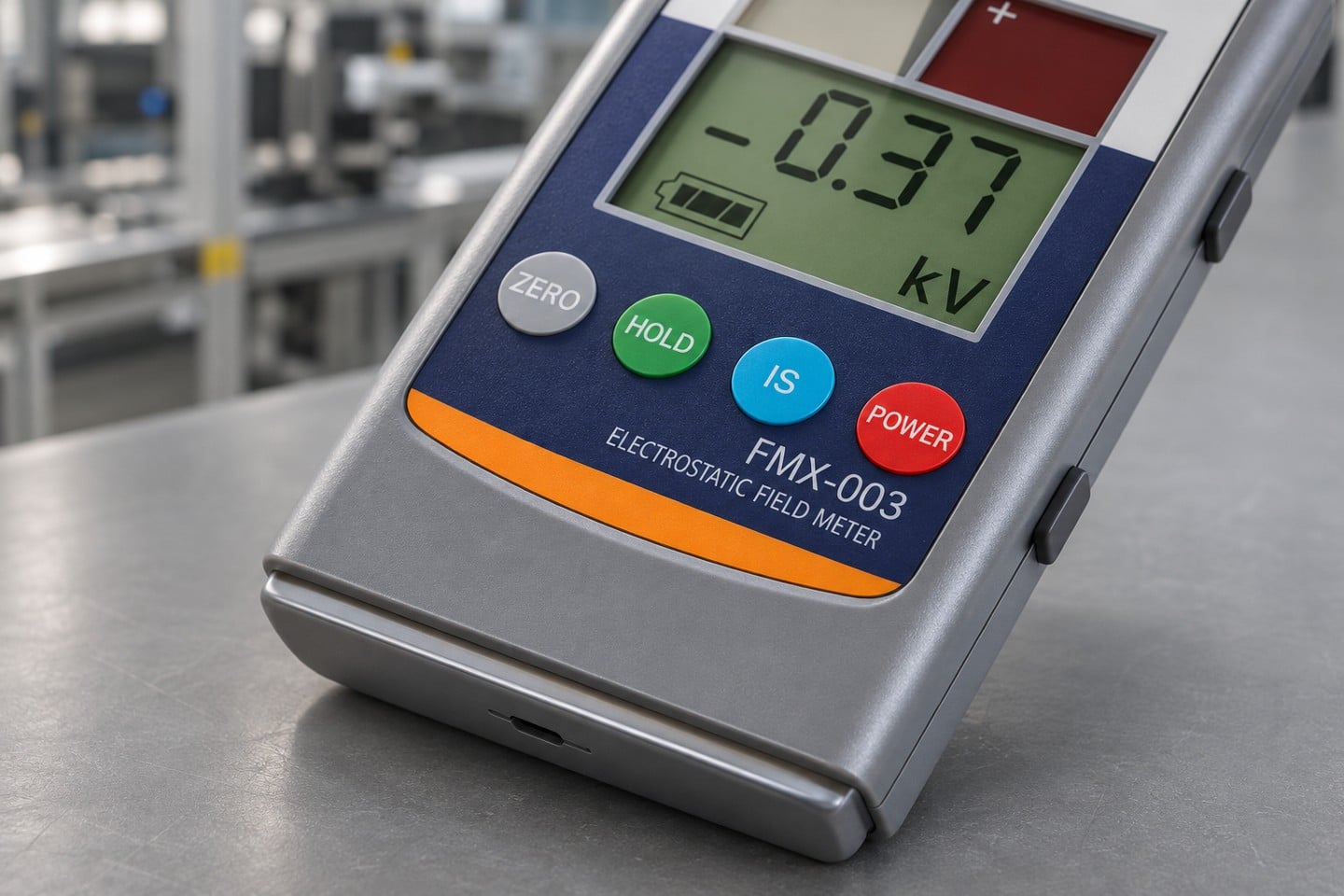
Земля SWESD electrostatic field meter product page identifies the relevant product family. Its photograph helps establish the instrument being discussed, but a product photograph does not establish the operating revision, calibration status or behavior of an individual delivered unit. Check the actual model, supplied manual and local work instruction before using the following troubleshooting route.
For the broader measurement context, the guide to what an electrostatic field meter measures introduces the instrument category. This troubleshooting article focuses on the narrower operating-state question: whether the visible number is still updating.
What the matching FMX-003 instructions establish
Земля original-author FMX-003 instructions available in this manual mirror explain the HOLD function and its relationship to normal measurement. This is a version-specific operating reference. Use the delivered instructions when they differ, and ask the supplier to resolve uncertain revision identity. Do not combine button sequences or numerical limits taken from different manuals.
For the version cited, the useful distinction is between retained display information and ongoing measurement. A display can look stable because it has intentionally stopped updating. That behavior alone does not demonstrate a stable field, a grounded target, a successful neutralization process or a failed sensor. Those are different questions requiring their own measurement conditions and evidence.
The same instructions distinguish HOLD from zeroing. Repeatedly pressing ZERO is therefore a poor first response to a frozen reading. Establish the operating mode, preserve any relevant observation and then follow the matching zero-check procedure if required. Zeroing is an operating adjustment under defined conditions; it should not be reported as a complete calibration or as proof that every earlier measurement was correct.
A practical decision table for an unchanged number
The following is a suggested troubleshooting record, not a standard limit or a substitute for the manufacturer procedure. Use it to decide what information to collect and which question to resolve next. A qualified owner must determine whether an observation can support a production decision.
| Наблюдение | Information to preserve | Следующее решение |
|---|---|---|
| HOLD visible | Retained value, units and original target if known | Follow matching instructions to resume live measurement |
| No known mode | Visible display and recent operator actions | Resolve state before using result |
| Live response restored | Approved position, target and fresh value | Record a new observation |
| Still unresponsive | Model, mode and permitted checks performed | Remove from acceptance use for assessment |
| Error or damage | Exact symptom and instrument identity | Follow authorized service route |
Treat unknown status as unknown. If an operator cannot determine whether the display was held, the record should not quietly become a live reading during data entry. Retain the original note, identify the missing condition and repeat the observation when a repeat is possible and useful. If the process event has passed, the responsible owner should decide how to handle the evidence gap.
Check the mode without creating a new problem
First identify a safe place to perform the check. Do not approach exposed electrical conductors or reach into moving equipment merely to make the display change. An ESD field meter is not permission to access hazardous equipment. The approved station procedure should define the target, access conditions and any required shutdown or authorization.
Next compare the visible mode with the matching manual. For the cited version, the green HOLD control switches the function. Observe the indicator after using the control rather than assuming the press registered. A worn button, an uncertain instruction or a display that cannot be read clearly is a reason to stop and clarify, not to press several controls until something looks plausible.
Once the appropriate live mode is confirmed, recreate the approved measurement geometry and grounding arrangement. Keep the target and measurement position identifiable. A response check should change only conditions that the approved method allows. Do not rub random materials together near sensitive products to manufacture a large reading; that introduces an uncontrolled charging event and does not provide a traceable accuracy check.
For the positioning question, use the separate guide to electrostatic field meter measurement distance. It addresses a different source of interpretation error. Releasing HOLD fixes a mode issue; it does not correct an unsuitable distance, target geometry or grounding arrangement.
Keep HOLD, lighting, battery and errors separate
A dark distance indicator does not, by itself, identify the entire instrument state. The cited instructions describe indicator behavior in operating modes, so inspect the actual mode indication and consult the correct section. Avoid building a universal diagnosis around one visible lamp. Record what is observed without changing the description to fit a preferred explanation.
Likewise, a low-battery symbol and an unchanged number need separate attention. If the power condition is uncertain, follow the actual battery instructions before relying on further measurements. Do not assume that cancelling HOLD cures a battery issue. When several symptoms appear together, list them separately so a service contact can distinguish mode behavior from power or display problems.
An error message, missing display segments, visible damage or continued non-response after the permitted checks needs its own disposition. Stop using the instrument for acceptance decisions when its condition is doubtful. Do not open the housing, adjust internal components or invent a field repair. Keep the instrument identity and observations available for the responsible service provider.
Build a record that preserves the meaning of the reading
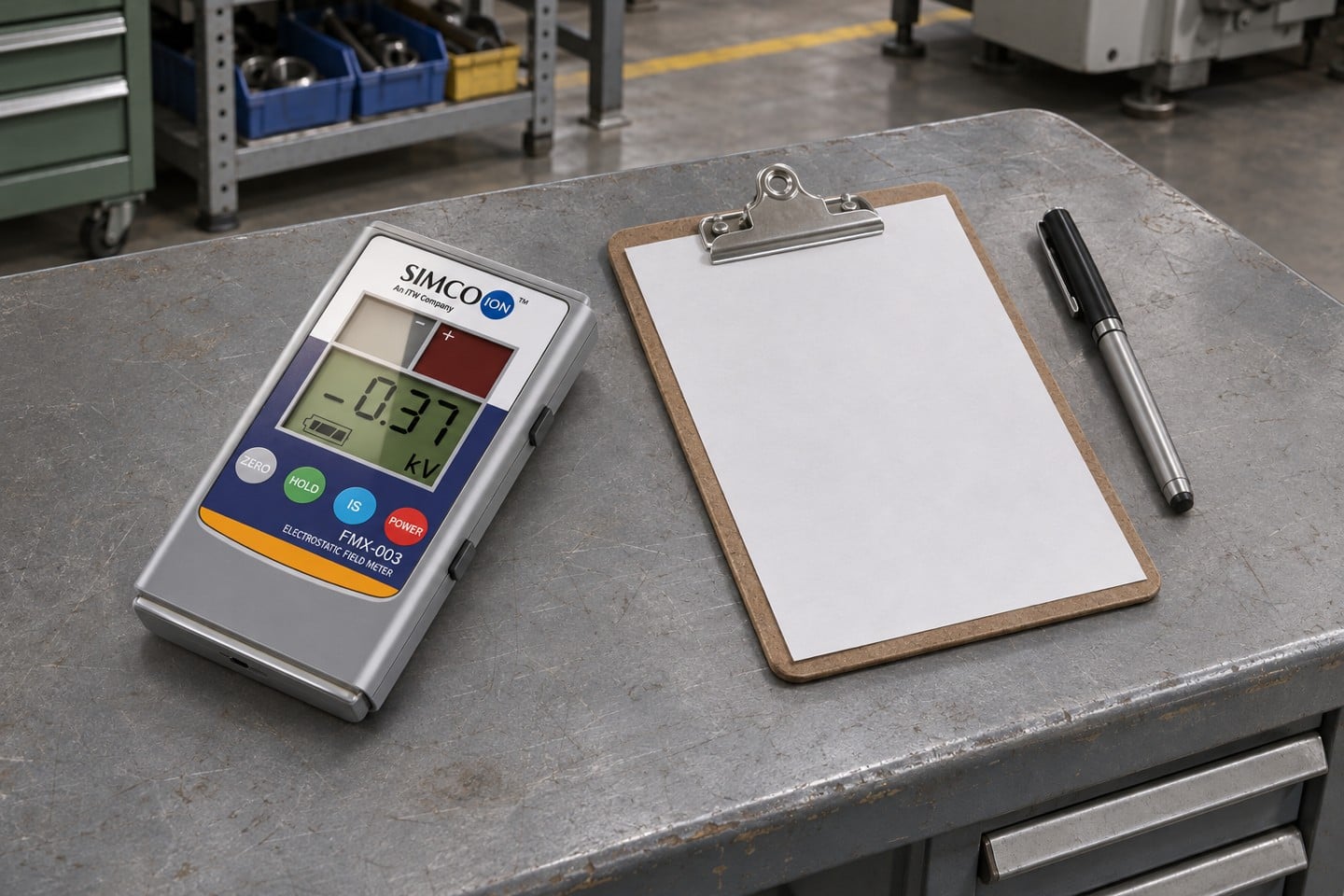
A useful observation sheet connects the instrument, target and operating state. Include an instrument identifier, model, operator, date and time, location, target description, units and polarity where displayed. Note whether the number was observed live or retained using HOLD. Record the measurement method or work instruction reference so another person can understand the context.
Separate the time of acquisition from the time of transcription. An operator may use HOLD to move the instrument to a readable position and then write down the result. The later writing time is not necessarily the time at which the target was measured. The record should preserve that distinction when timing matters to the process.
Do not assume HOLD provides permanent data storage. The record-retention behavior must come from the exact manual and instrument version. If a value matters, transfer it into the approved record while it remains available, with the required context. A photograph of an unexplained number is weaker evidence than a complete observation linking that number to the target and conditions.
Review earlier decisions proportionately
Discovering a retained display does not automatically invalidate every historical measurement. Identify the specific records that may have been affected: the operator, time window, instrument and locations. Look for evidence that distinguishes live observations from transcribed snapshots. Preserve original entries and corrections so the history remains understandable.
The responsible quality or ESD owner should decide whether to repeat a measurement, review a process decision or seek additional evidence. A fresh reading describes the present conditions; it may not reconstruct an earlier event. Keep this limitation visible when discussing whether a line was within its approved control conditions at a previous time.
Земля Руководство ассоциации EOS/ESD по обучению и аудиту supports the broader need for understandable procedures and verification. It does not prescribe this article’s worksheet or make a held measurement acceptable. Use the organization’s overview as context and the applicable program documents for the actual responsibilities and acceptance rules.
Train the handoff and define when to seek service
At shift handover, the outgoing operator should state the current mode and the meaning of any retained value. The incoming operator should not inherit a display without its context. A short observed demonstration can show the difference between retaining a result and taking another measurement, using a safe approved setup rather than production-sensitive devices.
Keep that training distinct from instrument verification. The separate article on проверка электростатического поля addresses confidence in the instrument under a defined method. Mode awareness is a prerequisite to meaningful checks, but it does not replace them. If a meter remains unresponsive after the allowed procedure, isolate it and report the evidence rather than using an improvised correction factor.
For supplier support, send the actual model and identifier, relevant manual revision, observed mode, symptoms and checks performed. Explain whether the problem is reproducible and whether the display becomes responsive after leaving HOLD. Avoid sending only the phrase “meter broken,” which omits the information needed to separate expected operation from a fault.
Further learning about electric fields
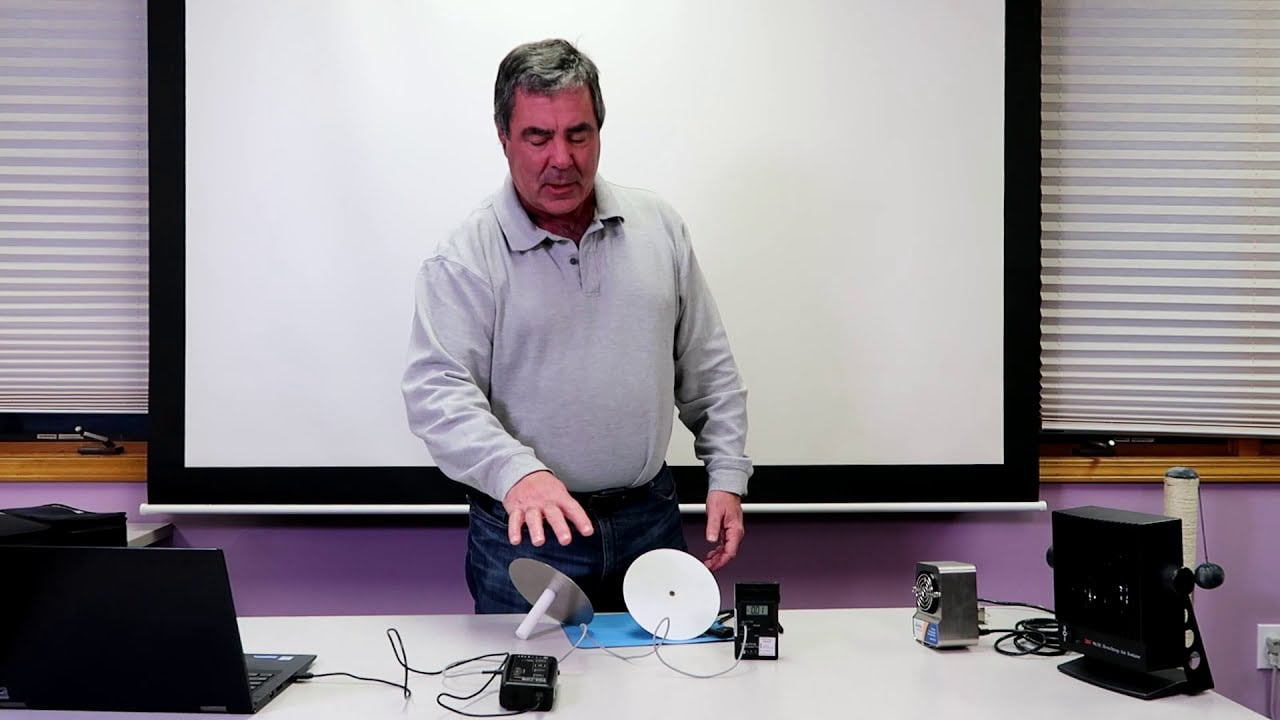
The EOS/ESD Association video below provides background on tribocharging and electric fields. It helps explain why the target and conditions matter when interpreting a measurement. It is not a button-by-button FMX-003 repair guide, a calibration demonstration or evidence that the pictured instrument has passed a test. Follow the matching instrument manual for operating controls.
Часто задаваемые вопросы
Показывает неизменяемое значение, означает ли это постоянное поле?
No. A retained display may show an earlier observation. Confirm the operating mode and measurement conditions.
Мне следует нажать ZERO, чтобы освободить режим HOLD?
Use the matching manual to leave HOLD. Do not treat zeroing as the first remedy for an unknown mode.
Доказательство калибровки при выходе в состояние HOLD подтверждает калибровку?
No. Mode operation and calibration are different questions. Apply the required verification and calibration controls.
Can I move the meter and use the held value for the new location?
No. The retained number belongs to the original observation, if that context is known. Take a fresh measurement for a different target.
What if the meter remains unresponsive?
Stop relying on it for acceptance decisions, preserve the symptoms and seek authorized assessment after the permitted checks.
Оставить ответ