- Турбо
- Блог
Cleanroom sticky roller residue should be investigated as a separate question from particle pickup. If a streak, haze or tacky mark appears after rolling, preserve the affected surface and identify the roller before applying another cleaning step. Compare the observation with suitable uncontacted material and an approved control process where available. A visible mark does not prove that the roller adhesive caused it, and a clean-looking panel does not prove the absence of chemical contamination. State what the observation actually establishes.
This guide covers a suspected transfer event on a surface already associated with a defined process. It complements the руководстве по использованию липких роликов в чистых помещениях and the separate sample approval review. Initial product approval is relevant history, but it cannot substitute for examining the particular item, substrate and handling conditions involved in a later complaint.
Preserve the original condition before troubleshooting
Record when the mark was first noticed and what happened immediately beforehand. Identify the surface, coating or protective film, roller item, available lot information, operator and process location. Photograph the affected area with a wider view that shows its position. If the mark follows an apparent rolling path, record that relationship as an observation rather than calling it proof of adhesive transfer.
Keep the suspect roller and relevant samples under an identified hold according to the site procedure. Separate items that have already been cleaned, reworked or tested from those preserved in their original condition. If an immediate operational requirement makes intervention necessary, record the action and its timing. The investigation should not later describe a wiped surface as an untouched original specimen.
Ask whether other material was present: a previous cleaner, a temporary label, an operator glove, protective packaging or an existing surface treatment. These are possible investigation inputs, not automatic causes. Preserve available identities and process records. Avoid collecting a long list of guesses without a way to compare them against the actual history of the affected surface.
Define the residue question precisely
A visible streak, an apparent change in tack, a particle count and an analytical chemical finding are different forms of evidence. Decide which concern prompted the investigation and what result would resolve it. If the customer reports a coating problem downstream, a visual observation immediately after rolling may be only part of the assessment. Include the receiving process owner in defining the necessary evidence.
Используйте общественные Обзор стандарта ISO 14644-18 от IEST for the general principle of assessing consumables against intended-use requirements, including cleanliness attributes. Its scope does not supply a universal residue threshold or a roller performance test. The investigation plan here is an operational proposal, to be accepted for the specific surface and process.
Write the question in a form that avoids a premature verdict. For example, ask whether the recorded contact condition produces an observable change relative to the defined comparison samples. Do not begin with a statement that a named lot is defective. A useful question makes it possible to record a negative or inconclusive result without rewriting the purpose after the test.
Build comparisons that isolate the contact step
Use representative sacrificial material when a trial is needed; do not experiment on valuable production parts without authorization. Identify the substrate, coating, preparation and storage history. Where possible, retain an uncontacted comparison from the same material set. If different panels have different initial conditions, note that limitation before comparing their final appearance.
An approved control process can provide context, but identify exactly what it controls. A known accepted roller is not necessarily identical in material, age or handling history to the suspect one. Keep the comparison focused on the question and avoid changing several factors at once. Otherwise a difference in the final surface cannot readily be connected to the intended contact step.
| Улика | Keep separate | What it can support |
|---|---|---|
| Original affected surface | Before further wiping or rolling | Initial appearance and location |
| Uncontacted comparison | Same substrate and preparation when available | Background condition |
| Approved control process | Known accepted method under defined conditions | Context for changed observations |
| Suspect roller sample | Item, lot and handling history | Traceable investigation input |
| Contact trial | Approved defined contact and observation | Comparison within the recorded scope |
| Analytical result | Method and detection limitations | Specific chemical evidence when appropriate |
This table is a record-planning aid rather than a standardized test method. Specify the permitted contact conditions, observation method and acceptance criteria before the trial. Use the applicable product instructions and accepted facility procedures for operating details. This article deliberately supplies no invented pressure, pass count, solvent, dwell time or analytical detection limit.
Identify the actual roller and its history
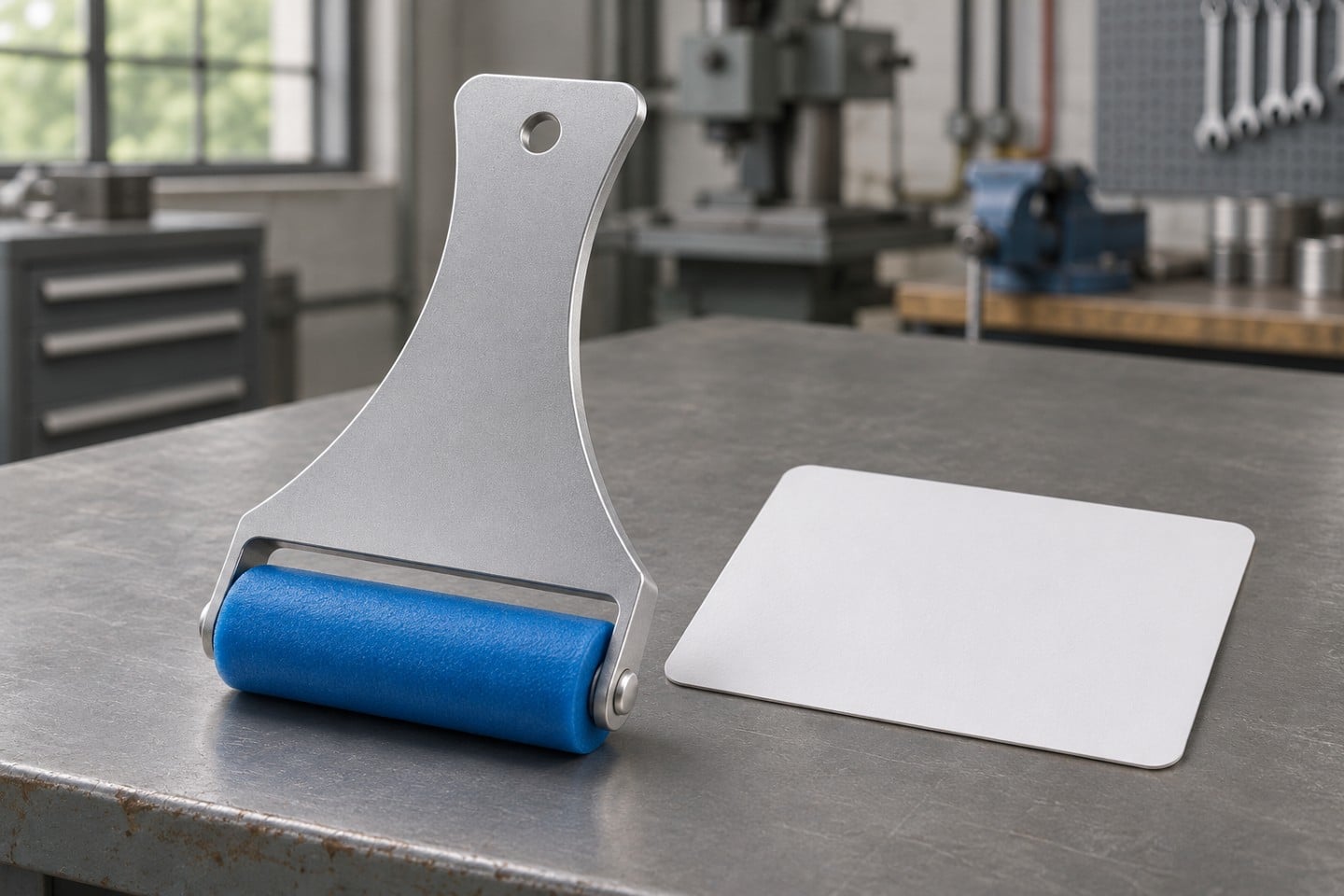
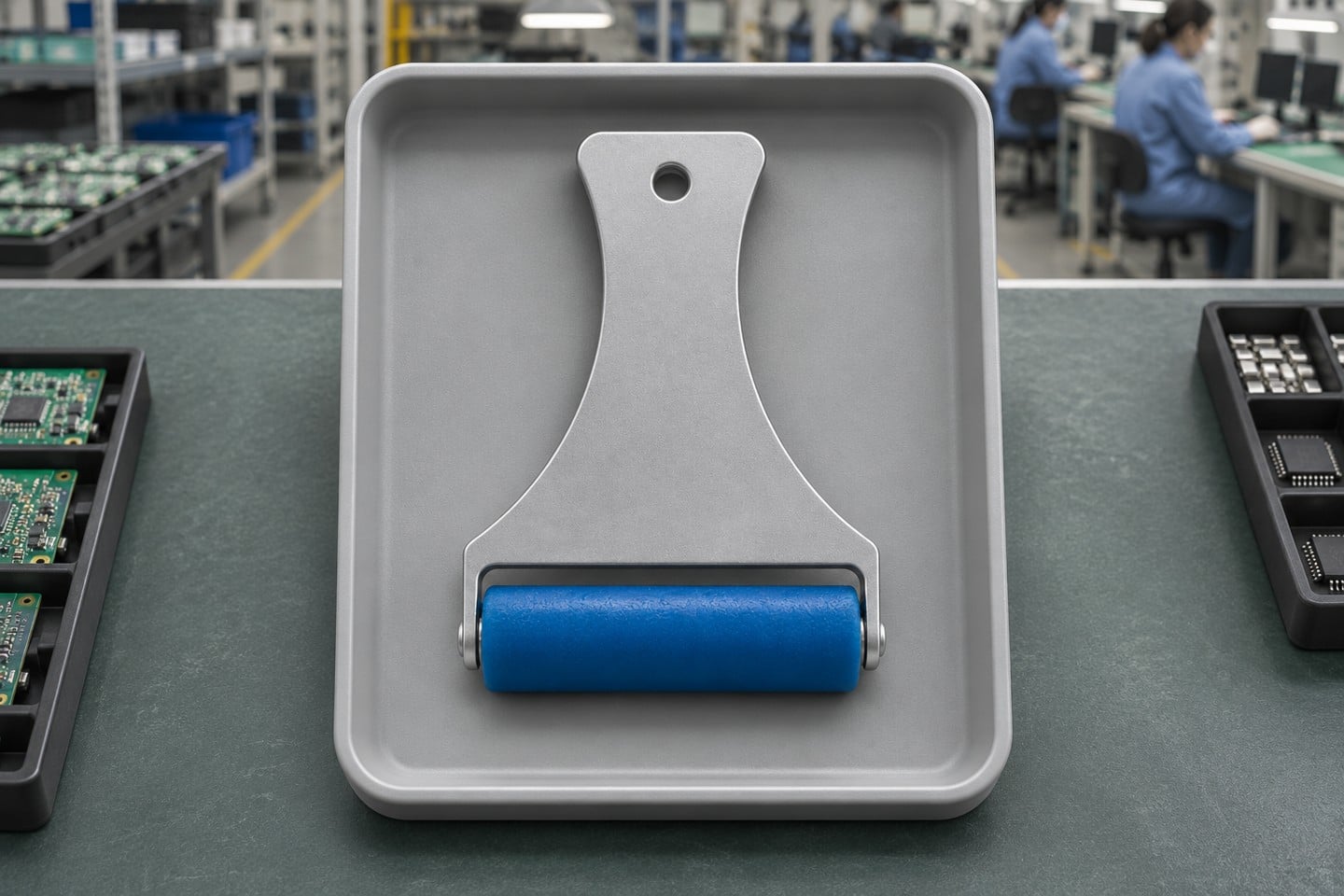
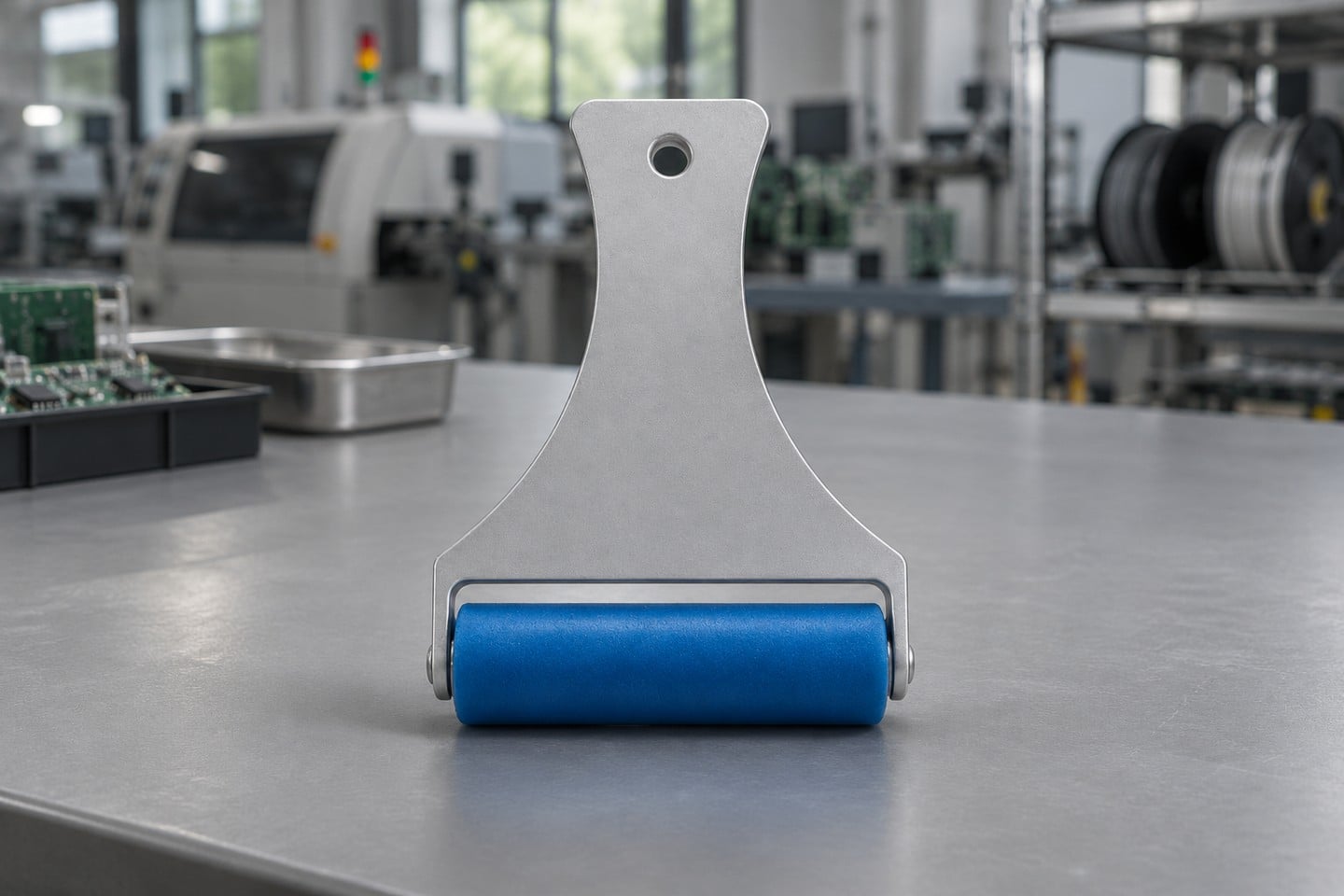
SWESD’s handheld sticky roller provides the product reference for this application discussion. Confirm the exact supplied construction and instructions rather than assuming every blue tack roller uses the same material. Record whether the investigation concerns a new item, an in-service tool or a replacement consumable. Do not infer chemical formulation or certification from the photograph.
Check receipt, storage and issue records where available. Ask whether the item was exposed to an unapproved cleaner, uncontrolled packaging or a different application before the event. Preserve the distinction between a documented fact and an unknown interval. An incomplete history is a limitation that may require additional work, not a reason to assign fault to the supplier or operator.
Review the associated tool condition using the руководство по проверке ручки роликового валика. Mechanical defects and contact irregularity may affect how the tool is used, but a handle check cannot identify a chemical residue. Keep the tool observation as a separate part of the event record so it is available without overstating what it proves.
Compare observations under defined conditions
For a visual assessment, record the lighting arrangement, viewing direction and relevant surface condition sufficiently for another reviewer to understand the observation. Use the same planned approach for the suspect and comparison samples. Preserve representative photographs, while acknowledging that photographs may not capture every observed feature. A changing reflection is not automatically a material deposit.
Describe the findings concretely: location, apparent pattern, whether the feature existed before contact and whether it is also present on the uncontacted comparison. Avoid vague verdicts such as perfectly clean. If the visual comparison does not distinguish the samples, report that result within the method’s limits. Do not translate it into a numerical claim of zero residue.
Where chemical identity or a low contamination limit matters to the process, obtain a suitable analytical plan from a qualified laboratory or the responsible technical owner. Define the sample, question and required reporting limits together. The choice of method must fit the surface and suspected material. An instrument name alone does not establish that the method can answer the specific investigation question.
Keep particle removal and surface compatibility separate
A roller may remove loose particles while another property remains unresolved. Do not use a favorable particle observation as evidence that chemical transfer is acceptable. Likewise, an apparent surface mark does not establish whether particle removal has failed. Record each required attribute separately and identify the method used for each conclusion.
Земля IEST ISO 14644-13 scope includes surface compatibility and assessment of cleaning approaches as general topics. It excludes detailed damage mechanisms and specific cleaning procedures. Use that scope to frame the need for a suitable assessment, not as a claim that the standard prescribes a particular sticky-roller test or approves the actual workpiece.
If downstream adhesion, coating or optical performance is the concern, involve that process owner in the decision. A cosmetic observation can be useful but may not represent the actual acceptance requirement. Keep any process-specific tests traceable to the samples and contact history. Avoid applying a criterion from an unrelated substrate just because it is readily available.
Do not erase the event with an unplanned wipe
A cleaning step can alter the evidence as well as the surface. Decide when cleaning is appropriate and which samples must be retained first. Do not try a succession of solvents merely to see which removes the mark. Besides changing the evidence, that approach can create another compatibility question and make the final condition harder to interpret.
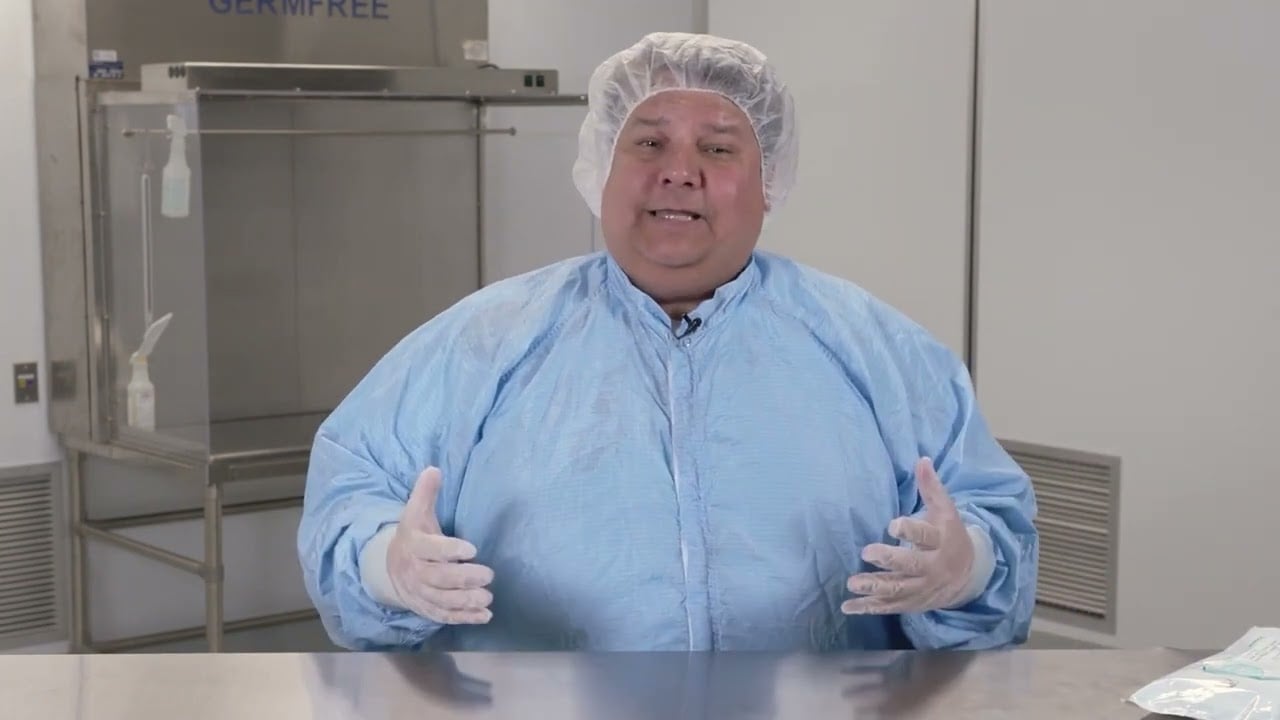
The IEST educational video below demonstrates cleanroom wiping techniques as background for a separately approved cleaning process. It does not establish that wiping will remove a suspected roller residue, identify its chemistry or authorize a particular liquid on the surface. Retain the original investigation evidence before introducing any cleaning step, except where a documented overriding requirement applies.
If cleaning is accepted as part of the disposition, record the method, responsible person and resulting assessment. Keep the original finding and post-cleaning observation as linked but separate events. A later satisfactory result should not overwrite the initial complaint or leave an impression that the suspect condition never occurred.
Close with a bounded conclusion and useful enquiry
State which samples were examined, what the comparison showed and what remains unknown. A conclusion may support release within a defined application, further testing, replacement, or continued hold. Do not extend a result from one substrate to every surface in the factory or from one retained sample to all supplied lots without supporting evidence.
For a supplier discussion, send the item and lot identity, surface description, contact history, photographs and the comparison plan. Explain the acceptance question and any downstream effect requiring investigation. Ask for relevant material and use information without presuming that the supplier can diagnose an unidentified mark from an image alone. Keep the response with the investigation record and have the responsible owner approve the final disposition.
Часто задаваемые вопросы
Доказательство переноса клея с помощью полосы?
No. Preserve the observation and investigate other plausible sources before assigning cause.
Доказательство хорошего захвата частиц подтверждает низкий остаток?
No. Particle removal and chemical residue are separate assessment questions.
Можно ли назвать поверхность, выглядящую чистой, без остатков?
No. Report the observation method and its limitations; absence of visible marks is not proof of zero chemical residue.
Should the suspect area be wiped immediately?
Preserve the original evidence first unless an overriding site requirement calls for immediate action. Record any necessary intervention.
Can a sample approval close a later residue complaint?
No. Review the actual item, history and affected process rather than assuming prior approval explains the new event.
Оставить ответ