- Турбо
- Блог
ESD trolley cleaning should use a procedure approved for the exact surfaces, joints, wheels and accessories in the supplied assembly. Remove inventory through the accepted handling process, use compatible materials and methods, and keep the trolley out of service until the required condition and affected electrical checks are complete. A clean appearance does not prove restored ESD performance. Likewise, cleaning cannot repair a damaged caster, unstable frame or unqualified modification. Record the equipment identity, cleaning method, observations and return-to-service decision so the process is repeatable and any unresolved condition remains visible.
Define the cleaning objective and use area
Identify what needs to be removed and why. Routine dust, handling residue and a specific contamination event may require different dispositions. Define the cleanliness requirement for the actual production area, packages and handled parts. Do not borrow a cleanroom claim from another product or assume that every trolley is suitable for the same controlled environment.
Assign the cleaning owner and the acceptance owner. They may need input from ESD, contamination-control, maintenance and safety staff. The procedure should explain what is routine work and which observations trigger a hold. An unknown spill or damaged finish deserves a scoped review before staff apply an aggressive cleaner. The aim is to restore an accepted configuration under the site’s requirements, not simply make the equipment look new for a photograph.
Identify all surfaces and components
Use the supplier’s assembly record to identify shelves, posts, wire dividers, joints, handles, casters and retained accessories. Ask for the accepted cleaning guidance for these specific materials and finishes. A shelf surface and a wheel assembly can have different restrictions; one general detergent instruction may not cover the complete trolley.
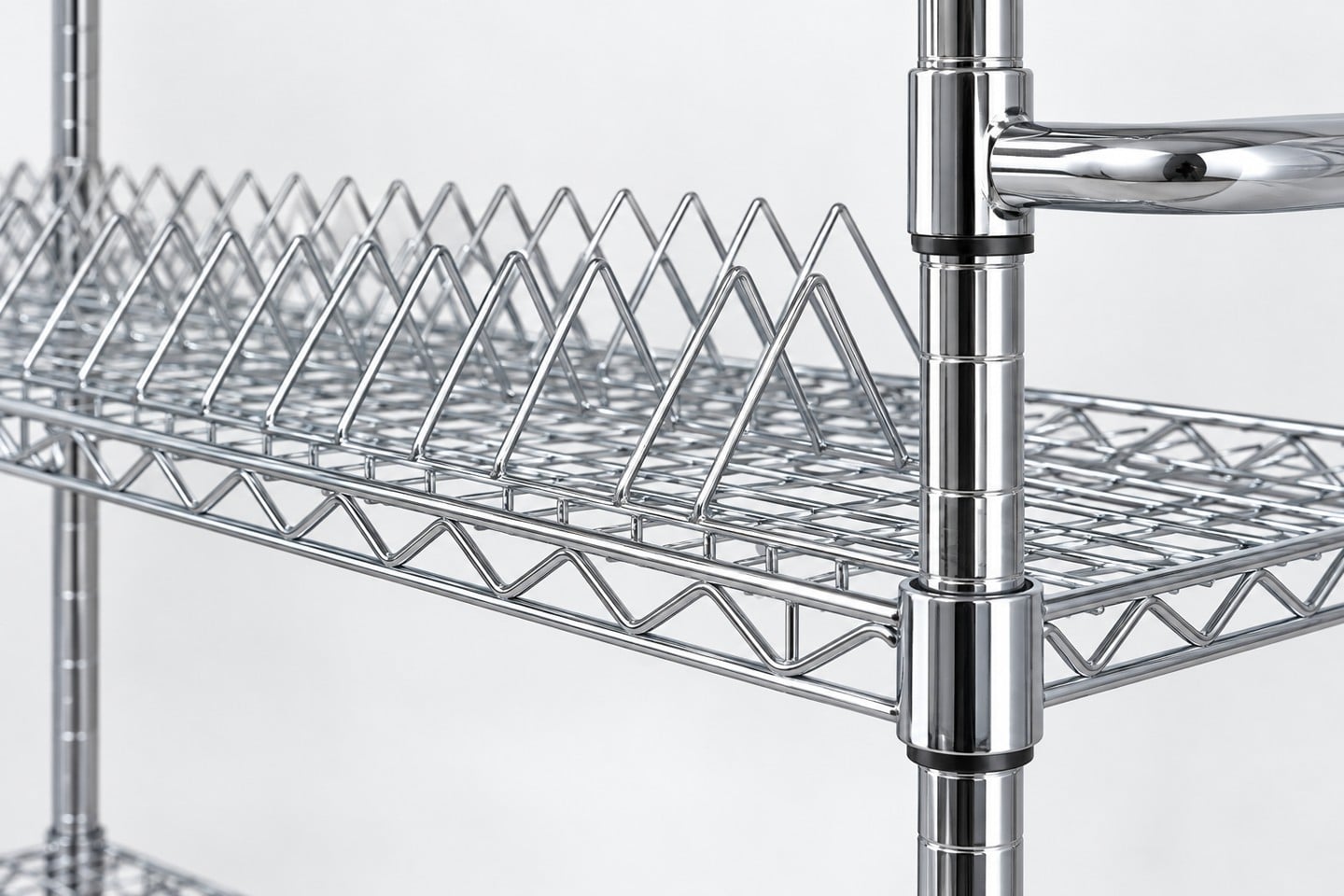
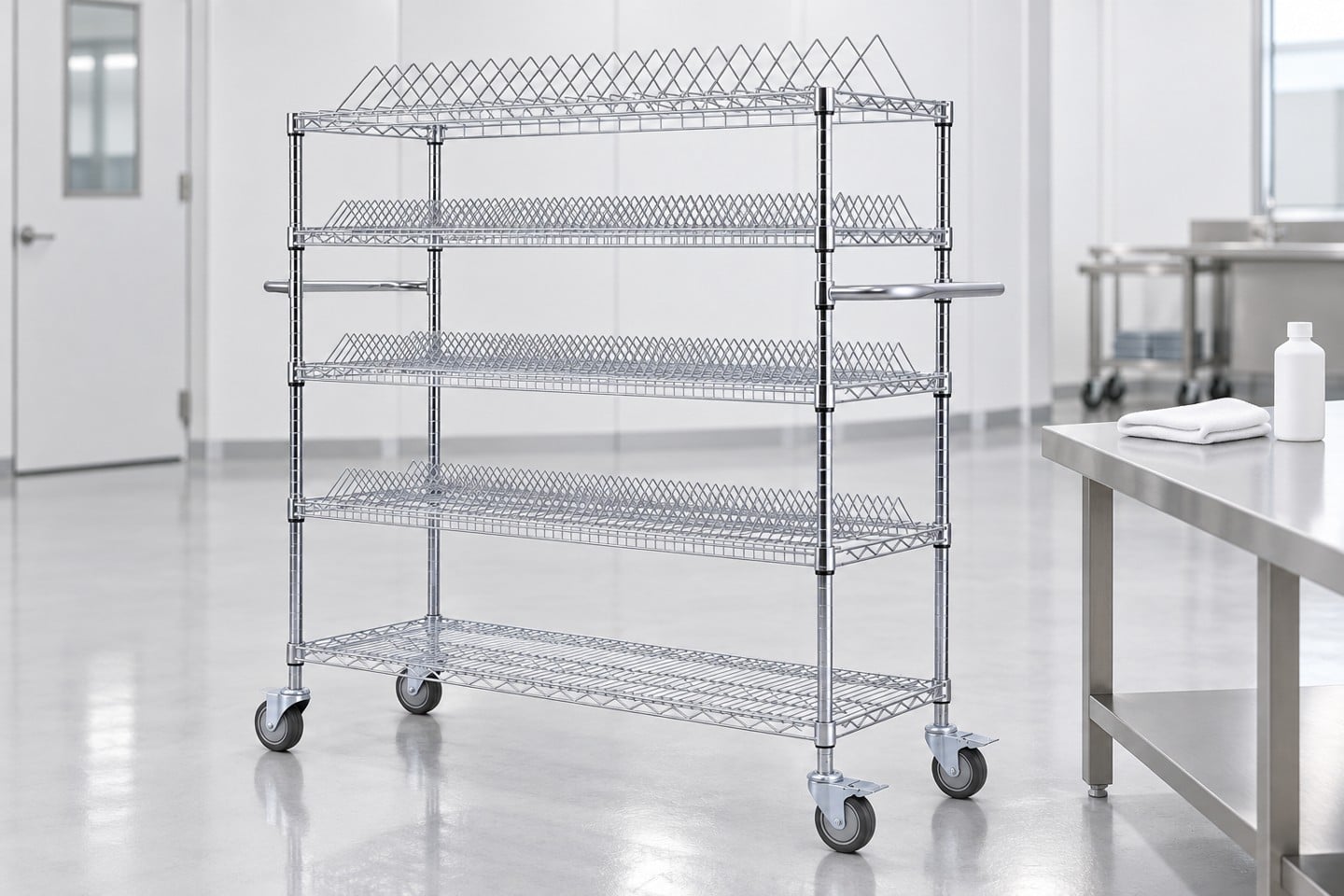
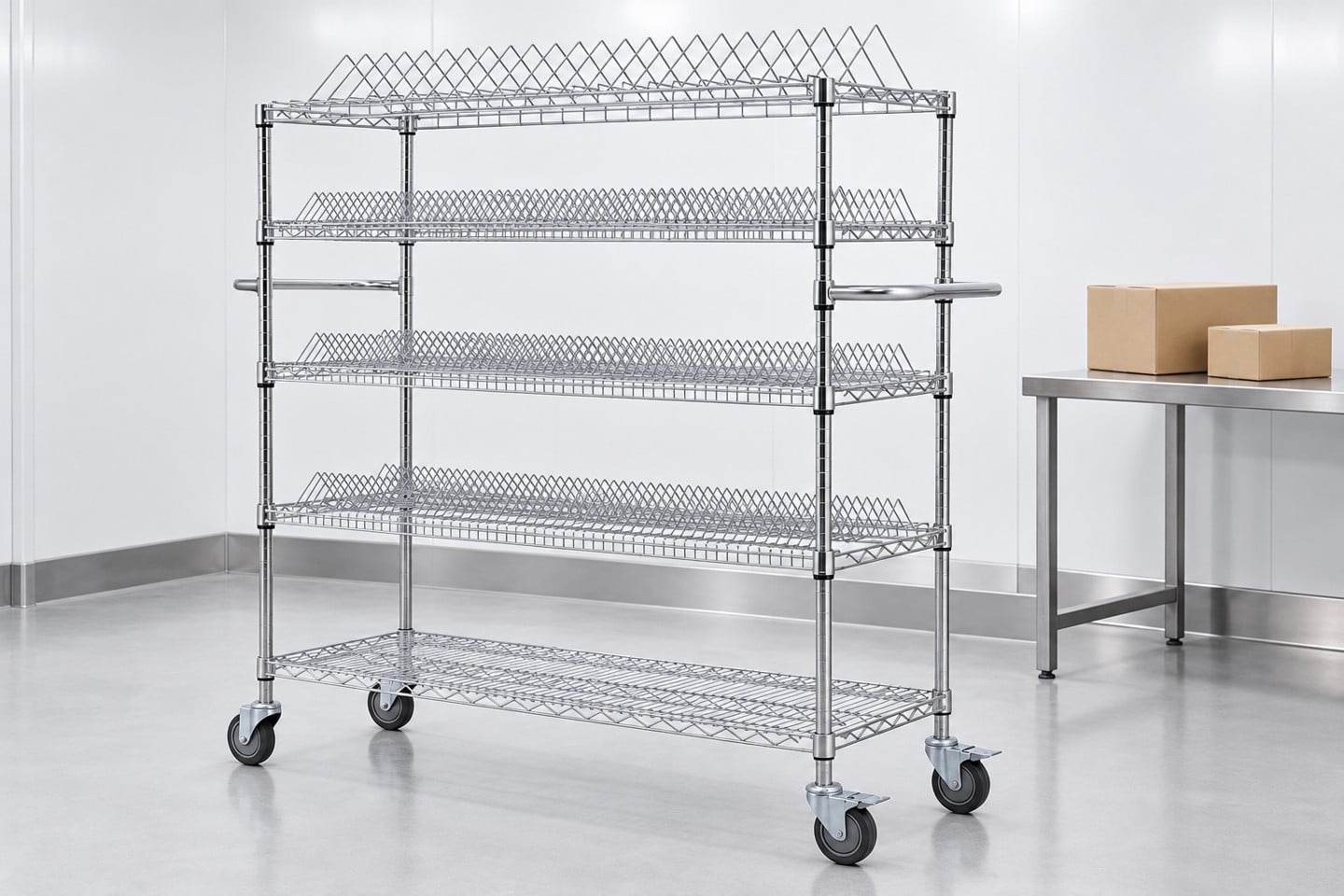
Земля SWESD wire shelving and trolley reference provides a real product structure for discussing these locations. Its chrome appearance does not establish chemical compatibility or an electrical rating. The existing triangular divider rows and caster arrangement remain part of the supplied configuration. Do not remove them merely to simplify cleaning unless the accepted instructions explicitly authorize that work and define the required reassembly checks.
Remove inventory through the approved handling process
Plan where the contents will go before clearing the trolley. Keep packages and lots identified and use the accepted protected environment for sensitive parts. Avoid temporary stacking that changes package support or leaves exposed items on an unqualified surface. Record any transfer that the site’s traceability procedure requires.
Земля EOS/ESD Association principles of control provide context for protecting items during handling. Apply the site’s requirements while the trolley is unavailable and during reloading. Cleaning equipment should not share an uncontrolled workspace with exposed sensitive inventory. If a package is contaminated or damaged, handle its disposition separately; a satisfactory trolley cleaning result does not automatically clear the product inside that package.
Confirm cleaner and method compatibility
Ask the supplier to identify the accepted cleaner, dilution where applicable, application method and restrictions. Review the product’s current instructions and safety information through the site’s authorized process. Do not substitute a solvent, polish or household product because it produces a shinier surface. Compatibility must relate to the exact finish and assembly.
Clarify whether the method permits direct application, a damp cloth, rinsing or another controlled step. Protect the components the procedure excludes from exposure. Do not invent a universal drying time or use heat without an accepted instruction. Where the proposed cleaner differs from the approved method, arrange a controlled compatibility assessment and obtain the responsible owners’ acceptance before routine use. Keep the approved product identity available at the cleaning station.
Use a cleaning and release checklist
This table is a proposed workflow record. It does not prescribe chemicals, environmental classifications or resistance limits. The actual procedure and acceptance requirements must come from the supplier and the responsible site owners. Complete the relevant evidence before the trolley returns to production.
| Stage | Record to retain | Release question |
|---|---|---|
| Preparation | Trolley identity and transferred inventory | Are contents protected and traceable? |
| Совместимость | Approved cleaner and application method | Does it cover the exact surfaces and components? |
| Cleaning | Completed procedure and observations | Were restrictions and excluded components respected? |
| Condition | Damage and unresolved contamination | Is a separate maintenance disposition required? |
| Verification | Affected electrical and mechanical checks | Does the accepted assembly meet the site requirements? |
| Release | Responsible approval and configuration | May inventory be reloaded for normal use? |
The record should separate cleaning completion from equipment release. If a condition check remains open, identify the trolley and preserve its hold status through the site process. Staff should not reload inventory simply because the cleaning task was signed. A clear division between the completed task and the outstanding acceptance prevents a maintenance queue from being mistaken for production availability.
Work around joints and dividers with care
Wire shelves, divider rows and shelf-to-post contacts can create areas that deserve specific inspection. Use the accepted method to access them without bending wires, loosening joints or introducing unapproved tools. A trapped residue should be reported when normal cleaning cannot resolve it within the procedure.
Do not scrape, sand or wire-brush a surface unless an approved instruction covers that operation and its consequences. Removing finish or altering a contact can change the accepted assembly. If disassembly is required, identify the authorized work and the reassembly evidence in advance. The ESD trolley maintenance checklist covers complementary equipment-condition questions; cleaning should not become an undocumented repair that bypasses that review.
Inspect wheels, mounts and handles separately
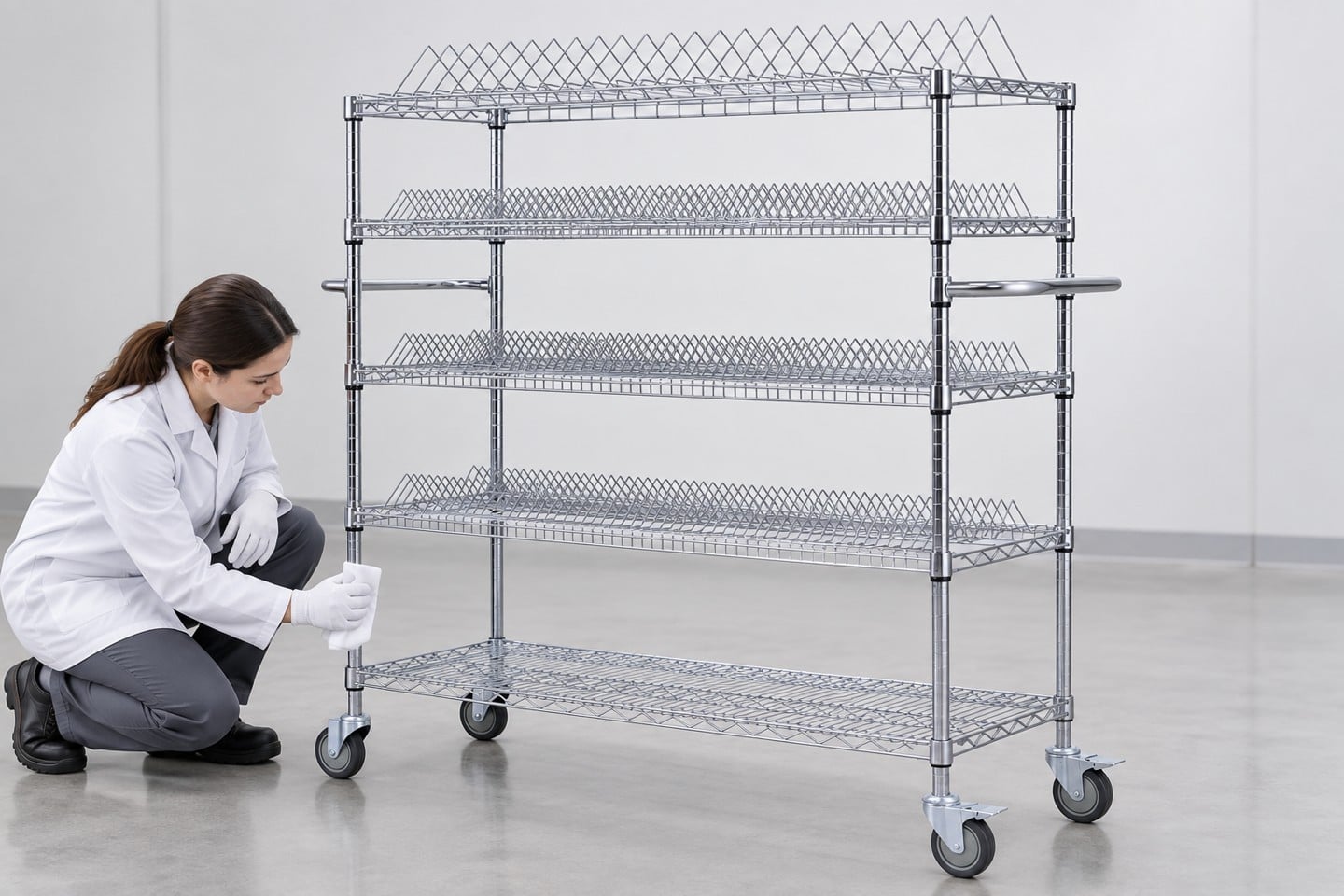
Review the components that influence movement and parking through the accepted maintenance procedure. Record visible damage, looseness, obstructed movement or other changes the procedure asks operators to report. A cloth wipe cannot establish that a caster, brake or mounting point remains acceptable under its rated conditions.
If a component is replaced, preserve its identity and obtain the required verification for the complete assembly. Do not assume that a physically fitting wheel reproduces the previous accepted properties. The trolley brakes and stability guide provides a related decision framework for parking and movement. The cleaning record should refer to that separate disposition when a mechanical concern is found rather than marking the complete trolley satisfactory from appearance alone.
Verify affected electrical properties
Have the ESD program owner define which checks apply after cleaning or a related change. Identify the test method, locations, instrumentation and conditions required by the site’s procedure. Preserve the actual results and connect them to the trolley identity and cleaning event. Do not equate a clean chrome surface with an accepted electrical path.
Земля EOS/ESD Association discussion of basic control procedures and materials gives context for different protective elements. If a cleaner leaves a residue or an accessory is changed, ask how that affects the relevant requirement. The existing wire mesh cart grounding-path guide addresses mobile-path questions; it does not replace the specific post-cleaning verification selected by your owner.
Handle contamination and damage as different cases
A cleaning event can expose a condition that cleaning cannot correct. Record cracks, deformed parts, damaged finishes or uncertain contamination and refer them to the responsible owner. Keep the trolley separate from accepted equipment until the disposition is complete. Do not conceal a damage observation with cosmetic touch-up or additional polishing.
If the condition requires repair, use an approved repair and requalification process. If the contamination cannot be removed within the accepted method, request a documented alternative or replacement decision. Preserve the original observation and the final action. This makes the record useful for future purchasing and prevents repeated cleaning attempts from obscuring a persistent problem. Only describe the assembly as returned to service when the applicable owners have accepted it.
Set frequency from actual use and risk
Choose the cleaning schedule through the site’s operating and contamination-control program. Consider exposure, use intensity, observed residue and required verification rather than assigning a universal daily or weekly rule. Define additional triggers for spills, relocation, repair and changes in handled material.
Земля EOS/ESD Association training and auditing overview supports keeping controlled practices consistent. The educational video below helps explain ESD handling context for cleaning and production staff. It does not approve a chemical, establish an environmental classification or set a test limit. Use it alongside the specific procedure and the broader multi-layer trolley purchasing guide.
Часто задаваемые вопросы
Does a clean appearance prove ESD performance?
No. Perform the affected checks under the approved site method and link the results to the trolley identity and cleaning event.
Can any solvent be used on chrome shelving?
No. Obtain compatibility and application instructions for the exact finish, joints, accessories and wheel assembly. Do not substitute a cleaner from appearance alone.
Can cleaning repair a damaged caster?
No. Mechanical damage needs a separate accepted maintenance or replacement decision and the required complete-assembly verification.
Should inventory remain on the trolley while it is cleaned?
Follow the approved procedure and handling plan. Normally prepare an accepted transfer location and protect the contents before the cleaning work begins.
When may the trolley return to production?
Return it after the procedure, condition review and applicable verification are accepted by the responsible owners, with unresolved issues clearly disposed of.
Последний пост
-
 ESD Trolley Cleaning Methods for Cleanroom Use08 Окт,2026
 -
 ESD Trolley Shelf Spacing for Mixed-Size Loads08 Окт,2026
 -
 ESD Shelf Grounding and Continuity Testing08 Окт,2026
Оставить ответ