- Turbo
- Blog
ESD shelf grounding should follow the site’s approved control plan for the identified shelving assembly. Establish which surfaces and components need an accepted path, how that path connects to the designated reference and which verification method applies. Metal appearance and apparent physical contact do not prove that a shelf is properly connected. Continuity testing and the electrical tests used for ESD qualification also answer different questions. The program owner must define the relevant method and acceptance criteria; staff should not improvise connections to electrical equipment, remove finishes or treat a casual meter reading as complete approval.
Define the fixed-shelving application first
Describe what the shelves hold and how the contents are protected. Identify whether sensitive devices remain inside accepted packages, whether exposed assemblies can touch a shelf and what handling activities happen at the storage point. This determines the control functions the shelving must support. A fixed rack does not automatically share the same path as a mobile cart moving across a floor.
O EOS/ESD Association principles of ESD control describe the broader protected-environment framework. Apply that context through the site’s own approved requirements. Have the program owner identify the relevant surfaces and boundaries, including the relationship between the shelf, packages and handling workstation. If the operating method changes, review the shelf requirement rather than assuming that the original acceptance still covers it.
Identify every component in the accepted path
Create a simple configuration record of shelves, supports, post connections, attachment points and any designated connection hardware. Mark the specific components and interfaces that the owner has included in the accepted path. Retain the assembly drawing and supplier identification so the record can be checked after installation and maintenance.
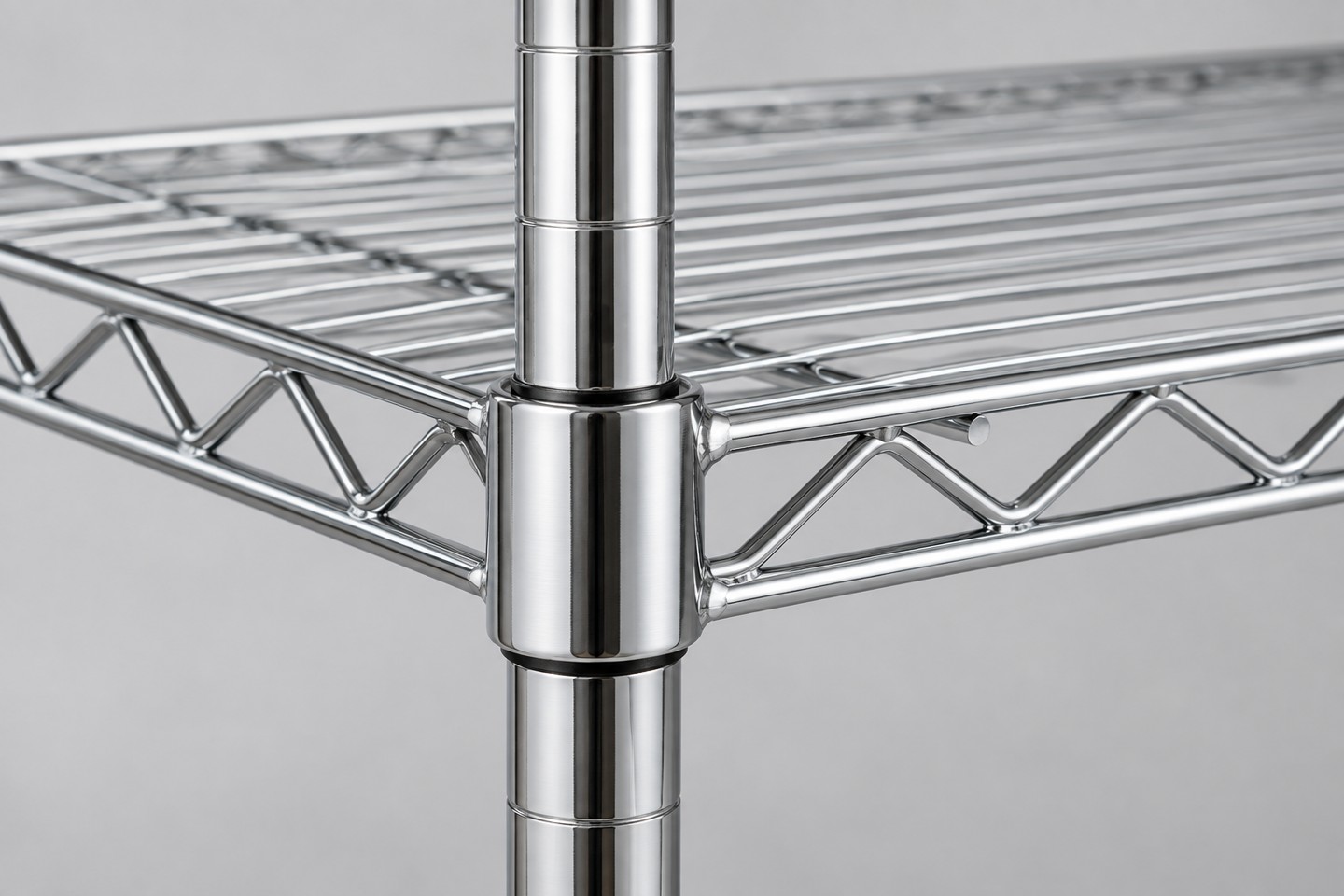
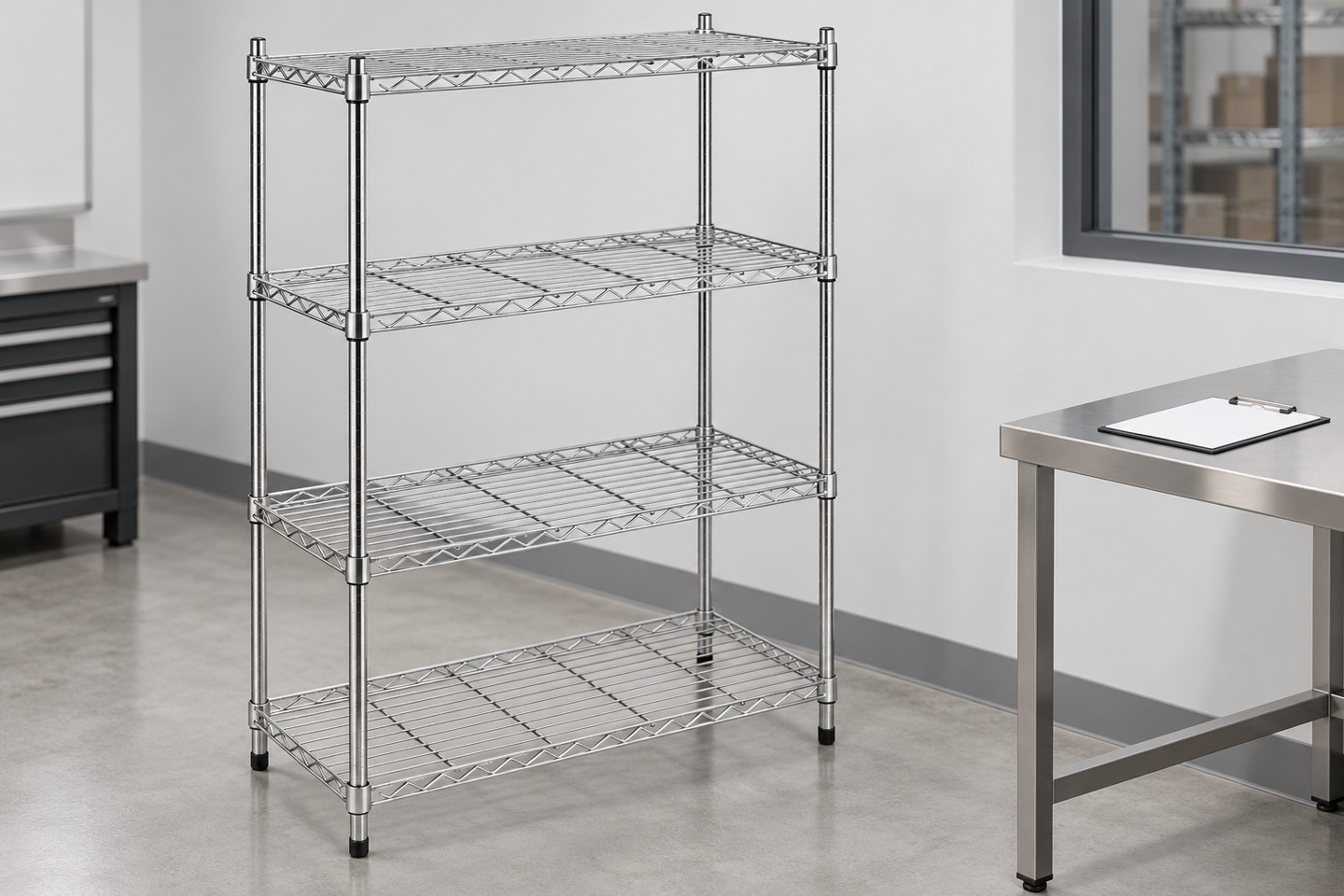
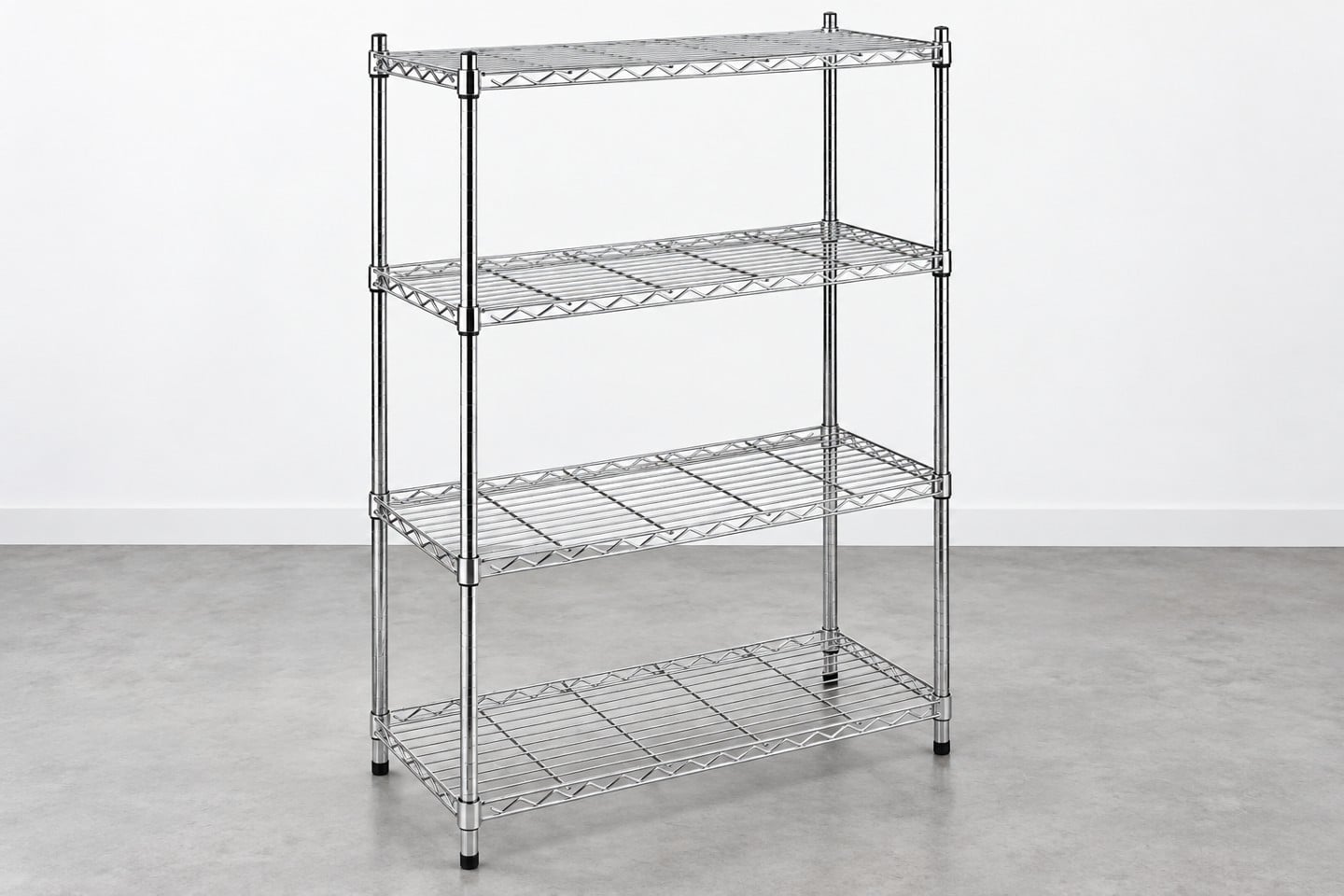
Utilize SWESD chrome wire shelving product as a structural reference when discussing wire shelves and post joints. The photograph does not establish resistance, connection suitability or an approved bonding point. Request the exact supplied configuration and its electrical declaration. A visually similar replacement shelf may use different finishes or contacts, so identify the replacement rather than accepting it from appearance alone.
Distinguish continuity checks from ESD qualification
A continuity observation can help investigate whether a connection exists under a particular measurement setup. It does not automatically establish all electrical properties relevant to ESD control. Different methods may involve different contacts, environments, instrumentation and interpretations. Comparing unlike readings without understanding those differences can lead to an unsupported release.
Have the responsible owner specify the appropriate method for each requirement and the authorized equipment. Record what the reading represents, where it was taken and under which conditions. Do not translate a meter’s audible indication into a universal acceptance statement. If a supplier report uses a different arrangement, ask how it relates to the site requirement before relying on it. Keep the investigation record separate from the final acceptance decision.
Confirm connection instructions with the supplier and site owner
Where an approved connection is required, obtain the accepted location, hardware and installation method. Identify which work may be performed by trained personnel and which requires another responsible professional. The rack instruction should be consistent with the site’s electrical and safety arrangements; it must not create an unofficial connection to nearby equipment.
Do not connect to an arbitrary outlet, power cord, machine housing or building element. Do not remove coatings, drill new holes or fit an unapproved clamp to make a reading appear satisfactory. Such actions can affect safety, mechanical condition and surface protection. If the specified point is inaccessible or missing, hold the affected requirement for review. Record the approved correction and verify the resulting configuration before return to service.
Use a verification planning matrix
This table is a proposed documentation checklist rather than a test procedure or a list of numeric limits. Your program owner must provide the actual method, acceptance criteria and safety conditions. The supplier should identify the configuration to which its evidence applies. Together these records allow a result to be interpreted in the right scope.
| Record | What to identify | What the owner must decide |
|---|---|---|
| Application | Packages, exposed items and transfer boundary | Required protective functions |
| Configuration | Shelf, post, joint and attachment identity | Scope of the accepted path |
| Connection | Approved point and hardware | Authorized installation method |
| Measurement | Method, equipment and test locations | Applicable acceptance criteria |
| Change | Moved shelf, new liner or replaced part | Affected checks before release |
| Exception | Original result and configuration difference | Disposition and required correction |
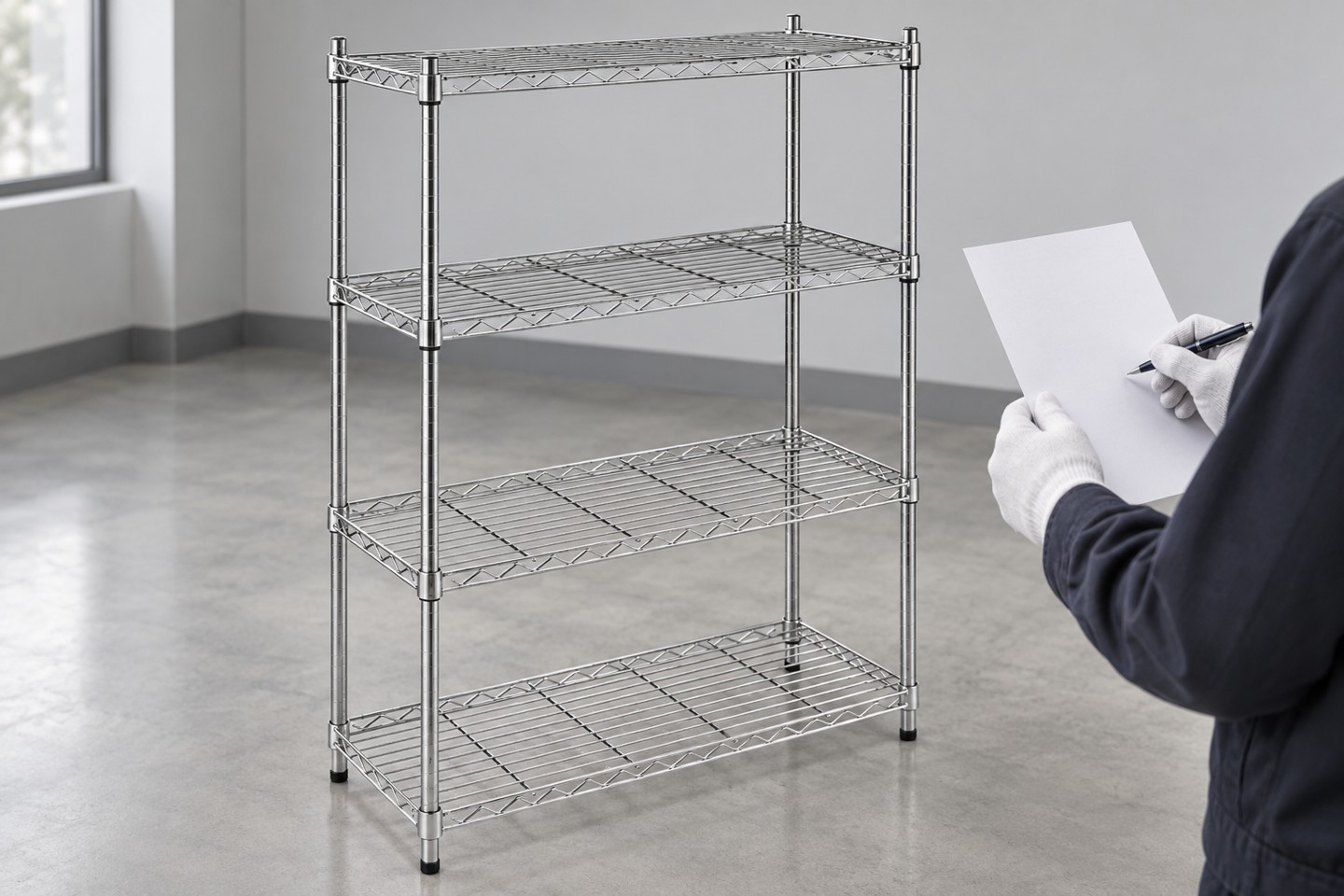
Each result should be attached to the rack identity and the actual tested arrangement. Include the shelf levels and interfaces the procedure requires. A single measurement at an easy-to-reach point should not be presented as coverage of every shelf or joint unless the accepted method explicitly supports that conclusion. Record any inaccessible location or configuration difference for disposition.
Check joints after assembly and changes
Shelf-to-post interfaces deserve attention when the configuration changes. Identify whether the assembly was dismantled, a shelf moved or a support replaced. Confirm that all relevant parts match the accepted configuration and that the installation follows the supplier instructions. A mechanically tight joint is not by itself an electrical qualification.
Plan the affected verification before the equipment returns to routine use. If a result is unexpected, preserve the setup details and inspect the configuration through the authorized procedure. Do not keep changing the meter placement until an acceptable number appears. Reproduce the approved method and refer the discrepancy to the responsible owner. For routine equipment condition, the ESD trolley maintenance checklist offers complementary change-control questions, while fixed shelving needs its own accepted path.
Include liners, packages and surface treatments
A shelf can be altered by materials placed on it. A liner, protective pad, divider or label may affect where a device or package makes contact. Identify which added materials belong in the approved configuration and what protective role each one performs. Do not assume that every accessory described as ESD safe creates the same electrical behavior.
O EOS/ESD Association discussion of control procedures and materials provides context for treating control elements according to their functions. Apply the site’s requirements to the completed arrangement. Where surface treatment is changed or repaired, review the affected evidence. A new finish that looks identical may require a different evaluation; an accessory that fits physically can still change the accepted interface.
Investigate an unexpected result systematically
Begin with identity and setup. Confirm the equipment status, procedure revision, test locations and environmental conditions that the method requires. Compare the current configuration with the accepted baseline. Ask whether cleaning, relocation, repair or an added liner occurred since the last satisfactory assessment.
Preserve the original result and the observations. Where the procedure allows a repeated measurement, record the reason and the unchanged or corrected conditions. Keep investigation and acceptance records linked so an isolated acceptable reading cannot hide an unresolved fault. If the cause remains unknown, refer the assembly for a decision and clearly identify the affected shelf or rack. The goal is a repeatable accepted configuration, not a convenient result obtained by an undocumented workaround.
Keep stationary and mobile paths separate
A fixed shelf connection and a mobile cart’s floor-related path can involve different configurations and use conditions. Review each according to its own accepted requirements. If containers move from rack to cart, identify the transfer boundary and the handling controls that protect them during that change.
The existing wire mesh cart grounding-path guide addresses mobile-equipment questions. Use it alongside the broader multi-layer trolley selection guide when planning transfers. Neither article substitutes for fixed-shelf qualification. Maintaining this distinction helps purchasing teams avoid using a wheel or floor-path declaration as evidence for joints and connections on a stationary rack.
Make ongoing verification practical
Set the verification frequency through the site’s risk and compliance program. Define the changes or incidents that trigger additional review and keep access to required locations practical. Include a clear reporting route for missing connections, damaged parts and unexpected readings. Operators need to recognize the accepted configuration and know when it has changed.
O EOS/ESD Association training and auditing overview supports maintaining controlled practices. The educational video below explains ESD-control context for handling personnel. It does not provide instructions for connecting electrical systems or establish a universal shelf resistance criterion. Use it with the site’s approved installation, measurement and return-to-service procedures.
Perguntas frequentes
Does a metal shelf automatically have an accepted grounding path?
No. The relevant components, joints and designated connection must be evaluated under the approved plan for the actual configuration.
Does an audible continuity indication qualify ESD performance?
Not by itself. Identify what the reading represents and use the method and acceptance criteria assigned to the relevant requirement.
Can staff use any convenient connection nearby?
No. Obtain the approved point, hardware and installation method from the responsible owners. Do not improvise connections to electrical equipment.
Should a moved shelf be reviewed?
Yes. Determine which interfaces and acceptance conditions changed and perform the affected checks before routine use resumes.
Can a mobile-cart floor-path report qualify stationary shelving?
Do not transfer that evidence without a scoped review. Fixed-shelf connections and mobile-equipment paths may involve different configurations and requirements.

Deixar uma resposta