- Turbo
- Blog
SMT reel storage barcode labels should remain identifiable and readable while the reel is in its approved carrier, or through a defined retrieval step that prevents mix-ups. Qualify the complete combination of label position, reel size, tray wall, neighbouring reels, scanner and lighting. A successful scan of an isolated reel does not prove that the same code can be read in a populated storage tray. Keep the component identity on the reel and connect any tray location label to that identity through a controlled transaction; a tray location alone is not proof of which component is inside.
Define what the reel label must identify
Start with the site’s material identification rules. The receiving record may need the supplier part number, internal part number, lot, quantity and relevant packaging status. Determine which fields belong on the reel and which belong in the inventory system. Do not invent a new barcode structure simply because the existing supplier label is difficult to see in one carrier position. Resolve the handling constraint without silently changing the meaning of the material record.
Ask the receiving and production teams which label they actually scan. Several codes may be present on one reel, and a scanner can read the wrong code perfectly. Record the expected decoded content, symbology and destination field for each transaction. Define the action for an unexpected or ambiguous result. The trial should demonstrate that the intended material record was selected, rather than merely producing a scanner beep.
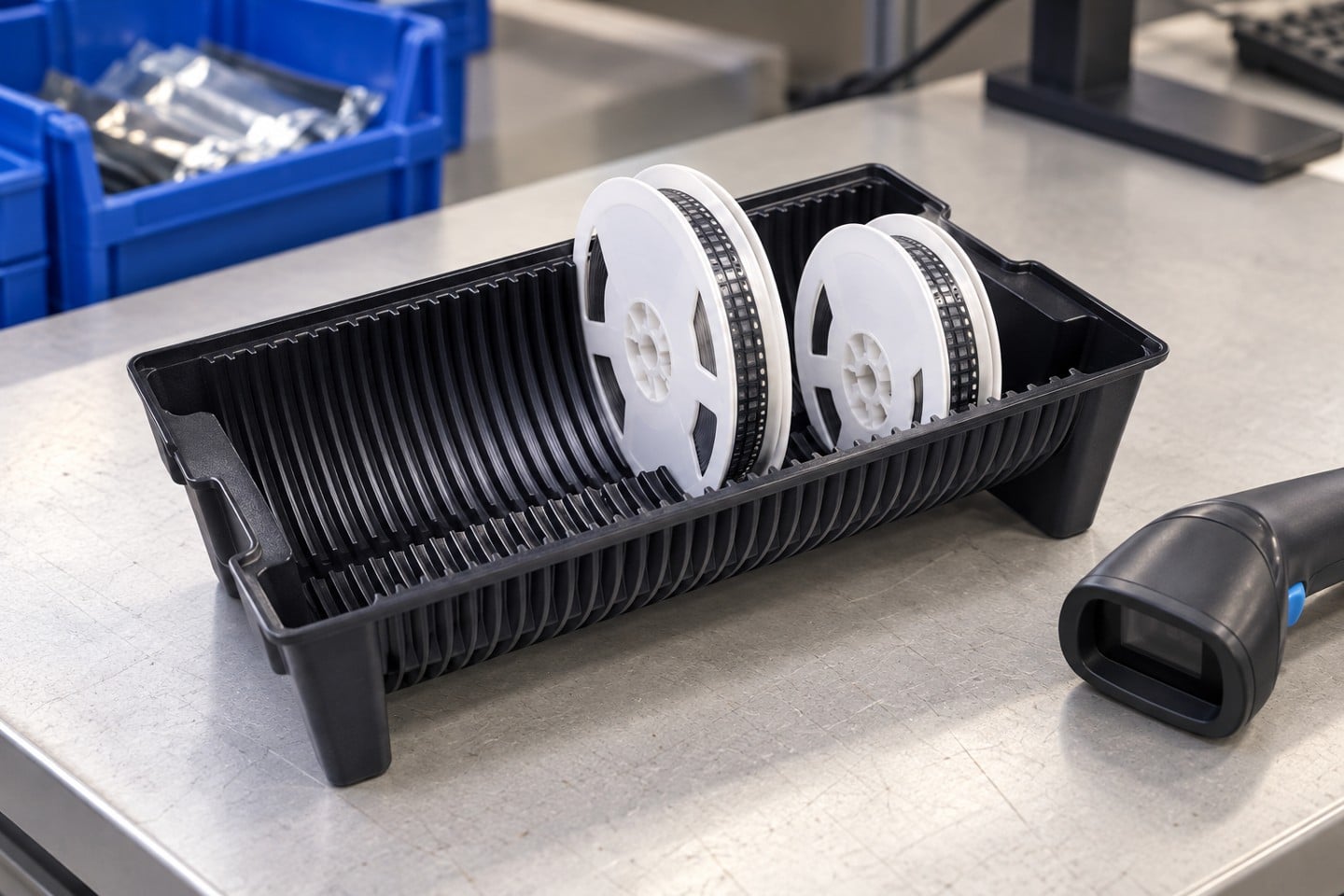
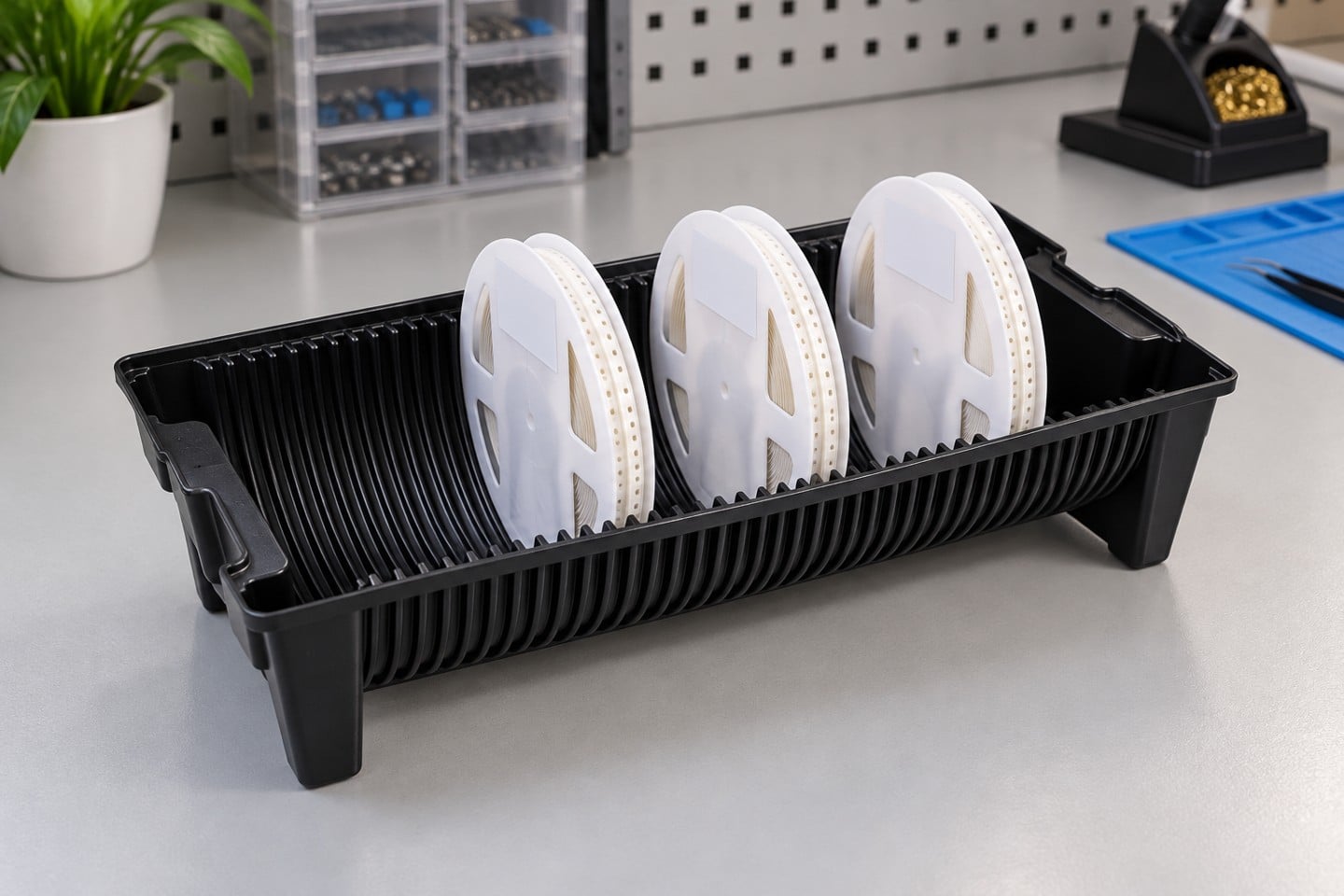
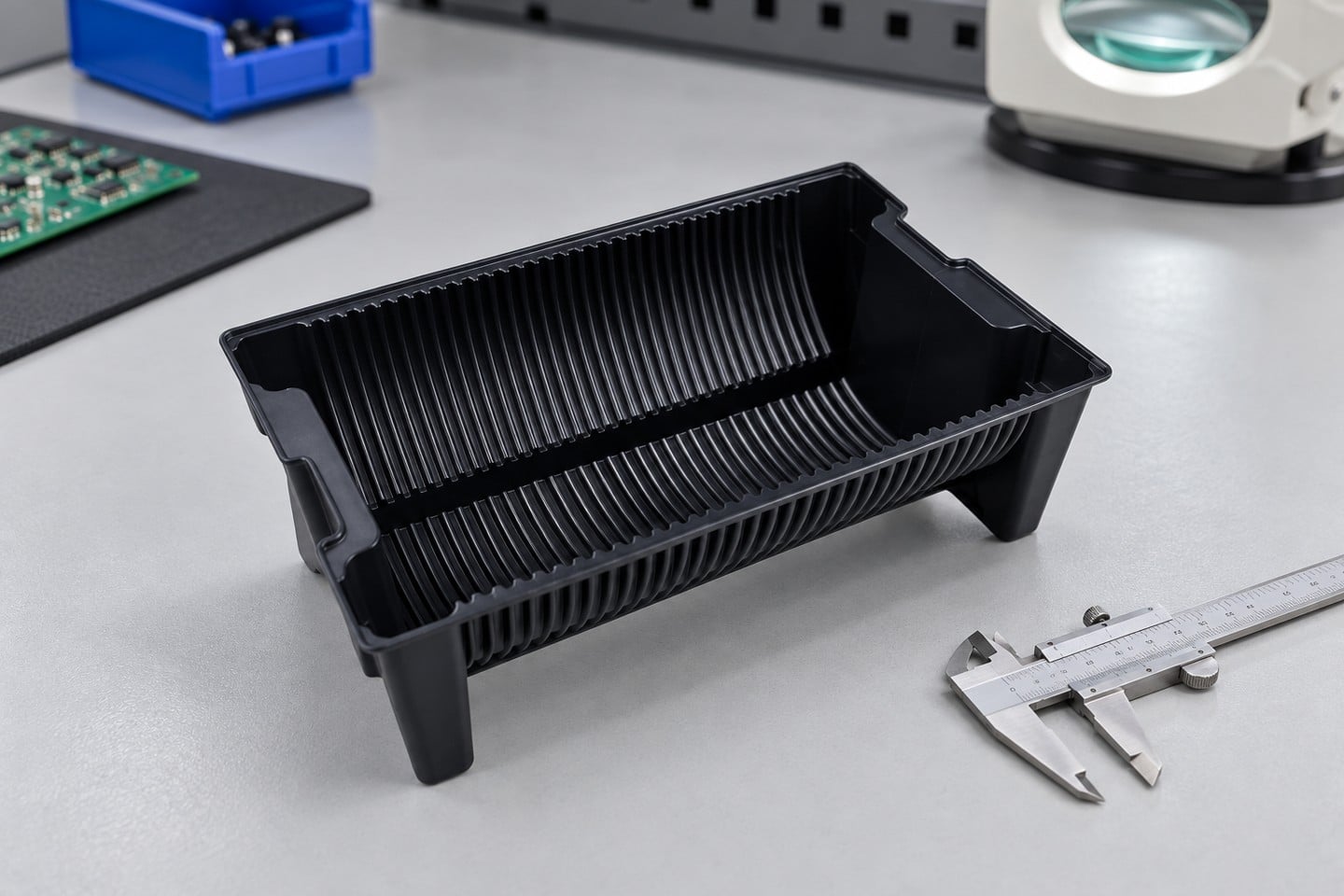
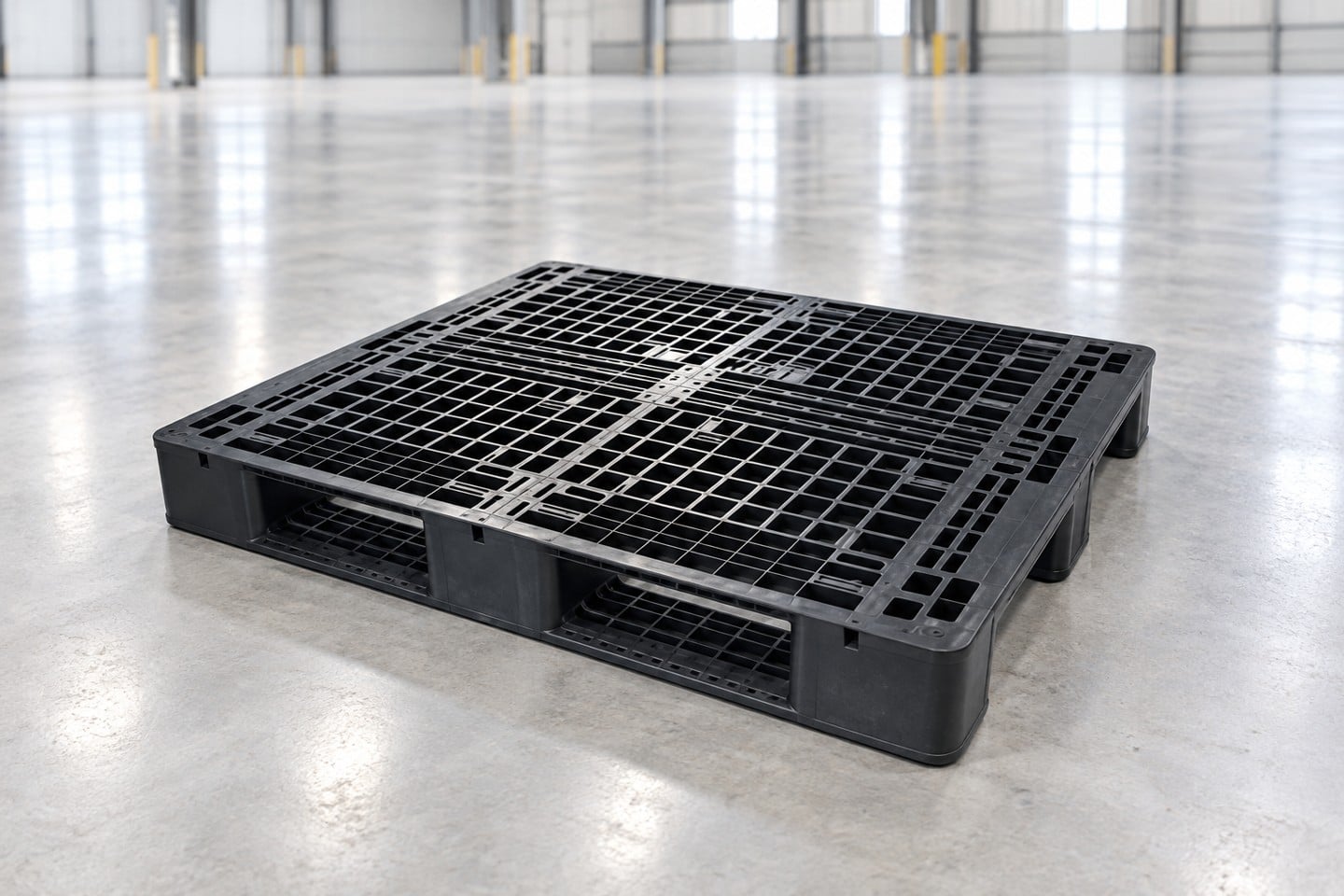
The SWESD SMT reel storage tray is a physical support for the reel. Its photographed grooved arrangement makes label position and access relevant buying questions. It does not establish scanner compatibility, barcode quality or software integration. Confirm those items using the intended reel packaging and the actual receiving and issue equipment.
Decide whether scanning happens in the tray or after removal
In-tray scanning can reduce handling when the code is exposed, the selected reel is unambiguous and the scanner can reach the required angle. It can also create confusion when a neighbouring code is easier to read. Define the permitted scan position and confirm that the operator can associate the result with the intended reel without guessing. Avoid treating a long reading distance as an advantage if it increases unwanted reads.
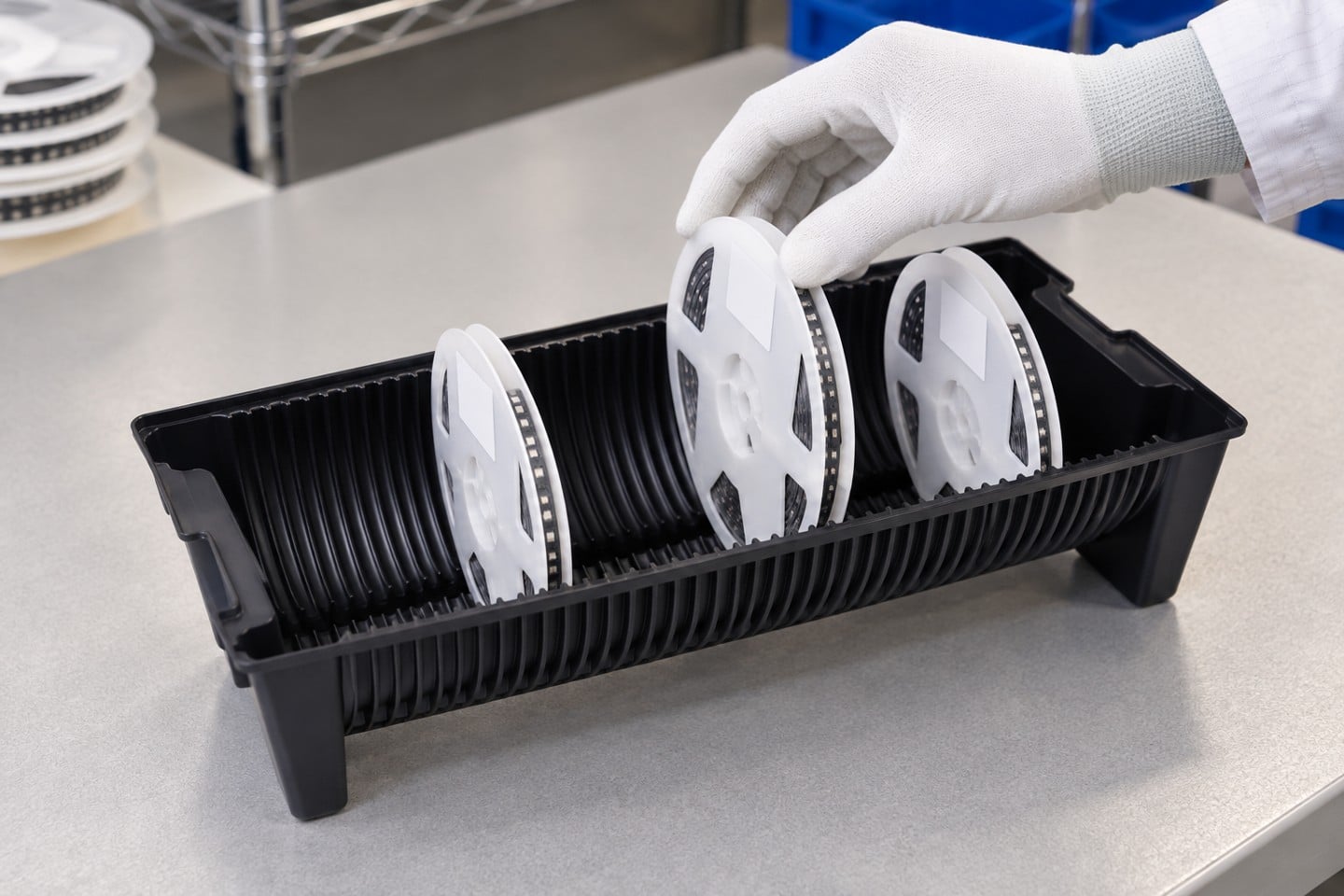
If the label is hidden by the carrier wall or adjacent reels, a controlled removal step may be more reliable. Specify where the selected reel is placed, how its original location is reserved and how the transaction is completed before another reel is handled. Prevent an interrupted scan from leaving two unconfirmed reels on the same bench. The tray design and working method should be evaluated together.
Do not cover the original supplier identity with a larger replacement label without an approved identification process. Added labels can obscure handling instructions or packaging information, and their edges can catch during retrieval. Where relabelling is authorized, maintain a traceable connection to the original record and validate the changed arrangement. A carrier improvement should not create a new material identity risk.
Build a representative scan trial
Use the actual scanner model, software settings and workstation lighting. Include the smallest and largest approved reel formats and any retained protective packaging. Test the label positions that occur in normal supply, rather than selecting only labels facing the scanner. Populate neighbouring positions according to the intended usable capacity so that a trial reflects the physical obstruction and selection risk of everyday storage.
For each attempt, record the intended reel, expected data and actual transaction result. Note whether the operator had to rotate or remove the reel, move another reel or scan more than once. A repeatable handling step may be acceptable when documented; an unexplained workaround is not a qualified process. Define the acceptance rule before testing so that inconvenient results are not reclassified afterwards.
The table below is a qualitative trial plan, not a barcode grading specification. Set numerical acceptance criteria through the organization’s applicable identification and quality procedures. The EOS/ESD Association training and auditing guidance provides context for documented, repeatable site practices. Barcode acceptance still requires the specification appropriate to the actual code and application; do not assume every component label follows one universal format.
| Trial condition | Observation | Required decision |
|---|---|---|
| Populated tray | Target code visible or controlled removal needed | Approve the exact scan workflow |
| Adjacent codes | Actual decoded data and selected reel | Prevent unintended material selection |
| Partial reel return | Identity and recorded status retained | Release or quarantine before put-away |
| Exception | Damaged or unreadable label | Use authorized resolution rather than guessing |
| Changed equipment | Scanner and parsing configuration | Retest affected combinations |
Separate reading a code from verifying its quality
A scanner reading demonstrates that a particular device decoded a particular symbol under the observed conditions. It does not, by itself, constitute a formal print-quality verification or prove suitability across every reader. If the customer or identification specification requires verification, use the specified equipment, method and acceptance rules. Keep that record distinct from the practical tray access trial.
A damaged label that reads once may remain unreliable during later handling. Establish inspection and quarantine rules for torn, smeared, detached or partially covered labels. Avoid guessing an unreadable lot from the neighbouring reel or typing a value from memory. A manual entry process needs its own checks and authorization, particularly when the same part number exists in several supplier lots.
Lighting, reflection and code orientation can change a practical result. Record the conditions and do not solve a difficult read by routinely bending the flange or exposing component tape. If another scanner setting improves performance, document the configuration and retest the intended range. An undocumented device adjustment can make a successful trial impossible to reproduce at another station.
Control the relationship between reel and tray location
A location code identifies a place; a reel code identifies material. Tie them together through a defined put-away transaction and confirm the relationship when material moves. If a tray is removed from a shelf, determine whether its location record follows the tray or whether the contents must be reassigned. The same physical tray should not appear simultaneously at two active inventory locations.
For partial reels returned from the line, verify identity and quantity through the approved return process before replacing them in storage. Do not overwrite the original lot simply because several partial reels share a part number. Keep rejected, uncertain and released material distinguishable through system status and physical controls. Tray arrangement should support those decisions without becoming the only source of status information.
The existing component FIFO and traceability guide covers wider stock rotation. Apply its record discipline at the reel transaction, while keeping this article’s focus on physical label visibility and scanning. The ESD box labelling guide addresses another container level; a box label should not be assumed to identify every reel after the contents change.
Review ESD and packaging effects of label changes
Electrical suitability must be evaluated separately from barcode readability. Adhesive labels, sleeves and added holders can change exposed materials or handling contact. The EOS/ESD Association’s basic control procedures explain the wider control context. Ask the responsible ESD function to review proposed changes using the site’s program and applicable methods. A readable code is not evidence of an electrically suitable label assembly.
Do not remove required protective packaging to make a scan more convenient unless the approved process permits it at that stage. If the reel is scanned through a bag, test the actual bag, label and scanner combination. Reflections or packaging folds may affect access, but this article does not establish moisture-sensitive device handling rules. Use the component supplier’s instructions and the organization’s relevant packaging controls.
The video below gives background on ESD control. It does not demonstrate barcode verification or qualify a label adhesive. For supplier documentation, use the ESD test report requirements guide to separate the exact tested material or assembly from a general claim about black plastic or antistatic storage.
Write a useful purchasing and receiving checklist
Include the approved reel population, label positions, populated arrangement, scanner identification and scan workflow in the request for quotation. Ask for a sample when the tray wall or groove spacing could obscure a code. State that the supplier should identify dimensional changes affecting label visibility. A promise that a carrier is “barcode compatible” is incomplete without the actual label, scanner and handling context.
At receiving, compare the supplied carrier to the approved sample and drawing. Check features that affect line of sight, grip and reel orientation. Repeating a short practical scan check on the first delivery can expose a changed wall height or mould detail before large quantities enter production. Record differences and hold uncertain combinations for review instead of quietly adopting a new workaround.
Maintain the approved trial with the workstation instructions. Revisit it when the scanner, label format, reel supplier, software parsing or carrier changes. Training should include the exception path: stop, preserve the reel identity and seek an authorized resolution. Reliable issue control depends as much on handling a failed read correctly as on scanning normal labels quickly.
Często zadawane pytania
Must every reel be scanned inside the tray?
No. Either in-tray scanning or controlled removal can be approved when identity, access and the transaction are validated.
Does a scanner beep prove a correct transaction?
No. Confirm the intended decoded content and the selected material record, including required lot information.
Is a tray location barcode a reel identity?
No. A location identifies a place. The inventory transaction must connect that place to the actual reel identity.
Does one successful read verify print quality?
No. Formal verification, where required, uses the specified method and equipment separately from a practical reading trial.
When should the scan arrangement be retested?
Retest relevant changes in labels, reel formats, carrier geometry, scanners, parsing settings or handling workflow.
Napisz odpowiedź