- Turbo
- Blog
ESD bin incoming inspection should verify that the delivered lot matches the accepted product, fits its intended handling route and has the required electrical evidence before it is released. Start with identity and shipping condition, then follow an approved sampling and inspection plan for dimensions, finish, lid fit, cleanliness and applicable performance checks. Receiving inspection is different from qualifying a new supplier: it asks whether this delivery conforms to an already defined specification. A black or yellow bin, an ESD symbol and an undamaged carton are not enough to answer that question.
Establish the accepted specification before unloading samples
Make the purchasing specification available to the receiving team. Include the supplier product code, drawing revision, material designation, color where controlled, lid or accessory requirements and the intended load or interface. Identify the accepted sample or approved drawing used for comparison. If the purchase order says only ESD bin, the inspector cannot reliably decide whether an apparently different rim or wall profile is an acceptable alternative.
Separate initial supplier approval from routine lot acceptance. The ESD packaging supplier qualification guide addresses how a source and proposed product are evaluated before regular supply. Routine receiving should refer to that accepted configuration, while routing relevant changes back to the qualification owner. Do not silently approve a different material, tool revision or liner because the delivery is urgently needed for production.
Verify lot identity and shipping condition
Record the purchase order, delivery identification, supplier lot information and quantity received. Check that labels and packing documents identify the actual product and any separately packed lids or accessories. Retain photographs of damaged cartons and the condition before unpacking. Keep a connection between inspected samples and the original delivery rather than moving all bins immediately into an anonymous shared storage location.
Look for contamination, crushing, unusual deformation, missing protection or signs that different products have been mixed. A transport problem may affect only part of a pallet, so note its location. Preserve the affected packaging where useful for investigation. Do not wash, reshape or relabel suspect stock before recording the original condition; those actions can remove evidence needed to decide whether the issue arose in manufacture, packing or transport.

Use a defined sampling plan and understand its limitation
De NIST acceptance sampling overview describes sampling as a decision about accepting or rejecting a lot based on sampled units. It does not turn a few inspected units into a complete measurement of every item. The quality owner should choose an applicable plan with its risks, inspection level and decision rules, considering the specification and the consequence of a defect.
Record how specimens were selected and what constitutes the lot. Avoid selecting only the easiest top units or the best-looking examples. If a sampling standard is required by contract, use its current complete procedure and the correct inputs. This article assigns no universal sample size or AQL. State how damaged outer packs, mixed lots, critical defects and previous supplier performance affect the authorized inspection decision.
Check geometry against the actual interface
Measure the dimensions that matter to the intended use, using the drawing and an appropriate controlled measuring arrangement. Outside width can govern a rack interface while inside clearance governs whether a protected assembly fits without contact. Include lid clearance, base support and handling features if they are part of the accepted configuration. Record actual observations instead of a single unchecked box labeled dimensions OK.
Use a representative rack, carrier or approved gauge when fit is an acceptance requirement. Keep the fixture identity and revision in the record. A bin may match a nominal catalogue size yet bind on the actual handling route because a rim, base or side-wall detail differs. The tote dimension planning guide explains which interfaces should already have been defined before the routine incoming check.
| Inspection item | Reference needed | Record to retain |
|---|---|---|
| Identity | Accepted product code, lot and revision | Delivery and sample identity |
| Dimensions | Current drawing and relevant interface | Actual observations and instrument |
| Passend voor het lid | Approved configuration and trial method | Closure behavior and deviations |
| Elektrisch bewijs | Specified function, method and criteria | Report connection or test result |
| Disposition | Authorized acceptance and hold rules | Quantity, status and responsible owner |
Examine surfaces, rims and lids without concealing defects
Inspect the surfaces and features identified by the product specification. Record cracks, sharp flash, damaged rims, distorted bases, loose fragments and areas where contact with the intended item could be unacceptable. Use agreed defect descriptions and examples where practical. Distinguish a cosmetic variation from a functional problem according to the approved criteria; the inspector should not invent a new threshold for each delivery.
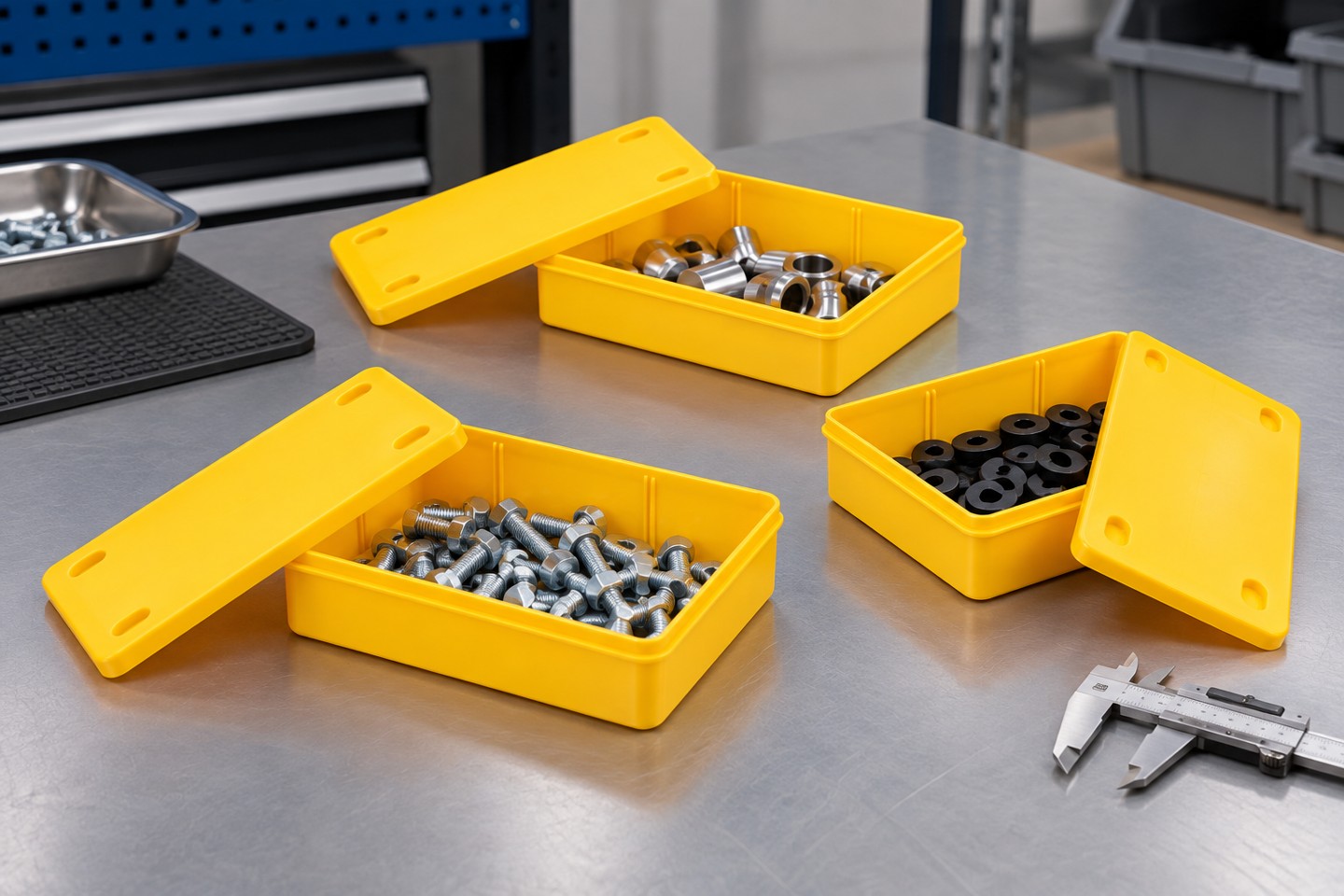
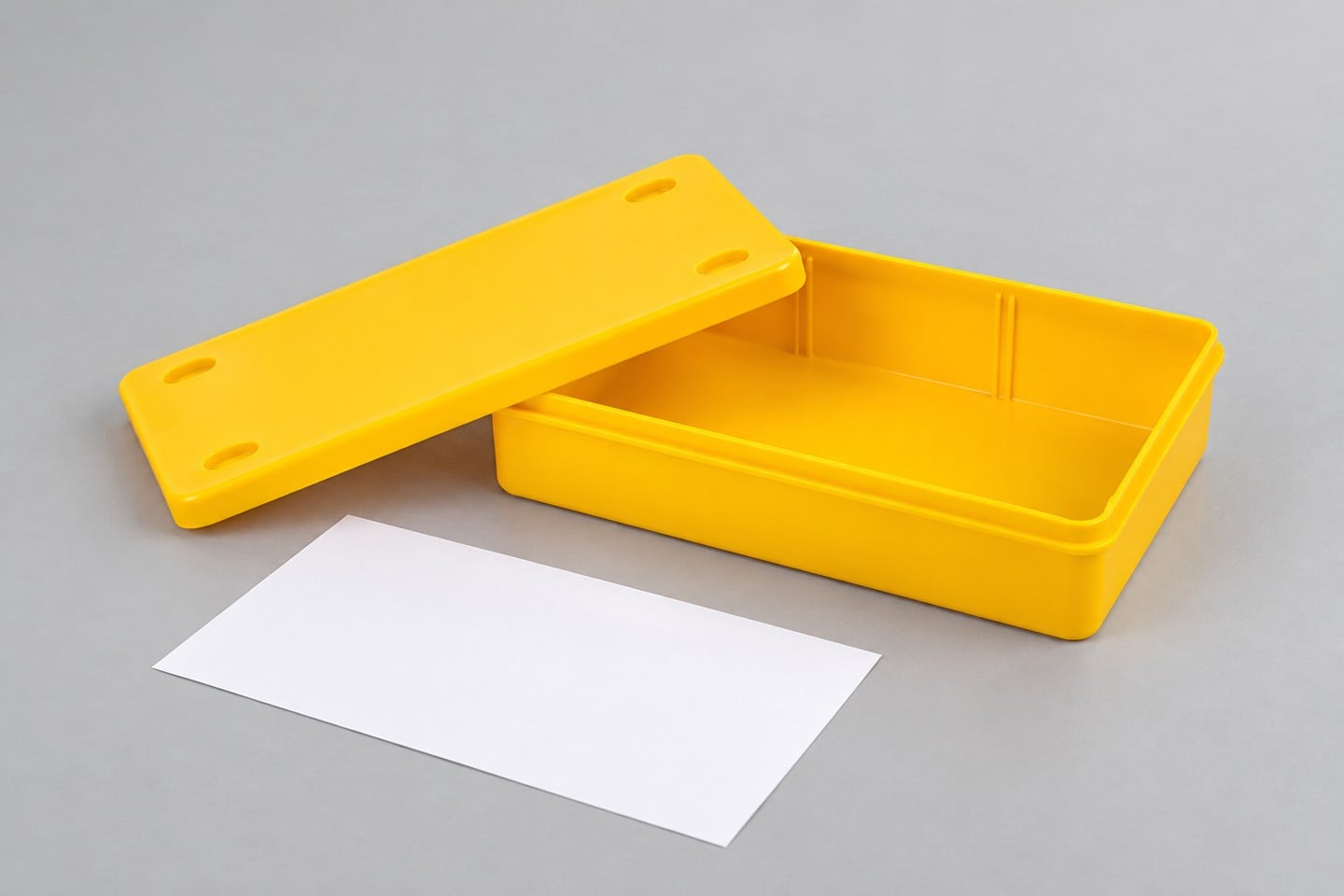
For a bin supplied with a lid, check the specified closure and removal behavior under the approved method. Do not force a lid into place or trim an edge to make the sample fit. If the pack has no lock or latch in its accepted design, do not request or report a latch test merely because a generic checklist includes one. The receiving procedure should match the actual product rather than an unrelated storage-container template.
Review electrical evidence for the exact delivered item
De EOS/ESD Association control overview explains the role of materials and packaging in an ESD program. Receiving personnel should therefore check which protective function the bin is expected to provide and which evidence the approved specification requires. A material name or color is not a resistance result. Nor does resistance evidence alone establish discharge shielding for an open container.
Match reports and declarations to the offered construction, relevant product identity and required scope. If routine incoming electrical tests are required, use the approved method, sample preparation, instrument and acceptance criteria. Record environmental and contact conditions as the procedure requires. Do not substitute an improvised handheld-probe reading for a prescribed method, and do not apply an unrelated published numerical limit simply to obtain a pass-or-fail field.
Confirm cleanliness and configuration before release
Determine whether the bins are used directly in a controlled process, carry already protected packages or require an approved cleaning step before entry. Inspect the delivered condition against that requirement. Visible dust removal is different from qualifying a cleaning method or establishing chemical compatibility. If a cleaning process is part of the release route, verify that it is the accepted process for the exact material and application.
Review separately supplied inserts, dividers and labels as controlled constituents. Confirm quantity and identity, then check their fit as required. The ESD bin cleaning guide provides a separate contamination-control discussion. Receiving inspection should not change an insert or cleaning method to repair an unexpected delivery configuration without the responsible owner’s documented review.
Record disposition and maintain segregation
Record the actual inspection results, report references, deviations and the authorized decision. Keep accepted, held and rejected stock distinguishable in the inventory system and physical storage. Define who can release a held lot, approve a concession or require additional evaluation. A handwritten note from an unidentified person should not override an unresolved material or fit discrepancy.
If production urgently needs some of the delivery, use the company’s controlled concession process rather than silently mixing held stock with accepted bins. State the scope, quantity, restrictions and responsible approver. Preserve rejected specimens or clear evidence for the supplier discussion. The purpose is to make the decision repeatable and traceable, while recognizing that sampling and inspection have limits and do not guarantee the behavior of every future use condition.
Feed recurring findings back into purchasing
Review repeated dimensions, defects, report mismatches and packing damage with the supplier and process owner. Identify whether the specification, packing method or manufacturing control needs clarification. A recurring incoming problem should not be normalized by repeatedly adjusting the inspection rule. If the delivered configuration changes, decide whether the initial supplier or package qualification must be reopened.
For the SWESD component bin product, a useful RFQ states the required geometry, material evidence, lid arrangement, sample trial and incoming documentation. Request confirmation for the exact offered item. The accepted sample, current drawing and delivery records should remain linked so that the next shipment can be inspected without reconstructing the agreement from emails or product photographs.
Onderwijsachtergrond
The EOS/ESD Association video below introduces the electrical-control context. It does not establish a receiving sample size or approve a delivered lot. Follow the agreed inspection plan and application-specific criteria for those decisions.
Veelgestelde vragen
Is receiving inspection the same as supplier qualification?
No. Receiving decides whether a delivered lot meets the already accepted specification; a change may require renewed qualification.
How many bins should be sampled?
Use the approved application-specific sampling plan. This guide assigns no universal sample size or AQL.
Can bin color prove electrical suitability?
No. Review the required evidence for the exact material and protective function.
Should an inspector reshape or trim a sample to make it fit?
No. Preserve the original condition and refer a discrepancy for controlled disposition.
What should happen to stock with missing evidence?
Keep it identifiable and on hold until the authorized owner resolves the gap and records a decision.

Plaats een reactie