- Turbo
- Blog
Cleanroom glove packaging integrity should be checked before a pack moves into controlled storage or is opened for use. Confirm the correct product and lot, inspect the packaging condition and follow the approved transfer and opening sequence. A clean-looking carton does not establish that its contents meet your process requirements, and a closed pouch does not prove sterility. For electronics operations, acceptance combines supplier evidence, intact identification, suitable handling and a defined response to uncertain packs. This guide explains how to build that receiving-to-use decision without assuming that every glove arrives in the same packaging or needs the same controls.
Establish what the package is expected to protect
Define the contamination and handling risks relevant to the work. Packaging may protect gloves during shipment, preserve a specified cleanliness condition or support transfer through a controlled boundary. Those functions are different. Request the supplier’s actual pack description, materials, quantity, closure and handling instructions. If a particular cleanliness or sterile claim is required, review the evidence that supports that exact supplied item. Do not infer it from the word cleanroom in a catalogue title.
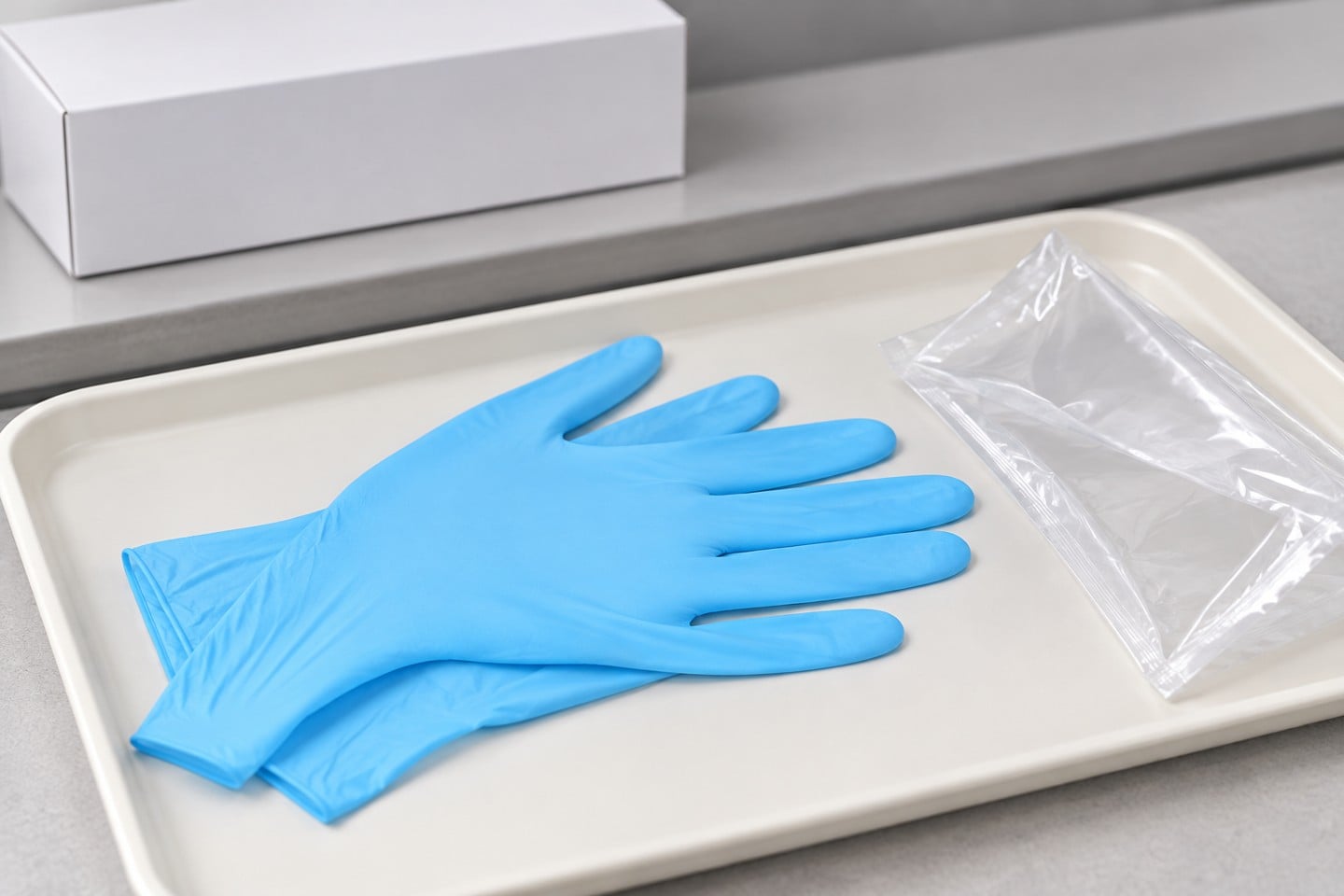
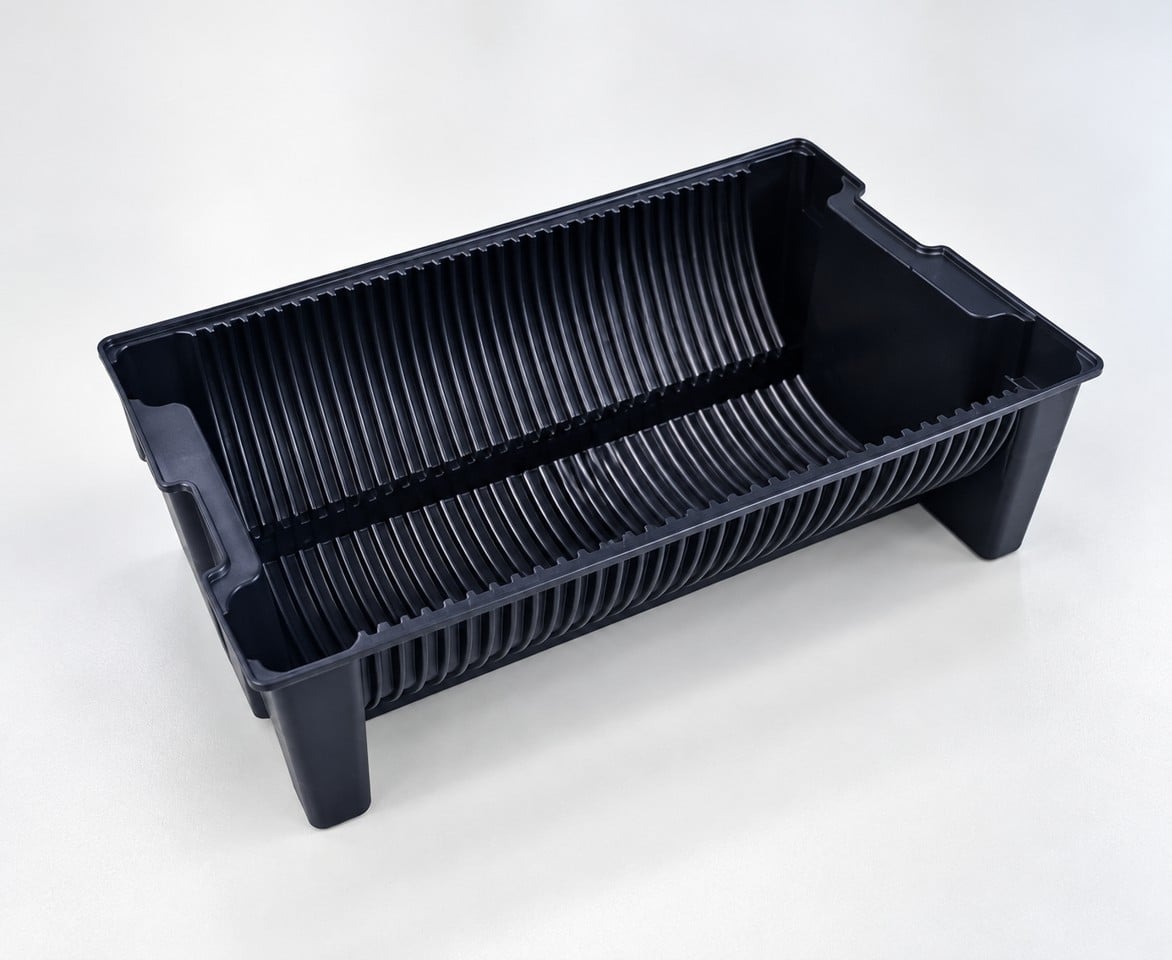
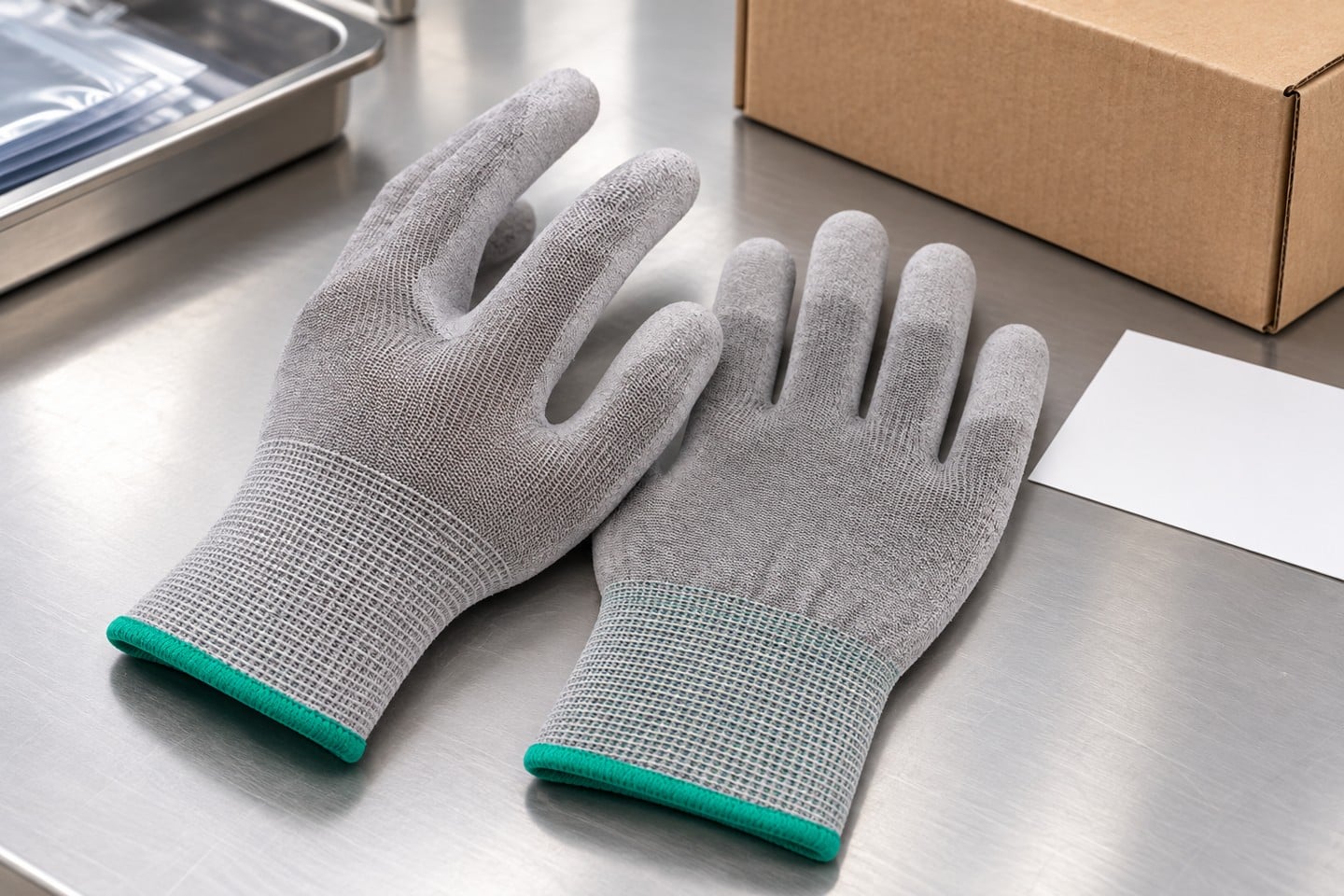
Gebruik de SWESD blue nitrile glove product as a concrete product reference when asking these questions. The product photo shows the glove, not a validated packaging system. Illustrations in this article show possible inspection arrangements rather than a promise about supplied packs. Confirm the offered configuration with SWESD before approving receiving instructions or writing a specification around assumed double bags, seals or unit counts.
Distinguish outer damage from inner condition
A damaged shipping carton is a signal to investigate, not an automatic description of every inner pack. Keep the carton and its identity available while inspecting the relevant inner packaging according to the receiving procedure. Record crushing, wet areas, punctures, loose closures and signs of unexplained opening. If a transport event could have affected contents, involve the person authorized to decide the investigation scope. Do not simply discard the evidence and place the packs into normal stock.
Conversely, an intact outer carton does not remove the need to check the identified inner packs. Damage can occur during packing, transfer or storage. Establish which surfaces are intended to contact the controlled environment and which should remain outside it. Any uncertainty about the intended package layers should be resolved with the supplier and process owner before the first transfer. Staff should be able to explain the purpose of each layer they remove.

Inspect without creating the defect you seek
Place the package on the approved inspection surface with adequate lighting and room to handle it. Look over accessible seams, corners and closure areas without squeezing or stretching the pack beyond its intended handling. A visual check can identify visible damage, but it cannot demonstrate a barrier property or validate an unseen seal defect. Where a formal packaging test is required, use the specified method and equipment with trained personnel rather than an improvised manual challenge.
Do not open a saleable pack just to reassure yourself that it is closed correctly. Destructive examination belongs in a defined sampling or investigation plan. Record the units affected by any opening so that they cannot return to unopened stock unnoticed. Where the supplier uses a resealable construction, ask what resealing is intended to accomplish and whether your application permits that condition after opening. Resealable does not mean indefinitely suitable for controlled use.
Build a visible receiving decision
| Observation | Question to resolve | Controlled response |
|---|---|---|
| Outer carton crushed | Could inner packs or identities be affected? | Preserve evidence and inspect under the receiving plan |
| Inner pouch punctured | Is the approved protective condition lost? | Hold affected stock for disposition |
| Unclear seam or closure | Does the actual closure match the offered specification? | Compare supported instructions; escalate uncertainty |
| Missing lot identity | Can contents be linked to released material? | Resolve identity before issue |
| Opened return | Is continued use permitted under the procedure? | Apply approved opened-pack status and storage rule |
This table offers a qualitative decision framework. It provides no universal seal-strength limit, shelf life or acceptable puncture size. Your acceptance criteria should come from the purchasing specification, supplier instructions and process requirements. Include examples of genuine acceptable and unacceptable conditions in training materials, with the product identity retained. A single vague instruction to check packaging is difficult to apply consistently across shifts.
Separate hold from rejection. A hold preserves stock while an authorized person resolves uncertainty; rejection is a disposition reached through the applicable process. Make both states visible in the inventory and physical storage arrangement. Avoid leaving suspect packs on the same shelf as released material with only a verbal reminder. A temporary note that falls off during transfer is not a reliable control.
Keep lot identity readable through transfer
Before removing an outer layer, check where the supplier lot and item identity are printed. If removing the layer would remove the only identity, use the approved method to retain the relationship. Do not guess that all visually identical pouches came from the same lot. Preserve distinctions between sizes, constructions and deliveries when stock is split. Record unexpected mixed lots or missing labels before issuing material to production.
De ESD test report guide helps separate product evidence from delivery identity. A report for an approved glove does not automatically release a pouch whose contents or history are uncertain. Likewise, a readable lot code cannot establish that a pack remained intact. Receiving should check these questions separately and connect the answers in the release record so a later investigation can recover the relevant evidence.
Approve the route into the work area
Map the actual route from receiving to storage, staging and point of use. Identify the place where each outer layer is removed and the surfaces on which inner packs are handled. Keep shipping materials out of areas where your procedure excludes them. Specify what happens if an operator touches an unapproved surface or drops a pack during transfer. The response should be practical enough to follow during a busy shift.
Do not invent a cleaning agent or wipe-down method for a package because another site uses one. A liquid can affect packaging, printing or contents, and its suitability requires an approved compatibility decision. Ask the supplier what handling is supported, then qualify the actual transfer method for your process. If no supported method is available, choose a suitable offered packaging configuration or revise the route rather than relying on an unverified treatment.
Control opening and partially used packs
Open the pack at the approved location using the intended opening method. Keep removed outer materials separate from the gloves and clean contact surfaces. Avoid cutting so deeply that a tool contacts or damages the glove. Where an opening tool is necessary, its control and cleaning belong to the local procedure. Operators should be able to retrieve gloves without repeatedly reaching over dirty packaging or handling unnecessary contact surfaces.
For a partially used pack, define whether continued storage is permitted and how its identity, opening condition and protection are maintained. No generic number of days can be justified for every workplace. Use supported instructions and process validation to establish a rule, then make the status visible at the issue point. Do not mix loose gloves from uncertain packs into a communal container whose label implies that everything inside remains new and approved.
Keep electrical suitability separate
Packaging acceptance does not demonstrate that the glove is appropriate for the electrical task or the worn configuration. The EOS/ESD Association material-control overview explains the broader need to select and control suitable materials. Your glove qualification and verification should follow the applicable ESD program. A package marked for cleanroom use cannot substitute for that technical decision, nor does electrical evidence establish cleanliness for every process.
Fit and contact coverage remain separate considerations too. Review the glove sizing and dexterity guide en de finger cots versus gloves comparison when defining the approved task. A package containing the wrong size or protection format should not be released merely because its closure looks intact. Receiving records should retain the exact product designation needed to prevent such substitutions.
Train the exception route and review trends
Use a short exercise with examples of a crushed carton, uncertain inner seam, unreadable lot and opened return. Ask staff to demonstrate the hold location and identify who makes the next decision. The EOS/ESD Association training and auditing guidance supports checking whether procedures are carried out as intended. Record the observed gaps and fix confusing instructions rather than treating attendance at training as proof of correct practice.
Periodically review damage records by supplier, package format, transport route and storage point. Distinguish supplier defects from damage caused by local handling before deciding a corrective action. Include a representative pack description, photos of the actual condition and preserved lot identity in supplier discussions. An effective packaging check produces a clear release decision and useful evidence; it should reduce uncertainty at the point of use rather than add paperwork that nobody can interpret.
Electrical-control learning resource
The following EOS/ESD Association educational video provides ESD-control background for selecting and managing materials. It is not a packaging integrity test demonstration, and it does not validate glove cleanliness, sterility or the conceptual pouches shown here. The receiving and transfer decisions above must be established through your actual product evidence and approved procedure.
Veelgestelde vragen
Does a closed pouch prove glove sterility?
No. A sterile claim requires evidence for the exact supplied item and packaging system.
Should every damaged carton be rejected automatically?
Investigate the relevant inner packs and transport evidence under the receiving procedure; an authorized disposition determines acceptance or rejection.
Can a visual seam check validate barrier performance?
No. It can find visible defects but does not replace a specified packaging test.
Can any disinfectant be used on glove packs?
No. Use only an approved method supported by packaging compatibility and the actual process requirements.
How long may an opened pack remain in use?
Use the supported instructions and a locally approved process rule; no universal duration applies to every product and workplace.

Plaats een reactie