- Turbo
- Blog
Returnable ESD packaging pool management keeps enough approved containers available while controlling ownership, inspection, cleaning and loss across the return route. Size the pool from actual circulation time and demand rather than buying a guessed reserve. Distinguish containers carrying products, empty returns, units awaiting release and damaged units on hold. A container is available only when its identity and condition are accepted for the next use. This guide focuses on the reusable pool and handoff process; qualification of the protective package remains a separate requirement for each route and product family.
Define what belongs to the pool
Identify the accepted container models, lids, inserts and approved product configurations. A mixed collection of visually similar totes is not necessarily one interchangeable pool. Some units may serve a different package, customer or handling route. Record those restrictions before assigning stock to a common location. Decide whether containers are owned by your factory, a customer, a supplier or a service provider, and establish who may approve changes or retirement.
Include accessories in the ownership record where their absence makes the container unusable. An empty tote without its required lid or approved insert should not be counted as ready stock. The ESD container labeling guide explains how permanent asset identity differs from the contents of a particular trip. Keep that distinction throughout the pool so unloading a product does not erase the container’s inspection or ownership history.
Map the complete return cycle
Follow a representative container from available storage through loading, dispatch, receiving, unloading, empty return, inspection and release. Record where it waits and which team controls each handoff. A route with a short travel time can still have a long circulation cycle if empty containers accumulate at the receiving facility. Do not calculate the required pool using truck travel time alone when inspection, consolidation and return scheduling also consume time.
Measure circulation consistently. Decide what event starts the cycle and what event marks return to usable stock. Keep an unresolved container on hold visible as unavailable rather than calling it returned and counting it twice. The interfacility packaging guide addresses protection across the route; the pool record here establishes how the physical carrier returns to a controlled, usable state.
Size the pool with explicit inputs
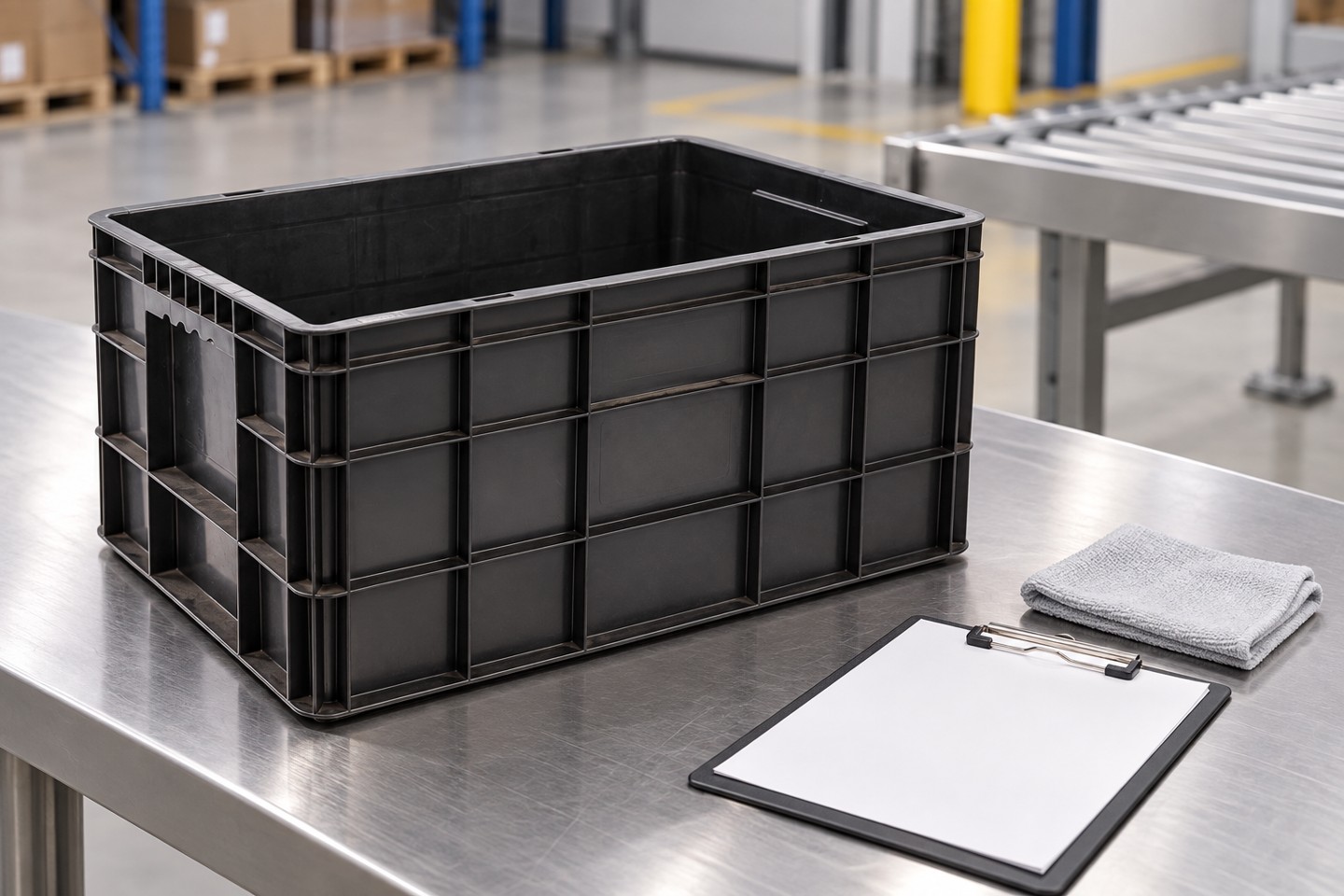
A simple planning starting point is average container demand per day multiplied by average circulation days, plus an explicitly justified reserve. Keep units consistent and round to complete containers. For illustration only, a route consuming 20 containers per day with a three-day complete cycle needs 60 containers in circulation; adding a chosen reserve of 10 gives a planning total of 70. These hypothetical figures are not SWESD operating data, a recommended reserve or a performance guarantee.
Review the variation around those averages before ordering. Longer return cycles, demand peaks and a batch of rejected containers can reduce availability. Use actual observations to choose reserve policy and assess whether one average hides an unreliable route. If demand differs by model or customer allocation, calculate those pools separately. An overall surplus does not solve a shortage of the one approved configuration required by the next production order.
Track useful statuses rather than a single total
The following status structure helps identify where containers are tied up. Adapt it to the actual system while preserving the distinction between returned and released. The status definition should tell staff what action is allowed next, not merely describe where an item was last seen.
| Pool status | Meaning | Next authorized step |
|---|---|---|
| Available | Identity, condition and required accessories accepted | Load the permitted product configuration |
| Loaded or outbound | Container associated with a current controlled load | Transfer through the approved route and record required handoffs |
| At receiving partner | Carrier still within the outbound and return cycle | Unload under the approved product handling procedure |
| Empty return | Contents removed but release not yet complete | Receive, inspect and perform required cleaning or verification |
| Hold | Damage, uncertain identity or acceptance issue unresolved | Quarantine pending a documented disposition |
| Retired | Unit removed from the approved usable pool | Close the asset record and prevent accidental reuse |
Reconcile the status record with a physical count at defined intervals. Investigate unexplained differences and containers that remain in one status beyond the expected process time. Avoid setting a universal delay threshold without observing the route. Use the findings to improve return scheduling, receiving capacity or release instructions before assuming that every shortage requires a purchase of new totes.
Establish receiving and release ownership
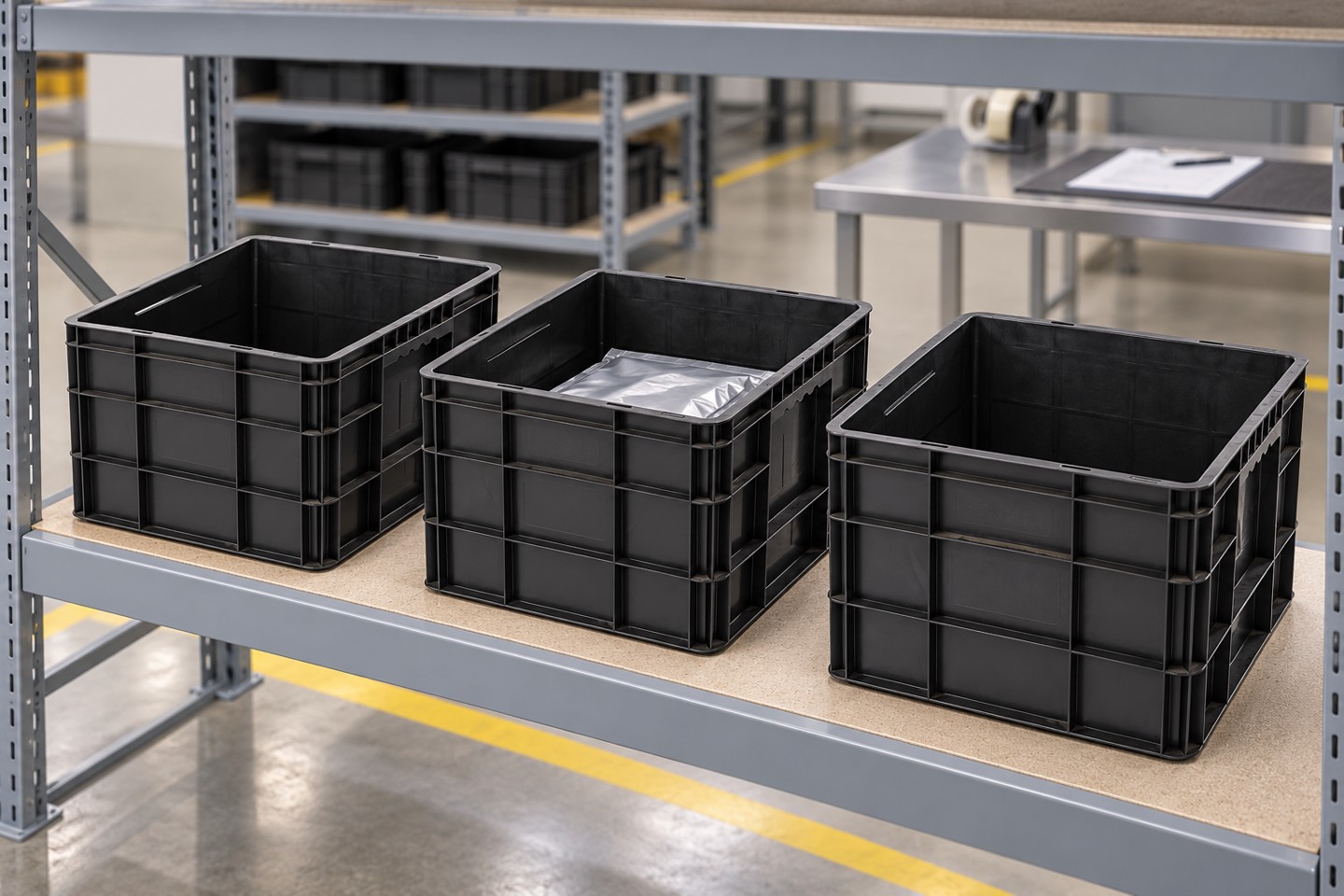
At empty-container receiving, verify the identity, model, accessories and visible condition. Keep unknown or damaged units separate from the accepted pool. Assign responsibility for cleaning and the checks required before the next load. A transport driver returning a tote is not the same as quality releasing it for sensitive electronics. Define the handoff so the ready-stock location contains only accepted units.
For a real model reference, review SWESD’s ribbed ESD tote box and establish the approved configuration with the supplier. The box cleaning-validation guide covers the process evidence needed where cleaning is part of release. Keep the instructions specific to the accepted model, insert and contamination risk rather than using one blanket process for every returned container.
Maintain ESD protection through shared handling
Each facility must understand the accepted product and packaging arrangement. A reusable outer tote can travel between locations while the sensitive item relies on a qualified inner package. The EOS/ESD Association’s control principles distinguish packaging inside an EPA from protection needed outside it. Do not assume that a supplier’s conductive description gives the complete return route discharge shielding.
The empty-return route also matters because it can introduce contamination, substitute inserts or damage surfaces before the next load. Define which verification checks apply after return, cleaning or repair. The ESD training and auditing guidance provides context for documented requirements and consistent release. Keep evidence accessible to the team responsible for acceptance rather than treating a permanent asset label as proof of current condition.
Control loss without overstating tracking capabilities
An identifier can support custody records, but it does not capture a handoff unless the process actually records the event. Audit representative trips and compare the system with the physical route. Examine transfer points where totes are exchanged, repacked or stored outside the normal location. A sophisticated code cannot fix an undefined ownership rule or a receiving team that has no responsibility for reporting empty stock.
Agree with partners how missing containers are investigated and how ownership disputes are resolved. Keep commercial terms in the responsible purchasing agreement rather than inventing charges or penalties in an operating instruction. For operational improvement, identify recurring causes such as delayed consolidation, unrecorded scrap or use on an unauthorized route. These findings can reduce the required reserve without claiming a saving until the actual count and circulation data support it.
Plan repair, replacement and retirement
Remove damaged units from available stock while their disposition is decided. If a repair is proposed, obtain supplier approval and the required verification before release. Do not count a cracked tote as usable merely because a temporary patch allows it to stand on a shelf. The repair-versus-replacement guide separates cosmetic condition from the functions affected by damage.
Record retirement against the container identity so a discarded unit does not remain in the system as a missing return. Prevent rejected units from returning accidentally to a partner’s available pool. When replacement models or accessories differ, assess whether the new configuration can join the existing pool. A mixed pool created through uncontrolled replacement can increase sorting work and conceal shortages of qualified units.
Use a focused pool review
Review availability, circulation time, hold quantity, loss and replacement by accepted model. Keep the figures tied to a defined period and route. Compare purchasing needs with operational causes of shortage. A growing hold queue may call for better receiving and inspection capacity; a long empty-return delay may call for a changed collection schedule. Neither is automatically solved by more containers.
Include the people who load, receive, clean and return the packaging in the review. Record the selected action, owner and evidence expected at the next check. The goal is a pool whose usable quantity is understandable and reliable. Treat calculated requirements as planning assumptions until the route data confirm them, and avoid presenting an estimated circulation improvement as an achieved result.
Further learning: return flow in material handling
The NPTEL lecture below provides background on organizing material handling systems. Use it to consider both outbound and empty-return movement, while the actual pool record and approved release process govern the reusable containers.
Educational video: Lec 27: Material handling systems, NPTEL IIT Guwahati.
Veelgestelde vragen
Are returned empty totes immediately available?
No. Availability requires the identity, condition, accessories and applicable release checks to be accepted.
How is a starting pool size calculated?
Multiply consistent daily container demand by complete circulation days and add a justified reserve, then review demand and return variability.
Does a barcode eliminate container loss?
No. The actual handoff process must record events, and physical reconciliation is still needed to investigate missing units.
Can different tote models share one pool?
Only where their configurations are accepted as interchangeable for the intended products and routes. Otherwise track their availability separately.
What should be addressed before buying more containers?
Review long return delays, hold queues, unrecorded retirement and misplaced stock to determine whether the shortage is operational or a real quantity need.



Plaats een reactie