- Turbo
- Blog
Floor marking tape incoming inspection should confirm that the delivered rolls match the approved order, remain identifiable and arrive in acceptable condition before installation. Check product identity, color or pattern, the dimensions specified by the order, packaging and any required supplier evidence. Hold uncertain stock separately and resolve discrepancies before it is issued. A roll that looks suitable does not prove floor compatibility, electrical properties or a safe installed layout. For electronics manufacturing, receiving acceptance is one step in a wider process that also controls EPA boundaries, floor condition, installation and ongoing inspection.
Establish the approved purchase reference
Use the purchase order and controlled specification as the receiving reference. Record the supplier’s exact product designation, ordered variant, agreed dimensions, quantity and required documents. Color names alone may be ambiguous, particularly when a site uses similar colors for several purposes. When pattern or contrast is significant, reference an approved sample, drawing or description that receiving personnel can access.
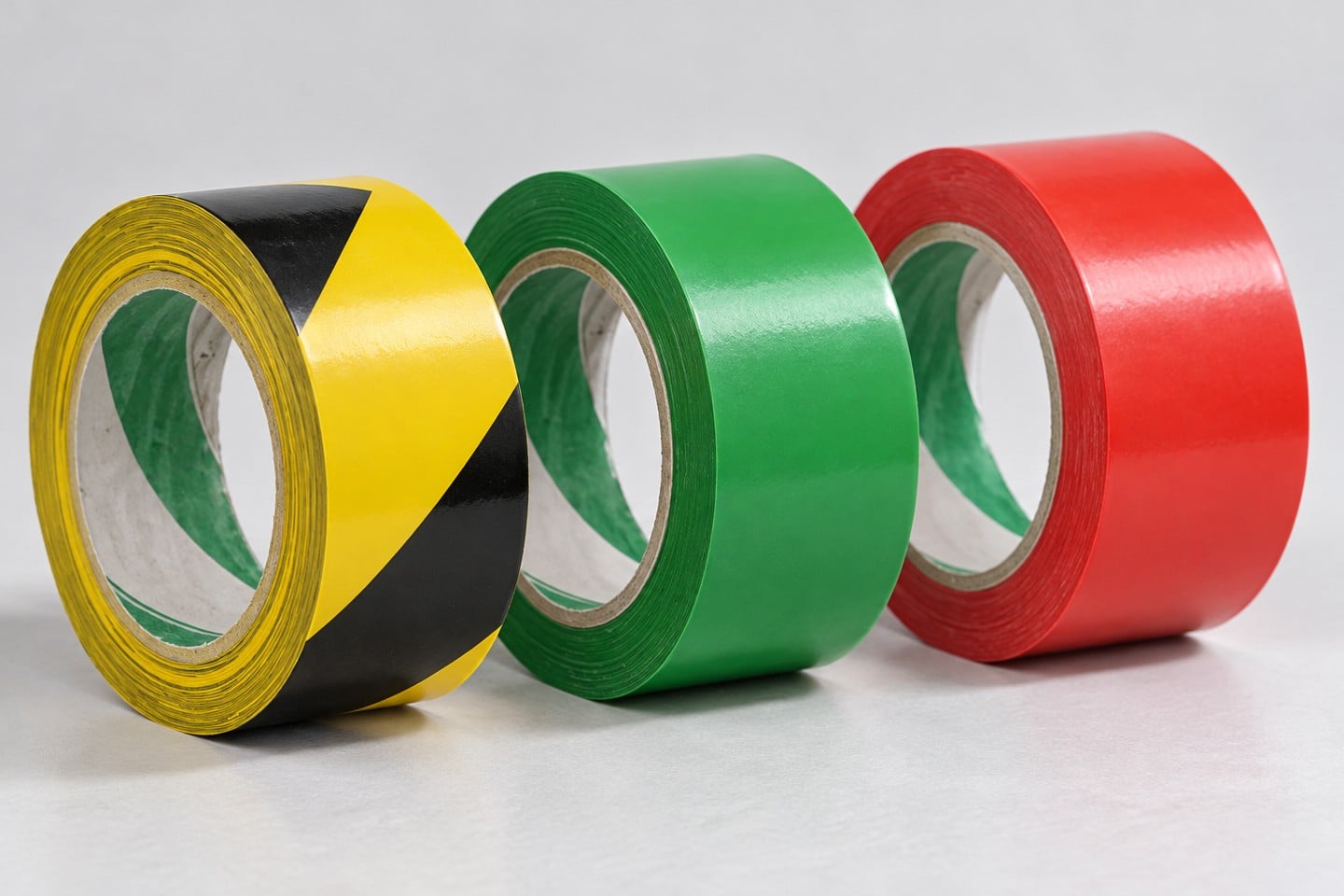
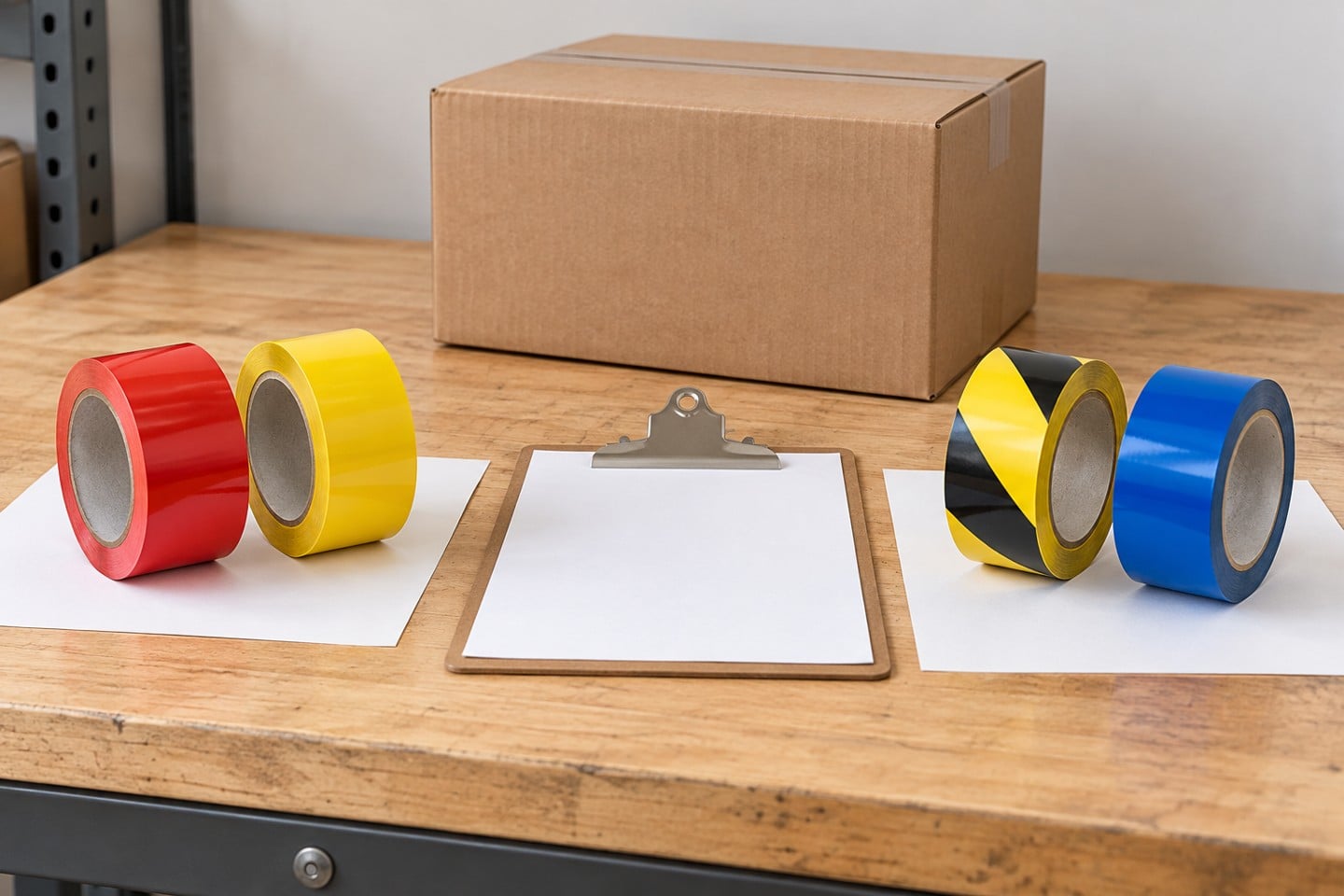
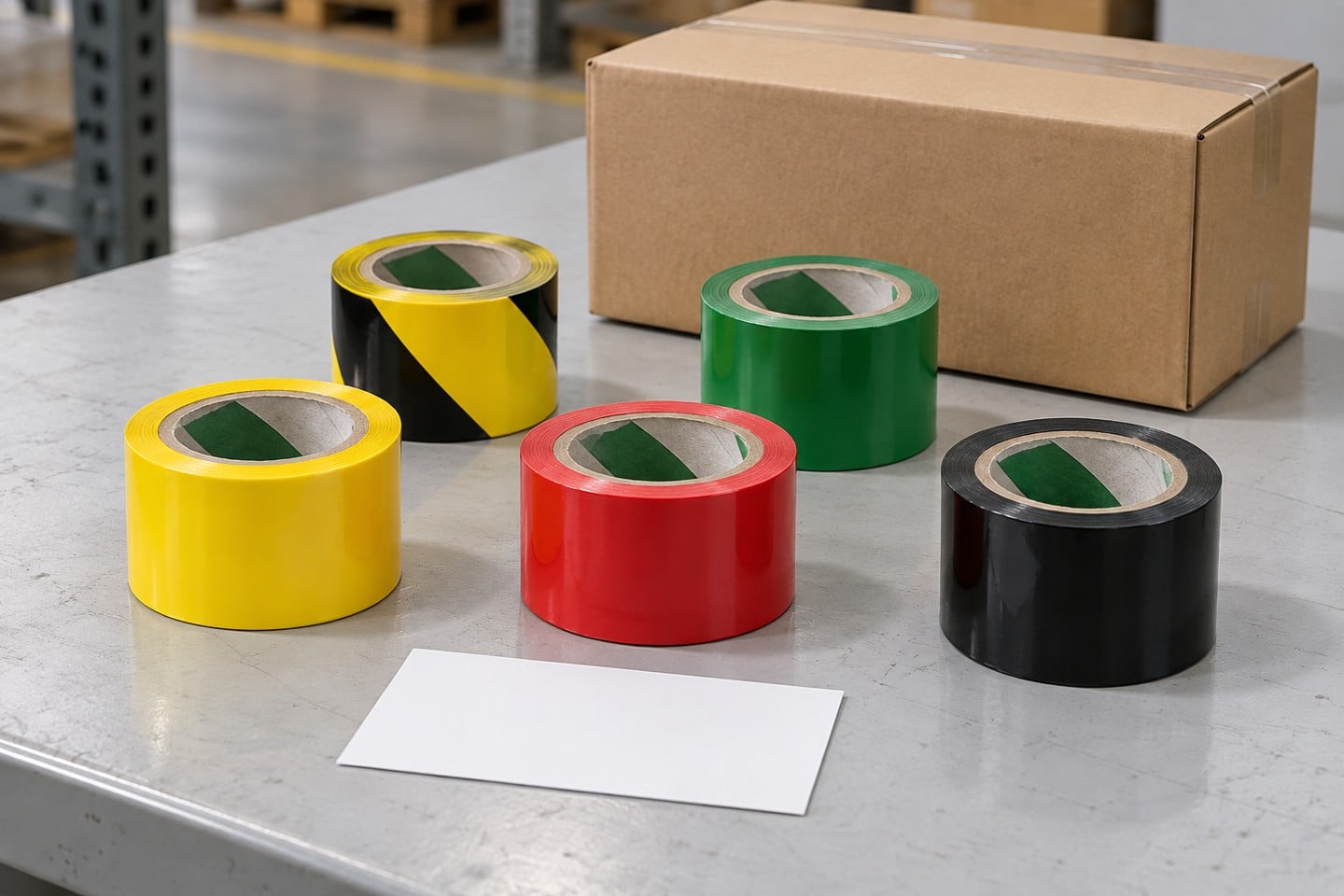
The SWESD floor marking tape product supplies the actual product reference for the illustrations. Its range of plain and striped rolls does not establish a universal color code or electrical qualification. Verify the current specification and the intended application with the supplier. Do not infer conductive behavior, ESD suitability or compatibility with every floor from a product photograph or a general category name.
Separate receipt, installation and service decisions
Give each stage a clear question. Receiving asks whether the delivered stock matches the order and can be accepted into controlled inventory. Installation asks whether that approved tape can be applied to the actual prepared surface using an authorized method. In-service inspection asks whether the installed marking remains legible, secure and appropriate to the current layout.
Keep those decisions separate in the record. The floor marking planning guide addresses layout and communication. This article addresses the delivered rolls before that layout is installed. A correct receiving result should not be used to bypass a required floor trial, and a successful trial should not excuse receiving a later unidentified or different product.
Review shipment identity before opening rolls
Compare carton identification with the delivery documents, then check the roll or inner-pack identity where available. Record discrepancies between the outer carton and its contents. If several product variants arrive together, keep them distinguishable during unpacking and counting. Avoid discarding the only original identification before the received stock has been linked to the inventory record.
Where a lot or date identifier is required by the purchase agreement, verify its presence and record it as supplied. Do not invent a lot number when the manufacturer uses a different identification system. If the supplier does not provide the agreed information, mark the evidence as missing and request clarification. An internal receipt number can identify the site’s transaction, but it does not become a manufacturer lot number by being written on a label.
| Receiving observation | Tindakan | Bukti yang perlu disimpan |
|---|---|---|
| Product identity matches the order | Continue the specified checks | Supplier designation and receipt link |
| Color or pattern differs | Hold for authorized review | Actual variant and approved reference |
| Package or roll visibly damaged | Separate affected stock for inspection | Photographs, location and quantity |
| Required document missing | Keep applicable release on hold | Request, owner and outstanding requirement |
| Dimensions require verification | Use the agreed inspection method | Measurement, criterion and item identity |
| Stock accepted for inventory | Transfer to identified storage | Acceptance status and required lot information |
The table provides qualitative receiving actions rather than universal tolerances or test thresholds. Exact limits and sampling rules must be specified in the purchase agreement or controlled inspection plan. The EOS/ESD Association’s prosedur kawalan asas dan panduan bahan provides context for material control in sensitive-device handling; it does not certify a particular marking tape or prescribe its receiving dimensions.
Examine packaging and visible roll condition
Look for wet or crushed packaging, damaged roll edges, unexpected deposits, severe deformation and other conditions defined by the inspection plan. Photograph a suspected problem before altering the packaging. Describe the observation precisely, including its location and extent, instead of using an unexplained phrase such as poor quality that the supplier cannot investigate.
Distinguish packaging damage from confirmed product damage. An outer carton problem may require further inspection without proving every roll is unusable. Equally, apparently intact packaging does not prove the contents are acceptable. Follow the site’s authorized method for examining affected stock, and keep questionable items separate until the responsible person determines their disposition. Do not clean away a complaint feature merely to make the shipment look acceptable.
Verify ordered dimensions without creating new damage
Measure only the characteristics required by the agreed inspection plan, using an appropriate method and equipment. Identify whether a value is nominal or subject to a specified tolerance before deciding that it passes. Avoid assuming that an instrument reading alone creates an acceptance rule. Record the measured characteristic, item identity, method and criterion so the comparison can be understood later.
For roll length, use the contractual evidence or approved verification method. Do not infer usable length from outside diameter, carton weight or appearance unless a validated method supports that conclusion for the actual product. Unwinding every roll can expose adhesive and change the stock being accepted. If a destructive or consuming check is required, define the sample, disposition and replacement arrangement in advance.
Compare appearance with the intended identification system
Check the ordered plain color or stripe pattern under the agreed viewing conditions. Record obvious mismatches or inconsistent presentation within the shipment. A photograph can document a concern, but screen appearance may differ from the physical item. Where color acceptance is important, use the site’s approved reference and method rather than deciding from a phone image alone.
Receiving should verify the ordered variant, not redesign the site’s marking convention. If a substitution arrives in a different color or pattern, hold it for review even when it seems visually clear. Changing a familiar boundary or aisle indicator may require communication, layout review and training. A buyer’s informal acceptance should not silently change what a marking means to everyone working in the area.
Request evidence for claims that matter
Identify which claims are necessary for the application and what evidence the agreement requires. Material identity, storage instructions, installation conditions and product-specific technical documents may all be relevant. Electrical claims need the responsible ESD review and appropriate supporting evidence; appearance, a black color or an anti-static description cannot replace that evaluation.
Keep the supplier document linked to the actual supplied product and revision. A generic sheet for a different tape family may explain a material but not establish acceptance for these rolls. Ask for clarification when the relationship is unclear. Record a pending evidence decision separately from physical receipt so the warehouse does not interpret a counted delivery as permission to issue the stock for controlled use.
Use an authorized trial for floor compatibility
If the purchase requires a trial, perform it on an approved representative surface under a defined method. Record the tape identity, floor or coating identity, preparation, application conditions, observation points and acceptance criteria. Keep the scope limited to what the trial actually demonstrates. A successful patch on one surface does not establish suitability for every floor finish, cleaning agent or traffic condition.
Treat removal and residue as part of the planned assessment when relevant. The panduan penangguhan pita lantai menjelaskan mengapa pembersihan sisa perlu dikualifikasi di lantai sebenar. Jangan mengubahsuai pelarut yang kuat atau ujian calar yang merosakkan semasa penerimaan. Jika ujian menggunakan sebahagian daripada gulung, rekodkan penggunaan tersebut dan kenal pasti apa yang masih tersedia untuk pemasangan.
Putuskan penerimaan, tahan atau tolak dengan jelas
Gunakan status yang mengawal apa yang berlaku seterusnya. Stok yang diterima boleh memasuki laluan inventori yang diluluskan. Stok yang ditahan kekal berasingan sehingga bukti yang ditetapkan atau semakan dilakukan. Stok yang ditolak mengikuti proses pulang atau pelupusan yang dipersetujui. Rekodkan siapa yang membuat keputusan, sebab dan sebarang sekatan yang diberi kuasa. Janji pembekal untuk menghantar maklumat kemudian tidak harus disalah anggap sebagai maklumat itu sendiri.
Di mana hanya sebahagian penghantaran yang terjejas, kenal pasti item dan kuantiti sebenar daripada membuat kenyataan umum yang tidak pasti. Rekodkan hubungan antara sampel yang diperiksa dan populasi yang diterima mengikut pelan pensampelan tapak. Jangan laporkan bahawa setiap gulung diperiksa secara individu jika hanya sampel yang diperiksa. Simpan bukti yang cukup untuk aduan pembekal tanpa melebih-lebihkan liputan pemeriksaan.
Pindahkan gulung yang diterima ke dalam stor yang dikenalpasti
Pastikan bahan yang diterima, ditahan dan dikembalikan dapat dibezakan secara fizikal atau prosedur. Simpan maklumat produk dan lot yang diperlukan melalui sebarang penghantaran terbahagi, isu sebahagian atau pemindahan dalaman. Gunakan arahan penyimpanan pembekal sebenar untuk pita yang dibekalkan; elakkan menetapkan jangka hayat, julat suhu atau tarikh luput yang tidak disokong berdasarkan produk pelekat lain.
Apabila gulung dikeluarkan, kaitkan dengan kerja pemasangan di mana keperluan penjejakan tapak memerlukannya. Pastikan gulung separa yang tidak digunakan dapat dikenalpasti dan lindungi mereka menggunakan kaedah yang diluluskan. Gulung tanpa identiti yang boleh dipercayai tidak harus diberikan kepada pemasangan seterusnya hanya kerana warnanya sepadan. Selesaikan ketidakpastian sebelum ia bergabung dengan stok biasa dan menyembunyikan keputusan penerimaan asal.
Selesaikan kitaran dengan pemasangan dan pemeriksaan
Beritahu pemasang produk yang diterima dan sebarang had semakan penerimaan. Kongsi kecacatan berulang dengan bahagian pembelian supaya pesanan masa depan dapat menangani kekurangan pembungkusan, pengenalan atau bukti. Jika pita yang dipasang kemudian terangkat atau menjadi sukar dibaca, bandingkan identiti yang diterima dan rekod aplikasi sebelum menganggap bahawa pembekal mengubah bahan atau persediaan lantai salah.
Gunakan panduan pemeriksaan pita yang dipasang untuk tahap kitar hayat seterusnya. Persatuan EOS/ESD panduan latihan dan pengauditan menyokong semakan sama ada proses kawalan keseluruhan berfungsi dalam praktik. Video persatuan berikut adalah latar belakang program ESD; ia bukan ujian pelekat, arahan kod warna atau kelulusan pita ini.
Soalan Lazim
Adakah penerimaan masuk membuktikan keserasian lantai?
Tidak. Sebarang ujian keserasian yang diperlukan dan penerimaan pemasangan adalah keputusan berasingan untuk permukaan dan kaedah sebenar.
Bolehkah panjang gulungan dianggarkan dari diameter luar?
Jangan gunakan anggaran itu sebagai bukti penerimaan melainkan kaedah yang sahih menyokongnya untuk produk sebenar.
Adakah pita hitam secara automatik mempunyai ciri ESD?
Tidak. Warna bukan kelayakan elektrik; dapatkan bukti produk yang berkaitan dan semakan yang bertanggungjawab.
Bolehkah nombor resit dalaman menggantikan lot pengeluar yang hilang?
Ia boleh mengenal pasti penerimaan, tetapi tidak harus diwakili sebagai lot pengeluar. Selesaikan sebarang pengenalan yang hilang yang diperlukan.
Perlukah warna yang berbeza diterima sebagai setara?
Tahan untuk semakan yang dibenarkan apabila ia berbeza daripada pesanan. Penggantian warna mungkin menjejaskan penandaan tapak dan sistem komunikasi.

Tinggalkan Balasan