- Turbo
- Blog
ESD trolley shelf spacing should accommodate the complete loaded package, its support arrangement and the clearance needed to place and remove it safely. The outside height of an empty box is only one input. Include lids, handles, fixtures, protective packaging and the normal retrieval motion, then confirm the proposed layout in the exact approved trolley configuration. Wider spacing is not automatically better: changing shelf locations can affect capacity, stability and access. Buyers should obtain supplier acceptance for the intended arrangement and verify fit with representative loads before approving a mixed-size production route.
Map the real load families
Start with the containers and packages that will travel together. Record their loaded dimensions, gross mass, orientation and contact footprint. Include any cover that remains fitted during movement. Identify which packages use dividers or dedicated supports and which must remain separated from other loads. This creates a useful load family rather than a list of box sizes without their handling context.
Separate routine combinations from exceptions. A layout for frequently used packages should not be compromised by an occasional unusually tall fixture without a review. Ask whether the exception needs another trolley, a dedicated level or a controlled arrangement. Keep the decision visible to operators so an improvised package placement does not become normal practice. The specification should describe permitted combinations, not simply claim that the trolley holds mixed sizes.
Measure usable clearance, not just shelf pitch
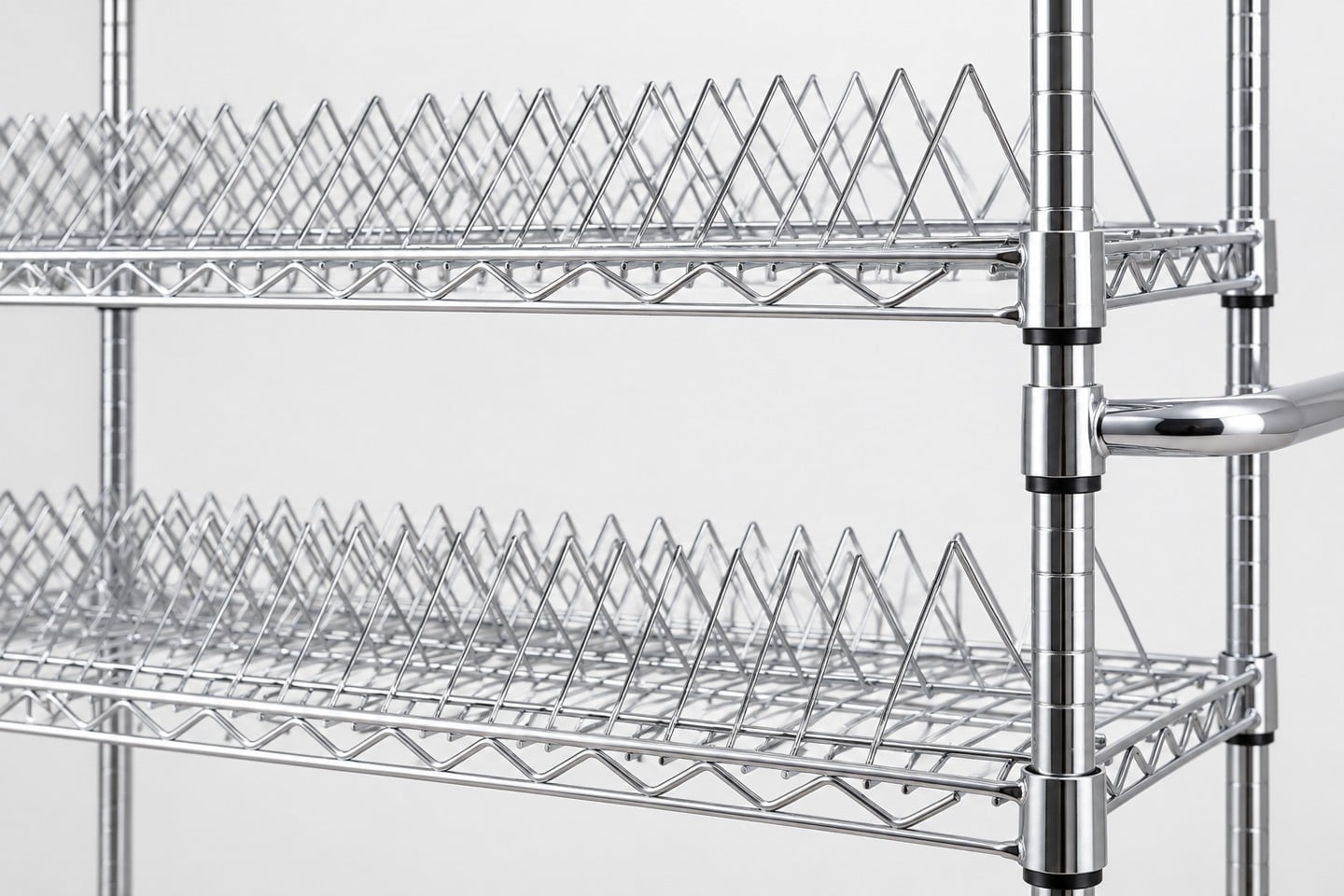
The distance between nominal shelf levels can differ from the free space available to a package. Shelf edges, upper-level supports, divider rows and other existing features can constrain the opening or retrieval path. Ask the supplier to identify the relevant geometry on the controlled drawing and compare it with the complete load envelope.
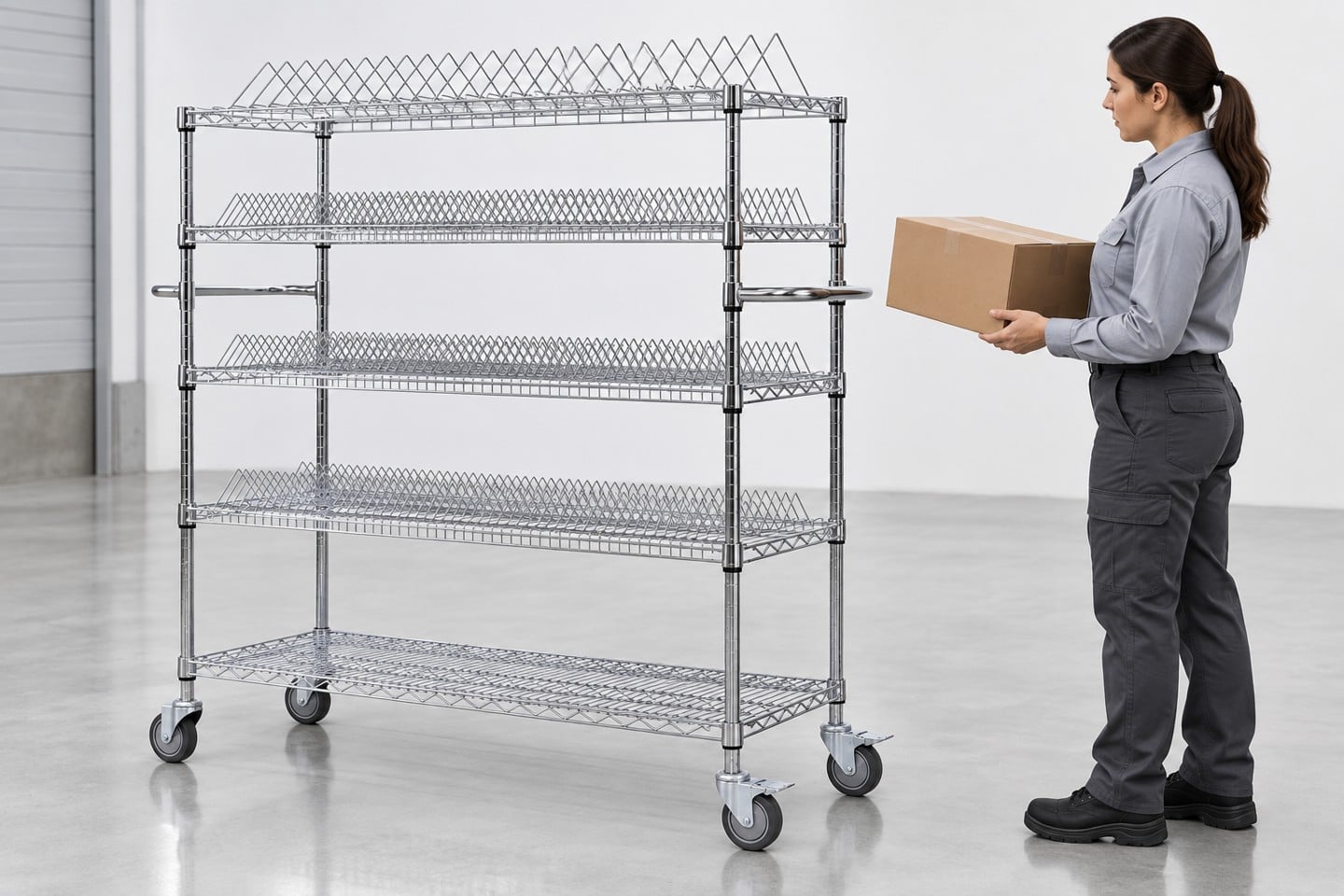
The SWESD wire shelving and transport equipment reference includes real structures for discussing these interfaces. The illustrated trolley has existing wire dividers; those features should remain part of a fit review. Do not remove them in a drawing or photograph to make a large package appear compatible. Their permitted use and any configuration change require supplier confirmation. No spacing dimension is established by the editorial images in this article.
Account for the insertion and removal motion
A package that fits in a static opening may still be awkward to load. Observe the approved orientation and the route by which hands or handling aids approach. The person performing the task may need room to grasp the package, clear a rim or set it down without dragging it across an unsuitable surface. Include these motions in the trial plan.
Do not invent a universal hand clearance. The practical requirement depends on package shape, approved gloves, retrieval method and site task assessment. Use representative operators and accepted handling equipment where the site plan calls for them. A site task assessment should examine reach, package control and transfer demands under the actual conditions. Record the resulting acceptance criteria instead of assigning a shelf interval from a generic example.
Use a mixed-load spacing checklist
The table below is a proposed purchasing and trial checklist. It does not assign dimensions, load ratings or ergonomic limits. Establish the actual values and acceptance conditions with the supplier and site owners, then link the completed checklist to the exact trolley configuration.
| Input | Apa yang hendak dirakam | What the fit trial must confirm |
|---|---|---|
| Package envelope | Loaded size including retained covers and handles | Accepted orientation clears the real opening |
| Sokongan | Footprint and existing shelf or divider geometry | Load rests on approved supports |
| Retrieval | Grasp and approved insertion motion | No forced access or unapproved dragging |
| Konfigurasi | Shelf locations and accessory identities | Matches supplier acceptance |
| Mixed loading | Permitted combinations and delivery sequence | Normal partial states remain accepted |
| Laluan | Complete loaded outline and parking area | Access and transfer remain practical |
Photograph the accepted load arrangement and record package identities alongside the controlled drawing. Where several configurations are permitted, identify them separately. An operator should be able to tell which arrangement applies without interpreting a vague instruction to leave enough room. If a new package does not match an accepted family, route it for review rather than forcing it into the nearest open shelf.
Preserve the approved supports and dividers
Existing shelf geometry controls how a load is supported and separated. A wire divider intended for one package type may not provide the correct support for a flat box or unusual fixture. Confirm the accepted contact arrangement before adding liners, relocating dividers or using a package across several supports.
Ask the supplier which adjustments are permitted and how they are performed under the approved instructions. A change in shelf location or a removed support can affect the assembly beyond the immediate opening. Do not drill new holes, cut wire features or add a makeshift spacer to obtain a convenient height. The mesh cart versus solid-shelf cart comparison helps frame the broader support choice without treating either design as universally suitable.
Review payload and stability with the new layout
Shelf spacing and load capacity are connected through the accepted configuration. Identify how the proposed package masses are distributed among the levels and which partial-load states occur during delivery. A layout that provides excellent access may place heavy loads differently from the supplier’s rated arrangement.
Keep the mechanical review explicit. Ask for the accepted assembly capacity, individual support conditions and stability requirements for the proposed configuration. Do not assume that changing spacing leaves every rating unchanged. The PCB transport load-rating RFQ guide explains how to ask for configuration-specific evidence. The current article addresses geometry and access; it does not provide a new payload rating or an improvised mechanical test.
Plan the loading and delivery sequence
cURL Too many subrequests by single Worker invocation. To configure this limit, refer to https://developers.cloudflare.com/workers/wrangler/configuration/#limits.
cURL Too many subrequests by single Worker invocation. To configure this limit, refer to https://developers.cloudflare.com/workers/wrangler/configuration/#limits cURL Too many subrequests by single Worker invocation. To configure this limit, refer to https://developers.cloudflare.com/workers/wrangler/configuration/#limits cURL Too many subrequests by single Worker invocation. To configure this limit, refer to https://developers.cloudflare.com/workers/wrangler/configuration/#limits.
cURL Too many subrequests by single Worker invocation. To configure this limit, refer to https://developers.cloudflare.com/workers/wrangler/configuration/#limits
cURL Too many subrequests by single Worker invocation. To configure this limit, refer to https://developers.cloudflare.com/workers/wrangler/configuration/#limits.
The cURL Too many subrequests by single Worker invocation. To configure this limit, refer to https://developers.cloudflare.com/workers/wrangler/configuration/#limits cURL Too many subrequests by single Worker invocation. To configure this limit, refer to https://developers.cloudflare.com/workers/wrangler/configuration/#limits brek troli dan panduan kestabilan alamat yang menjawab soalan pelengkap tanpa menjadikan pemeriksaan padanan sebagai bukti tempat parkir yang selamat.
Kekalkan sempadan pengendalian pelindung
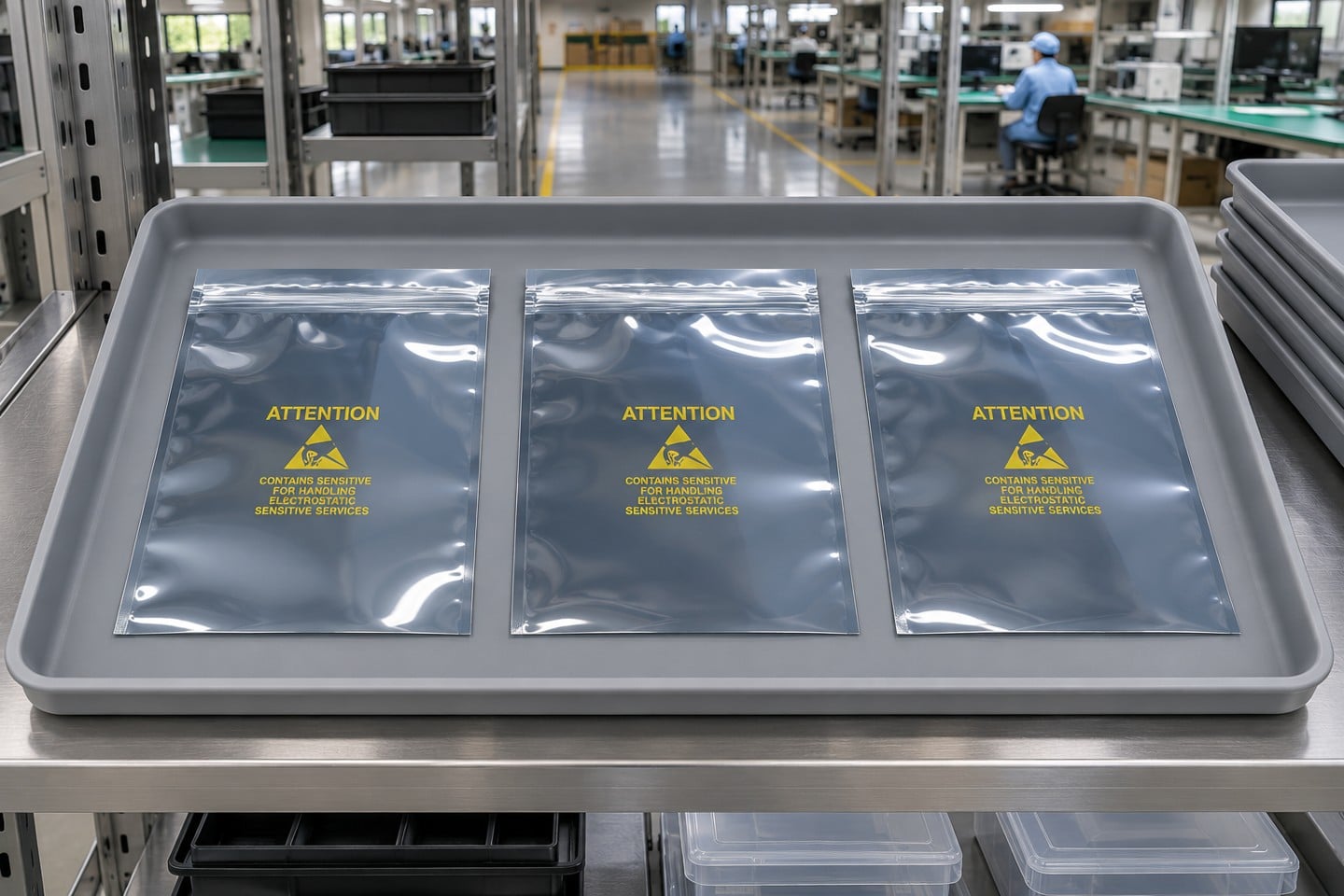
Penyelesaian jarak mesti memelihara keperluan ESD dan pembungkusan tapak. Tentukan sama ada bahagian kekal di dalam pakej yang diterima dan bagaimana ia dikendalikan semasa memuat dan memunggah. Rak terbuka yang mudah tidak membenarkan peranti yang terdedah bersentuhan dengan permukaan yang tidak layak atau mengabaikan persekitaran terlindung yang diluluskan.
The Prinsip kawalan Persatuan EOS/ESD berikan konteks untuk sempadan tersebut. Jika lapisan pelindung, pemisah atau pakej diubah suai untuk meningkatkan padanan, tanya bahagian mana yang terjejas oleh pemeriksaan elektrik dan kawalan pencemaran. Video pendidikan di bawah menyokong pemahaman kakitangan tentang pengendalian ESD; ia tidak menentukan dimensi rak atau mengesahkan susunan troli yang digambarkan.

Lepaskan susun atur sebagai konfigurasi yang boleh diulang
Selepas ujian padanan dan pengendalian yang diluluskan, rekodkan identiti peralatan yang tepat, susunan rak, keluarga pakej yang dibenarkan dan sekatan. Sertakan bukti penerimaan dan pemilik yang meluluskannya. Simpan rekod tersebut supaya boleh diakses oleh pembelian, penerimaan dan pengendali supaya pesanan semula dapat mengulangi susunan yang telah disemak.
Tentukan perubahan mana yang memerlukan semakan semula. Tudung baru, pemasangan dalaman tambahan, pakej pelindung yang lebih tinggi atau urutan penghantaran yang diubah suai boleh membatalkan anggapan padanan lama walaupun saiz bekas nominal tidak berubah. Semak perubahan tersebut sebelum penggunaan pengeluaran seterusnya. Rekod konfigurasi yang jelas mengurangkan penggantian yang tidak sesuai dan membantu pembekal memberi maklum balas yang tepat apabila keluarga bebanan masa depan memerlukan troli yang berbeza.
Soalan Lazim
Adakah jarak rak sama dengan jarak yang boleh digunakan?
Tidak. Tepi rak, sokongan dan geometri pemisah boleh mengurangkan pembukaan dan laluan pengambilan. Bandingkan keseluruhan amplop beban dengan lukisan terkawal.
Perlukah penutup dan pemegang disertakan?
Yes when they remain fitted during movement or retrieval. An empty-box height alone does not describe the normal loaded package.
Bolehkah pemisah yang sedia ada dibuang untuk memuatkan kotak yang lebih besar?
Hanya melalui perubahan konfigurasi yang diterima. Jangan keluarkan atau ubah sokongan dan pemisah tanpa kelulusan daripada pembekal dan pemilik tapak.
Adakah jarak yang lebih luas mengekalkan penarafan muatan asal?
Jangan andaian ia begitu. Semak konfigurasi yang diubah, pengagihan beban dan kestabilan terhadap keperluan pemasangan yang diterima.
What should trigger another fit review?
Semak sampul pakej baru, pemasangan tambahan, kedudukan rak yang diubah dan urutan muatan atau penghantaran yang berbeza sebelum digunakan rutin.

Tinggalkan Balasan