- Turbo
- Blog
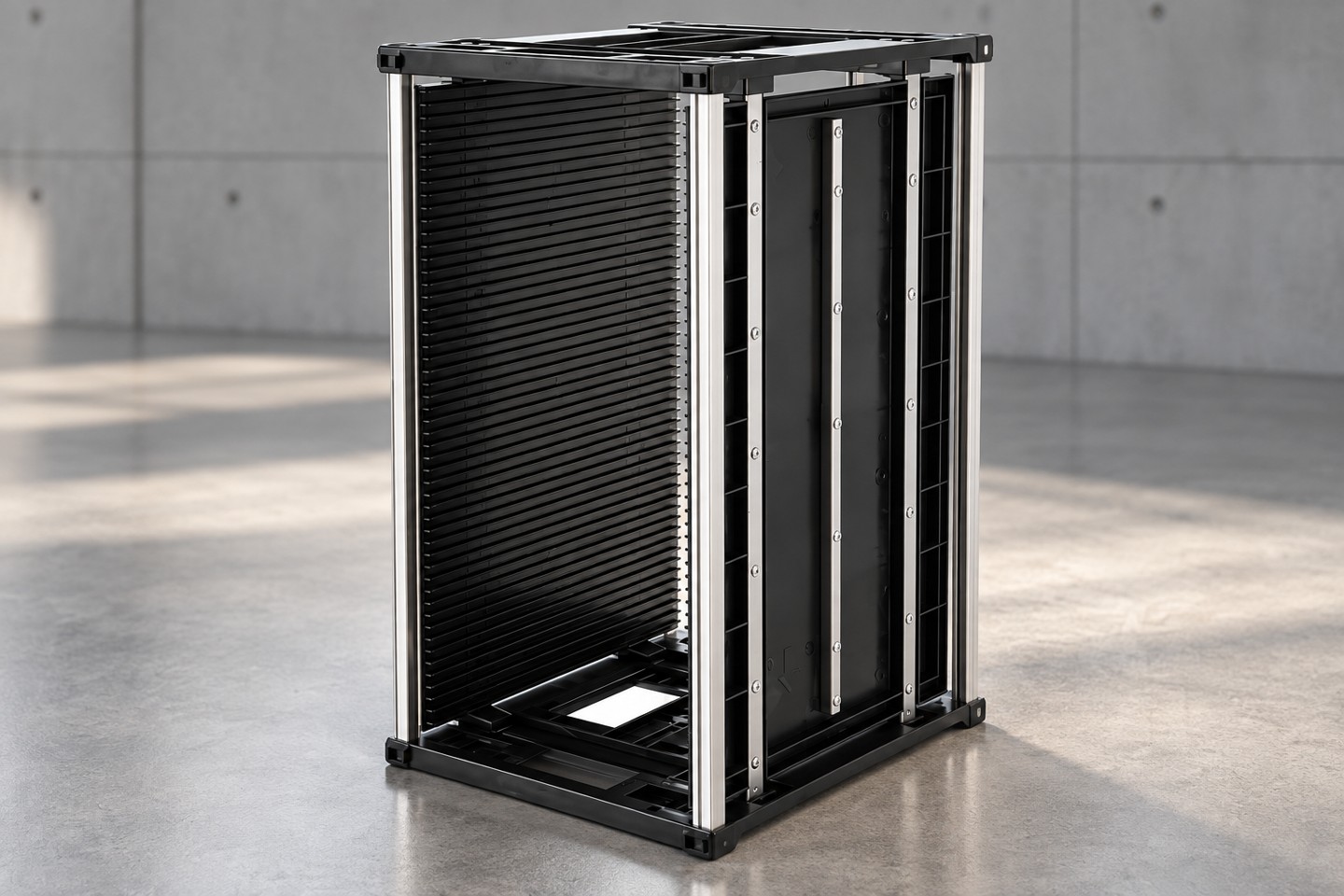
An ESD magazine rack used at a selective soldering line should support the PCB’s permitted edges, maintain the required orientation and fit the approved loading and unloading sequence. Treat line-side storage, machine carriers and thermal-process fixtures as separate equipment unless the machine and rack suppliers explicitly approve a shared use. A magazine described as heat resistant is not automatically qualified for flux, preheat or solder exposure. Begin with the board drawing and the selective soldering equipment’s interface requirements, then evaluate the exact rack outside and, only where approved, within the process.
Identify the rack's role in the line
Ask whether the magazine is a storage buffer, a carrier used by an automatic loader or part of an approved process fixture. These roles impose different requirements. A line-side rack may simply hold boards before a machine operator transfers them. An automatic interface requires additional checks for board presentation, base engagement and loader compatibility. A thermal fixture requires its own engineering approval. Do not infer one role from a photograph of a magazine placed beside a soldering machine.
Map the board’s movement from the previous operation to selective soldering and onward to inspection. Identify where its orientation or support changes. Record which equipment retains the assembly at each point. The PCB magazine conveyor-compatibility guide addresses loader and transfer interfaces; this article adds the process-specific staging and acceptance questions around selective soldering.
Review the populated board envelope
Obtain the controlled PCB drawing and relevant assembly information. Include connectors, components, mounting features and the approved edges for support. A magazine slot can accept the bare board thickness while still interfering with a component near the edge. Check the actual assembled envelope rather than relying on nominal board width alone. Identify any variant that changes the support or clearance requirement and include it in the evaluation.
Determine the correct loading orientation and make it understandable to operators. Where a board can be inserted in several ways, inspect which orientations maintain the permitted contacts and present it correctly to the next process. Do not add a stop, adhesive marker or improvised spacer inside a groove without reviewing the mechanical and ESD effects. Any approved accessory should appear in the configuration record and sample acceptance.
Define a setup checklist before the trial
The table below lists questions for the responsible manufacturing team. It supplies no universal board spacing, temperature limit or machine approval. Those inputs must come from the board requirements and the exact rack, loader and selective soldering equipment suppliers.
| Setup question | Requirement to obtain | Trial evidence |
|---|---|---|
| Carrier role | Staging, automatic interface or separately approved process fixture | Show the exact route and points where support changes |
| Board contact | Permitted edges and assembled component clearances | Demonstrate insertion without contact on vulnerable features |
| Magazine configuration | Exact material, base and adjustment arrangement | Retain the accepted settings and model identity |
| Pendedahan proses | Approved thermal and chemical conditions if exposure is proposed | Supplier and engineering approval for the actual process |
| Status control | Incoming, processed and held-board grouping | Show identification and exception handling at the buffer |
| Pengesahan ESD | Applicable installed control arrangement and methods | Keep electrical results separate from machine-fit findings |
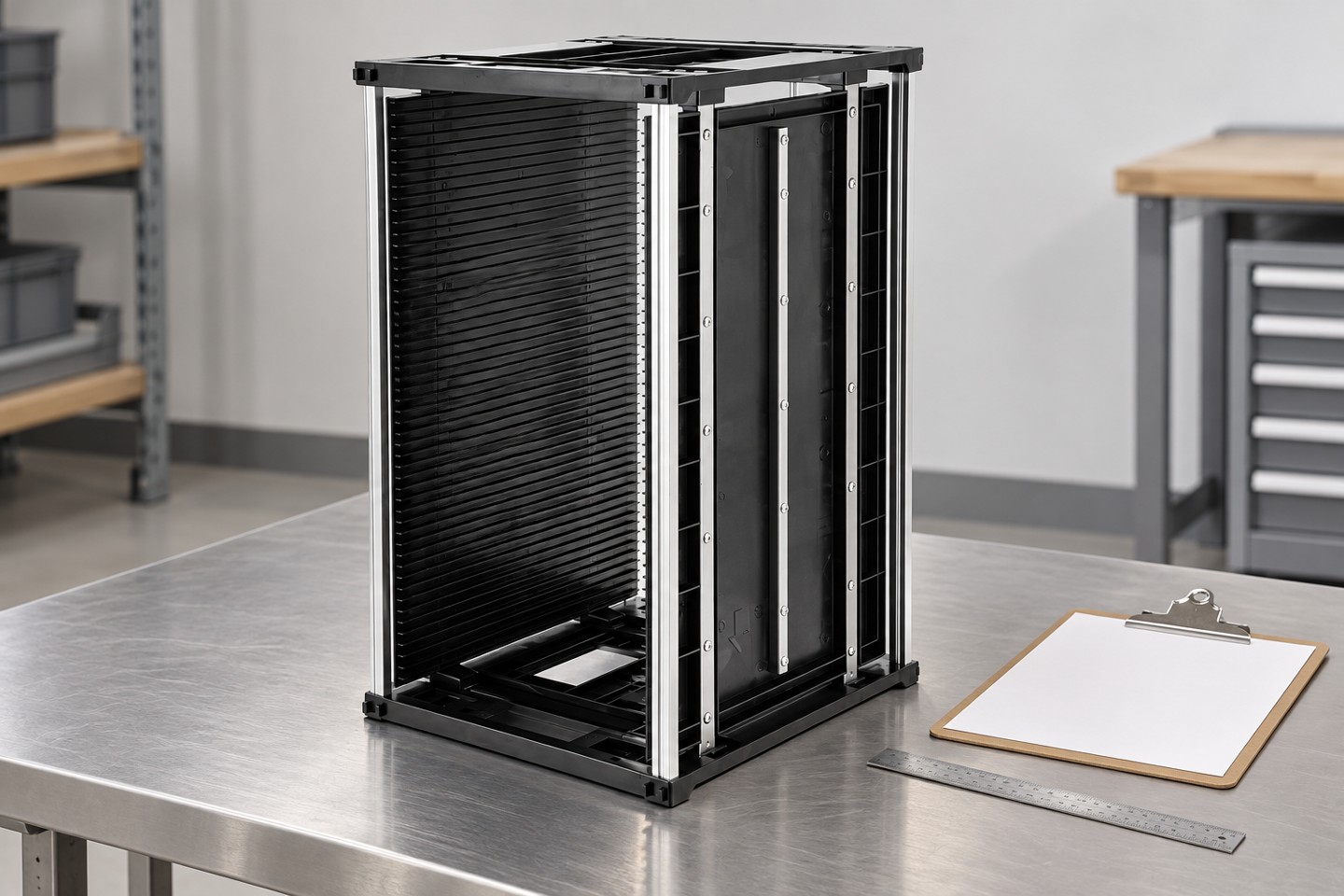
Untuk rujukan fizikal, semak SWESD adjustable ESD magazine rack and request its actual specifications. Confirm the supplied material and base configuration rather than assigning thermal performance from its appearance. A sample near the machine can be evaluated as a staging carrier without making a claim that it may enter the machine’s heated or flux-exposed process path.
Keep thermal exposure and storage suitability separate
Discuss the board’s state when it enters and leaves the storage point. If an assembly may still be warm, the process owner should define the approved cooling and handling sequence. Ask the rack supplier whether the relevant exposure conditions are allowed and what evidence covers them. Do not substitute a general heat-resistant description for a defined combination of temperature, duration, contact and environment.
If the rack is proposed for any part of the soldering process, obtain explicit approval from the relevant suppliers and the responsible engineer. Verify material compatibility and the complete arrangement under the defined process conditions. Otherwise, keep it at the approved staging point outside the process. The panduan ketahanan suhu majalah covers those evidence questions without supplying an invented universal temperature rating.
Control ESD during the staging and transfer sequence
Determine which handling points occur within the EPA and what controls are required when an exposed assembly changes support. The Prosedur asas dan panduan bahan dari Persatuan EOS/ESD explains the role of production aids, grounding and material handling equipment. Apply the site’s approved procedure to the actual arrangement; a magazine logo alone does not demonstrate that every transfer step is controlled.
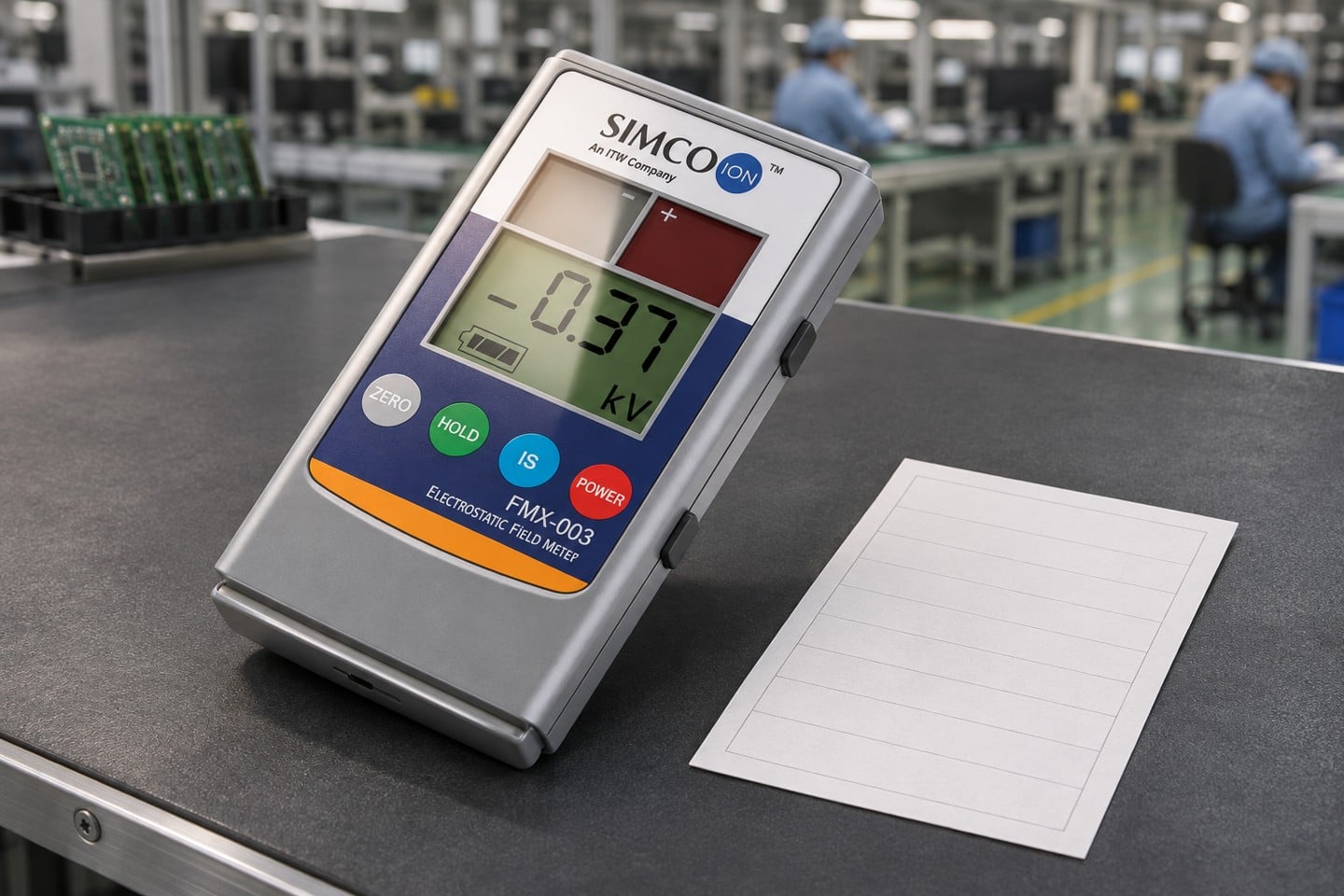
Request the relevant electrical evidence for the rack and installed system. If grounding or floor contact participates in the accepted arrangement, define and verify that configuration with qualified personnel. Keep electrical measurements separate from the mechanical fit trial. A loader that moves a board successfully does not prove ESD compliance, and a rack that passes an electrical check does not establish safe component clearance.
cURL Too many subrequests by single Worker invocation. To configure this limit, refer to https://developers.cloudflare.com/workers/wrangler/configuration/#limits
cURL Too many subrequests by single Worker invocation. To configure this limit, refer to https://developers.cloudflare.com/workers/wrangler/configuration/#limits.
The panduan penandaan majalah cURL Too many subrequests by single Worker invocation. To configure this limit, refer to https://developers.cloudflare.com/workers/wrangler/configuration/#limits.
cURL Too many subrequests by single Worker invocation. To configure this limit, refer to https://developers.cloudflare.com/workers/wrangler/configuration/#limits
cURL Too many subrequests by single Worker invocation. To configure this limit, refer to https://developers.cloudflare.com/workers/wrangler/configuration/#limits.
cURL Too many subrequests by single Worker invocation. To configure this limit, refer to https://developers.cloudflare.com/workers/wrangler/configuration/#limits.
cURL Too many subrequests by single Worker invocation. To configure this limit, refer to https://developers.cloudflare.com/workers/wrangler/configuration/#limits
cURL Too many subrequests by single Worker invocation. To configure this limit, refer to https://developers.cloudflare.com/workers/wrangler/configuration/#limits.
The magazine cleaning and inspection guide covers routine carrier maintenance. Set rejection criteria for damaged grooves, loose frame parts, altered settings or uncertain condition. Record repeat problems so the team can distinguish maintenance needs from an incompatible line interface. Cleaning cannot correct a slot geometry that loads a component or a base that does not engage the intended equipment.
Release the setup with a controlled specification
The acceptance record should identify the board family, rack model, width setting, support conditions, machine role, electrical evidence and handling restrictions. Include the approved process-state labeling and maintenance instructions. The panduan pengauditan Persatuan EOS/ESD provides background for defined requirements and reproducible verification rather than undocumented pass statements.
Ask suppliers to quote the exact configuration, samples and replacement parts needed to maintain it. Preserve evidence for any special thermal or process claim separately. A practical setup allows production to move the approved board safely through the line and makes later changes reviewable. It does not turn a line-side storage rack into a universally qualified selective soldering fixture.
Further learning: staging in material handling systems
The NPTEL lecture below explains material handling systems. Use it to review buffer locations and transfer steps around the line; machine safety, thermal approval and board-specific setup still follow the applicable supplier and site procedures.
Video pendidikan: Lec 27: Sistem pengendalian bahan, NPTEL IIT Guwahati.
Soalan Lazim
Bolehkah rak tahan panas memasuki mesin penyolderan selektif?
Only when the exact rack and process use are explicitly approved. A general description does not establish thermal or chemical compatibility.
Perlukah pemilihan rak menggunakan garis besar PCB kosong?
Gunakan sampul papan berpengisian, tepi sokongan yang dibenarkan dan varian yang berkaitan supaya komponen berhampiran tepi termasuk dalam semakan jarak bebas.
Adakah ujian muatan berjaya membuktikan pematuhan ESD?
No. Verify mechanical interfaces and the electrical control arrangement separately under their applicable procedures.
Bolehkah papan masuk dan diproses berkongsi satu majalah?
Hanya dengan susunan berdokumen yang mengekalkan identiti proses setiap papan dan mengelakkan bebanan yang salah pada langkah seterusnya.
What should the setup record contain?
Kenal pasti variasi papan, model, lebar dan peraturan slot yang diduduki, peranan mesin, bukti yang berkenaan, pelabelan dan sekatan terhadap pendedahan proses.
Tinggalkan Balasan