- 터보
- 블로그
An ESD garment laundering process should return the exact garment construction to a condition approved for its next use. Washing appearance alone does not establish electrical suitability, cleanliness, correct fit, or continued life. Before approving a laundry route, identify the garment, obtain its current care instructions, define the required checks, and run a documented trial using representative items. Keep the supplied garment and the laundered garment as separate evaluated states. This guide helps electronics manufacturers qualify that change without inventing a universal wash temperature, detergent formula, or number of safe cycles.
Define the garment and the release decision
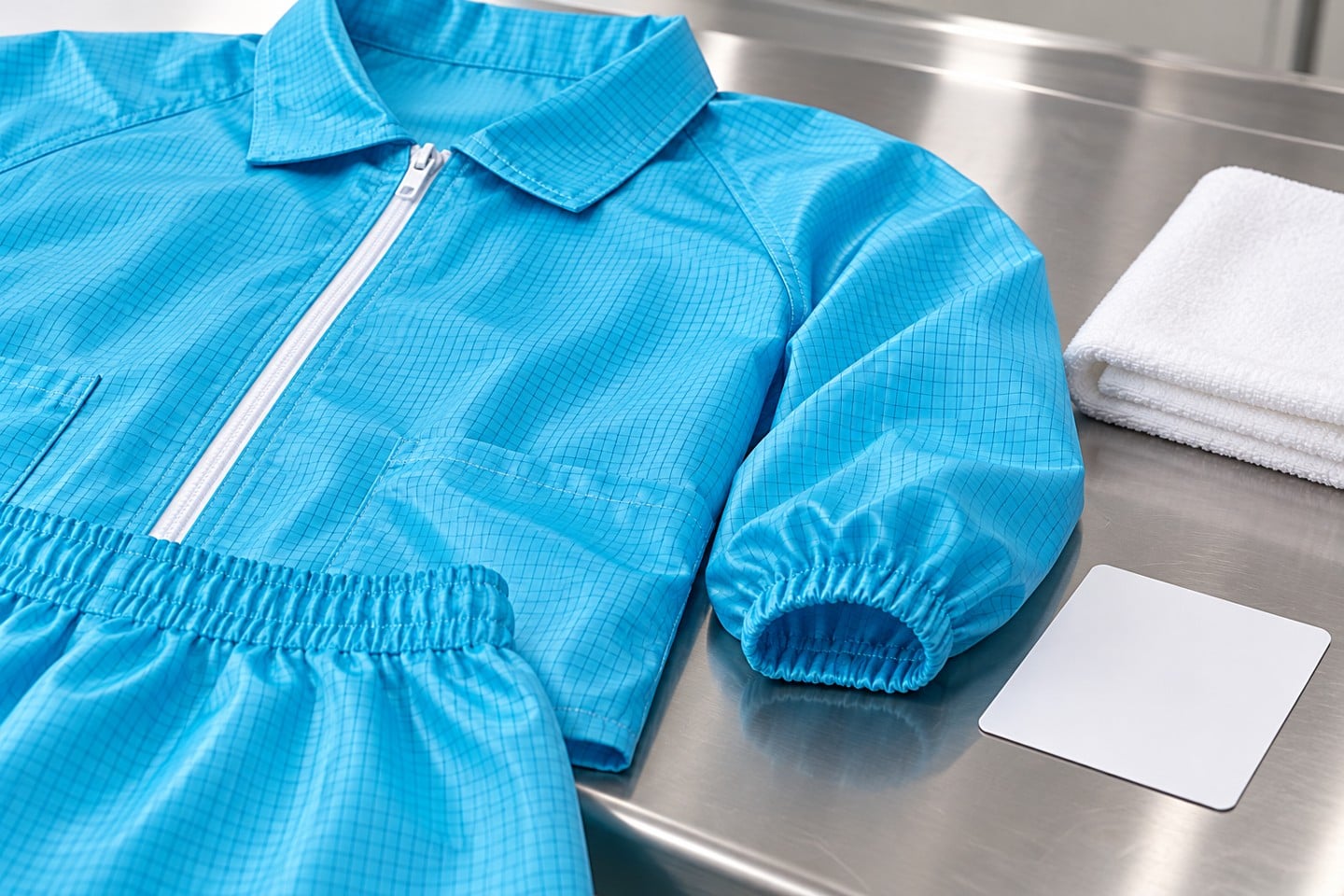
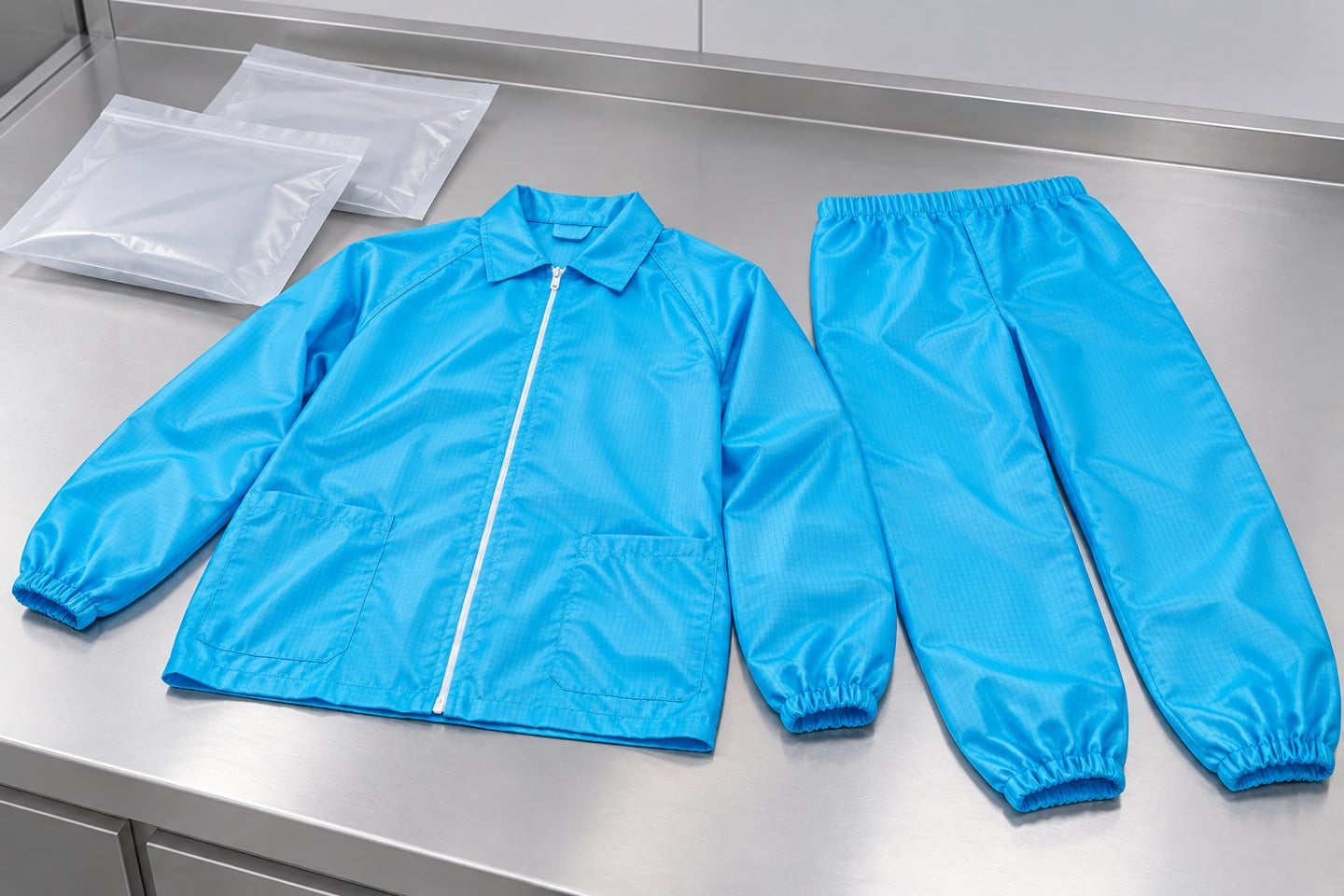
Begin with a product identity record covering the jacket, trousers, fabric construction, closures, size, production lot, and any accessories used during work. A two-piece cleanroom suit should not automatically inherit the wash approval of an open-front smock. Different cuffs, seams, fasteners, labels, and fabric treatments can change the practical outcome. Photographs help identify construction, but they cannot prove conductive performance or cleanroom compatibility.
그 SWESD two-piece cleanroom suit provides a product starting point for a supplier discussion. Ask for instructions covering that exact construction. Do not infer a temperature limit, detergent compatibility, or validated wash life from the product picture. Record what the release owner needs before a garment can return to service: identity, condition, required electrical evidence, cleanliness evidence, packaging, and permitted use.
Separate washing performance from ESD performance
A garment may look clean while its required electrical properties remain unverified. Conversely, an acceptable electrical result does not demonstrate that a garment meets the particle or residue requirements of a particular process. Define those two decisions separately, even when the same laundry provider supplies both sets of records.
그 EOS/ESD Association overview of control materials places protective materials within an overall control program. Apply that principle to laundering: the garment needs to function in the approved arrangement, rather than merely carry a familiar ESD label. For the broader purchasing specification, use the ESD smock RFQ guide, after confirming the exact garment and intended route with the responsible team.
Obtain care instructions before writing the recipe
Request the manufacturer’s current washing, drying, handling, and storage instructions. Ask which restrictions apply to detergent additives, softeners, bleaching agents, stain treatments, mechanical action, ironing, and finishing. A laundry provider’s standard recipe is a proposal until its suitability for this product and process has been demonstrated.
If the instructions omit an important operation, obtain clarification before the trial. Silence does not authorize an aggressive treatment. Keep the instruction revision and the provider’s proposed recipe together, so a later detergent substitution or dryer change can be recognized. This is also the point to define how damaged or unidentified garments are segregated instead of being returned with accepted garments.
Establish an initial condition record
Inspect representative garments before their first trial cycle. Record open seams, fabric damage, closure function, cuff condition, labels, discoloration, and any feature that could confuse the later comparison. Decide whether the sample represents new garments, garments already in circulation, or a particular complaint investigation. Mixing these groups can make an apparently clear result difficult to interpret.
Where the approved plan requires electrical or cleanliness checks, obtain the appropriate baseline using the specified method and conditions. Do not improvise a test by placing ordinary meter leads on convenient pieces of fabric. A useful report identifies the specimen, preparation, measurement arrangement, equipment, and acceptance rule. The ESD test report guide explains the traceability information purchasing should request.
Control the trial inputs
Describe the actual trial recipe sufficiently for another authorized operator to reproduce it. Record the washing equipment, loading arrangement, permitted product mix, cleaning chemicals, rinse process, drying method, handling, and final packaging. Use supplier-supported settings rather than copying numerical instructions from an unrelated garment or online article.
The trial should make changes visible. If the provider alters several inputs at once, a failed garment may reveal that something changed without revealing which change mattered. Where practical, compare a defined reference condition with the proposed route. Retain failed observations and deviations. Repeating a cycle until a favorable reading appears is not a reliable qualification method.
Use a release evidence table
| 통제점 | Record to request | Release question |
|---|---|---|
| Product identity | Garment construction, size, lot and revision | Does the approval cover this garment? |
| Laundry route | Current care instructions and proposed recipe | Are changes explicitly reviewed? |
| Condition checks | Closures, seams, cuffs and fabric observations | Is there damage needing segregation? |
| Required properties | Specified electrical and cleanliness evidence | Are both decisions supported separately? |
| 추적성 | Cycle history, acceptance and restrictions | Can accepted and rejected items be distinguished? |
Treat this table as a checklist for the approval discussion, not as a universal acceptance specification. Agree actual criteria with the garment supplier, process owner, ESD coordinator, and any cleanliness specialist responsible for the work area. If a required criterion is missing, keep that limitation visible before the trial begins.
A laundry invoice or delivery note can establish which service was ordered. It cannot replace a report showing that the agreed release checks were completed. Similarly, a provider’s general certificate should not be extended to a new garment construction without a documented basis. Match evidence to the actual product and evaluated state.
Evaluate drying and clean handling
Drying is part of the qualified route. Define how the provider confirms completion, prevents unacceptable heat or mechanical damage, and handles garments after drying. Do not turn a generic recommendation such as air dry into an instruction if it conflicts with the product’s approved care method or the area’s cleanliness controls.
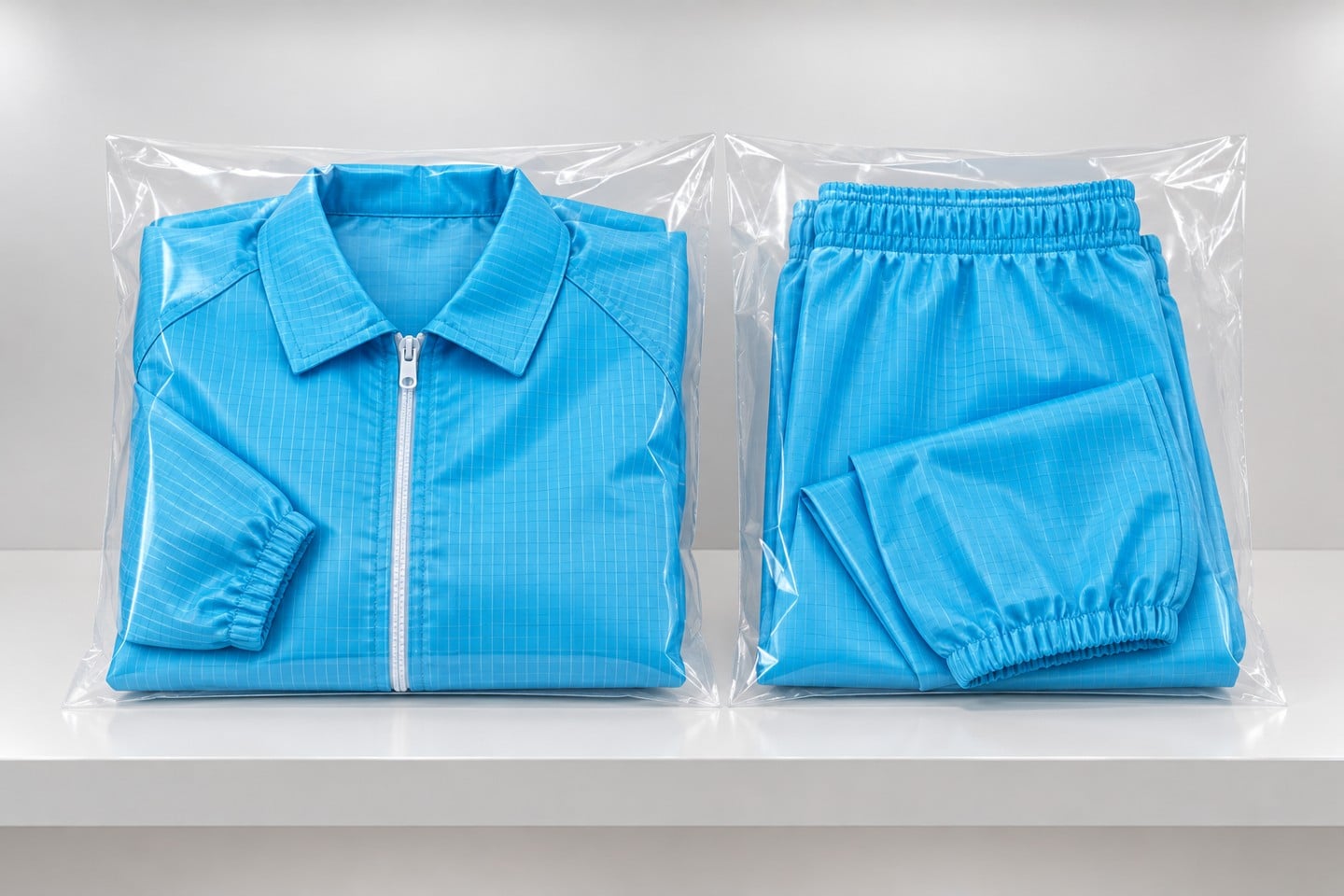
Check the whole path from finished laundry to the point of issue. An acceptable wash can be undermined by unsuitable handling, mixed storage, damaged bags, or incorrect identification. Separate accepted items from awaiting-review items. Ask how the provider prevents a rejected garment from rejoining the accepted batch during packing or delivery.
Track cycles without inventing a retirement number
A cycle count can support traceability, but it is not proof that every garment remains acceptable below a particular count. Actual condition, construction, process history, and the qualified evidence all matter. Establish a review and retirement rule from the supplier’s information and the organization’s approved program. Do not advertise a reusable life that has not been demonstrated.
Decide how identity survives washing and how incomplete histories are handled. A readable batch record may be sufficient for one controlled program, while another needs individual garment tracking. Use a system that supports the release decision. Replacing a lost label with an unverified history should not restore a garment automatically to the accepted population.
Review changes before extending approval
Create explicit review triggers for fabric or seam revisions, different closures, new cleaning chemistry, altered drying equipment, a changed laundry provider, or a different intended cleanliness zone. Not every change needs the same investigation, but the responsible owner should assess it before the original approval is extended.
그 EOS/ESD Association guidance on training and auditing supports making the control process observable and repeatable. Train staff to identify rejected garments, record exceptions, and use the correct issue route. An audit should compare practice with the approved procedure and evidence, rather than merely check that a laundry contract exists.
Connect laundering to the issue process
At receipt, verify the delivery identity, packaging condition, required evidence, and any restrictions on the returned batch. At issue, confirm that workers receive the correct garment and size, understand the closure arrangement, and follow the approved dressing sequence. An accepted laundry batch does not resolve unsuitable fit or improper wearing.
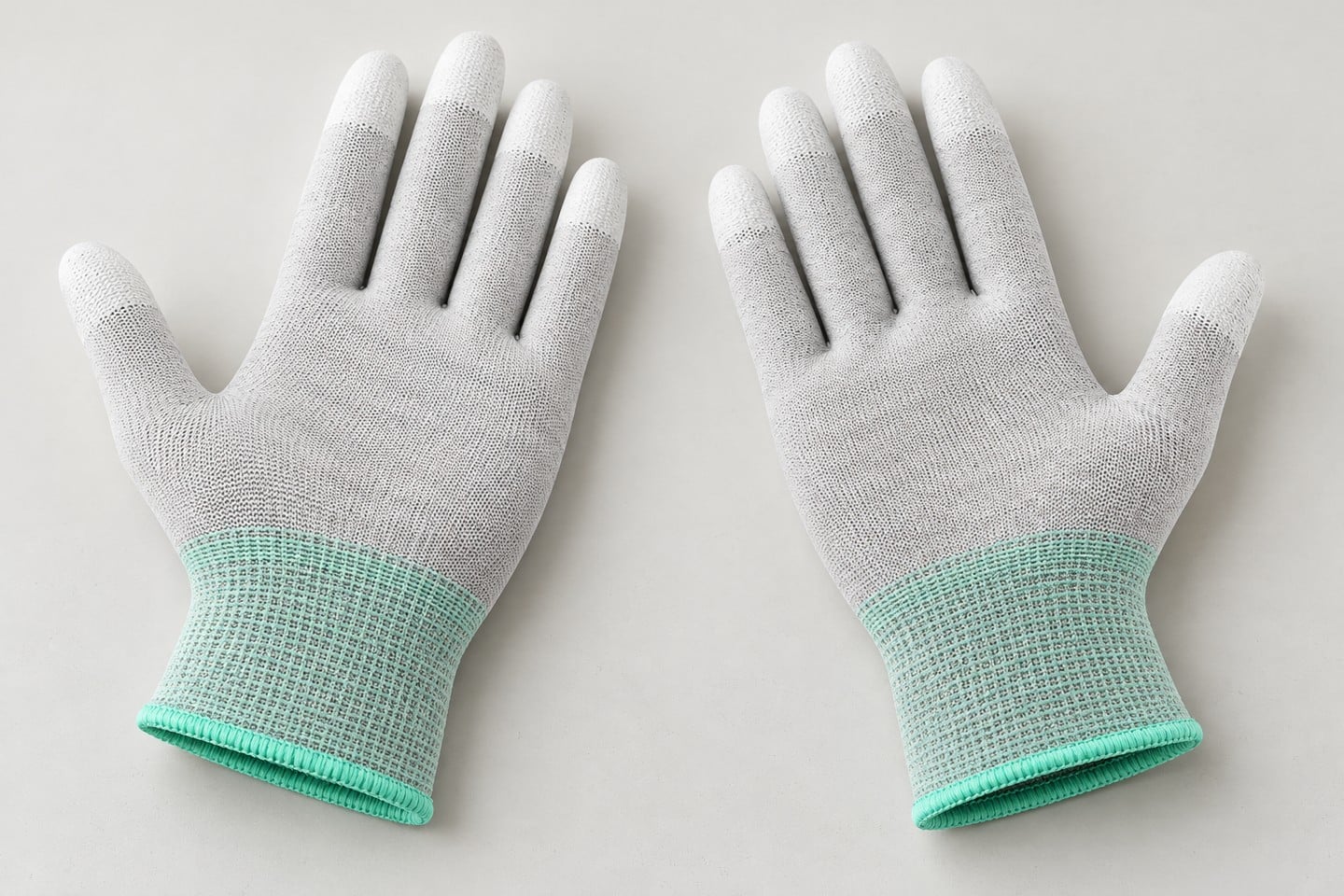
Keep complementary consumables under their own controls. The ESD glove resistance testing guide concerns a different worn item and must not be treated as garment evidence. The cleanroom wipe selection guide likewise addresses cleaning consumables rather than permission to use any wipe or solvent on protective clothing.
Educational background and supplier handoff
The following EOS/ESD Association introductory lecture provides background on electrostatic discharge and why controlled materials and handling arrangements matter. It does not prescribe a laundry recipe, certify this garment, or establish its reuse life. Use it to explain the purpose of the qualification process, then rely on the actual product instructions and approved test plan for release.
Send the supplier and laundry provider one complete request: exact garment identity, intended work area, care-instruction revision, proposed process, required checks, traceability expectations, packaging, change notification, and disposition of failures. Ask them to identify unsupported claims explicitly. The result should be a reproducible, approved route with clear responsibility for release, rather than a promise that washing will always restore performance.
자주 묻는 질문
Does a clean-looking suit prove acceptable ESD performance?
No. Appearance, electrical suitability and process cleanliness require separate applicable evidence.
What washing temperature should every ESD garment use?
There is no universal value in this guide. Follow the exact product care instructions and qualified laundry route.
Can detergent or drying equipment be changed without review?
Review relevant process changes before extending an existing approval.
Does a cycle count alone establish remaining life?
No. Combine traceability with product instructions, condition and required release evidence.
Can the laundry provider release rejected garments after rewashing automatically?
Only the approved disposition process can authorize release after required checks and review.

댓글 남기기