- ターボ
- ブログ
JEDEC tray bake temperature must come from the identified carrier specification and the approved drying procedure for the devices it holds. A tray that matches a familiar outline is not automatically suitable for an oven, and a component’s soldering temperature does not establish its carrier’s baking limit. Before approving a batch, match the tray part number, material revision, permitted exposure and device instructions. If any of these are unknown, hold the batch for engineering review. The practical purchasing question is whether the particular tray remains acceptable throughout the required process, including handling and dimensional checks after cooling.
Separate the carrier limit from the device drying recipe
Two decisions meet at the oven door. The device owner determines whether drying is required and which controlled procedure applies. The carrier supplier establishes what exposure the specific tray can tolerate under its approved conditions. A permissible device process cannot authorize an unsuitable carrier, while a high carrier rating cannot establish the right treatment for the components.
その Texas Instruments quality and reliability FAQs discusses moisture-controlled packaging and its relationship to applicable handling standards. Treat it as background for TI devices and consult the current instructions for the actual part. This article does not supply a universal temperature or time recipe. Release those values through your organization’s process owner rather than borrowing a number from a search-result snippet.
Identify the exact tray before looking up a temperature
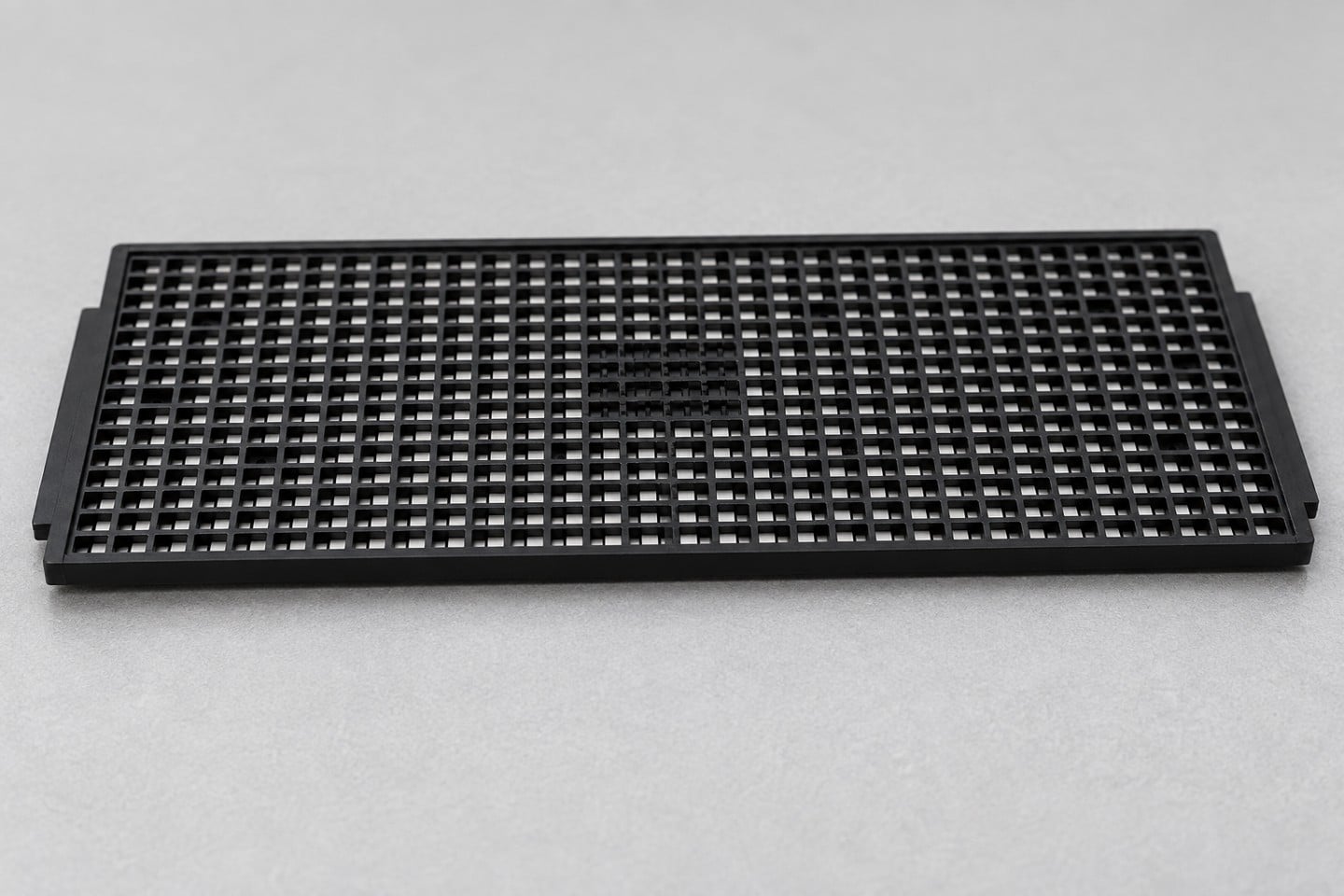
Begin with the container actually on the bench. Record its molded identification, supplier, purchase reference and revision where available. Photograph both faces and the perimeter. Compare the photographs with the controlled drawing, not merely with a catalog image showing a similar grid. Two carriers can look alike yet have different materials, histories or accepted uses.
その SWESD IC tray product page provides a starting point for discussing pocket format and handling requirements. Its visible photograph is a product reference, not proof of oven suitability. Request the thermal declaration and approved application for the exact ordered carrier. Where marks are missing or provenance is uncertain, isolate the trays until identity can be resolved. Do not add a self-assigned temperature label to make an unknown tray appear qualified.
Read the scope of the supplier's thermal statement
Ask what the stated limit means. Is it an allowed process exposure, a test condition, a material property or a short peak value? Request the associated duration, support arrangement, loading conditions, atmosphere and acceptance method. A material data sheet can inform engineering review but does not replace an assembly-level declaration for a molded tray.
Include the effects of repeated exposures in the discussion. A one-time qualification does not necessarily cover a reuse program with multiple drying cycles. Ask how the supplier controls material and molding revisions and which changes require a new assessment. If the statement omits important conditions, describe the intended process and obtain a written clarification before placing the order. Keep the response with the purchase specification so receiving staff can identify the approved configuration.
Use a pre-bake release checklist
The following table is a proposed workflow checklist, not a temperature schedule or a standard’s acceptance table. The process owner should adapt the evidence and release responsibilities to the actual components, carrier and equipment. Every unresolved item needs a named decision maker; an empty field should not silently become approval.
| Release item | 確認すべき証拠 | Action if unresolved |
|---|---|---|
| Carrier identity | Part number, revision and matched drawing | Hold unidentified trays |
| Device process | Current part-specific drying instruction | Refer to the component process owner |
| Carrier exposure | Supplier-approved conditions for the exact tray | Request a scoped written declaration |
| Complete load | Accepted support, loading and accessory arrangement | Review configuration before use |
| 設備 | Released procedure and verification record | Obtain equipment-owner acceptance |
| Post-process condition | Drawing-based condition and dimensional checks | Segregate suspect carriers |
A useful record connects the supplier’s carrier evidence with the production instruction that uses it. Put the tray identification and approved procedure on the same release sheet. If the carrier designation changes, make the relationship visible to the reviewer. This prevents an old recipe from following a replacement tray whose appearance happens to be similar.
Check the complete load and any accessories
The review must cover everything entering the process: trays, covers, ties, labels and the devices themselves. An accessory can impose a different restriction from the main tray. Packaging used for transportation should not be assumed to belong in an oven. Ask the process owner which items must be removed, retained or substituted and document the resulting approved assembly.
Also define how the load is supported. A carrier resting on an approved shelf can behave differently from one bridging a gap or carrying an unsupported stack. Confirm that the arrangement follows the equipment and process instructions. Do not invent stacking height or airflow clearance from the tray photograph. The site trial should reproduce the approved production configuration, including the permitted load pattern, rather than testing an empty carrier and extrapolating to every use.
Verify equipment settings through the site procedure
Have the equipment owner confirm that the selected oven and instrumentation can execute the released procedure. Record the equipment identity and the applicable verification status. Distinguish the controller setting from the evidence used to establish exposure of the actual load. The method and placement of any measurement devices require the process owner’s approval; casual readings from an unrelated thermometer are not a qualification.
cURL Too many subrequests by single Worker invocation. To configure this limit, refer to https://developers.cloudflare.com/workers/wrangler/configuration/#limits.
cURL Too many subrequests by single Worker invocation. To configure this limit, refer to https://developers.cloudflare.com/workers/wrangler/configuration/#limits
cURL Too many subrequests by single Worker invocation. To configure this limit, refer to https://developers.cloudflare.com/workers/wrangler/configuration/#limits.
その EOS/ESD協会の静電気制御の原則 cURL Too many subrequests by single Worker invocation. To configure this limit, refer to https://developers.cloudflare.com/workers/wrangler/configuration/#limits cURL Too many subrequests by single Worker invocation. To configure this limit, refer to https://developers.cloudflare.com/workers/wrangler/configuration/#limits.
cURL Too many subrequests by single Worker invocation. To configure this limit, refer to https://developers.cloudflare.com/workers/wrangler/configuration/#limits
cURL Too many subrequests by single Worker invocation. To configure this limit, refer to https://developers.cloudflare.com/workers/wrangler/configuration/#limits.
cURL Too many subrequests by single Worker invocation. To configure this limit, refer to https://developers.cloudflare.com/workers/wrangler/configuration/#limits cURL Too many subrequests by single Worker invocation. To configure this limit, refer to https://developers.cloudflare.com/workers/wrangler/configuration/#limits explains how to organize an inspection discussion without substituting generic limits for the approved drawing.
Manage repeated cycles as a controlled reuse program
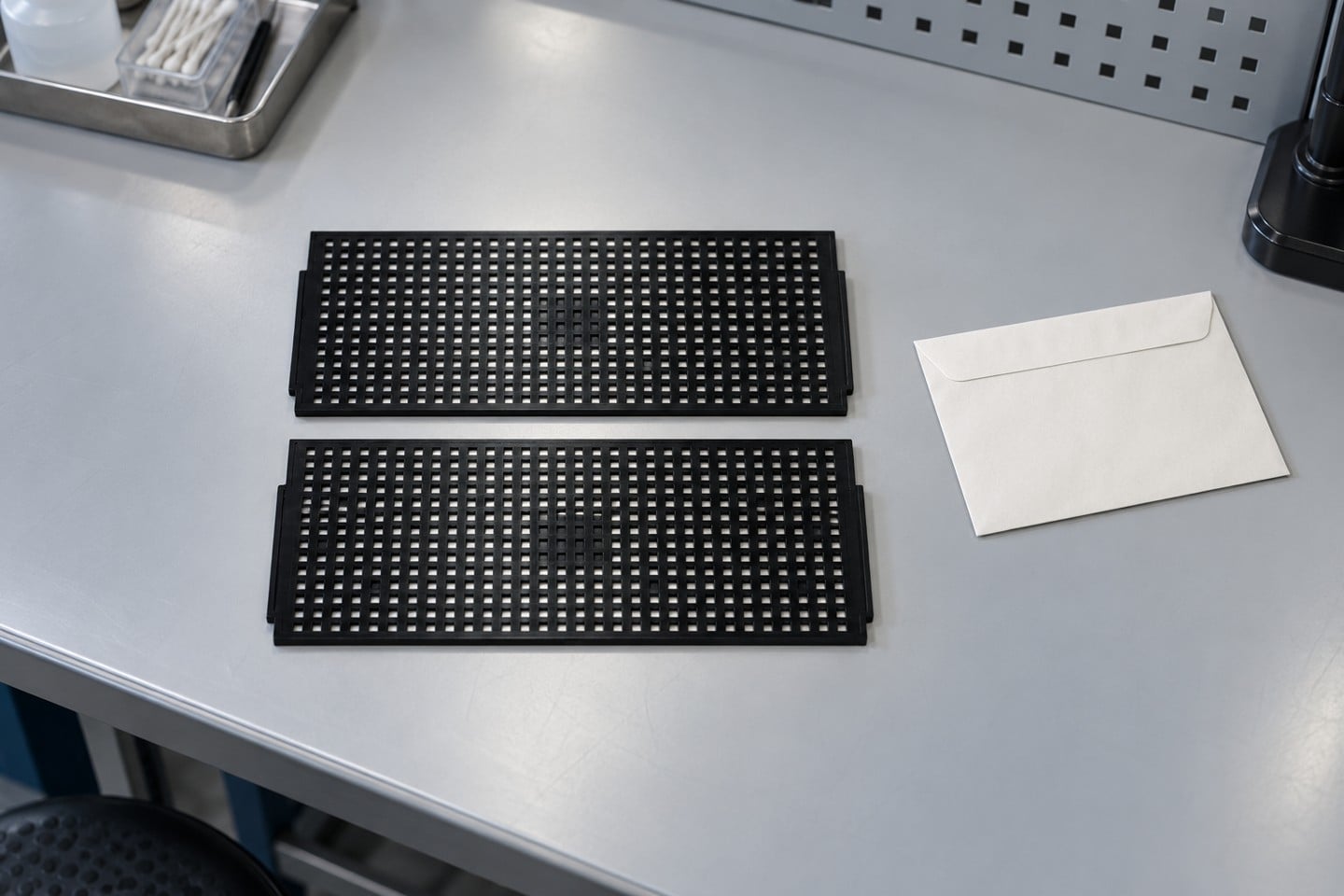
Create a practical identity method for carriers that will be used repeatedly. Where the program requires cycle tracking, define which events count, who records them and what happens when history is missing. The tracking method should not introduce unqualified stickers or attachments into the approved process. Ask the carrier supplier and process owner to accept the method before implementation.
Review the reuse decision separately from the component drying decision. A carrier may be withdrawn because its condition or history is unacceptable even when the devices remain recoverable through an approved process. Conversely, an acceptable tray does not clear a questionable device lot. Connect the carrier record to the JEDEC tray reuse program and retain the evidence that supports each release.
Specify a complete RFQ instead of a maximum number
An effective request for quotation states the carrier identification or drawing, device package, intended equipment, proposed exposure and expected reuse pattern. Ask the supplier to identify the offered material revision and provide the allowed conditions, inspection criteria and change-notification approach. Require exceptions to be written into the quotation rather than buried in a later email.
Separate mandatory process requirements from preferences such as packaging quantity or delivery format. If a supplier cannot support the required exposure, ask for an alternative carrier and a documented compatibility review; do not negotiate away the technical requirement to reduce unit cost. A sample approval should identify the exact tested configuration and the evidence needed at subsequent deliveries. This makes the purchase repeatable and gives receiving inspectors a clear basis for checking what arrived.
よくある質問
Is there one bake temperature for all JEDEC trays?
いいえ。識別されたトレイの許容曝露範囲と承認されたデバイス手順の両方が、意図したプロセスをサポートしている必要があります。馴染みのある概要だけでは熱的適合性は確立されません。.
Does a component reflow rating establish tray bake suitability?
No. Component soldering conditions and carrier drying conditions describe different requirements. Review the actual carrier declaration and device instruction separately.
Can an unidentified tray be approved from its color?
No. Resolve the carrier identity and obtain the relevant specification. Color and a catalog resemblance cannot replace material and revision evidence.
Should covers and labels be included in the review?
Yes. Every item entering the process needs an accepted disposition; the main tray's approval does not automatically qualify accessories.
What should happen after a bake interruption?
Preserve the process and lot records and refer the deviation to the responsible owner. Do not invent an additional cycle or release the lot without an approved decision.
最近の投稿
-
 静電気計測器 HOLD:凍結した読み取り値を解決する2026年11月27日
-
 クリーンルーム手袋混合カートン:出荷前にロット識別を照合2026年11月26日
-
 ESDシールドバッグの保管:避けられる折れ損傷を防ぐ2026年11月26日
コメントを送信