- ターボ
- ブログ
An electrostatic field meter with a frozen reading may simply be displaying a held snapshot. On the FMX-003 versions described in the operating instructions cited below, HOLD stops the displayed measurement from updating; releasing HOLD resumes measurement. Check the mode indicator before treating an unchanged number as a sensor fault. Preserve the observation, use the instructions supplied with your exact instrument, and take a new reading under the approved measurement conditions. A held value cannot tell you what is happening at a different location, and releasing it does not prove that the instrument is calibrated or suitable for a particular acceptance test.
Separate a saved-looking display from a live observation
An operator measures a charged surface, moves to a second station and sees the same number. Without checking the instrument mode, the team may conclude that both stations have identical conditions. That conclusion is not supported if HOLD remained active. The first display belongs to the earlier observation. Moving the instrument changes the location of the instrument, but it does not turn a retained value into a measurement of the new target.
Start by recording the target, time, displayed units, visible indicators and whether a button was pressed. If the previous measurement supports a quality record, capture that information before changing modes. Do not write a guessed second location beside the retained value. If the original location is uncertain, describe that uncertainty and take a fresh observation rather than inventing a missing association.
その SWESD electrostatic field meter product page identifies the relevant product family. Its photograph helps establish the instrument being discussed, but a product photograph does not establish the operating revision, calibration status or behavior of an individual delivered unit. Check the actual model, supplied manual and local work instruction before using the following troubleshooting route.
For the broader measurement context, the guide to what an electrostatic field meter measures introduces the instrument category. This troubleshooting article focuses on the narrower operating-state question: whether the visible number is still updating.
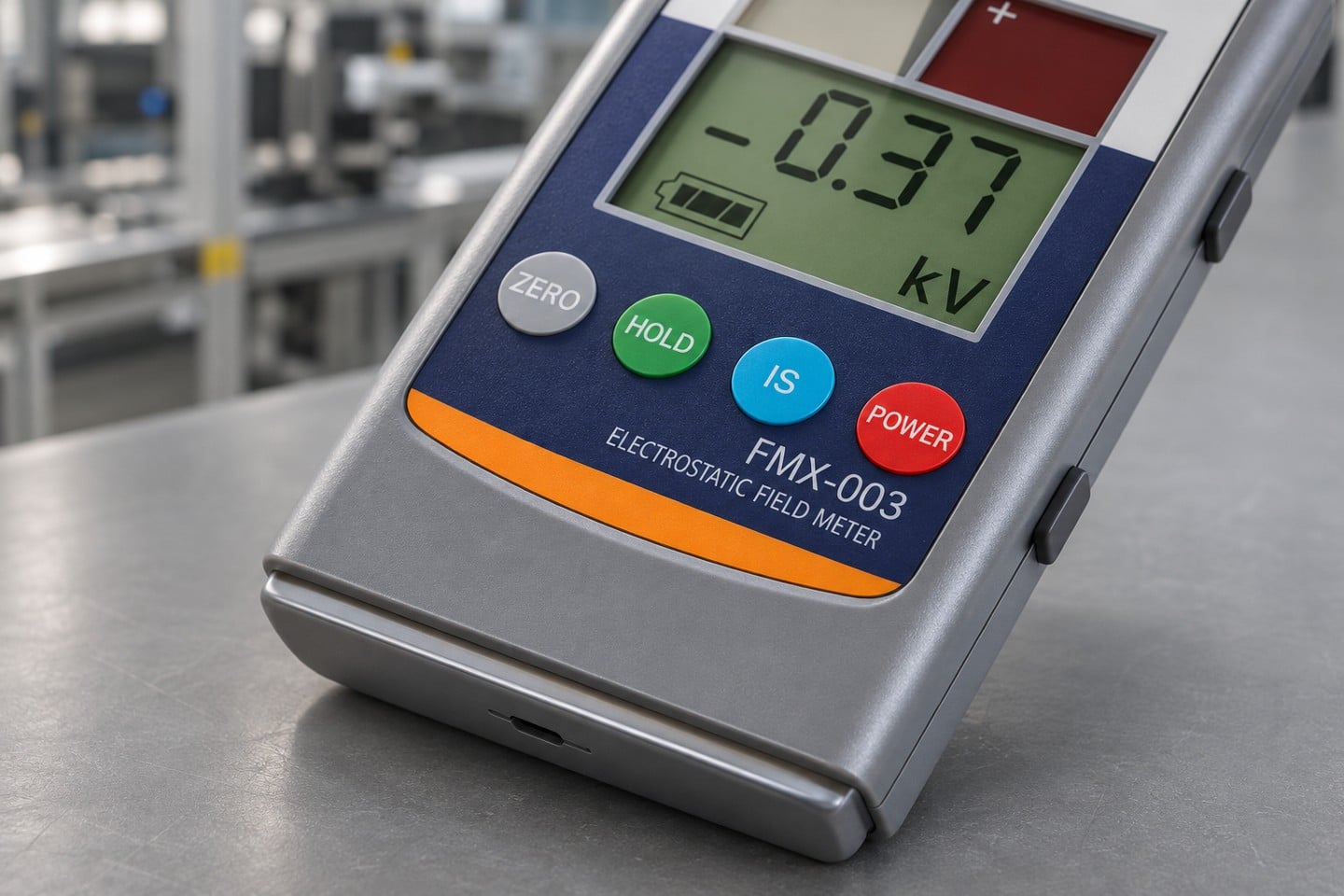
What the matching FMX-003 instructions establish
その original-author FMX-003 instructions available in this manual mirror explain the HOLD function and its relationship to normal measurement. This is a version-specific operating reference. Use the delivered instructions when they differ, and ask the supplier to resolve uncertain revision identity. Do not combine button sequences or numerical limits taken from different manuals.
For the version cited, the useful distinction is between retained display information and ongoing measurement. A display can look stable because it has intentionally stopped updating. That behavior alone does not demonstrate a stable field, a grounded target, a successful neutralization process or a failed sensor. Those are different questions requiring their own measurement conditions and evidence.
The same instructions distinguish HOLD from zeroing. Repeatedly pressing ZERO is therefore a poor first response to a frozen reading. Establish the operating mode, preserve any relevant observation and then follow the matching zero-check procedure if required. Zeroing is an operating adjustment under defined conditions; it should not be reported as a complete calibration or as proof that every earlier measurement was correct.
A practical decision table for an unchanged number
The following is a suggested troubleshooting record, not a standard limit or a substitute for the manufacturer procedure. Use it to decide what information to collect and which question to resolve next. A qualified owner must determine whether an observation can support a production decision.
| 観察 | Information to preserve | 次の判断 |
|---|---|---|
| HOLD visible | Retained value, units and original target if known | Follow matching instructions to resume live measurement |
| No known mode | Visible display and recent operator actions | Resolve state before using result |
| Live response restored | Approved position, target and fresh value | Record a new observation |
| Still unresponsive | Model, mode and permitted checks performed | Remove from acceptance use for assessment |
| Error or damage | Exact symptom and instrument identity | Follow authorized service route |
Treat unknown status as unknown. If an operator cannot determine whether the display was held, the record should not quietly become a live reading during data entry. Retain the original note, identify the missing condition and repeat the observation when a repeat is possible and useful. If the process event has passed, the responsible owner should decide how to handle the evidence gap.
Check the mode without creating a new problem
First identify a safe place to perform the check. Do not approach exposed electrical conductors or reach into moving equipment merely to make the display change. An ESD field meter is not permission to access hazardous equipment. The approved station procedure should define the target, access conditions and any required shutdown or authorization.
Next compare the visible mode with the matching manual. For the cited version, the green HOLD control switches the function. Observe the indicator after using the control rather than assuming the press registered. A worn button, an uncertain instruction or a display that cannot be read clearly is a reason to stop and clarify, not to press several controls until something looks plausible.
Once the appropriate live mode is confirmed, recreate the approved measurement geometry and grounding arrangement. Keep the target and measurement position identifiable. A response check should change only conditions that the approved method allows. Do not rub random materials together near sensitive products to manufacture a large reading; that introduces an uncontrolled charging event and does not provide a traceable accuracy check.
For the positioning question, use the separate guide to electrostatic field meter measurement distance. It addresses a different source of interpretation error. Releasing HOLD fixes a mode issue; it does not correct an unsuitable distance, target geometry or grounding arrangement.
Keep HOLD, lighting, battery and errors separate
A dark distance indicator does not, by itself, identify the entire instrument state. The cited instructions describe indicator behavior in operating modes, so inspect the actual mode indication and consult the correct section. Avoid building a universal diagnosis around one visible lamp. Record what is observed without changing the description to fit a preferred explanation.
Likewise, a low-battery symbol and an unchanged number need separate attention. If the power condition is uncertain, follow the actual battery instructions before relying on further measurements. Do not assume that cancelling HOLD cures a battery issue. When several symptoms appear together, list them separately so a service contact can distinguish mode behavior from power or display problems.
An error message, missing display segments, visible damage or continued non-response after the permitted checks needs its own disposition. Stop using the instrument for acceptance decisions when its condition is doubtful. Do not open the housing, adjust internal components or invent a field repair. Keep the instrument identity and observations available for the responsible service provider.
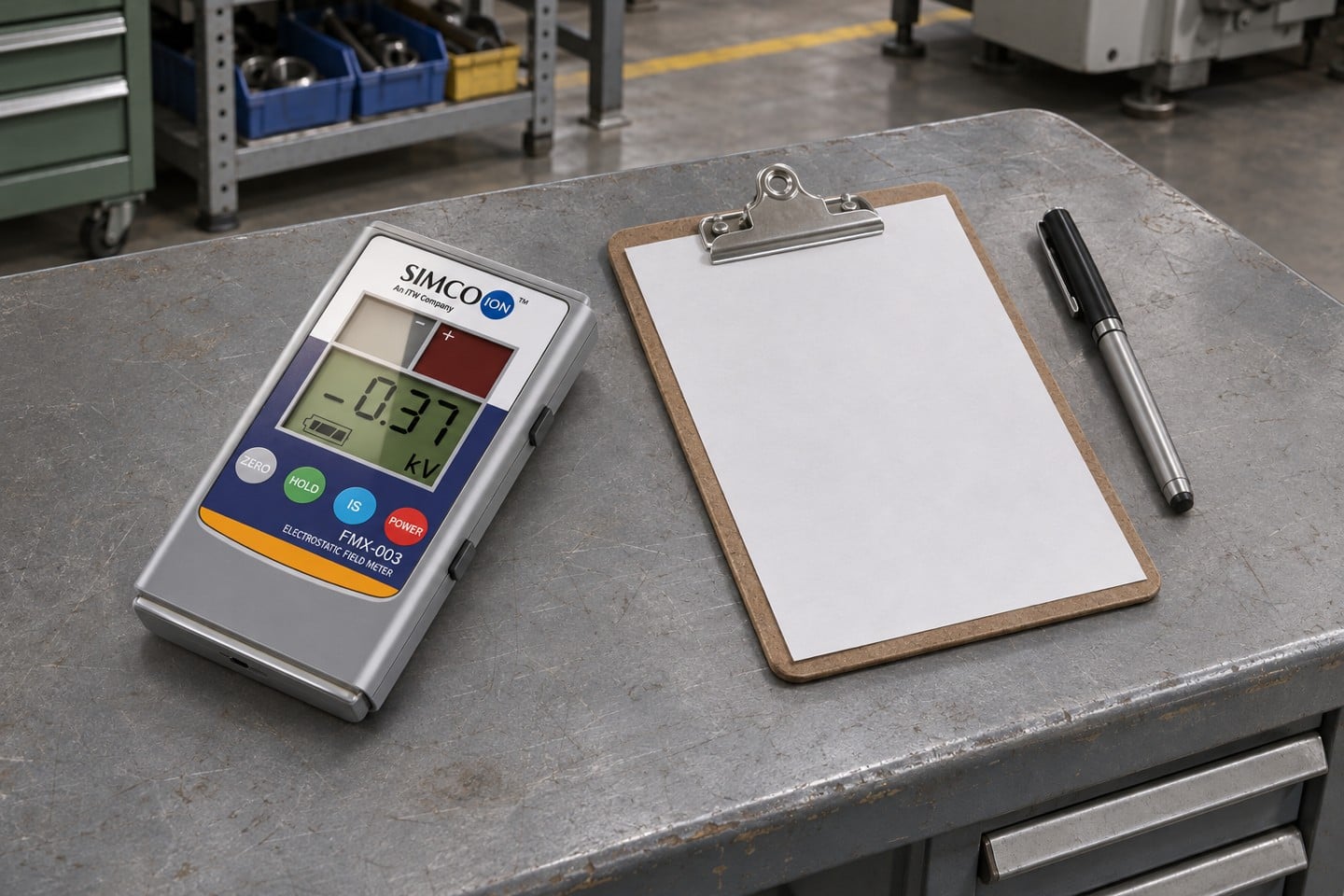
Build a record that preserves the meaning of the reading
A useful observation sheet connects the instrument, target and operating state. Include an instrument identifier, model, operator, date and time, location, target description, units and polarity where displayed. Note whether the number was observed live or retained using HOLD. Record the measurement method or work instruction reference so another person can understand the context.
Separate the time of acquisition from the time of transcription. An operator may use HOLD to move the instrument to a readable position and then write down the result. The later writing time is not necessarily the time at which the target was measured. The record should preserve that distinction when timing matters to the process.
Do not assume HOLD provides permanent data storage. The record-retention behavior must come from the exact manual and instrument version. If a value matters, transfer it into the approved record while it remains available, with the required context. A photograph of an unexplained number is weaker evidence than a complete observation linking that number to the target and conditions.
以前の決定を比例配分で見直す
保持された表示を発見しても、すべての過去の測定値が自動的に無効になるわけではありません。影響を受けた可能性のある特定の記録を特定してください:操作者、時間範囲、計器、場所。ライブ観測と書き写されたスナップショットを区別する証拠を探します。元のエントリーと修正を保持し、履歴が理解できる状態を保ちます。.
責任ある品質またはESD所有者は、測定を再実施するか、プロセスの決定を見直すか、追加の証拠を求めるかを決定すべきです。新しい読み取りは現在の状態を示します;以前の出来事を再構築するわけではありません。この制限を、ラインが以前の承認された管理条件内にあったかどうかを議論する際に明示してください。.
その EOS/ESD協会の訓練と監査に関するガイダンス 理解可能な手順と検証のための広範な必要性をサポートします。本記事のワークシートを規定したり、保持された測定値を許容したりするものではありません。組織の概要を背景として、実際の責任と受け入れルールについては適用されるプログラム文書を参照してください。.
引き継ぎの訓練を行い、サービスを求めるタイミングを定義する
交代時に、退任する操作者は現在のモードと保持された値の意味を述べるべきです。新任の操作者は、そのコンテキストなしに表示を引き継ぐべきではありません。短いデモンストレーションを行うことで、結果を保持することと別の測定を行うことの違いを、安全な承認済みの設定を使用して示すことができます。生産に敏感な装置ではなく。.
その訓練は計器の検証から区別してください。別の記事で 静電場メーターの検証チェック は、定義された方法に基づく計器の信頼性について扱います。モードの認識は意味のあるチェックの前提条件ですが、それに代わるものではありません。許容された手順の後もメーターが応答しない場合は、隔離し、証拠を報告し、臨時の補正係数を使用しないでください。.
サプライヤーサポートのために、実際のモデルと識別子、関連するマニュアルの改訂版、観察されたモード、症状、実施したチェックを送信してください。問題が再現可能かどうか、HOLDを解除した後に表示が応答するかどうかを説明してください。「メーター故障」のみを送信することは避けてください。これは、期待される動作と故障を区別するために必要な情報を省略しています。.
電場についてのさらなる学習
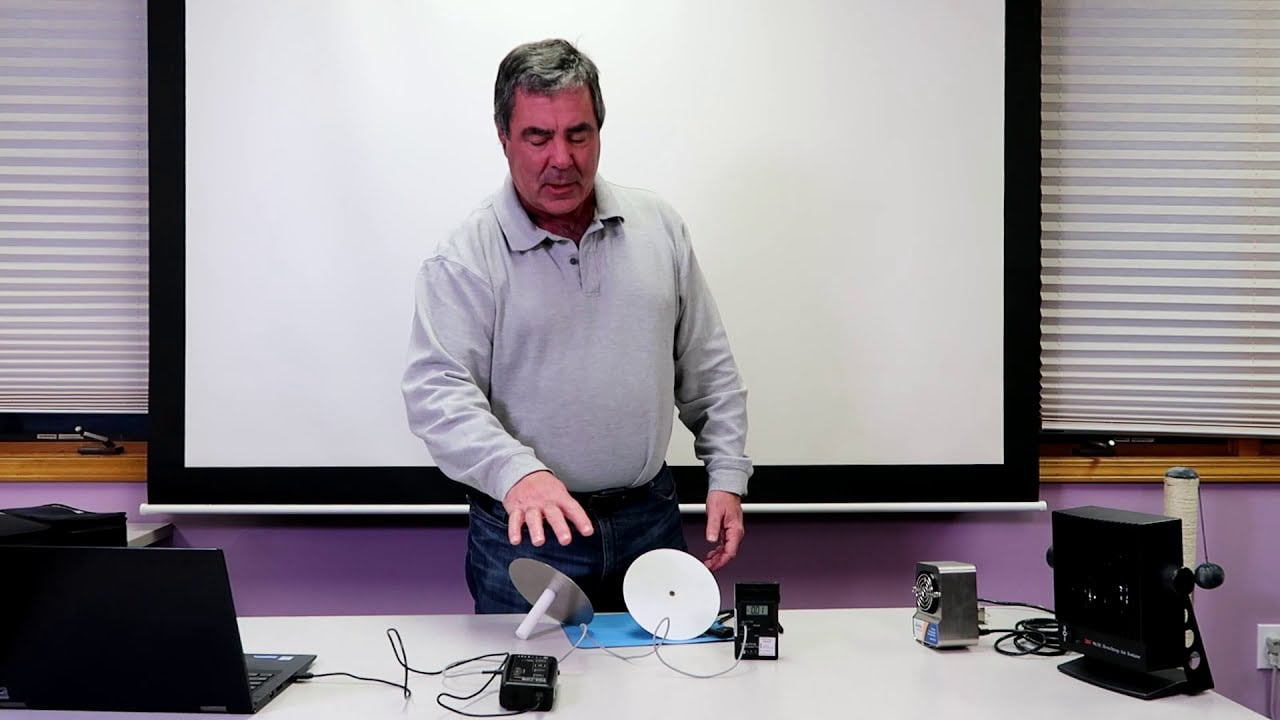
以下のEOS/ESD協会のビデオは、帯電と電場の背景を提供します。測定結果を解釈する際にターゲットと条件が重要である理由を説明するのに役立ちます。これは、FMX-003の修理ガイドや校正デモンストレーション、または写真の計器がテストに合格した証拠ではありません。操作コントロールについては、対応する計器のマニュアルに従ってください。.
よくある質問
変化しない読み取り値は一定の電場を証明しますか?
いいえ。保持された表示は、以前の観測値を示すことがあります。動作モードと測定条件を確認してください。.
HOLDを解除するにはZEROを押すべきですか?
対応するマニュアルを使用してHOLDを解除してください。ゼロ設定を未知のモードの最初の対処法としないでください。.
ホールドを解除することはキャリブレーションの証明になりますか?
番号。モードの操作と較正は異なる問題です。必要な検証と較正の管理を適用してください。.
メーターを移動して、保持された値を新しい場所で使用してもよいですか?
いいえ。保持された数値は、元の観測値に属します。そのコンテキストがわかっている場合に限ります。別のターゲットについて新たに測定してください。.
もしメーターが反応し続けない場合はどうしますか?
受け入れ判断に頼るのをやめ、症状を保存し、許可された検査後に認定された評価を求めてください。.
最近の投稿
-
-
 クリーンルーム手袋混合カートン:出荷前にロット識別を照合2026年11月26日
-
 ESDシールドバッグの保管:避けられる折れ損傷を防ぐ2026年11月26日
コメントを送信