- Blog
Effective ESD mitigation in SMT is a continuous material-flow control, not a checkpoint at the EPA door. Personnel entry, grounded work, board containment, mobile transfer and exceptions outside the protected area must share one status system. If a board can move without a named owner, permitted carrier and release condition, the control loop has a gap.
1. Define the EPA boundary and entry response
Mark where the protected area starts and what changes at that line. Entry controls should state who tests, what equipment is used, where the result is recorded and what happens after a failed test. A poster that says “wear a wrist strap” is not a response plan.
La ESD Association control principles place personnel grounding inside a wider system. The Aperçu de la protection antistatique EPA likewise describes an area made from coordinated people, ground, surfaces, tools and procedures. Use the requirements and limits adopted by your own program; do not copy a value from a generic product page.
2. Keep the workstation and the carrier in the same control plan
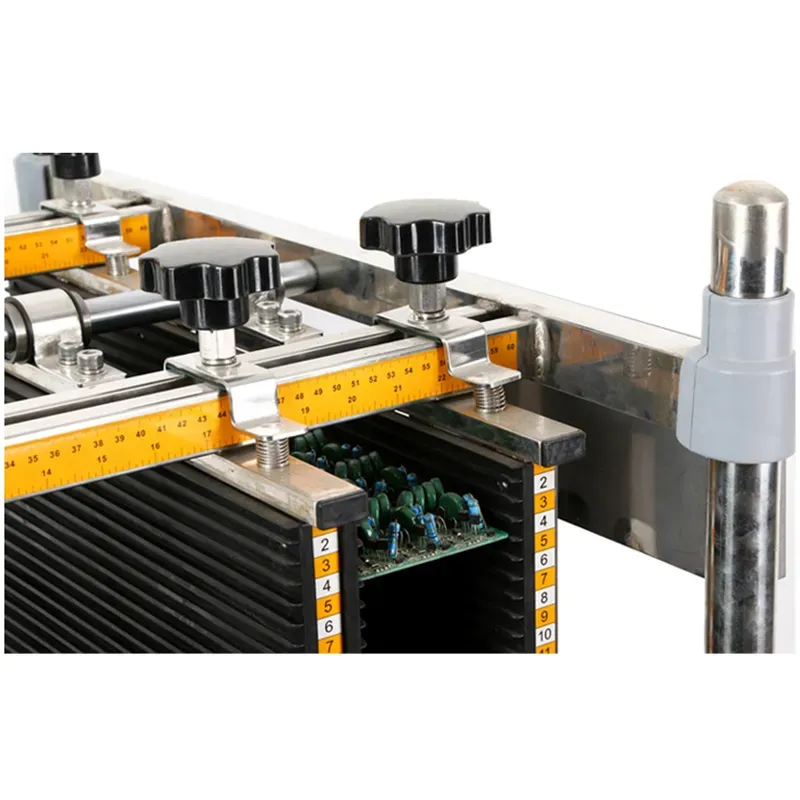
A grounded operator and worksurface do not protect a board that is placed in an undefined container. At each printer, inspection point, placement stage, rework bench or test position, define the permitted carrier and the permitted board contact areas.
La PCBCart SMT review identifies personnel, equipment and movement as recurring exposure sources. The practical response is to document how the board arrives, where it rests and how it leaves—not merely how the operator is grounded while working.
3. Give every buffer a limit, status and owner
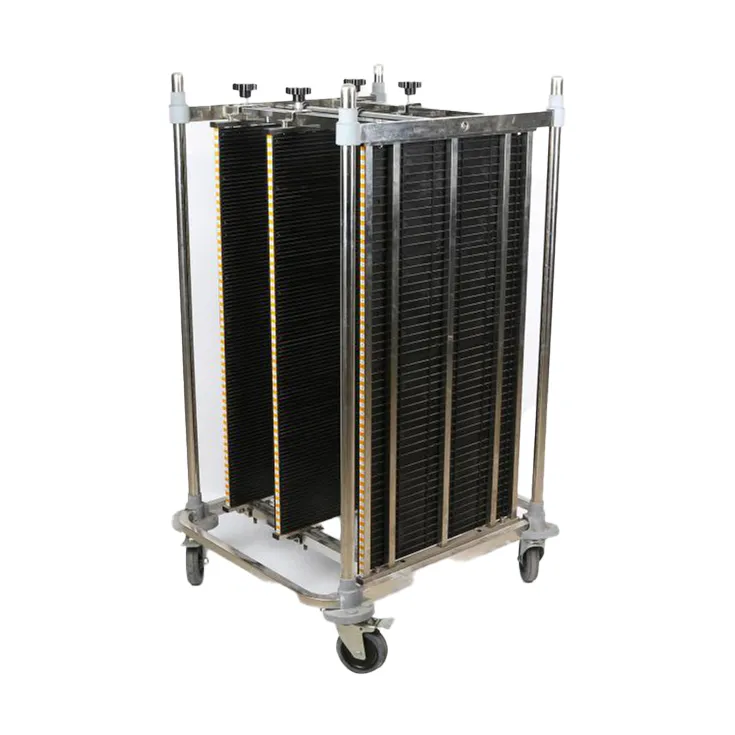
Buffers are necessary in real SMT lines, but unnamed WIP quickly becomes uncontrolled WIP. Give each rack, tray or trolley position:
- A permitted material type and maximum board envelope.
- A visible status such as queued, processed, hold or rework.
- A WIP limit and a named process owner.
- A loading and unloading rule that protects approved contact areas.
- A check for cleanliness, damage and current identification.
These controls improve traceability as well as ESD discipline. They also reveal whether the trolley is being used as transport, temporary storage or both.
4. Control the mobile transfer
Before movement, the sending operator confirms status and carrier readiness. During movement, the route should avoid unapproved staging areas. At arrival, the receiving operator accepts ownership and checks that the load, labels and containment remain intact.
| Événement | Stop condition | Required response |
|---|---|---|
| Entry test fails | Person is not cleared for the defined work | Follow the local retest and escalation procedure |
| Carrier is dirty or damaged | Board contact or containment is uncertain | Quarantine the carrier and transfer by an approved method |
| Status label is missing | Lot or processing state is uncertain | Hold material until identity is restored |
| Route leaves the EPA | Existing carrier may not provide required protection | Apply the approved protective packaging plan |
This table is intentionally procedural. Exact acceptance values belong in the site’s ESD control plan and equipment records.
5. Plan exceptions outside the EPA
Maintenance, laboratory review, cross-building transfer and outbound packing can move material beyond the controlled area. The ESD Association procedures and materials guidance explains why protective packaging is needed when the environment cannot be controlled.
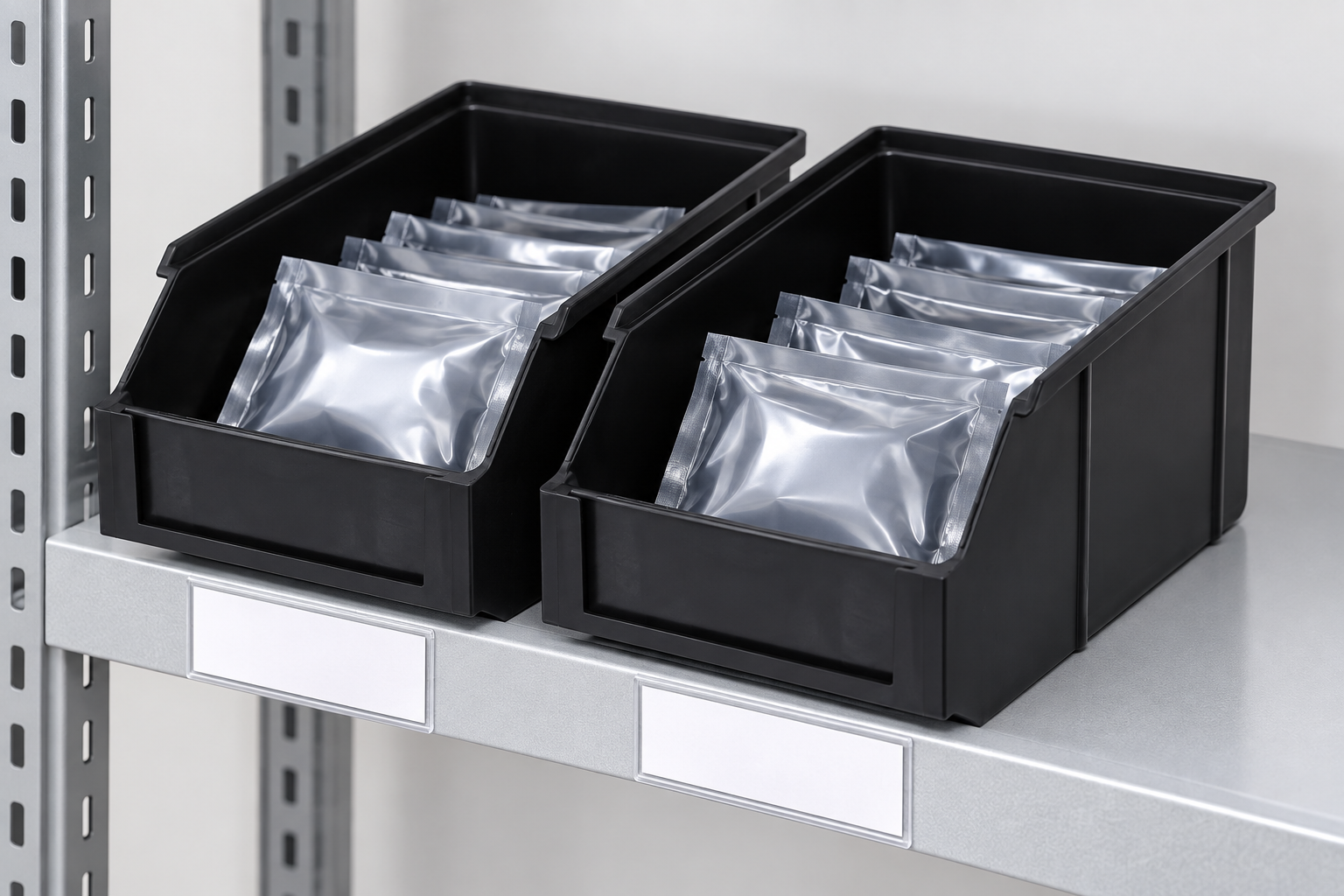
Define the point at which a rack or open tray must enter a closed protective package. State who seals it, how the package is identified and where it may be opened again. A trolley is a movement platform; it does not automatically provide an electrostatic shielding enclosure.
Specify the mobile handoff

Utilisez Chariot ESD SWESD page to identify the mobile-equipment family and the Étagère de magazine ESD page when separated PCB containment is also required. Then ask for the exact combination rather than assuming that any rack fits any cart.
Provide Contacter Sanwei with the board envelope, carrier count, handoff route, status-label method, cleaning conditions, floor and doorway constraints, ESD evidence required, trial quantity and destination. Confirm dimensions, construction, movement behavior and test documentation against the quoted configuration before approval.

Laisser un commentaire