- Turbo
- Blog
ESD storage cabinets and open shelving should be compared by access, contamination control, stock security and the electrical requirements of the stored product. Open shelving suits visible, frequent picking when the packaging already protects the items. An enclosed cabinet can control access and reduce direct exposure to the surrounding area, but a door does not establish discharge shielding or moisture control. Select the storage system after defining the approved inner package and the location’s ESD control plan. This comparison concerns ordinary storage layout; a qualified dry cabinet is a different product with separately verified environmental performance.
Begin with the stored package and its route
List what the location will hold: sealed component packages, populated boards in carriers, consumables or tools. Then identify how each item arrives, how long it stays and how it leaves. A system designed for sealed shipping packages may not suit exposed assemblies handled repeatedly during inspection. Determine which operations occur inside the EPA and which transfer points cross its boundary. Storage furniture is part of this route, not a replacement for the product’s approved packaging and handling instructions.
La EOS/ESD Association’s control principles distinguish the packaging properties needed for sensitive items inside and outside an EPA. Apply that distinction before comparing a cabinet door with an open shelf. Metal appearance, a lock or an ESD symbol cannot establish how the complete enclosure behaves electrically. If a supplier claims a special protective function, request the method and conditions used to demonstrate it rather than assuming that all cabinets provide it.
Access frequency often determines the simpler arrangement
Open shelves allow users to inspect the location and pick a package without opening a door. That can help a busy line-side location where quantities change repeatedly. The same visibility may also expose stock to unauthorized removal or contact. Observe the actual work: who picks, who replenishes, and who checks the inventory. A storage system that makes picking fast but hides reserve stock or encourages uncontrolled mixing may increase errors elsewhere in the process.
A cabinet can be useful for controlled-access stock, shared tools or segregated material when ownership and access rules are clearly defined. It can also add door-clearance and key-management requirements. Do not assume a cabinet is more secure simply because it has a lock; establish how access is assigned and how lost keys or emergency access are handled. Choose the arrangement that supports the approved workflow rather than buying a more complex enclosure without a specific operational reason.
Use a comparison that keeps special claims separate
The table below compares planning questions. It intentionally avoids unverified claims about electrical resistance, airtightness, load capacity or cleanliness. Obtain those properties for the exact proposed configuration. CCOHS storage-layout guidance provides useful background on storage layout and avoiding awkward reaches.
| Decision | Open shelving review | Enclosed cabinet review |
|---|---|---|
| Frequent picking | Check visibility and unobstructed reach | Check door access and whether opening disrupts nearby tasks |
| Access control | Define who may remove visible stock | Define locks, ownership and access records rather than assuming security |
| Propreté | Review package protection and exposed shelf surfaces | Evaluate doors, internal surfaces and cleaning under actual use |
| Chargement | Confirm shelf and complete unit conditions | Confirm shelves, enclosure stability and door or drawer restrictions |
| ESD control | Verify installed surfaces and relevant contacts | Verify the exact enclosure configuration and any claimed protective function |
| Environmental claims | Do not assume covered packages control humidity | Do not equate ordinary doors with qualified dry storage |
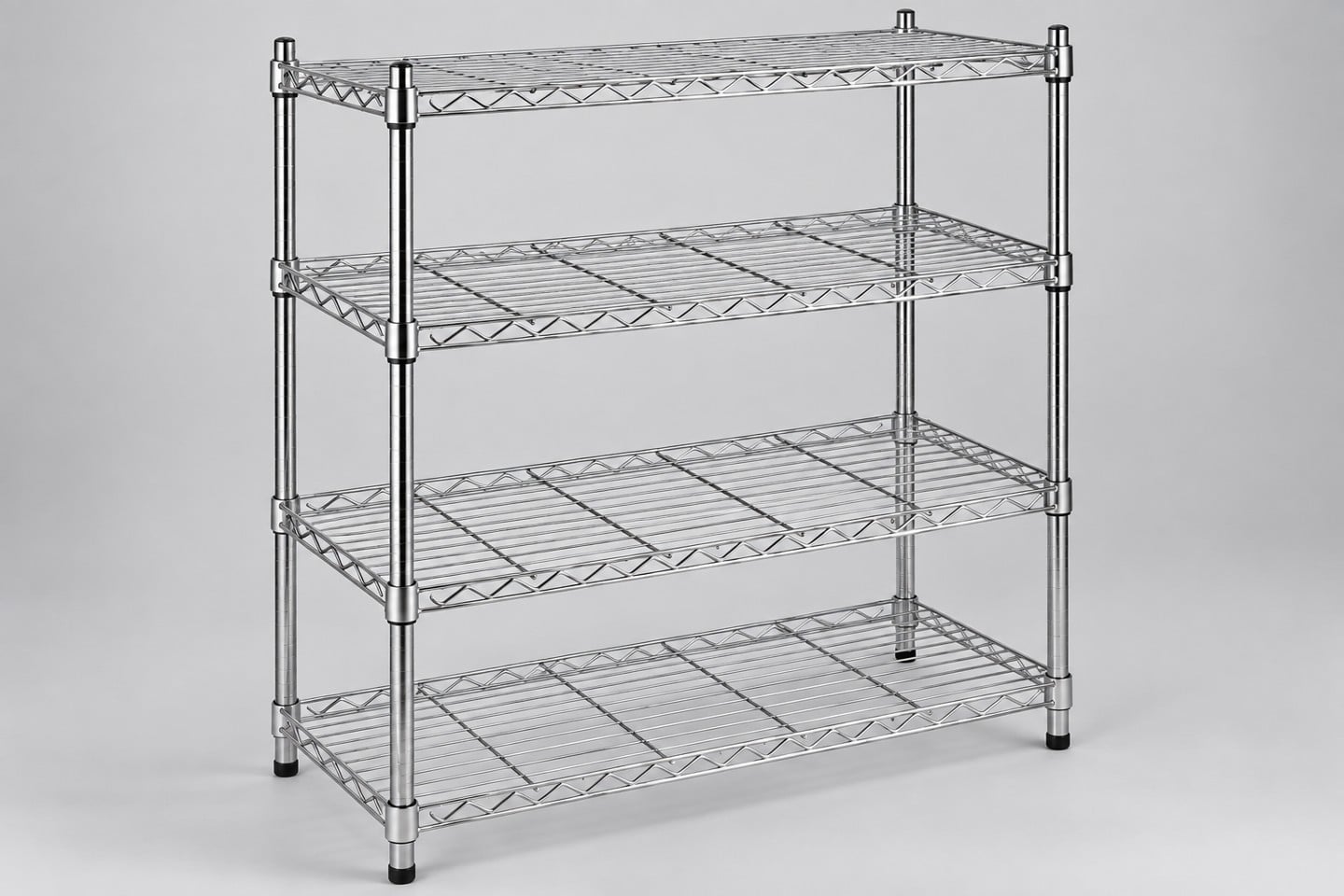
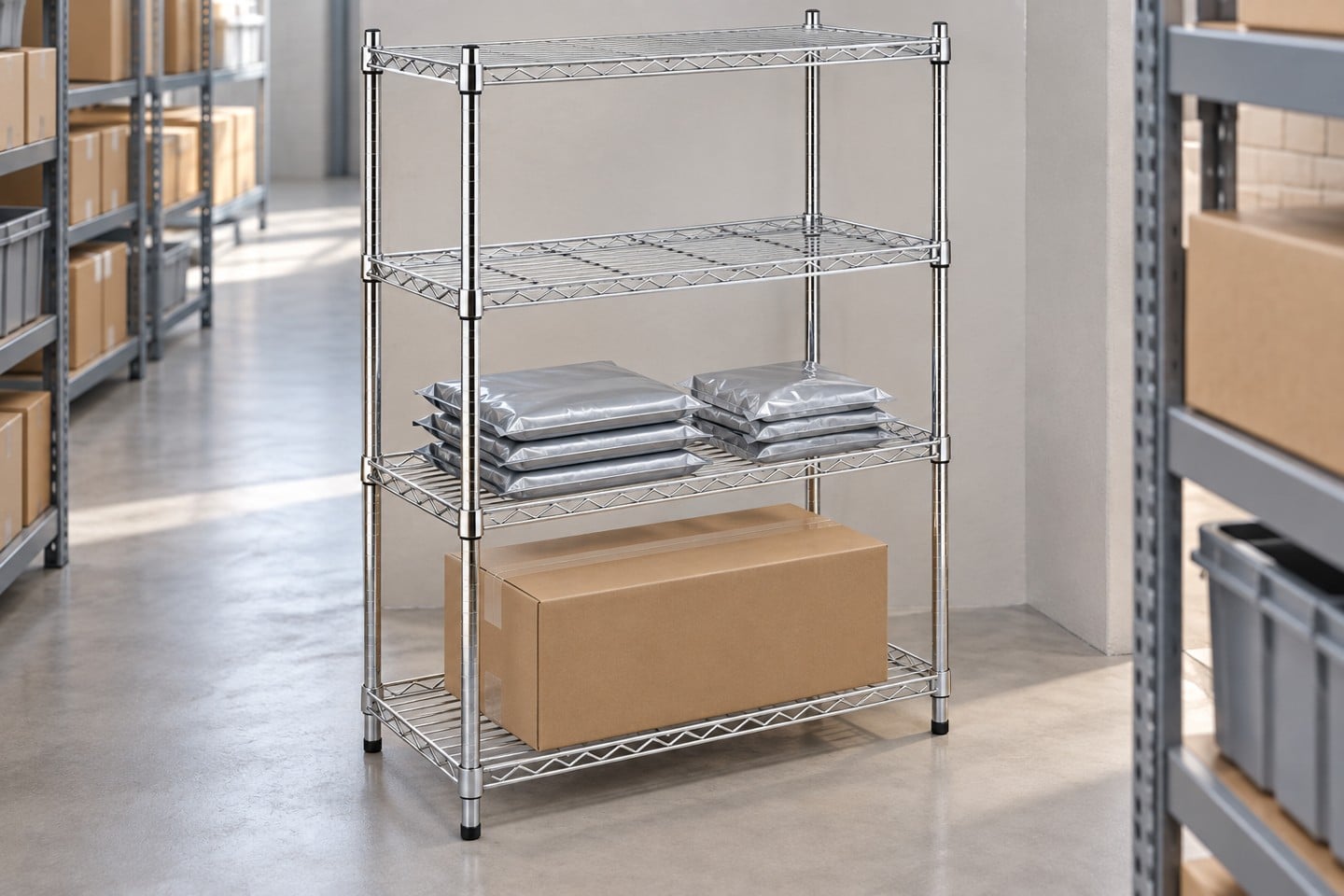
For a starting open-storage reference, see SWESD chrome wire shelving. Confirm the supplied model, shelf arrangement, feet or casters, grounding provisions and ratings with the supplier. The article illustration shows an open wire-shelf arrangement; it does not represent a closed cabinet or establish that any particular furniture model meets the site’s acceptance requirements.
Separate dust protection from cleanroom qualification
An enclosure can reduce some direct exposure to dust and incidental contact, but this is not a cleanliness guarantee. Door openings, seals, internal surfaces and cleaning practices all affect the stored environment. Ask what kind of contamination is relevant: visible debris, particles, residues or contamination transferred by people and packaging. Evaluate the system under its intended use. A cabinet that stays closed during a showroom demonstration may behave differently in a production area with frequent access.
Open wire shelving can allow inspection and cleaning access, but the package may need its own cover or approved enclosure. Avoid adding ordinary plastic curtains, shelf liners or paper coverings without reviewing their suitability for the EPA. These additions can affect electrical contact and introduce charging materials near sensitive products. The basic ESD procedures and materials guidance explains why auxiliary materials belong in the control review rather than being treated as harmless decoration.
Review electrical contact and grounding after installation
Ask the supplier how the installed furniture is intended to participate in the ESD control arrangement. Define which surfaces require measurements and whether the accepted configuration includes a grounding connection, particular feet, casters or accessories. Do not add an improvised connection to an electrical outlet or assume an incidental metal contact is an approved ground. The site’s responsible electrical and ESD personnel should define the permitted configuration and testing procedure.
Paint, removable shelves, liners and packaging can change contact paths. A successful measurement on a bare metal frame does not automatically demonstrate the behavior of a package on an insulated shelf liner. Verify the actual installed arrangement and keep the result tied to the model and configuration. Decide which changes require rechecking: relocation, repairs, accessory replacement or changes to the floor. The acceptance record should allow another person to reproduce the configuration rather than relying on a photograph alone.
Determine load placement and physical clearances
Specify individual shelf loading and the complete unit’s permitted loading conditions. A total capacity figure does not tell operators how a concentrated fixture or an unevenly filled shelf may be placed. Include the heaviest accepted package and the normal removal sequence. Confirm stability when only some shelves are filled. For cabinets, assess the effect of opening doors or drawers using the manufacturer’s instructions; for mobile shelves, consider the accepted parked and moving configurations separately.
Allow clearance for aisles, doors, carts and emergency access. Check whether a cabinet door blocks replenishment or whether an open shelf protrudes into a transport route. Put high-use items where users can reach and identify them safely, while keeping heavier approved loads in suitable positions. The placement decision should account for worker tasks and the actual arrangement rather than using one universal shelf height. Inspect the finished location after installation because nearby equipment can change available space.
Make stock status visible without exposing the product
Use a location system that distinguishes available material, inspection hold, returns and reserved customer stock. Decide whether status belongs to the location, the outer container or the individually protected package. A cabinet door can hide labels that were easy to see on an open shelf, so check identification both when the cabinet is closed and during picking. Avoid duplicating labels in ways that can leave conflicting information after a lot is moved or consumed.
Mixed-size storage benefits from a deliberate arrangement of containers rather than filling each available gap. The ESD picking-bin guide addresses front access and replenishment at the container level. The ESD drawer-cabinet guide addresses small parts and drawers. This furniture comparison should link to those more specific decisions without treating every storage problem as a reason to add another cabinet.
Do not confuse ordinary cabinets with dry storage
Moisture-sensitive components may have instructions that specify packaging, storage conditions or handling limits. A conventional storage cabinet does not satisfy those instructions merely because it has doors. Ask the responsible quality team what environmental controls are required and how they are verified. If a dry cabinet is needed, compare its documented operating conditions, monitoring and maintenance separately from the general ESD furniture selection.
Keep ESD, moisture and cleanliness evidence distinct in the purchase record. A supplier may offer several configurations with different functions, and the quotation must identify which one is actually supplied. The moisture-proof cabinet planning guide covers that separate procurement question. Avoid creating an unsupported combined claim such as dustproof, moisture controlled and ESD safe unless the exact product and intended conditions have been assessed for each requirement.
Run an installation acceptance trial
Install a representative sample or the first unit in the intended location. Use the actual approved packages and demonstrate receiving, picking, replenishment and inspection. Check shelf clearances, labels, access restrictions and the path used by a cart. Record whether users can complete the sequence without leaning over exposed parts or placing stock temporarily on an unapproved surface. Include electrical verification and the relevant cleaning assessment in the acceptance process.
Retain the accepted model, configuration, layout and evidence with the purchasing specification. Define inspection triggers for damage, loosened supports, door problems or altered grounding provisions. A replacement shelf or lock may need a configuration review even if it appears similar. The goal is a storage arrangement that continues to support the approved workflow throughout service, not only a unit that looked suitable when it arrived.
Further learning: storage within material handling systems
The NPTEL lecture below provides background on how storage and movement fit into a material handling system. Use it to review the complete route and the number of handling steps, then apply the product-specific acceptance requirements described above.

Educational video: Lec 27: Material handling systems, NPTEL IIT Guwahati.
Foire aux questions
Does an ESD cabinet replace shielding bags?
Only a qualified complete packaging arrangement can establish the required protection. A cabinet door alone does not demonstrate discharge shielding.
Is open wire shelving suitable for every EPA?
It must be evaluated with the stored packages, installed configuration, loading and site ESD plan. Appearance does not establish acceptance.
Can a normal cabinet store moisture-sensitive parts?
Follow the component handling requirements. An ordinary enclosed cabinet is not evidence of controlled dry storage.
Should shelves be grounded after installation?
Use the grounding and verification configuration defined by the supplier and the site ESD and electrical personnel; do not improvise connections.
What usually decides between the two systems?
The approved package, access frequency, stock control, contamination requirements and physical layout determine which system best supports the actual workflow.


Laisser un commentaire