- Blog
A beveled ESD bin earns its place when the angled, open front lets an operator complete a pick in one motion without lifting, tipping, or unstacking the container. Write the requirement around the pick: part envelope, mouth height and angle, sight line, station clearance, and label position — then confirm the selected model against that requirement in the RFQ.
Buyers use “beveled” loosely for any bin whose front wall drops or slopes toward the operator. Within the Bac ESD category, that job belongs to the open-front family, and the operating decision is about presentation at the point of use rather than bulk capacity. A category word alone does not tell a supplier what geometry the station needs.
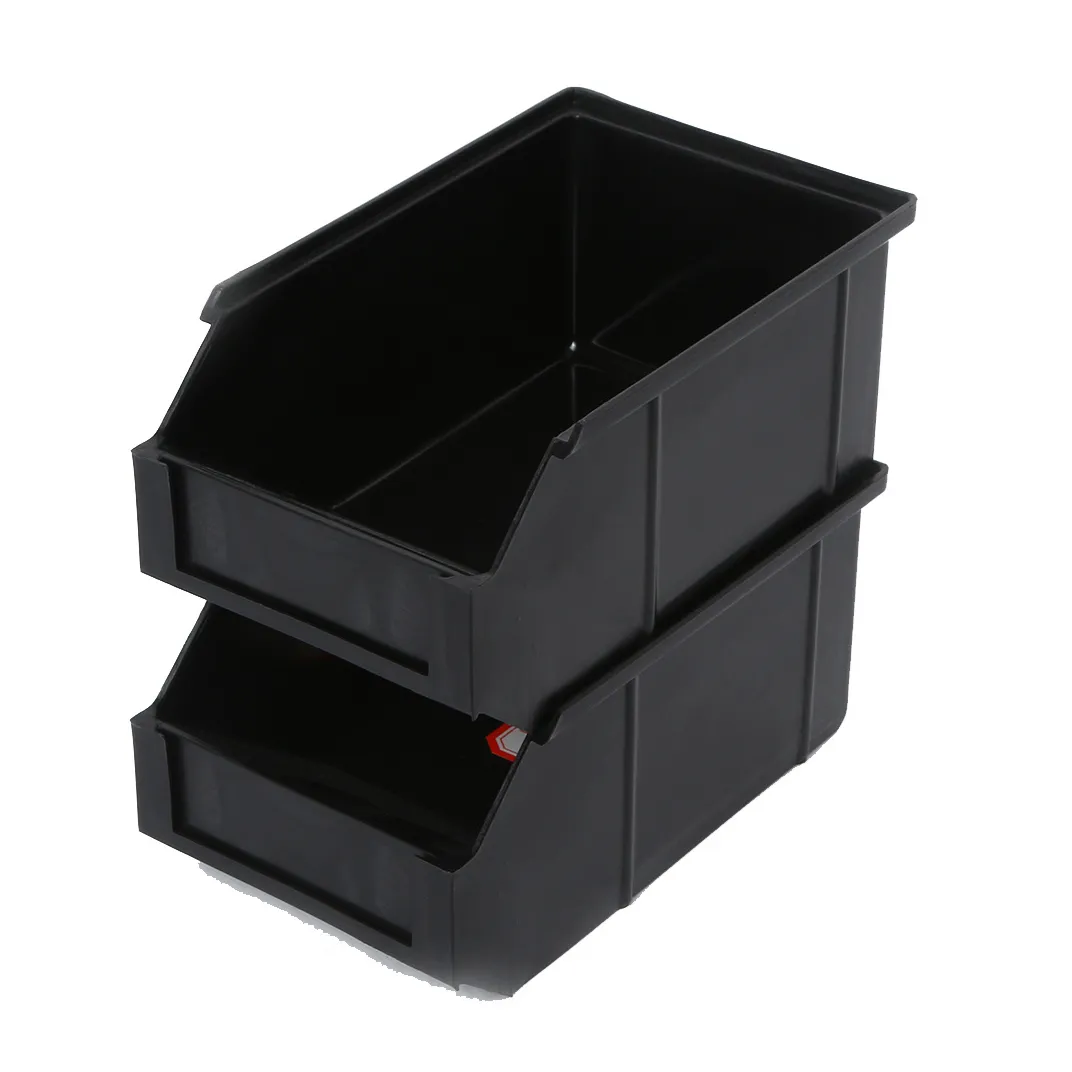
Part 1. When does a beveled front actually help picking work?
Start from the operator task. If a hand or tool must enter the bin repeatedly while the other hand is occupied — feeder preparation next to a pick-and-place machine, hardware kitting at an assembly bench, rework stations pulling connectors — an angled mouth reduces wrist rotation and keeps the remaining stock visible.
| Line-side situation | Why the beveled front helps | What to define first |
|---|---|---|
| Feeder-prep table beside a placement machine | One hand holds the reel or tray while the other picks | Pick frequency and free-hand clearance |
| Bench assembly of mixed small parts | Operator picks by sight without lifting bins | Sight line from the seated or standing position |
| Rework or repair pulls of connectors and ICs | Occasional picks from labeled stock | Label position readable at an angle |
| Shelf-edge presentation above a workbench | Bins sit above elbow height | Mouth angle that exposes contents downward |
The same geometry has costs. An open, sloped mouth lowers the effective fill line, so very small parts can ride over the front wall during transport, and an open face collects dust in storage areas. Where the container must travel between areas or hold material for long periods, review the container-role guide before fixing the format.
Part 2. How does buyer language map to the published Sanwei bin family?
“Beveled,” “slanted mouth,” “scoop front,” and “open hopper” all describe the same buying intent: a front profile cut for access. On the Sanwei site, that intent maps to the published Bac de rangement à ouverture frontale ESD family, which the page describes as a front-opening design for quick access, easy identification, and efficient parts handling.
Published, family-level options on the cited pages include stacking, side-by-side connection, and material-hanging-board compatibility on listed models, an optional anti-static label, temperature-resistance customization options, and a static index range of 10e4–10e8 ohm. Treat each item as a configuration topic for the selected model, because options and values vary across the family.
What the cited pages do not verify matters just as much. No page confirms a specific mouth angle for a given station, a load rating for stacked columns, the material specification of a particular order, price, MOQ, or lead time. Those points move to the quotation, and the sample review closes the loop.
Part 3. Which access and presentation decisions define the requirement?
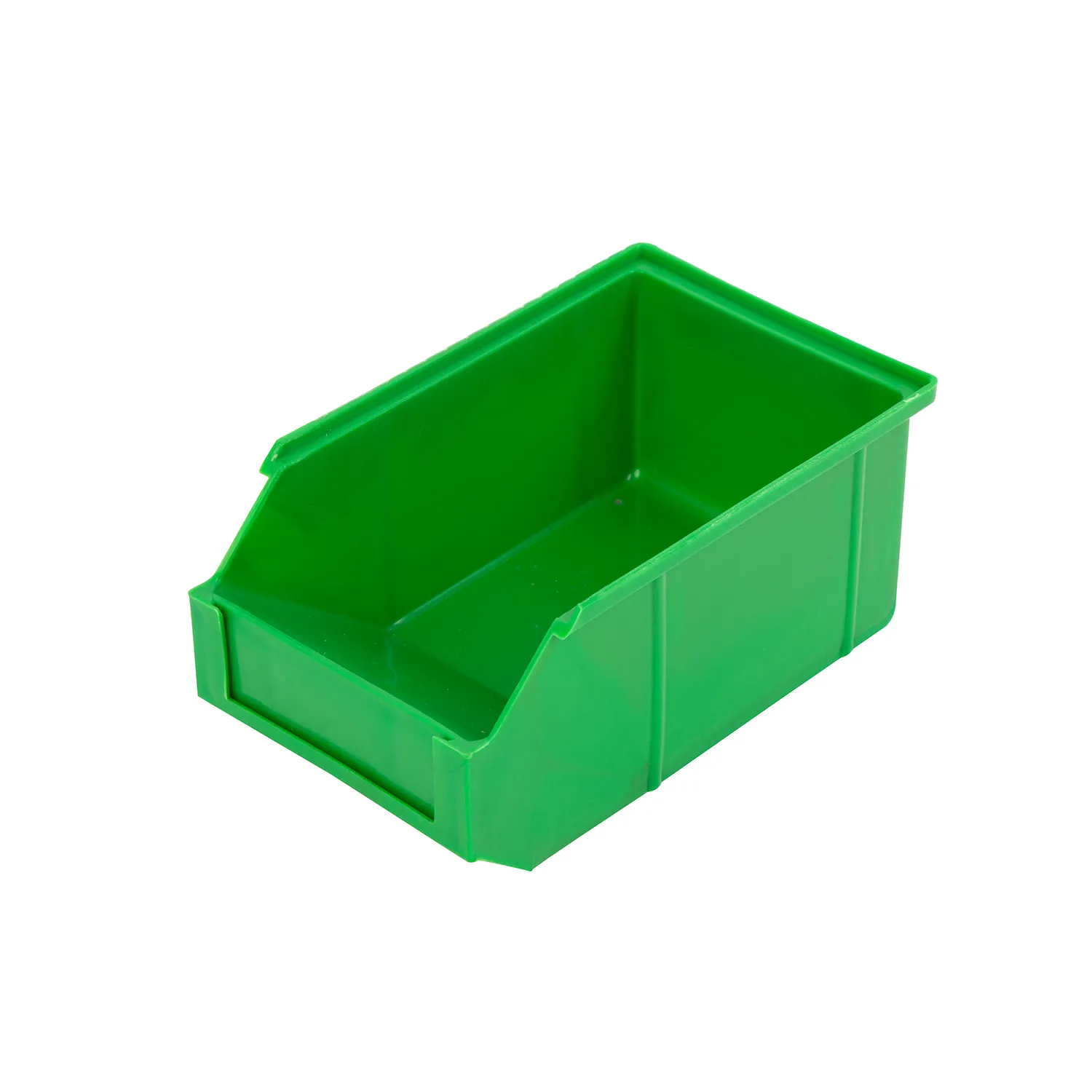
Turn the station into numbers before asking for a quote. Five decisions define most front-access requirements.
| Decision | Buyer input | Pourquoi c'est important |
|---|---|---|
| Part envelope and pick method | Largest part plus finger, tweezer, or scoop clearance | Sets minimum mouth opening and inner depth |
| Mouth height and angle | Measured from the bench or shelf edge | Controls one-motion reach and spill risk |
| Sight line | Operator eye height at the station | Determines whether stock level is visible without tipping |
| Station clearance | Shelf pitch, bench depth, neighboring equipment | Limits external footprint and stacking height |
| Mounting intent | Bench, shelf, stack, side connection, or rack | Must match the selected model’s published options |
Quantity of formats is its own decision. A station usually works better with one or two bin footprints repeated in color or label variants than with a different geometry per part number, because replenishment carts and shelf pitch stay predictable.
Where stock must stay enclosed between shifts or move as a sealed unit, a front mouth is the wrong tool; compare the enclosed drawer-bin overview for that job before writing the RFQ.
Part 4. How should labels, segregation, and replenishment stay controlled?
An open front changes where identification lives. The label must read correctly at the presentation angle, which usually means the front face or a holder near the mouth rather than the lid area used on covered boxes.
| Control | Working rule | Failure it prevents |
|---|---|---|
| Label field | Part number, description, location, and revision or date | Picks from an outdated or misplaced bin |
| Label position | Readable at the installed angle without touching stock | Operators tipping bins to identify contents |
| Segregation | One part number per bin, or a documented partition rule | Mixed lots discovered at test |
| Replenishment | Defined trigger, route, and refill owner | Stockouts hidden behind full-looking front rows |
| Return loop | Empty bins cleaned and relabeled before reuse | Old identification traveling with new stock |
Mixed small parts inside one container call for a partition rule rather than a second geometry; the partitioned-bin segregation guide covers that decision. Keep the beveled-front requirement focused on presentation.
Part 5. Which ESD evidence and fit boundaries still apply?
Geometry never substitutes for the ESD program. The bin sits inside the buyer’s EPA rules for grounding, handling, and acceptance, and program-level context comes from IEC 61340-5-1 and the ANSI/ESD standards route rather than from a product photo.
| Demande de pièces justificatives | Why it belongs in the file | Limite |
|---|---|---|
| Quoted model and accessory list | Ties the requirement to one configuration | A family page is not model confirmation |
| Material identification | States what will be supplied | Color does not identify a material |
| Electrical evidence against buyer criteria | Matches the EPA acceptance method | The published 10e4–10e8 ohm range is a family statement to confirm per model |
| Test method and conditions | Makes results comparable | Unstated methods cannot be audited |
| Sample or lot traceability | Connects evidence to the delivered item | Keep it with receiving records |
Ajuster la limite
| Situation de l'acheteur | Voie raisonnable | Éviter |
|---|---|---|
| Repetitive front picks at a bench or feeder-prep point | Beveled front defined by pick motion and sight line | Choosing geometry from a catalog photo |
| Stock that travels between areas | Documented movement container and route rule | Letting presentation bins wander with material |
| Dust-sensitive or long-idle storage | Covered or enclosed formats | Treating an open mouth as storage protection |
| Heavy or oversized parts | Station review with load confirmation in the RFQ | Assuming stacked open-front columns carry any load |
Part 6. What should the RFQ and sample review include?
Send one requirement set that a supplier can answer line by line. “Beveled ESD bin, quantity 500” leaves the geometry, evidence, and accessories undefined.
| Champ d'appel d'offres | Buyer input |
|---|---|
| Application summary | Station type, pick motion, and pick frequency |
| Part data | Part types, envelope, and weight class |
| Geometry requirement | Mouth height and angle intent, footprint limits, stacking or mounting plan |
| Identification | Label fields, position, and holder or print method |
| ESD requirement | Buyer-defined electrical criteria, test method, and acceptance rule |
| Accessories | Labels, partitions, or mounting options to confirm on the selected model |
| Commercial request | Quantity bands, destination, and required documentation |
| Sample plan | Station trial, fit check, and evidence review before release |
Recommandation de produit
Begin the model review with the Sanwei ESD Front-Opening Component Bin when the primary job is a one-motion front pick, and use the ESD Bin & ESD Rack solution page when bins and racks will be specified together. This is a starting point for an RFQ review, not a statement that a listed model fits a particular station.
Do not lock a model from an image, a category word, or a neighboring article. Ask Sanwei to confirm the selected model, mouth profile, accessories, electrical evidence, and commercial terms in writing, then repeat the check on a sample at the actual station.
Send the station summary, part envelope, presentation requirement, label plan, and acceptance criteria through Contacter Sanwei for quotation review.
FAQ
What is a beveled ESD bin?
It is buyer shorthand for an ESD-safe bin whose front wall is cut or sloped toward the operator so parts can be picked in one motion. The term describes a front-access intent, not a standardized specification, so the exact profile must be confirmed on the selected model.
Is a beveled ESD bin the same as a front-opening bin?
The intent is the same. On the Sanwei site, the published front-opening component bin family covers this format; supplier naming varies, so confirm the mouth geometry rather than the label.
Does a beveled front help pick-and-place feeder preparation?
It can, because one hand stays free for reels or trays while the other picks. Whether it helps a specific table depends on pick frequency, part envelope, and clearance, which belong in the RFQ.
Can a beveled ESD bin be stacked or hung?
Stacking, side connection, and material-hanging-board compatibility are published options on listed Sanwei models. Confirm the option set and any load question for the selected model in the quotation.
What ESD evidence should be requested for a picking bin?
Request the quoted model, material identification, electrical evidence against the buyer’s own criteria with the test method stated, and traceability from the reviewed sample to supplied lots.
How should a beveled ESD bin be labeled for picking?
Place identification where it reads at the installed angle, typically the front face or a holder near the mouth, and keep fields to part number, description, location, and a revision or date.
Which Sanwei page should anchor the model review?
Use the ESD Front-Opening Component Bin product page for the family review and the ESD Bin category for adjacent formats; both are discovery routes, and the selected configuration is confirmed by quotation.
What should be confirmed on a sample?
Check the mouth profile against the pick motion, the footprint against the station, label readability at the installed angle, stacking or mounting behavior, and the ESD evidence required by the buyer’s program.
Laisser un commentaire