- Turbo
- Blog
Cleanroom glove and hand lotion compatibility must be reviewed as a combination of the exact glove, the exact hand-care formulation and the intended process. A product described as fragrance free or suitable for cleanrooms is not automatically approved for every glove or sensitive surface. Ask for compatibility evidence, consider possible contamination transfer and demonstrate the approved preparation and donning sequence. Keep skin health decisions with the appropriate occupational health personnel. This guide concerns electronics manufacturing purchasing and process control; it does not establish medical glove protection, sterile suitability or a treatment for skin conditions.
Use the broader Lista de verificación para la compra de guantes ESD to define the base glove requirements before reviewing an additional hand-care product.
Define the request before evaluating a new hand-care product
A request may begin because workers report discomfort, because purchasing cannot obtain an approved formulation, or because a visitor brings a personal product into a controlled area. These are different triggers. Record the reason and current process before selecting a substitute. A supply shortage does not establish compatibility, and a useful product outside work does not automatically belong at a sensitive assembly station.
Identify who owns each decision. Occupational health addresses worker health concerns, the glove supplier addresses product-specific compatibility evidence, and process or quality personnel assess contamination and work performance. Purchasing coordinates identities and documentation. The person using the glove should contribute observations about donning and handling, but should not be left to decide alone whether a formulation meets manufacturing requirements.
Define the process boundary: hand preparation location, glove material and model, product contact, approved cleaning agents and any relevant personnel grounding arrangements. An evaluation for a nonsterile electronics room should not be presented as acceptance for pharmaceutical aseptic work. If several departments share a product, document the approved scope instead of relying on a single general label in the storeroom.
Check the exact glove and formulation identities
SWESD’s blue nitrile glove product provides a real product starting point for a supplier discussion. Confirm the model, size, packaging identity and current supporting information. The word nitrile describes a material family; it does not make all formulations and finishes interchangeable or establish resistance to every hand-care ingredient.
For the hand-care product, obtain its exact commercial name, manufacturer, version or formulation identifier where available, intended use and current instructions. A safety data sheet can support hazard communication, but its existence alone does not prove glove compatibility or absence of process-relevant residues. Ask what the supplier actually tested and whether the named glove was included.
Record substitutions explicitly. A similarly named bottle, a different fragrance option or a revised ingredient list should trigger review. Packaging appearance is an unreliable identity control. If the supplier does not disclose a formulation change mechanism, purchasing should at least establish a route for receiving current documentation and assessing whether the existing approval remains applicable.

Understand what published guidance does and does not establish
El CDC Hand Hygiene 101 educational material notes that petroleum-based lotion formulations can weaken latex gloves. That is a useful warning against assuming universal compatibility. It does not mean every lotion damages every nitrile glove, and it does not establish a safe formulation for a particular electronics process. Keep the material-specific wording intact when discussing the source.
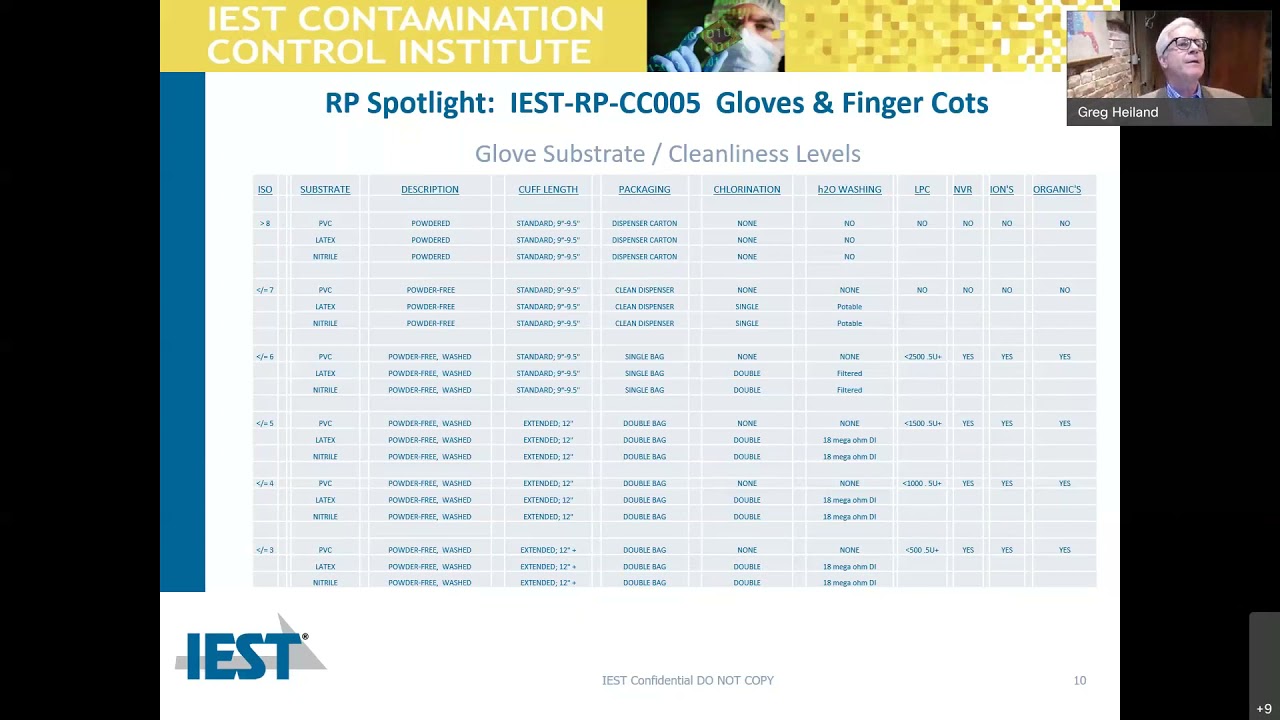
IEST-RP-CC005 concerns evaluating gloves and finger cots for controlled environments. Its public description supports treating cleanliness and performance as selection questions. The public page is not the complete recommended practice, and this article does not claim to reproduce its test procedures or acceptance limits. Obtain the applicable document when a contractual evaluation requires it.
Treat supplier compatibility statements as evidence with a scope. Ask which glove, product concentration, contact conditions and assessment endpoints were used. A short demonstration with an unspecified glove is weaker than a documented study identifying the products and method. Neither evidence type should be relabelled as cleanroom process qualification unless that additional assessment was actually performed.
Separate glove integrity from contamination transfer
The first review question is whether the combination affects the glove’s intended function under the approved conditions. Possible observations during a controlled trial include unexpected tackiness, swelling, altered handling or tearing. These observations are reasons for investigation, not a substitute for a defined product test. A glove that looks normal has not automatically passed every relevant integrity or performance requirement.
The second question is whether the hand-care product creates an unacceptable contamination path. Consider preparation surfaces, dispenser contact, glove cuffs, items touched before product handling and the target assembly. Fragrance free, silicone free and low residue are distinct claims with distinct evidence needs. Avoid treating any one of those phrases as a complete approval for all sensitive processes.
For ESD-controlled work, review the established personnel protection arrangements separately. Do not use lotion as a substitute for the site’s grounding and verification requirements. If a change could affect an approved measurement or work instruction, the ESD coordinator should define the review. This article intentionally provides no universal resistance value or claim that moisturizing alone improves compliance.
Plan a controlled trial without exposing production
Begin with documentation review and a trial plan accepted by the responsible personnel. Identify candidate and current approved combinations, representative tasks, evaluation methods and stop conditions. Use nonproduction samples or suitable test surfaces until the organization authorizes a later stage. A first trial should not turn customer assemblies into an uncontrolled experiment.
Follow the product instructions and site-approved hand preparation sequence. Record application and waiting conditions when they are relevant to the procedure, but do not invent a universal drying time. Observe whether workers can follow the sequence consistently and whether preparation introduces unplanned contact with bottles, benches or clean supply. Practical usability is part of the process review.
Where measurements are required, define methods and acceptance criteria before looking at results. Visual inspection, surface analysis, glove testing and electrical checks answer different questions. Choose those that match the identified risk and available qualified methods. A clean-looking coupon cannot establish the absence of ionic residue, and a successful electrical measurement cannot prove that a glove leaves no contamination.
Record questions and decisions in one review table
The table below is a proposed internal review aid. It contains no universal compatibility limits and does not replace the glove manufacturer’s instructions, the hand-care product instructions or applicable workplace requirements. Populate it with the evidence accepted for the specific process.
| Pregunta | Se necesitan pruebas | Límite de aprobación |
|---|---|---|
| Identidad | Exact glove model and hand-care formulation | Named combination only |
| Compatibilidad de materiales | Supplier methods and applicable conditions | No transfer to all nitrile gloves |
| Contaminación | Process-relevant transfer assessment | Specified product and contact route |
| Work sequence | Observed preparation and donning method | Approved workstation conditions |
| Control de cambios | Formulation and glove change notification | Reassessment by responsible reviewers |
Keep unresolved items visible. If product identity is clear but residue suitability remains unknown, record that distinction. It prevents an administrative approval from being mistaken for technical acceptance. The next action may be a supplier question, a focused trial or a different candidate whose evidence is stronger; it should not be an unsupported declaration that the products are safe together.

Connect approval to normal glove handling
A compatible preparation process still needs sound glove handling. Use the cleanroom glove donning guide to review how fresh gloves are withdrawn and worn. This article focuses on the additional hand-care variable. It does not replace the accepted donning method or authorize applying hand-care products to the outside of a glove.
Confirm that the chosen size remains appropriate during representative tasks. If operators pull excessively on a cuff or struggle with grip, investigate the fit and procedure rather than assuming lotion will solve the problem. The glove sizing and dexterity review addresses those separate decisions. Keep any proposed size change controlled so the trial still identifies the combination actually used.
When a worker reports skin symptoms, follow the workplace reporting route and obtain appropriate professional advice. Do not ask the worker to continue an uncomfortable trial merely to complete a manufacturing checklist. Record process observations without publishing personal health details. The purchasing record needs the approved products and conditions, not unnecessary medical information about an individual employee.
Control dispensing, training and future substitutions
After approval, define where the product can be stored and dispensed, how the container is identified and which instructions operators follow. Use the manufacturer’s packaging and handling requirements. Do not create an informal practice of mixing products or transferring them into unlabelled containers. Container management is part of keeping the approved identity connected to actual use.
Train personnel to recognize the approved product and report substitutions. Include temporary staff and visitors when they enter the same process. Personal hand-care products can bypass purchasing controls, so explain the process reason for review in plain language. A usable alternative and a clear reporting route are more effective than an unexplained prohibition.
Review repeat complaints and performance observations through the normal quality process. The glove complaint sample retention guide helps preserve identity and condition when an issue occurs. Retain the relevant packaging and lot information where practical, and distinguish a reported association from a demonstrated cause. Change the approved combination only after the responsible reviewers assess the evidence.
The IEST educational video below introduces cleanroom gowning context. It helps explain why preparation and contact boundaries matter, but it is not a glove-and-lotion compatibility test or a medical recommendation. The written review and product-specific evidence remain the basis for acceptance.
Preguntas frecuentes
¿Significa que sin fragancia está aprobado para sala limpia?
No. Review the complete formulation, process requirements and relevant evidence.
¿Son compatibles todos los guantes de nitrilo con la misma loción?
No. Obtenga evidencia para la combinación exacta de guantes y cuidado de manos.
¿La advertencia de látex de los CDC prueba la incompatibilidad del nitrilo?
No. Mantenga su alcance específico de material y evalúe las combinaciones de nitrilo por separado.
¿Puede la loción reemplazar los controles de conexión a tierra del personal?
No. Follow the established ESD protection and verification arrangements.
¿Qué pasa si un trabajador informa sobre un problema en la piel?
Use the workplace reporting and occupational health route; do not improvise a treatment or require an uncomfortable trial.


Dejar un comentario