- Turbo
- Blog
An ESD test report should connect a clearly identified product or specimen to a stated test method, setup, conditions, measured results and acceptance decision. A document that says only ESD compliant is not enough to compare suppliers or release an incoming lot. Procurement should ask for evidence that matches the intended use: a tray material measurement, a finished container check, a work-surface check and a device-level discharge test answer different questions. Define that scope before requesting a certificate or approving a sample.
This guide provides a practical report-review template for electronic manufacturing purchases. It focuses on evidence after testing, while the ESD packaging RFQ guide explains the drawings, quantities and application information to send before a quotation. Neither document establishes a universal acceptance limit for every product.
Start with the claim the report must support
Write the purchasing claim in plain terms before collecting reports. You might need to verify a specified resistance measurement on a molded tray, review packaging performance for a handling route, or check an installed storage system. Each scope calls for different evidence. An electrical test on a small material coupon should not be presented as proof that every feature of a finished assembly has been evaluated.
A device-level ESD susceptibility report is particularly easy to confuse with packaging evidence because both may use ESD in the title. Ask what was tested and which failure or performance question the method addresses. If the document describes semiconductor stress testing, it may say nothing about the resistance or protective function of the container you are purchasing. The product engineer should resolve this mismatch before procurement treats the report as an approval document.
Identify the exact item and sample
The report should list the product model, drawing or specification revision, material description and sample identity. Include the tested component or surface when a product has several materials. A lid, divider and main container body may need separate identification. If the supplier tested a coupon instead of the assembled item, record how the coupon relates to the production construction and what remains unverified.
For a lot decision, require the lot or batch reference and the agreed sampling basis. The report should make it possible to distinguish a development sample from a production sample and a current batch from an older demonstration. Photographs are useful supporting evidence when they show the specimen and test location, but they should be tied to the same sample identifiers. An undated catalog photograph cannot establish the identity of a tested item.
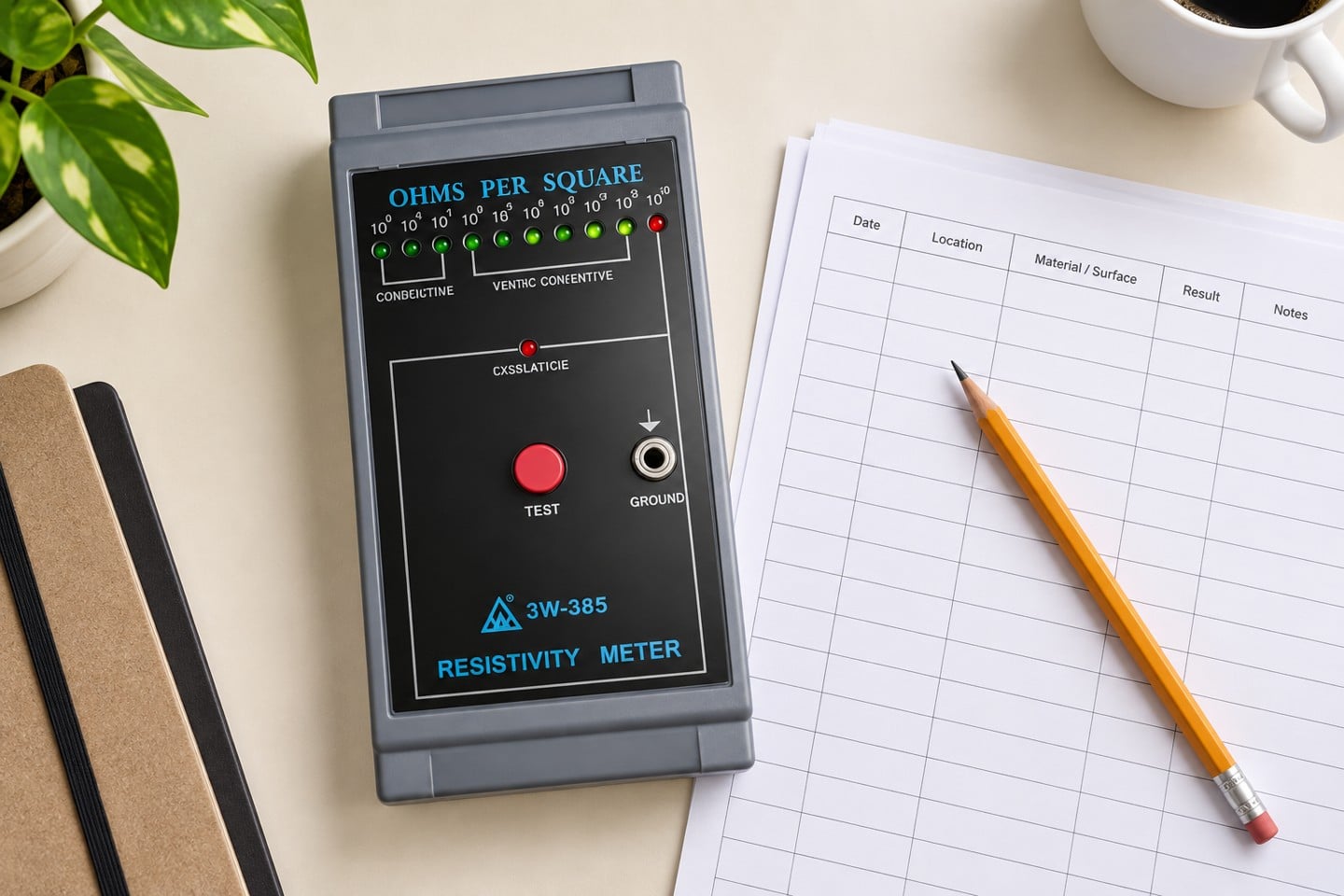
A procurement report-review template
| Review field | What to request | Reason to hold |
|---|---|---|
| Item and specimen | Model, revision, construction and sample identifier | Report cannot be tied to supplied item |
| Test scope | Property and locations actually evaluated | Coupon evidence presented as assembly approval |
| Method and setup | Method revision, contacts, settings and deviations | Unexplained change or unidentified procedure |
| Conditions | Conditioning, environment and sample history | Conditions absent or unsuitable for agreed scope |
| Equipment | Instrument identification and relevant calibration evidence | Measurement capability is unresolved |
| Results and decision | Values, units, acceptance requirement and disposition | Pass statement without reviewable basis |
This template lists useful review fields, not a claim that every laboratory standard requires the same layout. Adapt it to the contract and applicable method. Assign a reviewer and a resolution date to missing fields so a request for clarification does not disappear into email. A completed template should allow another person to reconstruct what the supplier tested and why the purchasing team accepted or held the result.
Record the method and any deviations
Name the test method and revision, then describe departures from it. A report that quotes a standard family without identifying the procedure may leave the actual measurement unclear. Record the measured quantity, electrode or fixture arrangement, instrument settings, specimen preparation and timing when these are relevant. A claimed equivalent method needs a documented technical basis and approval from the person responsible for acceptance.
If specimen geometry prevents the normal fixture from fitting, ask how the laboratory adapted the measurement. Report the change and its implications rather than hiding it in a footnote that procurement never sees. Do not accept an unexplained unit change between resistance and resistivity. The separate surface resistivity testing background provides context for interpreting material measurements, while the report must identify its own method and geometry.
Environmental conditions and sample history
Require the temperature and humidity conditions used during conditioning and measurement where the method calls for them. Record conditioning duration, cleaning or preparation, and whether the sample was new or previously used. If a report covers an aged or cleaned sample, its history should be explicit. This lets buyers distinguish an initial material result from evidence that represents an agreed service condition.
Avoid describing the laboratory condition as the full operating range of the product. The report may evaluate only one defined condition. If your plant uses materially different conditions, ask the technical reviewer whether additional evidence is needed. A reasonable report can state its limits; a report that suppresses them is harder to use. Keep assumptions about transport, storage, cleaning and exposure visible in the approval record.
Instrument identity and measurement evidence
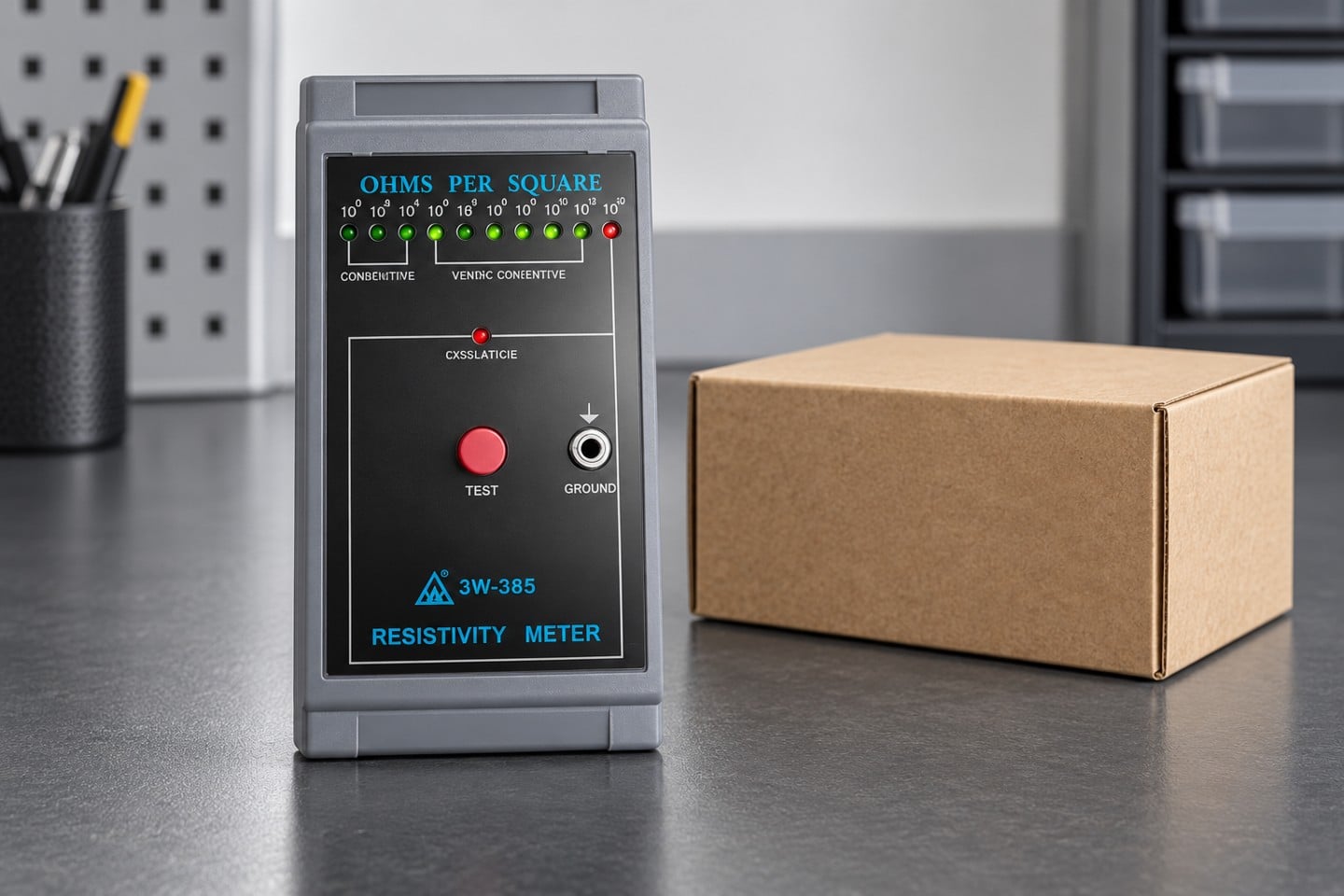
List the instrument model and identifier, the accessories or electrodes used, and relevant calibration information. Where results depend on a calibrated measurement system, ask how the calibration relates to the required range and uncertainty. A sticker or a reference to a national laboratory is not a substitute for explaining the evidence supporting the result. The calibration record and the product test report are related documents with different purposes.
El NIST guidance on metrological traceability explains why measurement evidence needs a documented chain and uncertainty. For procurement, the practical question is whether that evidence is suitable for the result being used. Do not turn a traceability statement into a product endorsement. The SWESD tester calibration guide can help frame questions about instrument checks and the records to retain.
Report measured values before the verdict
Ask for individual results or an appropriately defined summary, together with units and sample locations. The agreed method and sampling plan should determine the presentation. An average alone can conceal variation that matters to acceptance, while a long list of values without specimen identifiers is equally difficult to review. If the instrument indicates a range rather than a precise value, the report should preserve that distinction.
Define how out-of-range readings, invalid contacts and repeated tests are handled. A blank cell should not be silently interpreted as a pass. If a result is replaced after a repeat test, record the reason, the original observation and the approved basis for using the replacement. This is useful for practical fault finding as well as auditability: it separates a setup problem from evidence of material variation without guessing which occurred.
Connect pass or fail to an agreed requirement
The report should identify the acceptance requirement and any decision rule used where uncertainty affects conformity. Procurement needs to know which specification authorized the verdict. Do not import a numerical threshold from an unrelated product, older project or internet article. A supplier’s internal classification may be useful information, but it is not automatically the requirement in your purchase order.
When a result is close to the applicable limit, let the responsible technical reviewer decide whether additional investigation or testing is needed under the agreed rule. Avoid rounding a result until it looks acceptable or treating extra significant digits as extra confidence. Record the decision and its reasoning. If the customer and supplier use different requirements, resolve that conflict before accepting the lot rather than filing both reports as if they prove the same thing.
Release, hold and corrective action
Use a clear disposition field: accepted for the stated scope, held for clarification, or rejected under the agreed requirement. A hold should identify the missing evidence and who can resolve it. For example, an unidentified specimen needs traceability clarification; an unexplained fixture change needs technical review; and a failed result requires the contract’s response process. These are different actions and should not share a vague report incomplete label.
Keep the supplier response attached to the original report and record revisions. If replacement parts or retesting are authorized, preserve the relationship between the initial lot, corrective action and final decision. A revised report should explain what changed. This protects receiving teams from accidentally releasing material using a superseded document and gives purchasing a usable history when the same problem appears in a later delivery.
Requesting evidence with an equipment or product inquiry
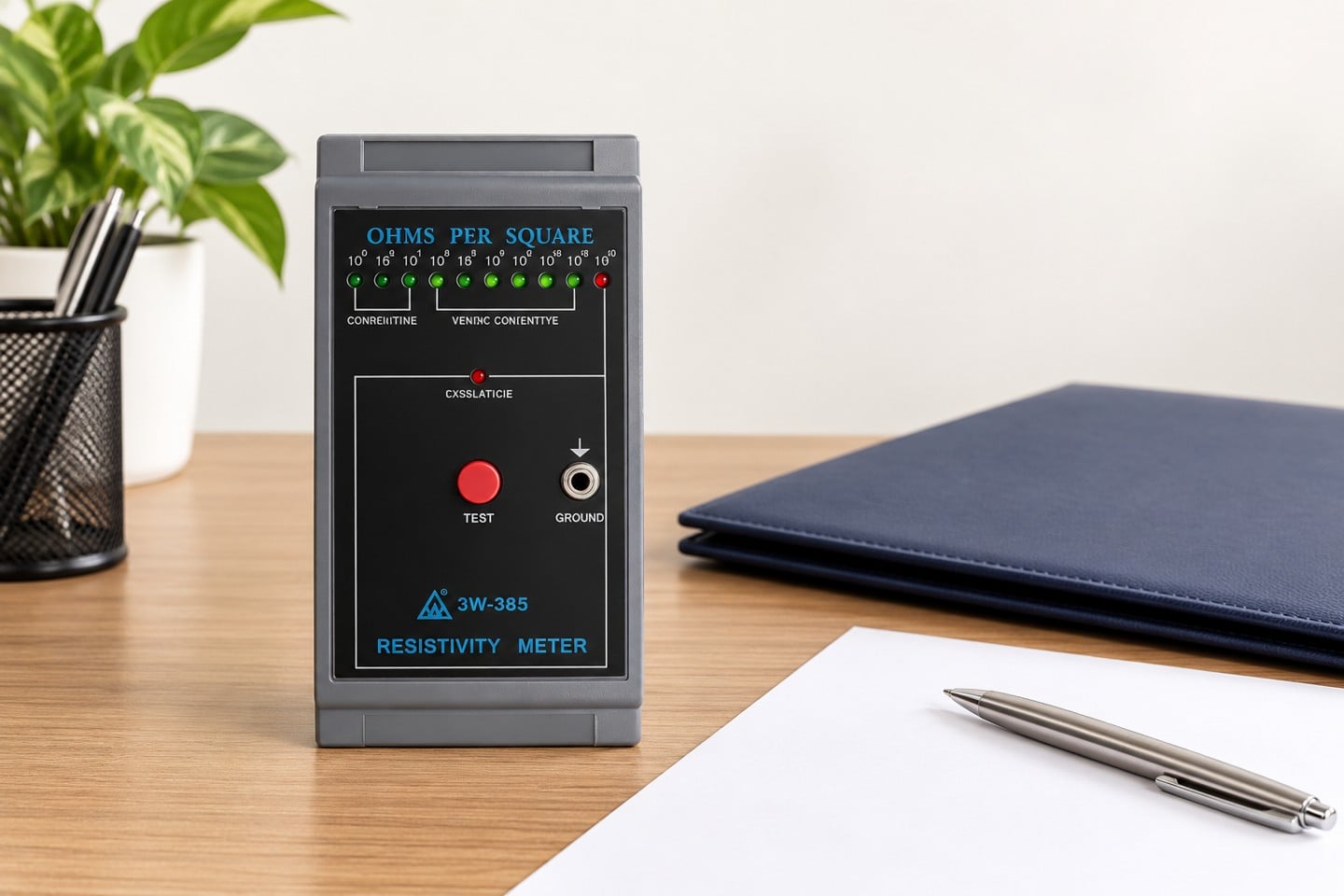
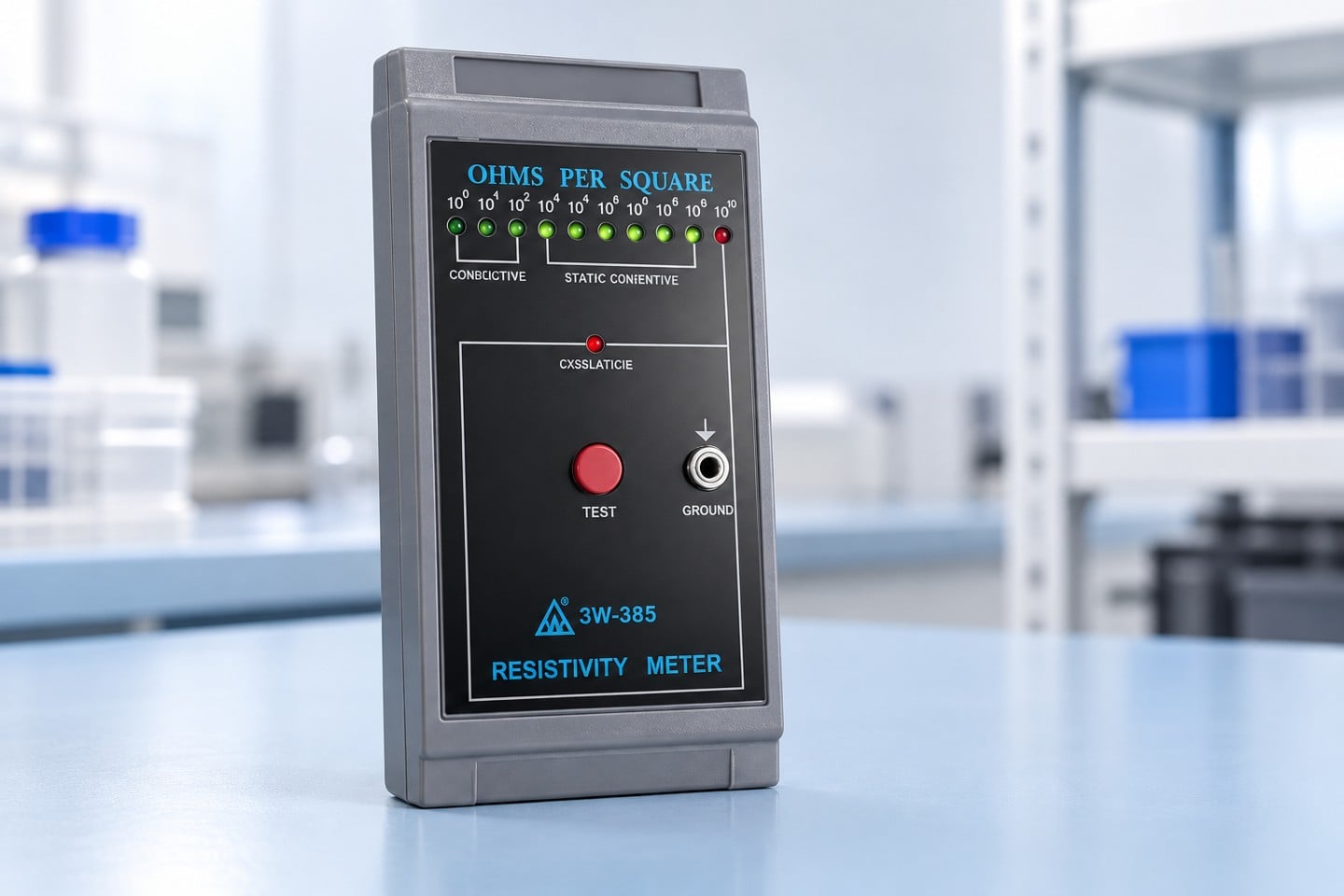
When asking about the SWESD surface resistance tester, provide the required quantity, specimen geometry, method reference, expected range and reporting needs. Confirm the exact instrument configuration and available documentation before ordering. This article does not claim that the shown model supports every method, accessory or laboratory reporting function. Equipment selection and product acceptance need their own review.
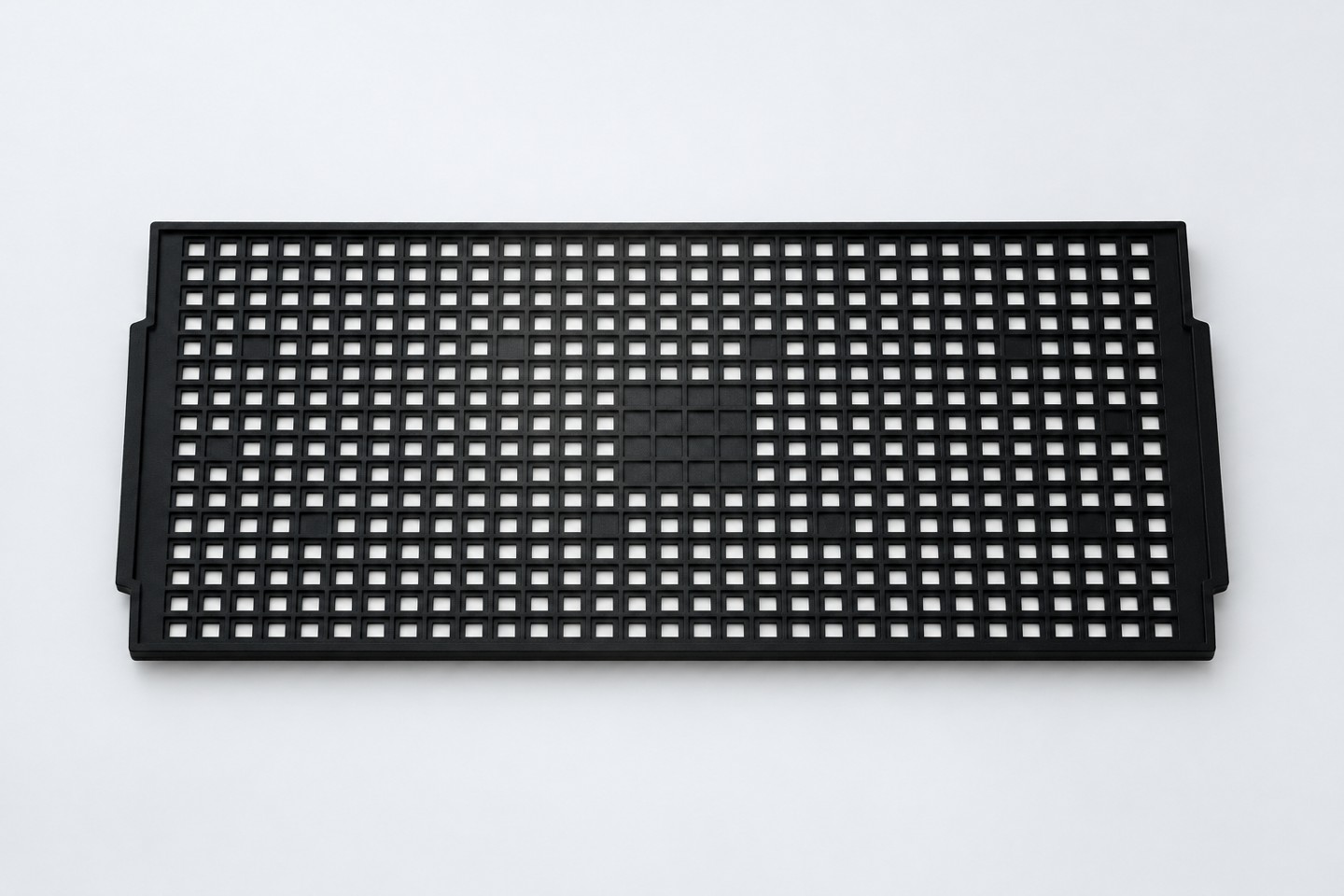
For containers and trays, send the drawing revision, material and application description alongside the requested test scope. Ask whether existing evidence matches that construction or whether sample testing is needed. Use the surface tester measurement guide for setup questions, and retain the report template here for purchasing review. Giving each document a defined purpose helps avoid duplicate checks while keeping unresolved questions visible.
Further learning and report handover
El EOS/ESD Association overview of control procedures and materials places material measurements within a larger control program. A purchase report should state its evaluated scope rather than claim that one measurement proves the entire program is effective. The NIST calibration policies also explain limits on interpreting calibration and test evidence as endorsement or a prediction of future performance.
Use the educational video for electrostatic background, then hand over the approved report, review template and unresolved actions together. Record who reviewed the evidence and which production use was authorized. Set the retention location before the shipment arrives so receiving staff can find the correct revision. A useful report is a decision record that another reviewer can follow, not merely a PDF collected to complete a supplier folder.
Preguntas frecuentes
Is ESD compliant on a certificate enough?
No. Require evidence for the exact item, measured property, method and acceptance requirement. A broad phrase does not define the tested scope.
Can a coupon report approve an assembled container?
It supports the coupon and stated construction relationship. Decide separately which finished-product and application checks are required.
Does a calibration certificate replace a product test report?
No. Calibration evidence concerns the measurement system. A product report identifies the specimen, setup, results and acceptance decision.
Should a report include failed or repeated tests?
Preserve relevant original observations, repeat-test reasons and the approved disposition. Do not silently replace inconvenient results.
Who should approve a result close to the limit?
The responsible technical reviewer should apply the agreed requirement and decision rule, including uncertainty where relevant. Procurement should record that decision.
Dejar un comentario