- Turbo
- Blog
ESD trolley shelf spacing should accommodate the complete loaded package, its support arrangement and the clearance needed to place and remove it safely. The outside height of an empty box is only one input. Include lids, handles, fixtures, protective packaging and the normal retrieval motion, then confirm the proposed layout in the exact approved trolley configuration. Wider spacing is not automatically better: changing shelf locations can affect capacity, stability and access. Buyers should obtain supplier acceptance for the intended arrangement and verify fit with representative loads before approving a mixed-size production route.
Map the real load families
Start with the containers and packages that will travel together. Record their loaded dimensions, gross mass, orientation and contact footprint. Include any cover that remains fitted during movement. Identify which packages use dividers or dedicated supports and which must remain separated from other loads. This creates a useful load family rather than a list of box sizes without their handling context.
Separate routine combinations from exceptions. A layout for frequently used packages should not be compromised by an occasional unusually tall fixture without a review. Ask whether the exception needs another trolley, a dedicated level or a controlled arrangement. Keep the decision visible to operators so an improvised package placement does not become normal practice. The specification should describe permitted combinations, not simply claim that the trolley holds mixed sizes.
Measure usable clearance, not just shelf pitch
The distance between nominal shelf levels can differ from the free space available to a package. Shelf edges, upper-level supports, divider rows and other existing features can constrain the opening or retrieval path. Ask the supplier to identify the relevant geometry on the controlled drawing and compare it with the complete load envelope.
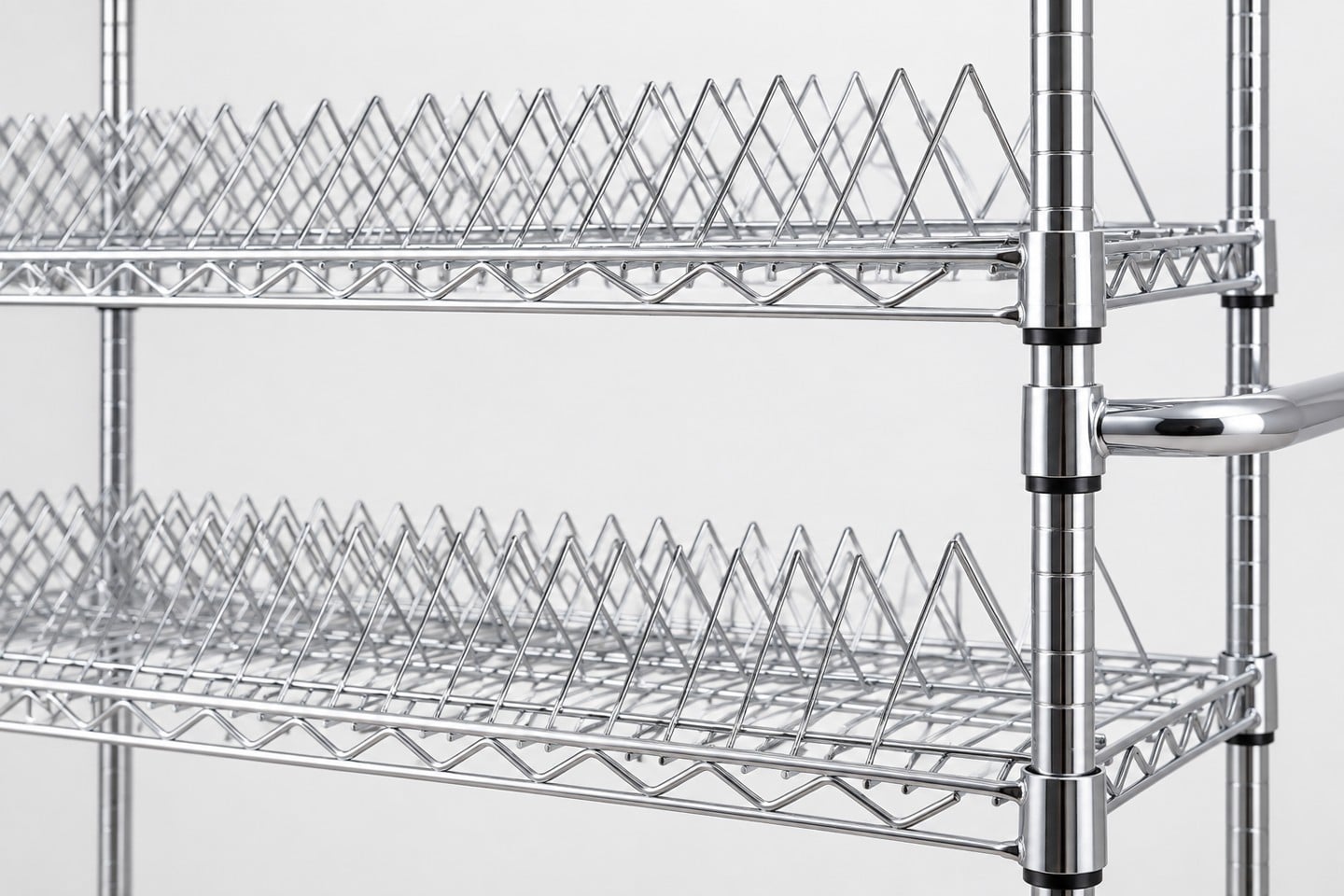
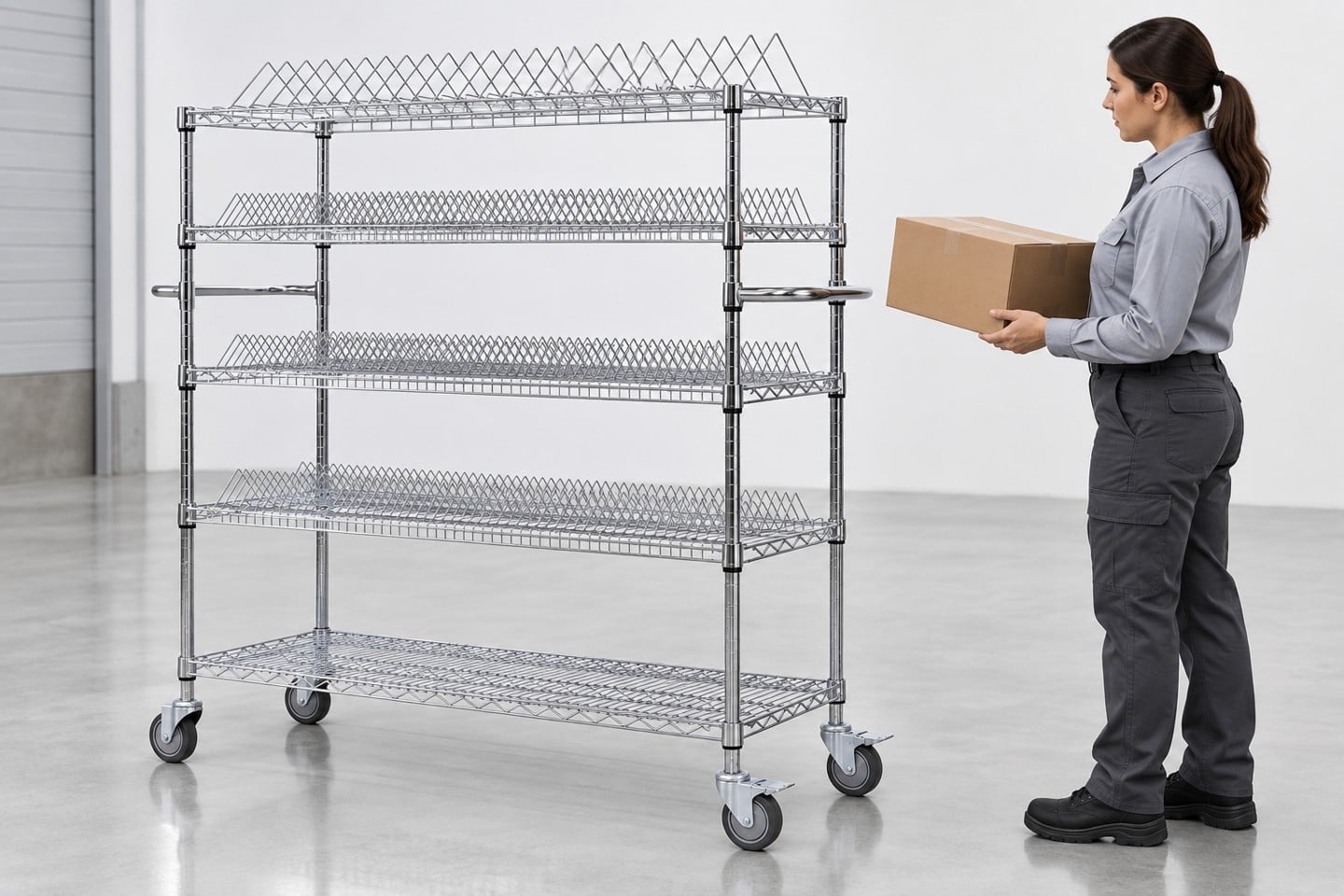
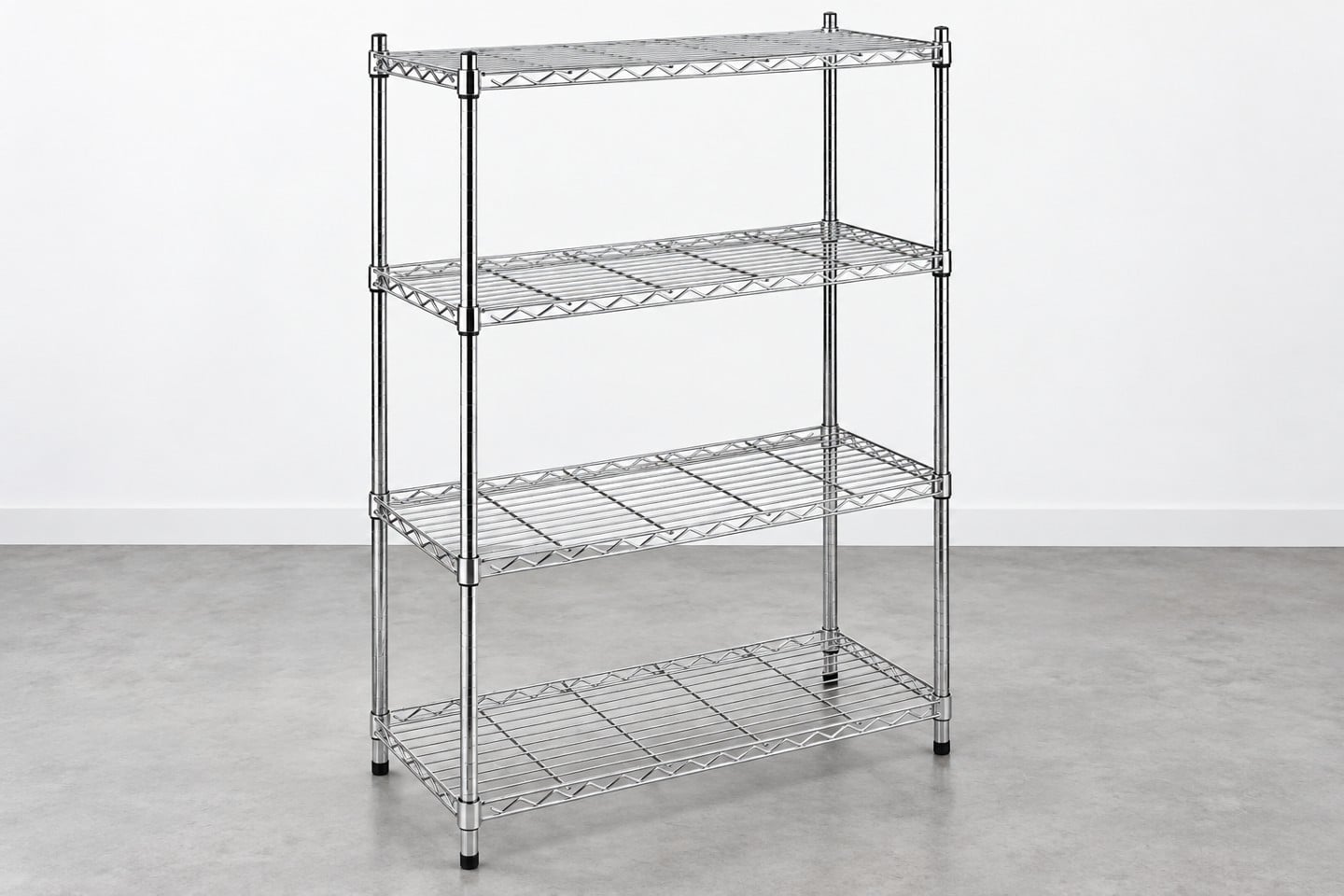
El SWESD wire shelving and transport equipment reference includes real structures for discussing these interfaces. The illustrated trolley has existing wire dividers; those features should remain part of a fit review. Do not remove them in a drawing or photograph to make a large package appear compatible. Their permitted use and any configuration change require supplier confirmation. No spacing dimension is established by the editorial images in this article.
Account for the insertion and removal motion
A package that fits in a static opening may still be awkward to load. Observe the approved orientation and the route by which hands or handling aids approach. The person performing the task may need room to grasp the package, clear a rim or set it down without dragging it across an unsuitable surface. Include these motions in the trial plan.
Do not invent a universal hand clearance. The practical requirement depends on package shape, approved gloves, retrieval method and site task assessment. Use representative operators and accepted handling equipment where the site plan calls for them. A site task assessment should examine reach, package control and transfer demands under the actual conditions. Record the resulting acceptance criteria instead of assigning a shelf interval from a generic example.
Use a mixed-load spacing checklist
The table below is a proposed purchasing and trial checklist. It does not assign dimensions, load ratings or ergonomic limits. Establish the actual values and acceptance conditions with the supplier and site owners, then link the completed checklist to the exact trolley configuration.
| Input | Qué grabar | What the fit trial must confirm |
|---|---|---|
| Package envelope | Loaded size including retained covers and handles | Accepted orientation clears the real opening |
| Support | Footprint and existing shelf or divider geometry | Load rests on approved supports |
| Retrieval | Grasp and approved insertion motion | No forced access or unapproved dragging |
| Configuración | Shelf locations and accessory identities | Matches supplier acceptance |
| Mixed loading | Permitted combinations and delivery sequence | Normal partial states remain accepted |
| Route | Complete loaded outline and parking area | Access and transfer remain practical |
Photograph the accepted load arrangement and record package identities alongside the controlled drawing. Where several configurations are permitted, identify them separately. An operator should be able to tell which arrangement applies without interpreting a vague instruction to leave enough room. If a new package does not match an accepted family, route it for review rather than forcing it into the nearest open shelf.
Preserve the approved supports and dividers
Existing shelf geometry controls how a load is supported and separated. A wire divider intended for one package type may not provide the correct support for a flat box or unusual fixture. Confirm the accepted contact arrangement before adding liners, relocating dividers or using a package across several supports.
Ask the supplier which adjustments are permitted and how they are performed under the approved instructions. A change in shelf location or a removed support can affect the assembly beyond the immediate opening. Do not drill new holes, cut wire features or add a makeshift spacer to obtain a convenient height. The mesh cart versus solid-shelf cart comparison helps frame the broader support choice without treating either design as universally suitable.
Review payload and stability with the new layout
Shelf spacing and load capacity are connected through the accepted configuration. Identify how the proposed package masses are distributed among the levels and which partial-load states occur during delivery. A layout that provides excellent access may place heavy loads differently from the supplier’s rated arrangement.
Keep the mechanical review explicit. Ask for the accepted assembly capacity, individual support conditions and stability requirements for the proposed configuration. Do not assume that changing spacing leaves every rating unchanged. The PCB transport load-rating RFQ guide explains how to ask for configuration-specific evidence. The current article addresses geometry and access; it does not provide a new payload rating or an improvised mechanical test.
Plan the loading and delivery sequence
Identify which load is placed first, which is removed first and what remains on the trolley between stops. Record whether packages need to pass through another level’s opening or whether operators reach around an occupied shelf. A practical layout should support the intended sequence without requiring unapproved temporary stacking.
Review the receiving station as well as the trolley. The target shelf, bench or buffer needs an accepted transfer arrangement. If the destination requires a different package orientation, plan that transition rather than discovering it during production. The multi-layer anti-static trolley selection guide provides the upper-level specification framework for routes, container interfaces and repeat purchasing. Use the spacing record as one controlled input to that framework.
Check travel clearance and parked access
The complete loaded trolley must fit its intended route and parking area. Include the accepted package envelope and any permitted overhang when reviewing turns, doorways and adjacent equipment. A package that clears the shelf above can still obstruct a handle or extend into an aisle.
El materials-handling rule in the eCFR addresses clear passage and stable storage within its applicable context. Apply relevant local and site requirements to your route. The spacing trial should also cover normal parked retrieval under the approved arrangement. The trolley brakes and stability guide addresses that complementary question without turning a fit check into proof of safe parking.
Maintain the protective handling boundary
A spacing solution must preserve the site’s ESD and packaging requirements. Determine whether the parts remain inside accepted packages and how they are handled during loading and unloading. A convenient open shelf does not authorize exposed devices to contact an unqualified surface or bypass an approved protected environment.
El EOS/ESD Association principles of control provide context for that boundary. If a liner, divider or package is changed to improve fit, ask which electrical and contamination-control checks are affected. The educational video below supports staff understanding of ESD handling; it does not specify shelf dimensions or certify the illustrated trolley’s arrangement.

Release the layout as a repeatable configuration
After the approved fit and handling trial, record the exact equipment identity, shelf arrangement, permitted package families and restrictions. Include the acceptance evidence and the owner who approved it. Keep the record available to purchasing, receiving and operators so a repeat order reproduces the reviewed arrangement.
Define which changes require another review. New lids, added internal fixtures, a taller protective package or altered delivery sequence can invalidate an old fit assumption even when the nominal container size is unchanged. Check those changes before the next production use. A clear configuration record reduces unsuitable substitutions and helps the supplier respond accurately when a future load family requires a different trolley.
Preguntas frecuentes
Is shelf pitch the same as usable clearance?
No. Shelf edges, supports and divider geometry can reduce the opening and the retrieval path. Compare the complete load envelope with the controlled drawing.
Should lids and handles be included?
Yes when they remain fitted during movement or retrieval. An empty-box height alone does not describe the normal loaded package.
May existing dividers be removed to fit a larger box?
Only through an accepted configuration change. Do not remove or alter supports and separators without the supplier and site owners approving the arrangement.
Does wider spacing preserve the original payload rating?
Do not assume it does. Review the changed configuration, load distribution and stability against the accepted assembly requirements.
What should trigger another fit review?
Review new package envelopes, added fixtures, changed shelf positions and different loading or delivery sequences before routine use.
Publicación reciente
-
 ESD Trolley Shelf Spacing for Mixed-Size Loads08 Oct,2026
 -
 ESD Shelf Grounding and Continuity Testing08 Oct,2026
 -
Dejar un comentario