- Turbo
- Blog
ESD trolley brakes and stability should be evaluated for the complete trolley, approved load and actual transport route. Confirm what a brake controls, how the trolley is parked and whether the permitted load remains stable during normal handling. Wheel braking, swivel control and load retention are different functions; one does not automatically provide the others. Use the supplier’s instructions and the site’s safety procedure rather than an improvised incline or overload test. Electrical suitability must also be verified separately from the mechanical parking and movement checks.
Ask what the proposed brake actually controls
A brake may restrain wheel rotation, swivel motion or a specified combination. Ask the supplier to identify the function of the exact supplied caster and how it must be operated. Do not infer the function from a lever’s appearance. Also distinguish a parking arrangement from a service brake intended to control motion. A trolley should be used only in the conditions approved for its complete assembly.
If a particular trolley model does not include a brake, do not add a different caster casually and treat the change as approved. Mounting, installed height, loading, clearance, stability and electrical behavior may all need review. For a physical reference, see SWESD’s PCB transport trolley and request the actual caster and parking configuration. The photographs illustrate the referenced equipment; they do not assert that it includes a specific braking function.
Define the actual load before evaluating stability
Record which magazines or containers the trolley carries, their complete loaded mass and where they are positioned. Include lids, fixtures and accessories. A trolley with a high or uneven load can behave differently from the same empty frame. Ask the supplier for permitted loading conditions and distribution, not only a total capacity figure. The transport cart load-rating RFQ guide covers the related rating questions.
Consider partial loads as well as a full arrangement where the accepted use permits them. Removing one carrier can change distribution and access. Determine how the remaining load is supported during loading and unloading. Do not use an improvised hanging weight or an unapproved side-mounted item to represent normal service. The accepted arrangement should describe what production may actually place on the trolley and how it is retained.
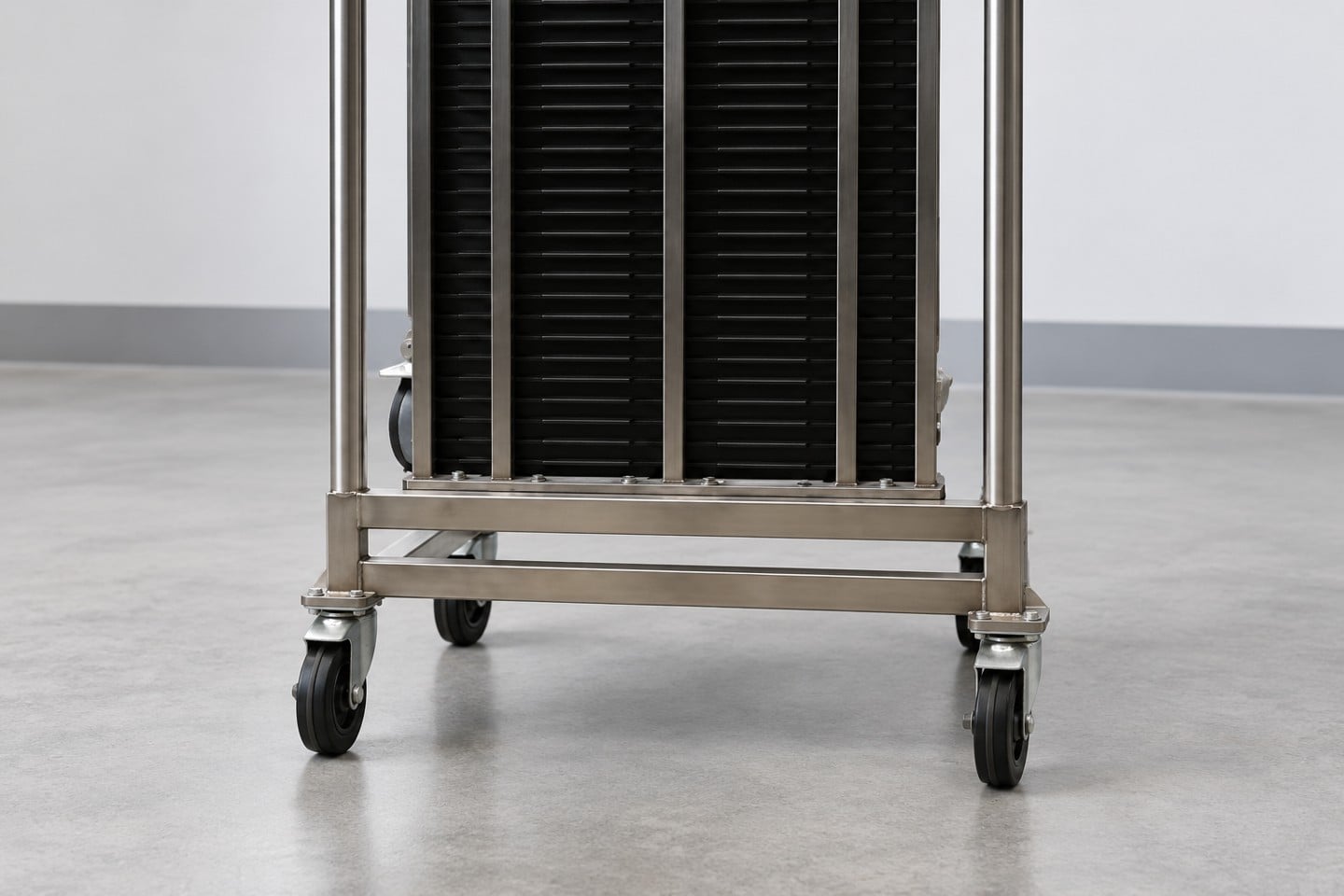
Review parking, movement and retention separately
The matrix below lists checks for the supplier and responsible engineer. It does not set a universal load, slope or stopping distance. Define any trial protocol and safe limits before evaluation. The Canadian Centre for Occupational Health and Safety’s handcart guidance provides useful background on cart movement, braking and handling risks.
| Control function | Supplier question | Site demonstration |
|---|---|---|
| Wheel braking | What motion is restrained by the supplied brake? | Operate it under the approved loading and parking conditions |
| Swivel control | Is caster direction restrained and how? | Confirm maneuvering and parking behavior without assuming a lever function |
| Load retention | How are magazines or containers supported and secured? | Show loading and unloading with the permitted arrangement |
| Stability | Which distribution and partial-load conditions are allowed? | Use representative configurations selected by the responsible engineer |
| Route handling | Which floor and movement conditions are accepted? | Inspect transitions, clearances and the normal user task |
| ESD suitability | What complete electrical arrangement is required? | Verify it independently from movement and parking trials |
Confirm the operating instruction for each action. Operators need to know when to engage the approved parking controls, how to release them and what to do when the trolley does not remain secure. A painted parking rectangle can identify a location but does not physically restrain movement. Conversely, a wheel brake does not ensure that an unsecured magazine or loose container remains in place.
Evaluate the route under normal conditions
Inspect the approved path for transitions, damaged floor areas, tight corners, doors and shared traffic. The route may create handling demands that a smooth showroom floor does not reveal. Discuss the actual floor and movement conditions with the trolley supplier before selecting the caster arrangement. Keep the evaluated route within the manufacturer’s permitted conditions and the site’s safety procedure.
Use representative loading selected by the responsible engineer and include the people who normally push and park the trolley. Observe visibility, gripping, maneuvering and clearance rather than judging the result only by whether the cart moved. Stop and isolate a trolley that behaves unexpectedly. Do not escalate a trial onto a slope or obstacle without an approved procedure intended for that condition.
Make parking part of the loading sequence
Define where loading and unloading occur and how unintentional movement is prevented. Check that the relevant controls are accessible when the trolley carries its permitted load. A brake that is easy to reach on an empty cart may be obstructed by the normal carrier arrangement. Observe whether operating it requires reaching into a pinch point or stepping into the transport path.
The work instruction should show the accepted parked configuration before an operator releases or places a load. Include the action for a damaged or ineffective control. Do not compensate by wedging an ordinary object under a wheel unless that method is specifically part of an approved arrangement. The parking procedure must remain reproducible across shifts and should not depend on one operator’s informal workaround.
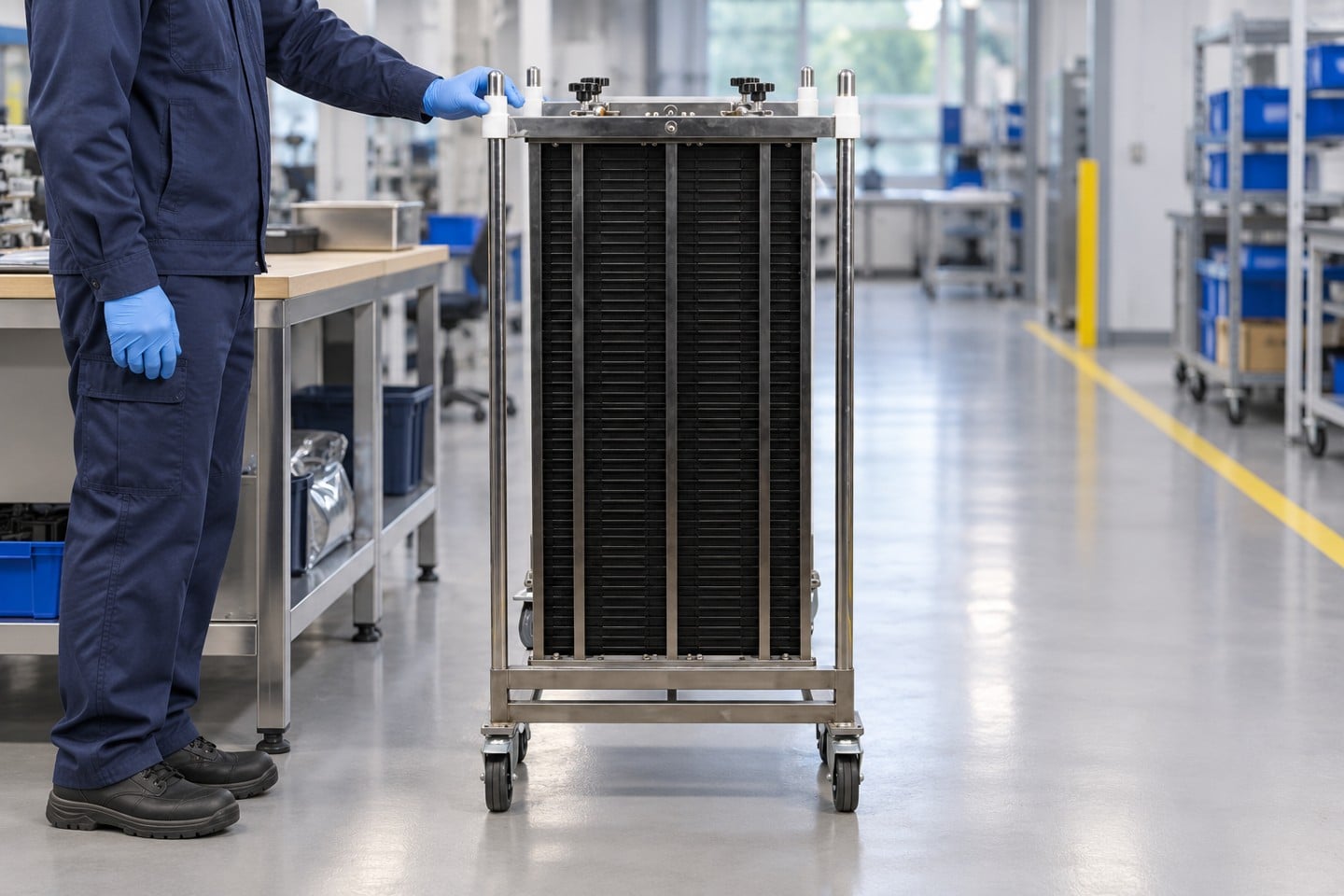
Keep ESD verification independent of the brake trial
The trolley’s electrical suitability involves the relevant materials and complete installed arrangement under the site’s ESD plan. A caster that is advertised as conductive is not sufficient evidence for every trolley and floor combination. The EOS/ESD Association’s basic procedures and materials guidance provides context for handling equipment and grounding controls.
Ask which electrical checks apply and how replacement parts are controlled. A caster substitution can change contact behavior as well as the mechanical setup. Do not assume an improvised chain or wire corrects an unsuitable arrangement. The trolley maintenance guide covers caster inspection and maintenance questions; the braking review here should retain those accepted requirements rather than replacing them with a parking test alone.
Inspect the features that maintain control
Check casters, mounting security, frame condition and the relevant parking controls using the supplier’s maintenance instructions. Inspect for obstruction, wear or damage that affects the approved operation. Avoid supplying a generic torque or lubrication instruction when the exact caster and mounting details are unknown. Record recurring problems and remove equipment from service when its required function is uncertain.
Cleaning can also affect moving parts and electrical contact surfaces. Confirm compatible methods for the supplied equipment and the site’s environment. A procedure suitable for a plastic bin may not be suitable for caster bearings or a braking mechanism. The trolley maintenance checklist covers routine service questions that should accompany the accepted parking and handling instruction.
Control changes to casters and the load arrangement
A larger wheel, a different brake or a new carrier may alter the trolley’s behavior even if installation appears straightforward. Obtain the responsible supplier or engineering approval before making the change. Identify which checks need to be repeated and keep the revised configuration in the record. Do not preserve the old capacity label automatically when its supporting conditions have changed.
Review the impact of new loading heights, accessory positions or routes as well. A trolley qualified for one magazine arrangement is not universally approved for any material that fits between its uprights. Keep the accepted mechanical and electrical evidence linked to the actual assembly so purchasing and maintenance staff can order compatible parts without unintentionally creating a different configuration.
Specify acceptance evidence in the RFQ
Provide the trolley model or functional layout, approved carrier arrangement, loaded mass distribution, floor conditions and parking needs. Ask the supplier to state the brake function, caster details, complete assembly ratings and relevant electrical evidence. Request a sample or first-unit trial under an agreed protocol, and define the acceptance criteria before testing. Include replacement availability and maintenance information in the quotation.
Release the trolley with a clear loading, movement and parking instruction, photographs of the accepted configuration and the action for damage or unexpected movement. Keep any restrictions visible to the users. For the equipment’s general role, review what an ESD trolley does. The practical objective is a trolley that can be controlled and maintained in its actual workplace. A brake lever, an ESD label or a successful empty-cart demonstration alone cannot establish that result.
Further learning: handling equipment and route design
The NPTEL lecture below explains material handling systems. It provides context for separating storage, movement and parking decisions; the trolley’s permitted mechanical and electrical conditions still come from its accepted configuration and site procedures.
Educational video: Lec 27: Material handling systems, NPTEL IIT Guwahati.
Häufig gestellte Fragen
Does a wheel brake also lock the caster swivel?
Not necessarily. Confirm the exact function of the supplied caster with the manufacturer rather than relying on its appearance.
Does braking secure the load?
Wheel control and carrier retention are different functions. Verify how the approved magazines or containers remain supported during use.
Can any braked caster replace an existing wheel?
Obtain approval for mounting, height, loading, stability, clearance and electrical behavior before changing the accepted trolley configuration.
Should the trolley be tested empty or loaded?
Use the relevant approved loading configurations, including permitted partial loads, under a defined safe procedure. An empty demonstration is insufficient.
Does a parking test establish ESD suitability?
No. The complete material and installed electrical arrangement requires separate verification under the site ESD plan.
Neuester Beitrag
-
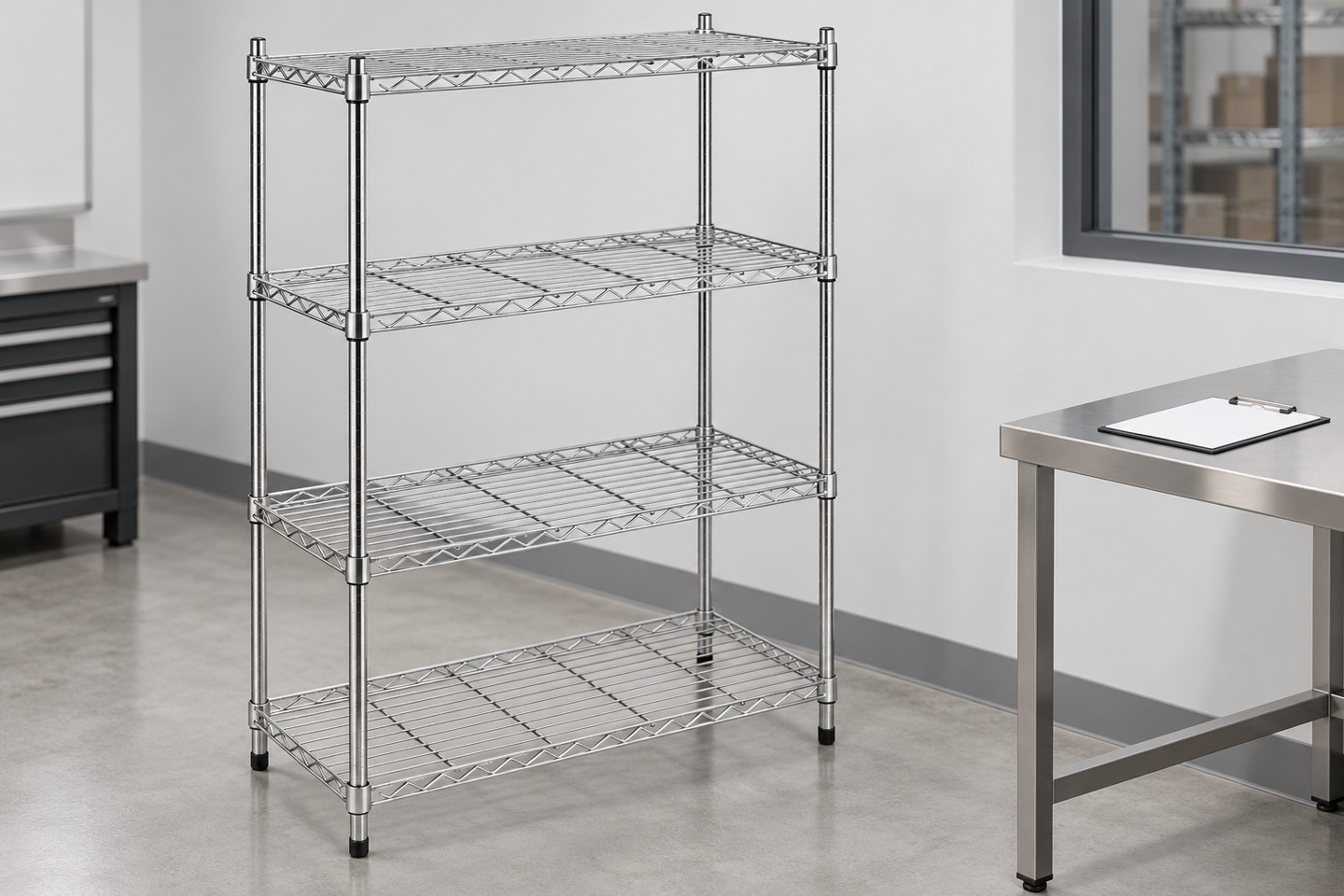 ESD Shelf Grounding and Continuity Testing08 Okt.,2026
 -
-
Schreiben Sie eine Antwort