- Turbo
- Blog
ESD foam cavity fit should be accepted with the actual component, its contact restrictions and the complete package. A pocket that looks accurate on a drawing can still press on a connector, make removal awkward or allow movement after closure. Start with a controlled sample trial rather than a universal clearance number. Confirm where support is permitted, how the part enters and leaves, what changes when the lid closes, and which evidence is required before production. Mechanical fit and electrostatic protection are separate acceptance questions, even when the same foam contributes to both.
Define what the cavity must protect
Identify the assembly revision before discussing dimensions. A connector, fitted cable, protective cap or label can change the effective envelope without changing the nominal board outline. Record the condition in which the component will actually be packed. If it travels inside a bag, trial the approved bagged arrangement; testing a bare dummy alone will not reveal bag folds trapped between the product and pocket wall.
Create a contact map with the product engineer. Mark robust support areas and prohibited contact areas, including exposed contacts, delicate leads, buttons and cosmetic surfaces where applicable. Do not assume every flat surface is load bearing. A supplier can reproduce an outline while misunderstanding the force path. The contact map gives the trial a functional objective that a photograph of a neat insert cannot provide.
Separate handling, storage and shipment requirements. An internal transfer tray may face repeated insertion, whereas an export package may remain closed through an agreed transport route. These duties can need different retention, access and cushioning arrangements. State the intended use in the sample request so an approval for one route does not quietly become approval for all routes.
Keep material selection separate from dimensional fit
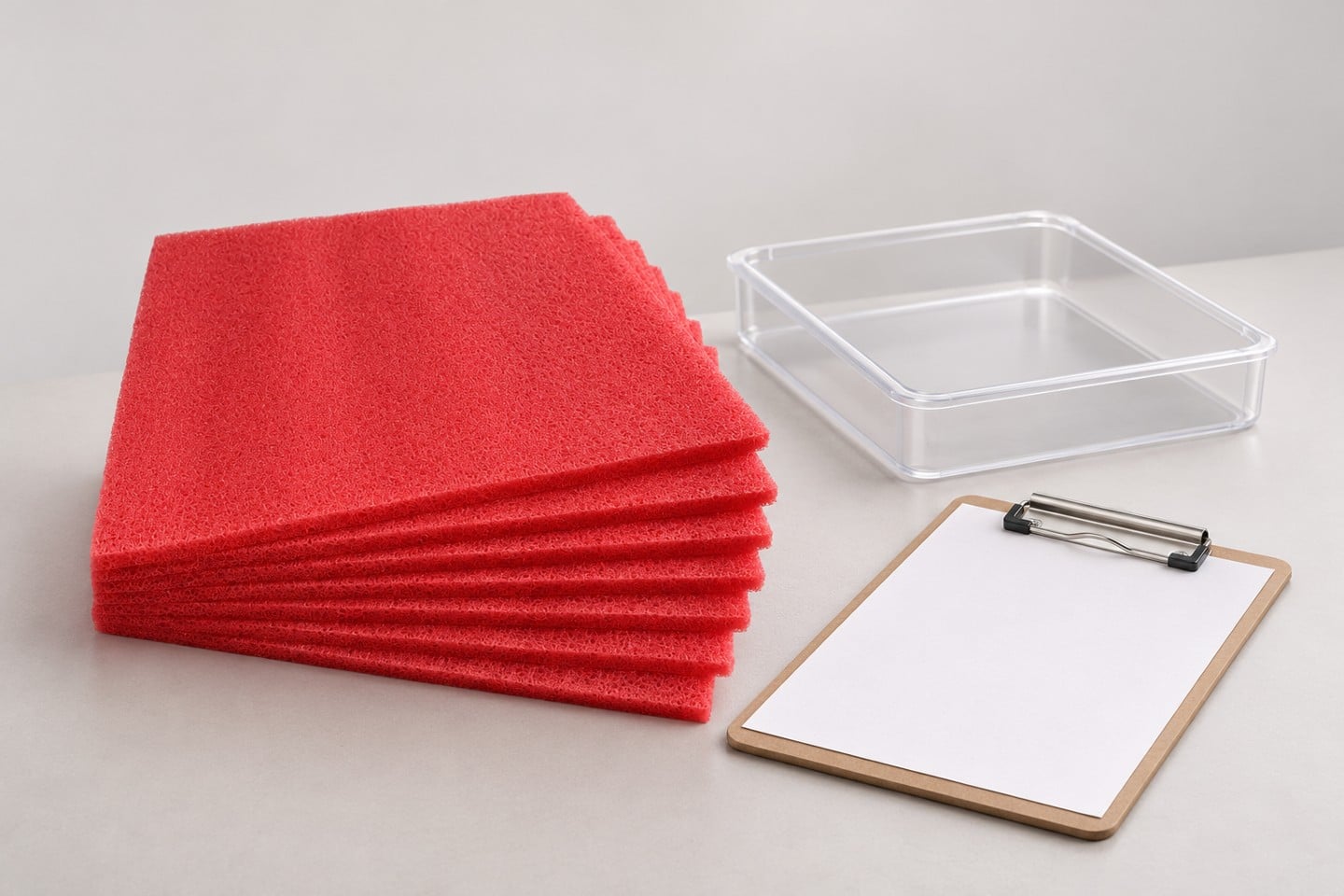
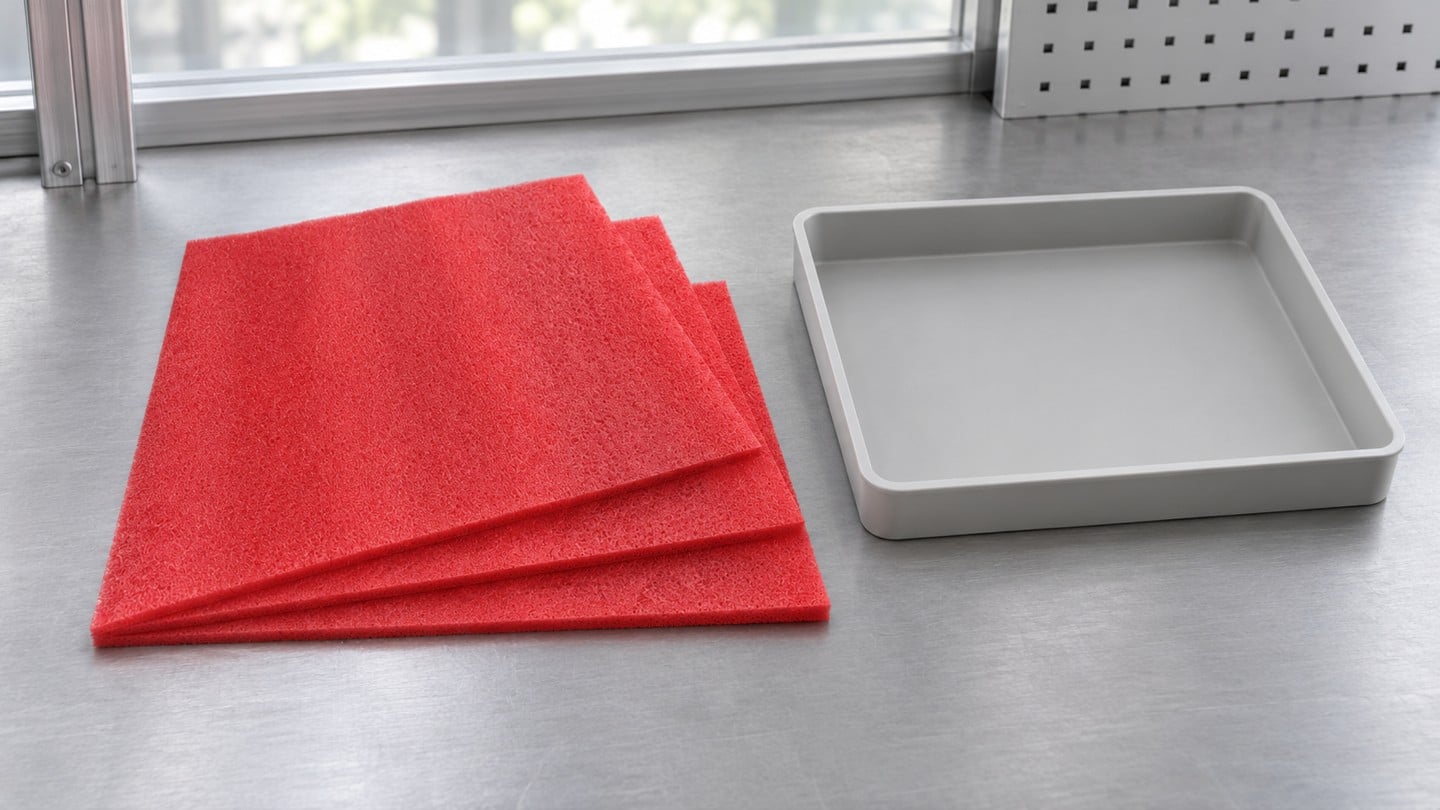
SWESD lists ESD anti-static foam sheet options as a starting point for material discussion. Confirm the specific construction, available thickness and relevant documentation with the supplier. The product family name does not establish that every grade shares the same electrical behavior, recovery or suitability for direct contact with a sensitive assembly.
Das EOS/ESD-Vereinigung Überblick über Kontrollmaterialien explains packaging within a wider protection program. Use that framework to specify required functions, rather than treating foam color as evidence. A fit trial does not demonstrate shielding, and a material electrical result does not demonstrate that the loaded package survives its handling route.
Before approving geometry, connect the candidate grade to its supplier identity and lot. Read the foam material change review when an alternative grade is proposed. If the material changes during development, document which earlier observations remain applicable and which must be repeated. An unchanged drawing cannot by itself transfer approval between materials.
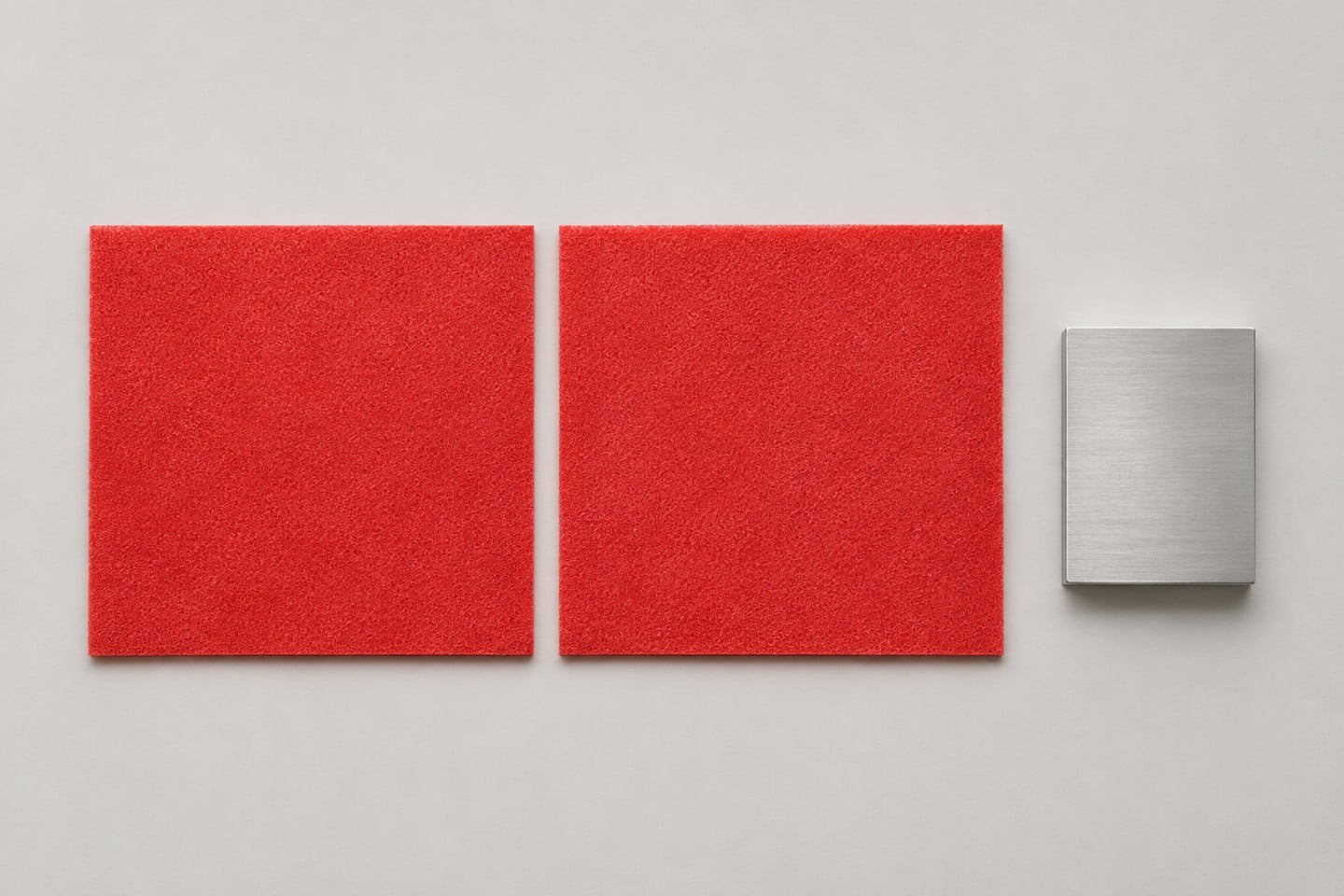
Build a sample trial that represents production variation
Use actual parts when authorized, or representative dummies whose limitations are recorded. A rigid block may help check gross dimensions but cannot demonstrate the behavior of a thin board or fragile projection. Identify the dummy on every record, and avoid describing its successful insertion as acceptance of the real product. Where a valuable assembly is involved, the engineer should define a safe progression before live-part trials.
Include relevant product variation instead of trying only the easiest sample. Drawing tolerances, fitted accessories and approved product variants can affect the fit. Ask the supplier how the sample relates to the proposed manufacturing process. A hand-trimmed prototype may be useful for development while failing to represent the edge condition or dimensional consistency of the eventual production cut.
Record the foam condition and sample preparation. Stacking, storage and repeated compression can influence what operators observe. The foam sheet storage review covers upstream handling; this trial should identify the condition used for approval. Avoid assigning a universal conditioning time or recovery limit without an applicable specification and supporting material evidence.
Observe insertion before judging retention
Ask an operator to load the part using the proposed work instruction. Watch which surfaces the operator grasps, whether the assembly enters in the intended orientation, and whether any feature catches. A design that needs pressure on a connector to finish seating is not rescued by a tidy final appearance. Stop the trial if loading threatens the product, and revise the support or access arrangement.
Describe observations instead of using vague labels such as perfect fit. Record whether the part sits at the intended depth, whether permitted support surfaces carry the load, and whether there is visible rocking or unwanted contact. Measurements should reference the approved drawing and method. If insertion force matters, engineering must define a suitable measurement procedure and acceptance criterion; hand feel alone cannot supply a numerical result.
Check removal with equal care. Finger access, lift direction and available grip can determine whether the package is usable. Operators should not need to pull a cable or lever against a fragile edge. If an extraction aid is proposed, include it in the trial and in the released package definition. A loose demonstration accessory is not a controlled production feature.
Review the closed package and handling sequence
Assemble the actual packing set, including the container, lower support, upper pad, bags and required documents. Close it using the intended method. Check that closure does not introduce an unapproved load path or move the part from its accepted position. Do not force a lid shut merely to demonstrate that the package can be closed; unexpected resistance is information requiring investigation.
Open the package and inspect the assembly and insert for signs of unintended contact. Record the location and condition, and distinguish an observation from an established cause. If marks appear, preserve the samples before cleaning or trimming them. Comparing the before and after condition is more useful than debating an isolated photograph without a baseline.
Transport qualification is a separate controlled activity. The responsible packaging engineer should choose a relevant protocol and acceptance criteria for the route, product and risk. NASA’s ESD handbook provides broader handling context, not a universal cavity dimension. Neither that context nor a successful bench trial authorizes inventing a drop height, vibration limit or shipment guarantee.
Use a decision table rather than a universal clearance rule
The following table is a proposed review aid, not a standard test method. Add the drawing references and site criteria that apply to the actual project. A blank acceptance field should remain an open action rather than being filled with an unsupported industry number.
| Bewertungspunkt | Aufzeichnungen von Nachweisen | Entscheidungsträger |
|---|---|---|
| Stützung | Permitted and prohibited contact zones | Product engineer |
| Insertion | Orientation, catches and seating condition | cURL Too many subrequests by single Worker invocation. To configure this limit, refer to https://developers.cloudflare.com/workers/wrangler/configuration/#limits |
| Entfernung | Grip access and approved lift route | cURL Too many subrequests by single Worker invocation. To configure this limit, refer to https://developers.cloudflare.com/workers/wrangler/configuration/#limits |
| Verschluss | Complete packing set and unintended contact | Packaging engineer |
| Veröffentlichung | Part, insert, material and package revisions | Quality and purchasing |
cURL Too many subrequests by single Worker invocation. To configure this limit, refer to https://developers.cloudflare.com/workers/wrangler/configuration/#limits.
cURL Too many subrequests by single Worker invocation. To configure this limit, refer to https://developers.cloudflare.com/workers/wrangler/configuration/#limits
cURL Too many subrequests by single Worker invocation. To configure this limit, refer to https://developers.cloudflare.com/workers/wrangler/configuration/#limits.
cURL Too many subrequests by single Worker invocation. To configure this limit, refer to https://developers.cloudflare.com/workers/wrangler/configuration/#limits.
Benutzen Sie leitfähige Schaum RFQ-Leitfaden cURL Too many subrequests by single Worker invocation. To configure this limit, refer to https://developers.cloudflare.com/workers/wrangler/configuration/#limits.
cURL Too many subrequests by single Worker invocation. To configure this limit, refer to https://developers.cloudflare.com/workers/wrangler/configuration/#limits
cURL Too many subrequests by single Worker invocation. To configure this limit, refer to https://developers.cloudflare.com/workers/wrangler/configuration/#limits.
cURL Too many subrequests by single Worker invocation. To configure this limit, refer to https://developers.cloudflare.com/workers/wrangler/configuration/#limits.
For additional learning, the neutral EOS/ESD Association lecture below introduces electrostatic discharge. It supports the distinction between handling protection and physical packaging design; it does not demonstrate this cavity trial or certify any SWESD material. Keep the written acceptance record usable without relying on the video.
Häufig gestellte Fragen
Is a tighter foam cavity always safer?
No. Retention must be balanced with approved support, product variation and safe loading and removal.
Can a rigid dummy replace every real-part trial?
No. Record its limitations and obtain engineering approval for the evidence it can provide.
Does a successful fit trial prove ESD protection?
No. Mechanical fit and electrical protection need their own applicable evidence.
Should the sample include the product bag?
Include the approved bag and other components when they are part of the intended package.
Is there one cavity clearance for all electronics?
No. Establish drawing requirements and acceptance criteria for the specific product and route.

Schreiben Sie eine Antwort