- Turbo
- Blog
Long-term electronic component storage requires a product-specific plan for packaging integrity, moisture exposure, electrostatic protection, identity, and reinspection. A sealed moisture barrier bag, a storage bin, and a dry cabinet do different jobs. The appropriate combination depends on the device maker’s instructions, moisture sensitivity, package finish, expected storage period, and assembly process. Record the original seal state and dates when material arrives, preserve traceability through every move, and define what must be checked before old stock is released to production. A plastic container alone cannot establish shelf life.
Start with the component maker’s storage guidance
Read the data sheet, packing label, moisture sensitivity classification, and any customer requirements. Texas Instruments explains that semiconductor shelf life depends on device materials, manufacturing and packaging conditions, MSL, moisture barrier packaging, desiccant, and customer storage conditions in its product shelf life guidance. Its findings apply to its own products and controlled processes; do not transfer a numerical life claim to unrelated devices.
Document the receiving date, supplier date code, bag seal date where present, lot, quantity, package condition, and storage location. If the supplier’s label is ambiguous, resolve it before stock is moved into long-term inventory. A long shelf life in a database is meaningless if the physical unit has lost its identity.
| Storage concern | Evidence to retain | Check before release | Common wrong assumption |
|---|---|---|---|
| Moisture | MSL, seal state, bag and desiccant record | Exposure and dry-pack procedure | A lidded bin is a dry pack |
| ESD | Packaging type and handling route | Bag integrity and EPA controls | Plastic color proves ESD protection |
| Lot identity | Supplier lot, date code and quantity | Physical label versus system record | One shelf label covers mixed lots |
| Part condition | Original finish and supplier guidance | Visual or process-specific reinspection | Age alone proves failure or fitness |
| Container | Bin ID, cleaning and damage history | Fit, cleanliness and label legibility | A closed lid repairs a damaged pouch |
The decision limits and inspection methods come from the device, process, and applicable standard. This table organizes evidence without inventing universal shelf life values.
Keep the packaging layers distinct
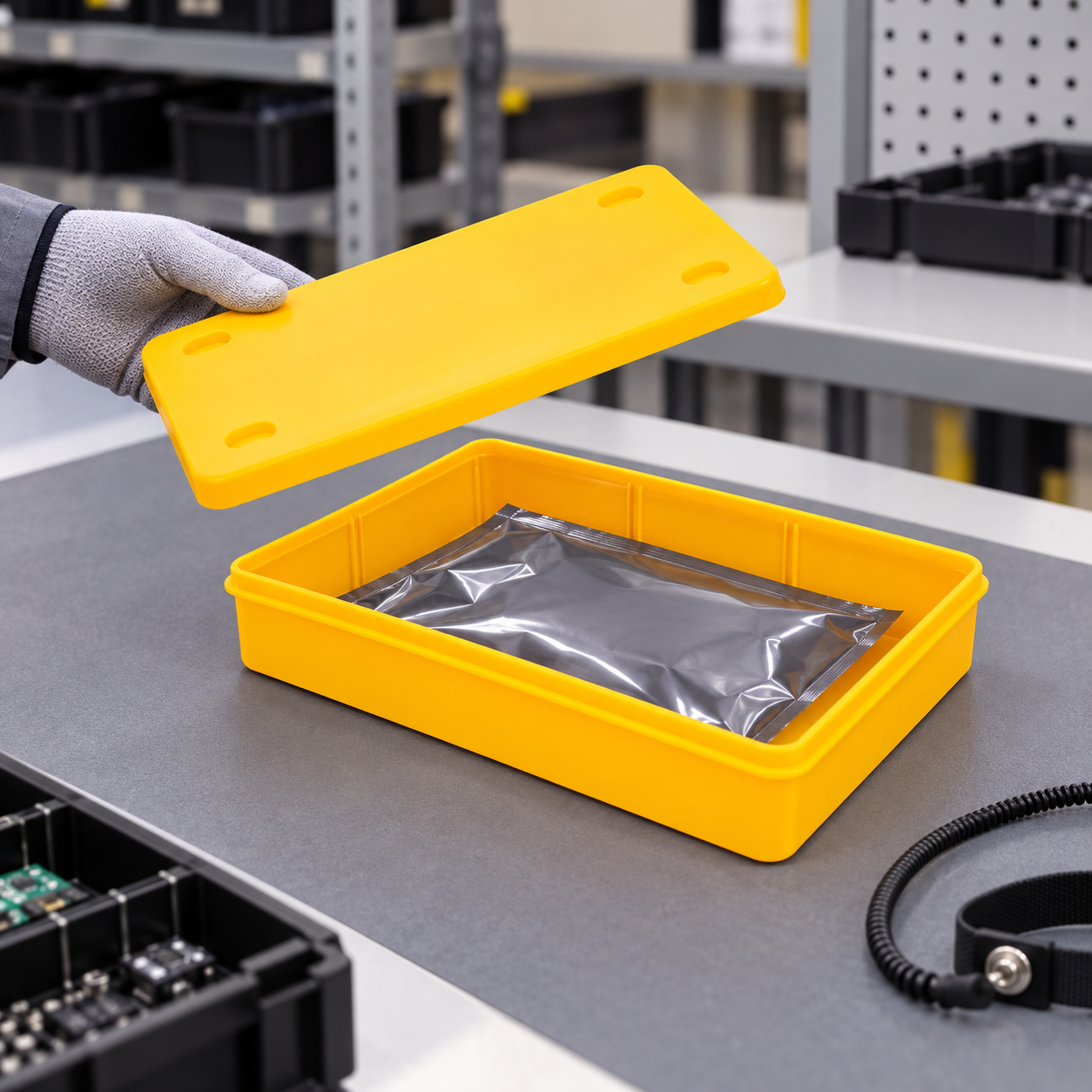
A lidded ESD bin can organize and protect units from incidental handling, but it is not automatically a moisture barrier or discharge shielding package. A sealed moisture barrier bag has a specific moisture-control role; the bin may support transport and location control around it. A dry cabinet controls its internal environment when correctly specified and maintained. Do not remove a sealed pouch merely to make a bin look organized.
The official IPC/JEDEC J-STD-033D contents identify dry pack, shelf life, dry atmosphere storage, and exposure procedures for applicable moisture-sensitive devices. Use the current controlled standard and the device maker’s classification for actual conditions. Record when a bag is opened and which rule governs re-sealing, drying, or baking.
Manage ESD risk at every opening
Long-term stock may remain sealed for months, but receiving checks, sampling, relabeling, and partial picks can expose devices. Mark which activities must occur in an electrostatic protected area. The EOS/ESD Association’s ESD control principles note that warehouse handling can present ESD risk and that protective packaging must match the route inside or outside an EPA.
Inspect the bag and seals before opening. A damaged bag or unapproved repack should be held for review, not silently placed in a new bin. When a lot is split, use a controlled child identity and a package that meets the needed protection. Keep the parent lot and original supplier evidence linked to every child unit.
Control environment without inventing one temperature
Record the ambient temperature and humidity range required by the particular product and packaging. Separate products that need dry storage, refrigeration, or special handling from ordinary stock. Never apply a single warehouse set point to every semiconductor family. Monitor the environment where the requirement exists and retain alarms and corrective actions when it goes out of range.
Texas Instruments’ long-term storage evaluation demonstrates that controlled storage conditions and packaging matter to the outcomes observed in its study. It does not authorize a blanket promise for all components or facilities. Use supplier-specific evidence and reinspection criteria when material has been stored beyond the planned horizon.
Use containers that support inspection and location control
Das SWESD lidded ESD component bin is a physical storage option. Check its footprint, lid fit, material, cleaning method and load against the actual use. A lid can reduce handling exposure, but neither the product page nor a photograph proves the bin is hermetic or moisture controlled. Keep critical bags sealed and identified inside any outer container.
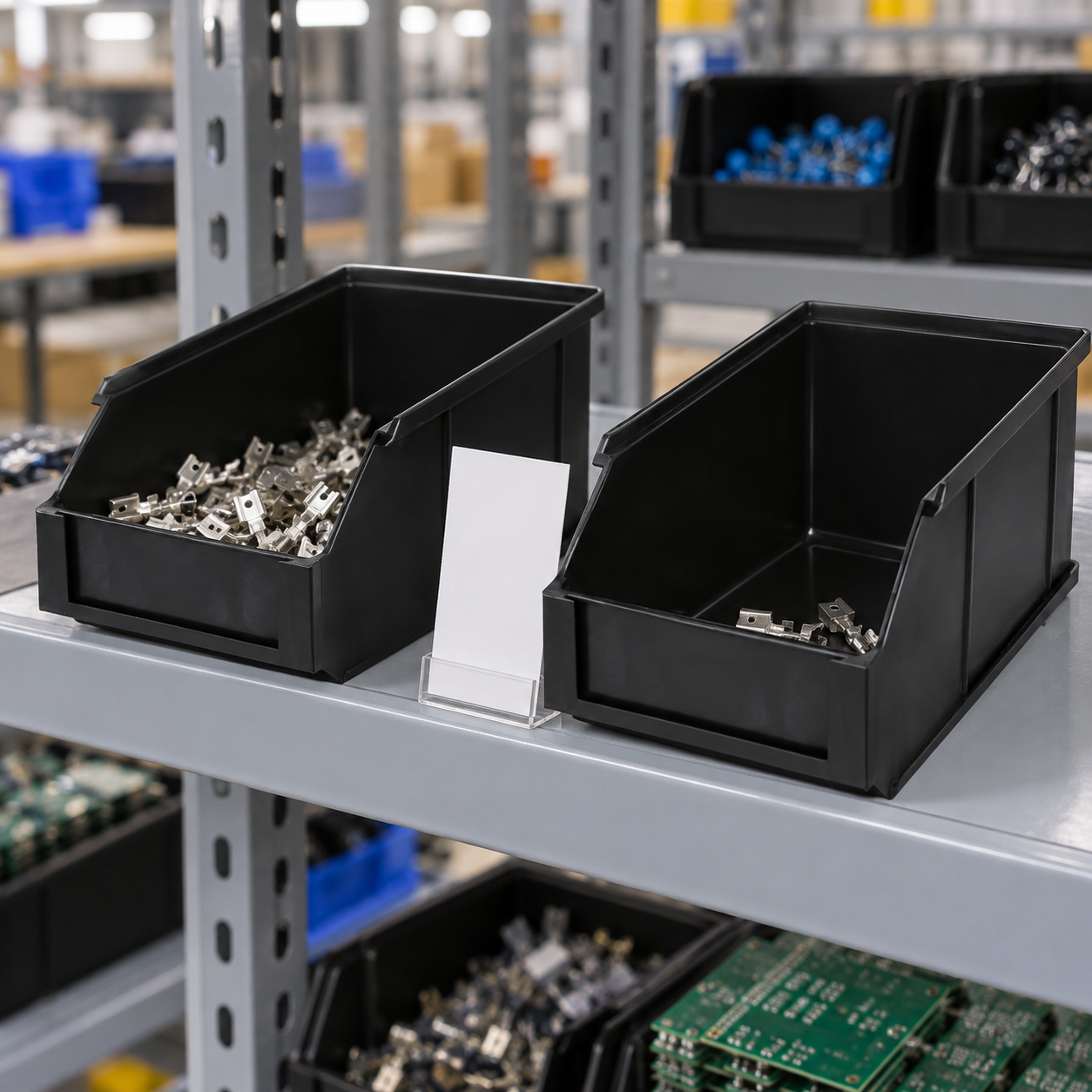
Assign a stable location, then identify each material unit with part, revision, lot, quantity, status and dates. Do not put new receipts in front of older lots without a retrieval rule. The ESD warehouse storage guide covers receiving and location design. This page focuses on the longer time horizon and release decision.

Plan periodic review and release checks
Set a review cadence based on product risk, packaging condition, storage environment and customer requirements. A review should confirm physical inventory, seal integrity, label readability, moisture record, and whether the component is still approved for the intended assembly. For aged stock, the quality owner may require solderability, visual, or functional checks; the exact method should be approved for that device, not chosen from a generic internet checklist.
Do not use a purely calendar-based “expired” label without an evidence path. Some product families may remain usable under controlled conditions, while others need earlier action because their packaging was opened or their storage conditions were not maintained. Record the reason for release, hold, or rejection with the lot.
Evaluate aged stock without damaging the evidence
When a lot approaches the site’s review point, first inspect the external package without opening it. Photograph label and seal condition, verify the inventory record, and compare the stored environment with the approved range. If a moisture indicator or desiccant record is part of the package, follow the controlled interpretation procedure. Opening a bag merely to look at a part can start an exposure clock and change the very condition under review.
If a technical check is needed, choose a sample plan and test suited to the device and the reason for concern. A solderability check addresses a different risk from a functional test or package integrity check. Define who may open the package, how remaining units will be repacked, and how the result applies to the rest of the lot. A sample that passes one test does not automatically resolve an unrecorded humidity excursion.
Before release, confirm the part is still the approved revision for the build and that its manufacturer has not changed the assembly instructions. Link the quality decision to the actual material unit and the work order that consumes it. If the unit is rejected, preserve the reason for disposal or return so another location does not issue the same stock later.
Train receiving and inventory teams to distinguish a package’s date codes: manufacturing date, seal date, receipt date, internal review date, and customer expiry date may have different meanings. Store them in separate fields rather than copying one value into every date column. This reduces false scrapping and false release.
Keep the digital and physical history aligned
Every receive, move, split, issue, return, reseal and disposition should create a time-ordered record. Linked records support later verification. In a warehouse, the practical implementation may be a well-controlled WMS or MES rather than a complex new platform.
Test the record in both directions: from a physical unit to its supplier and condition history, and from a customer lot query to every remaining or consumed unit. Resolve missing quantity and duplicate identifiers before releasing material to the line.
What to put in the purchasing and storage plan
- Part number, revision, manufacturer, lot and packaging format.
- MSL or other process sensitivity and the governing instructions.
- Original seal, bag, desiccant and label evidence.
- Required environment, monitoring, alarm and response.
- Outer container and shelf location requirements.
- Review interval and device-specific release test decision.
- Split, return, reseal, quarantine and disposal workflows.
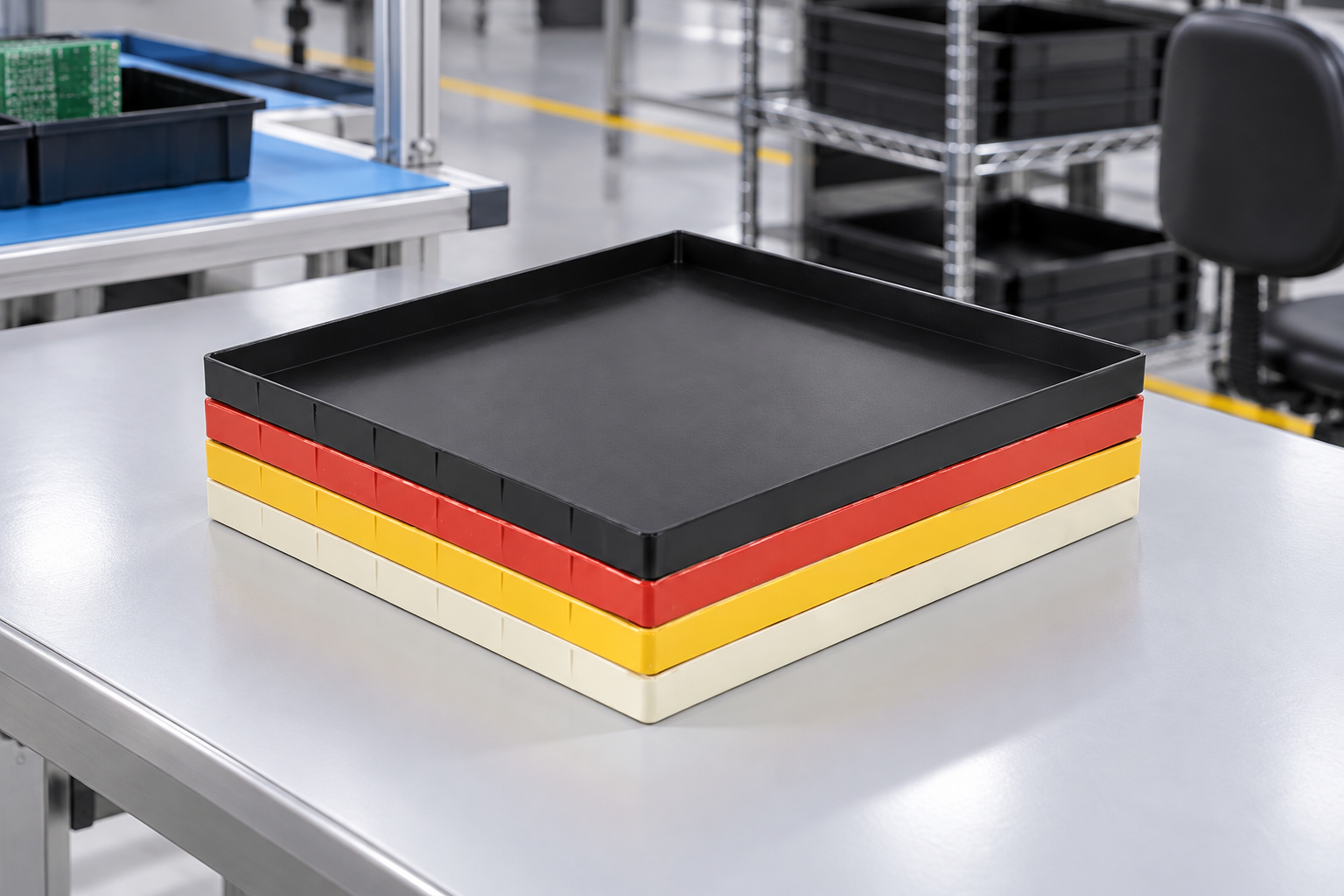
For container selection, compare anti-static component trays und reusable ESD tray controls when those formats fit the part. For label discipline, see barcode and MES labeling.
Further learning: ESD control context
The EOS/ESD Association lecture explains the ESD side of storage. Moisture and shelf life decisions still require product-specific guidance.
Häufig gestellte Fragen
Is a lidded ESD bin a moisture barrier?
No such claim should be assumed. Use the package and dry-storage method required for the component.
Does an old date code mean the component is unusable?
Not by itself. Review supplier guidance, storage evidence, package condition and the approved release criteria.
What happens after opening a moisture barrier bag?
Record exposure and follow the applicable component classification and controlled handling procedure.
Can different lots share one container?
Only if each unit remains physically separated and traceable under an approved process; avoid unsegregated mixing.
Which record is most important before release?
The linked identity and condition history: supplier lot, packaging state, environment, exposure and any reinspection decision.

Schreiben Sie eine Antwort