- Turbo
- Blog
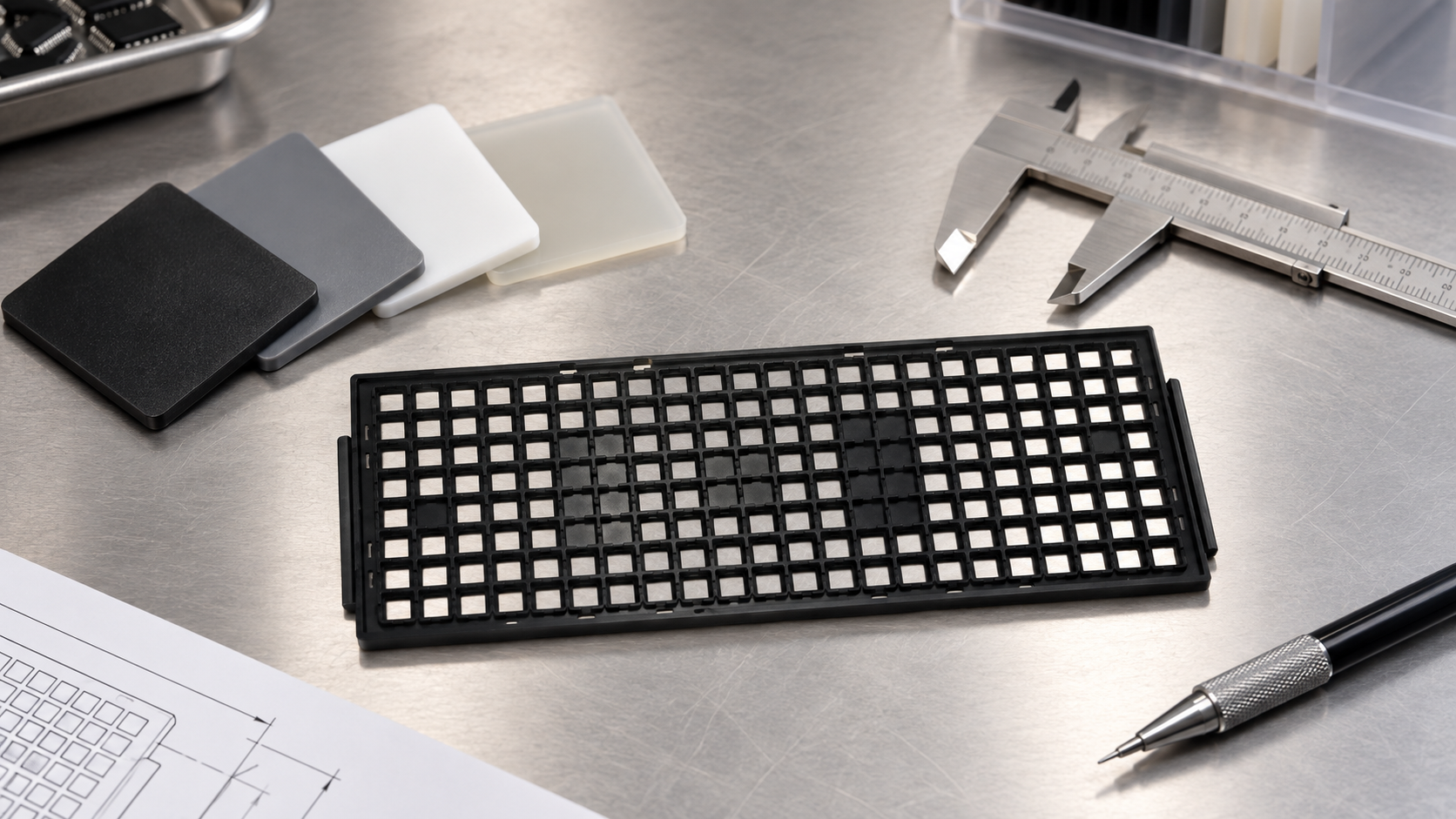
How to Choose JEDEC Tray Materials for IC Packaging requires a route-specific engineering decision, not a catalog shortcut. The practical objective is to select a tray resin and ESD formulation that survives the actual thermal, mechanical, cleanliness and handling route. This guide turns that objective into drawing inputs, supplier questions, sample trials, receiving checks and change-control records. It avoids universal material claims and invented limits: final values must come from the approved device drawing, facility ESD program, current standards, supplier data and qualified tests.
Define the Use Case Before Choosing the Tray
Start with the protected item and its complete journey. Record the device or assembly number, revision, maximum and minimum geometry, vulnerable features, approved contact areas, orientation and sensitivity information. Then map loading, internal transport, storage, cleaning, heat exposure, equipment interfaces, shipment and unloading. A tray that works at one bench may fail when stacked, moved through a loader or cleaned with a different chemistry.
Assign owners to the decision. Process engineering defines how the tray is used, quality defines evidence and sampling, the ESD coordinator defines the electrostatic function, and purchasing controls commercial assumptions and changes. The supplier should receive one consolidated requirement rather than conflicting notes from separate departments.
Translate the Search Term into Measurable Requirements
The phrase jedec tray material is useful for finding options, but it is not an acceptance specification. Convert it into characteristics that can be observed or tested. Separate mandatory limits from preferences, name the method and conditioning, and identify the drawing revision. If a reliable limit is not yet known, define a prototype trial instead of borrowing a number from an unrelated product page.
| Entscheidungsbereich | What the buyer should define | Verification approach |
|---|---|---|
| Temperature exposure | Operating, cleaning and any bake profile | Use the tray supplier’s controlled material data and validate the complete tray |
| Electrical role | Low-charging, dissipative or conductive behavior | State method, conditioning and acceptance range |
| Mechanical duty | Pocket retention, stiffness, warpage and stack load | Test worst-case devices and a representative stack |
| Process chemistry | Wash agents, labels and contamination limits | Run compatibility and residue trials |
This decision table is intentionally qualitative. Tray performance depends on geometry, material formulation, environment and the test setup. Numeric values belong in the controlled project specification and should be supported by the applicable standard, manufacturer documentation or qualified measurement.
Control Drawings, Samples and Revisions
Use a controlled 2D drawing for critical dimensions and a 3D model where complex pockets or equipment interfaces benefit from it. Identify datums, tolerances, contact zones, orientation features, stack interfaces and label areas. Mark dimensions as critical, reference or supplier process-control characteristics so incoming inspection does not waste effort while missing the features that protect the device.
Physical samples add information that drawings cannot fully convey, such as operator access, stiffness and the feel of a stack seating. They do not show the full tolerance or every material condition. Approval should therefore link the sample to its drawing, resin or construction, cavity or production lot, test evidence and signed deviations. Any later change needs a documented review of the characteristics it can affect.
Evaluate the Complete System
Test the tray as it will actually be used. Include the device, inserts, covers, labels, restraints, outer packaging, shelves and handling equipment where relevant. A material coupon cannot reveal a pinched lead, unstable stack, blocked vacuum pickup, isolated conductive surface or label that interferes with a sensor. The complete system is the meaningful unit of approval.
Environmental history also matters. Record conditioning, cleaning, temperature, humidity and prior use when they can influence the result. Compare suppliers only when the same method and conditions are used. If the facility’s ESD plan requires a resistance range or grounding behavior, state the surface, electrode arrangement, test voltage, measurement locations, sample count and disposition rule.
Prototype Approval Sequence
- Document review: confirm the device revision, route, tray role, drawing, material restrictions and acceptance methods.
- Erster Artikel: verify identity, workmanship and critical dimensions before valuable devices are introduced.
- Anprobe: load minimum and maximum device conditions, then check contact, rotation, lift and removal.
- Stack trial: test the actual stack quantity with the intended cover, restraint and storage interface.
- Process trial: reproduce equipment handling, cleaning, heat, labels and normal operator actions.
- Evidenzprüfung: confirm test method, conditioning, sample identity, result, date and acceptance criterion.
- Freigabe save the approved drawing, sample identity, deviations, photographs and receiving plan.
Run the sequence as gates. A failure should stop progression until the cause is understood and the affected requirement is retested. Cosmetic approval cannot override a functional failure. Conversely, harmless appearance variation should not become an unplanned rejection rule; defect definitions should connect to function or an agreed visual standard.
Incoming Inspection and Supplier Control
At receiving, separate supplier lots before sampling. Check purchase identity, drawing revision, quantity, packaging condition and required documents. Inspect for cracks, flash, contamination, distortion, incomplete features and incorrect labels. Measure critical characteristics using the same datum and method used during approval. A fit or stack check with a controlled master can quickly detect a wrong revision, but it should not replace required measurements.
Sampling frequency should follow risk, supplier performance and the quality system rather than a universal percentage. Retain results by supplier lot and, when relevant, mold cavity. If a lot fails, quarantine it before mixing with accepted inventory. Document expanded inspection, rework, return or concession decisions and assess whether previously used trays are affected.
Maintenance, Reuse and Change Control
Define what users inspect before reuse: pocket damage, wear, contamination, warpage, stack seating, labels and any grounding interface. Cleaning instructions should name approved tools and chemistry, rinse or drying steps and release criteria. Retirement rules need observable triggers. “Use until damaged” is too vague unless the organization defines damage that matters.
Supplier changes to resin, additive, coating, mold, cavity, site, process or subcontractor can affect performance even when the part number stays the same. The purchase agreement should require notification and identify the evidence needed for requalification. The review can be proportional to the change, but it should be completed before changed product enters normal inventory.
Common Failure Modes
- Choosing by black color rather than verified material behavior. Treat this as a preventable control failure: identify the affected lots, confirm the governing requirement and repeat the relevant validation before release.
- Using a generic resin temperature number as a finished-tray guarantee. Treat this as a preventable control failure: identify the affected lots, confirm the governing requirement and repeat the relevant validation before release.
- Ignoring humidity, cleaning and repeated handling. Treat this as a preventable control failure: identify the affected lots, confirm the governing requirement and repeat the relevant validation before release.
A final common error is using a marketing description as proof. Terms such as JEDEC, antistatic, conductive, reusable or heat resistant need a defined scope. Ask what drawing or method supports the claim, which surfaces and conditions were evaluated, and whether the evidence applies to the finished tray or only its raw material.
Anfrage-Checkliste
- Device or assembly numbers, revisions, drawings, samples and allowed contact areas.
- Quantity per tray, orientation, stack quantity, covers and identification method.
- Complete route, operators, equipment interfaces, storage and shipping conditions.
- Material restrictions, cleaning chemistry, temperature and environmental exposure.
- Required electrostatic function, method, conditioning, limits and reporting format.
- Critical dimensions, datums, tolerances, gauges and first-article sampling.
- Prototype quantity, functional trials, approval owners and change-control rules.
- Demand, tooling, packaging, delivery, replacement and reuse expectations.
SWESD’s IC tray product page provides the relevant product starting point. Use the JEDEC tray dimensions guide, custom IC tray RFQ guide und semiconductor shipping tray guide as complementary planning references rather than substitutes for project validation.
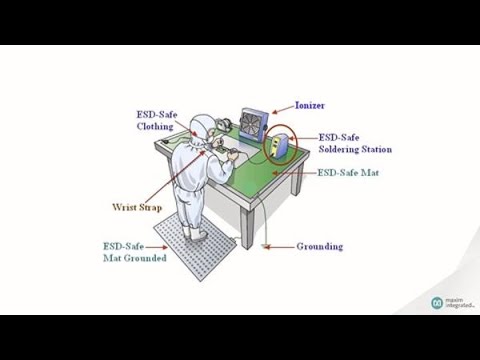
Educational Video: Why ESD Controls Matter
This neutral educational video explains the electrostatic-discharge context behind controlled semiconductor handling. The article remains complete without it, and project-specific requirements still govern the tray decision.
Häufig gestellte Fragen
Welches Material ist am besten für ein JEDEC-Tray geeignet?
Es gibt kein universell bestes Material. Die Auswahl richtet sich nach dem Temperaturprofil, der Geräteempfindlichkeit, der Geräteschnittstelle, dem Reinheitsbedarf und dem Lebenszyklus. Dokumentieren Sie die endgültige Entscheidung in der kontrollierten Spezifikation für das jeweilige Gerät und den jeweiligen Pfad.
Beweist die Farbe Schwarz Leitfähigkeit?
Nein. Farbe ist kein Testergebnis; fordern Sie die vereinbarte elektrische Methode und Chargennachweise an. Dokumentieren Sie die endgültige Entscheidung in der lenkenden Spezifikation für das betreffende Bauteil und den Weg.
Kann ein Tablett recyceltes Harz verwenden?
Nur wenn die genehmigten Formulierungs-, Leistungs-, Rückverfolgbarkeits- und Änderungskontrollanforderungen weiterhin erfüllt bleiben. Die endgültige Entscheidung ist in der kontrollierten Spezifikation für das jeweilige Medizinprodukt und den jeweiligen Weg zu dokumentieren.
Sollten Käufer ein Materialzertifikat anfordern?
Ja, aber ein Zertifikat ergänzt die Validierung von fertigen Trays, anstatt sie zu ersetzen. Dokumentieren Sie die endgültige Entscheidung in der kontrollierten Spezifikation für das entsprechende Medizinprodukt und den entsprechenden Prozessweg.
Wie sollten zwei Materialien verglichen werden?
Vergleichen Sie diese unter denselben Konditionierungs-, Geometrie- und Einsatzbedingungen und bestätigen Sie anschließend Passform und Gerätekompatibilität. Tragen Sie die endgültige Entscheidung in die kontrollierte Spezifikation für das jeweilige Gerät und den jeweiligen Weg ein.
Maßgebliche Referenzen
- EOS/ESD Association: packaging and material-handling fundamentals
- NASA-STD-8739.6B: Steuerung elektrostatischer Entladungen
- JEDEC JEP95: registered and standard mechanical outlines
Application boundary: This guide supports RFQ and process planning. Final dimensions, temperature exposure, electrical limits, inspection frequency and disposition rules must follow current controlled drawings, standards, device requirements, manufacturer documentation and the facility ESD and quality systems.

Schreiben Sie eine Antwort