- مدونة
Line-side staging works when the ESD box has a defined place, a defined owner, and a defined next step. The buyer should map the handoff between two process steps before choosing a box, because access and status are part of the application.
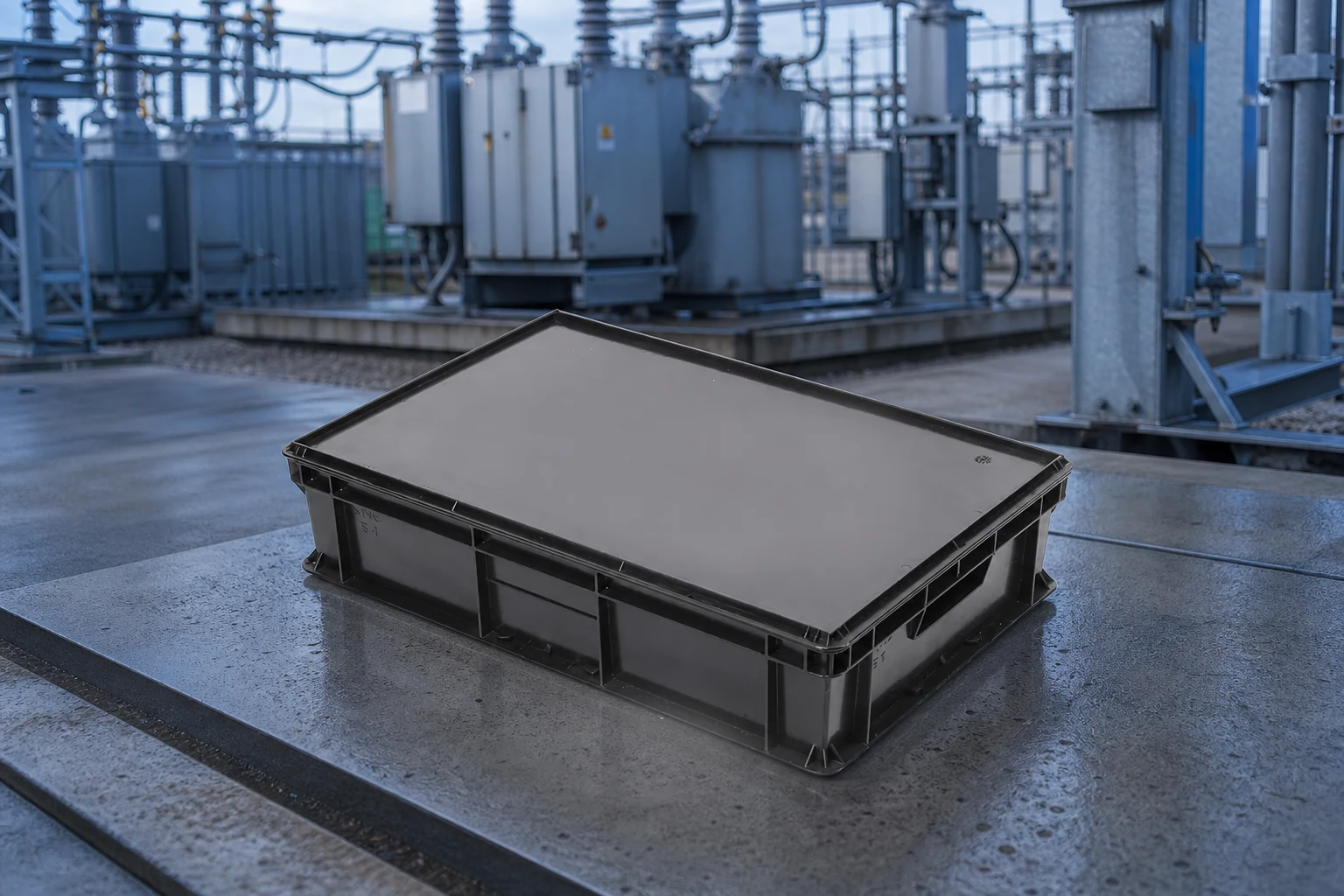
Part 1: Name the two process steps
Start with a simple statement: material leaves process A, waits at this line-side point, and enters process B. Include whether the box is a temporary queue, a protected hold, or a return container. That wording gives the supplier a real application to review.
Do not use “line-side” as a substitute for a location. Identify the line, station, access side, and person responsible for moving the box onward.
Part 2: Set the line-side position and access
The position should support the operator’s loading and removal direction without blocking the work area. Note whether the box is opened at the station, moved to a nearby bench, or exchanged as a closed unit.
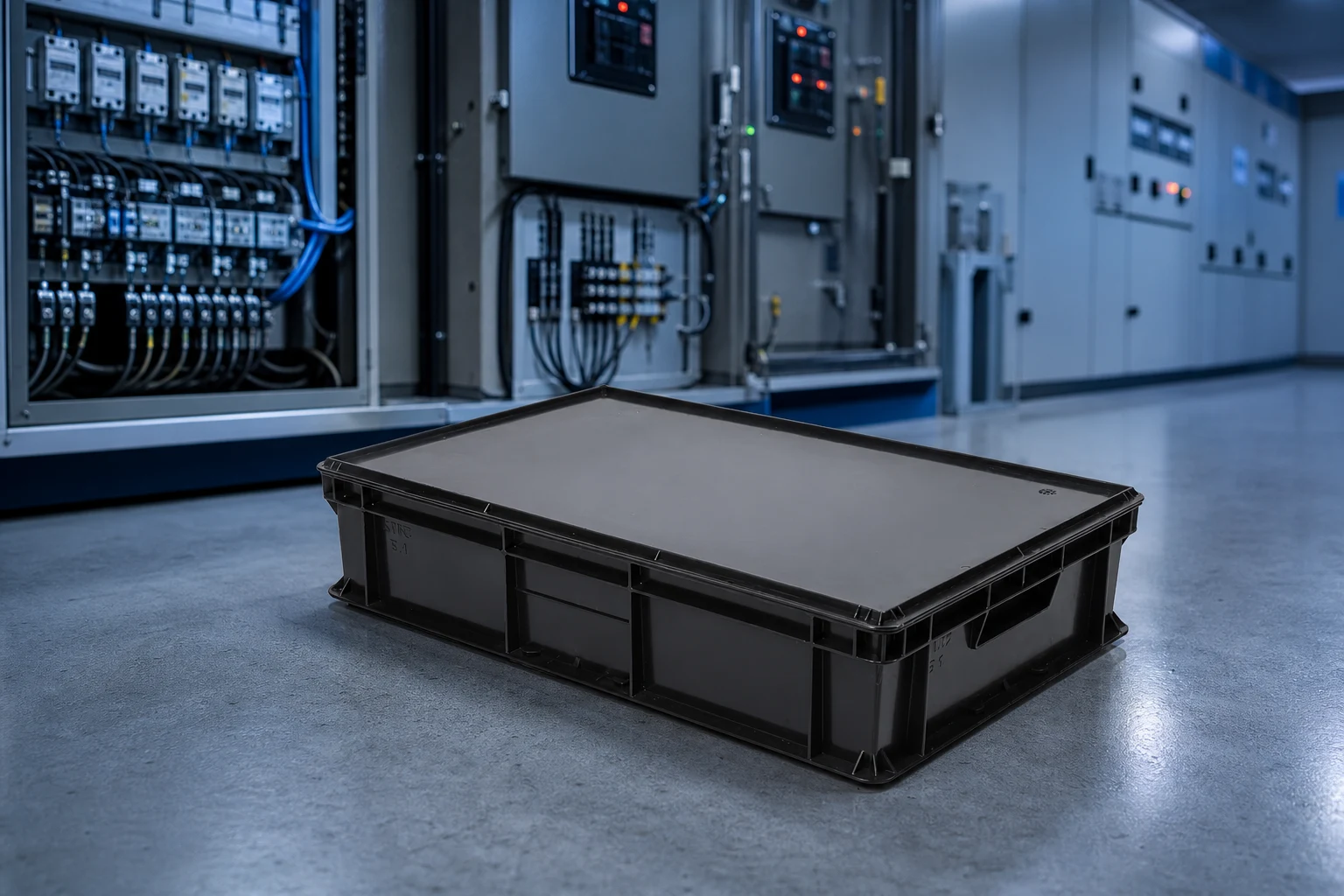
Queue logic matters too. Define the event that stops adding material, moves the box away, or changes its status. Avoid translating a process rule into an unsupported box-capacity promise.
Part 3: Make WIP status visible
Choose a small vocabulary that operators can maintain, such as waiting, released, hold, and ready for the next step. Pair each status with an owner and an update point. If labels are reused, define how a previous status is cleared.
The request should also state the item identity, lot or work order, revision, and quantity convention. These fields make a line-side handoff auditable without requiring a particular label technology.
Part 4: Keep staging inside the ESD process
ال نظرة عامة على معايير جمعية التفريغ الكهروستاتيكي provides the wider control-program context. It does not approve a box or prove that a line-side layout delivers a specific ESD result.
Connect the staging point to the site’s handling rules, inspection record, and training. This keeps “line-side” from becoming an unreviewed exception to the process.
مهم: Do not promise throughput, universal capacity, or ESD performance from a box photo or a line-side placement. Confirm the current configuration, process conditions, and acceptance evidence with the supplier and line owner. Source: SWESD ESD Box category.
Part 5: Check the box against the route
Walk one representative board, assembly, or component family through the handoff. Check the opening direction, label visibility, temporary holding state, and removal trigger. If the item needs a dedicated tray or a rack slot, record that boundary instead of forcing every step into a box.
For broader flow context, see تخزين لوحات الدوائر المطبوعة والتعامل معها. For a different container family, compare صينية تفريغ شحنات إلكتروستاتيكية لتقنية التثبيت السطحي. These references help define the boundary; they do not select a box for the buyer.
الجزء 6: ضع هذه الحقول في طلب المشتري
| طلب تقديم عرض أسعار | لماذا يهم الأمر |
|---|---|
| Process A and process B | Defines the handoff the box must support. |
| Station, access side, and owner | Makes the line-side position actionable. |
| WIP status vocabulary | Defines what operators must show and update. |
| Queue limit and removal trigger | Describes flow control without a generic capacity claim. |
| Item envelope and label fields | Supports a configuration and visibility review. |
| Required response evidence | Requests a drawing, photos, or staged-use review. |
This is more useful than “ESD box for SMT line.” It tells the supplier what the box must support and what the buyer needs checked.
Part 7: Choose the right configuration review
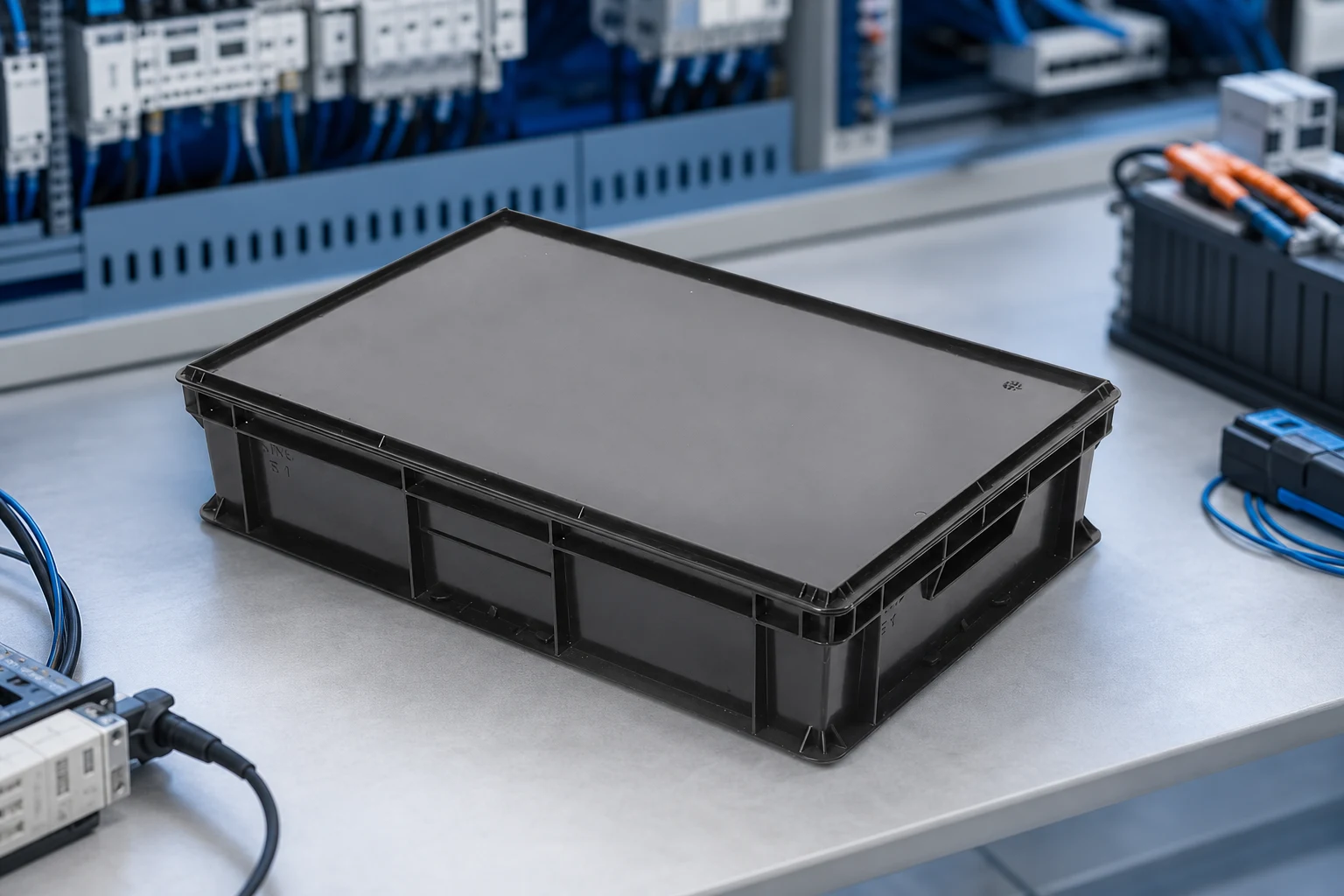
ابدأ بـ فئة صندوق تفريغ الكهرباء الساكنة and send the process map through اتصل بسانوي. Ask the response to identify the reviewed configuration and the assumptions still needing confirmation.
Do not recommend a named SKU until access, queue, status, and item envelope are controlled. If the route actually requires a tray, rack, or circulation system, record that fit boundary instead of treating the box as a universal substitute.
أسئلة متكررة
What does line-side ESD box staging mean?
It means an ESD box has a defined position between two named process steps, with an owner, a status, and a trigger for moving material onward.
How many boxes should remain at the line?
Set the queue rule from the process owner’s flow and removal trigger. Do not assume a universal number or infer capacity from a product photograph.
Which side of the line should the box face?
Choose the side that supports the documented loading and removal direction without obstructing the station. Confirm it with the line owner and supplier configuration review.
How should WIP status be shown?
Use a short controlled vocabulary, pair each status with an owner and update point, and define how old status is cleared when the box is reused.
Can an ESD box replace every SMT tray?
No. Tray, box, and rack choices depend on the item envelope, access, route, and process step. Record the boundary when a tray or rack is the better fit.
When should a buyer ask for a staging review?
Ask for one when the handoff location, access direction, queue rule, status fields, or item envelope is not already defined in an approved specification.
المراجع
أحدث مشاركة
-
 ESD Slippers vs ESD Safety Shoes for Electronics Factories16 أكتوبر,2026
 -
 ESD Shoe Sole Resistance: Test Methods and Acceptance Limits15 أكتوبر,2026
 -
 How to Verify Cleanroom Sticky Mat Contamination Removal15 أكتوبر,2026
اترك ردًا